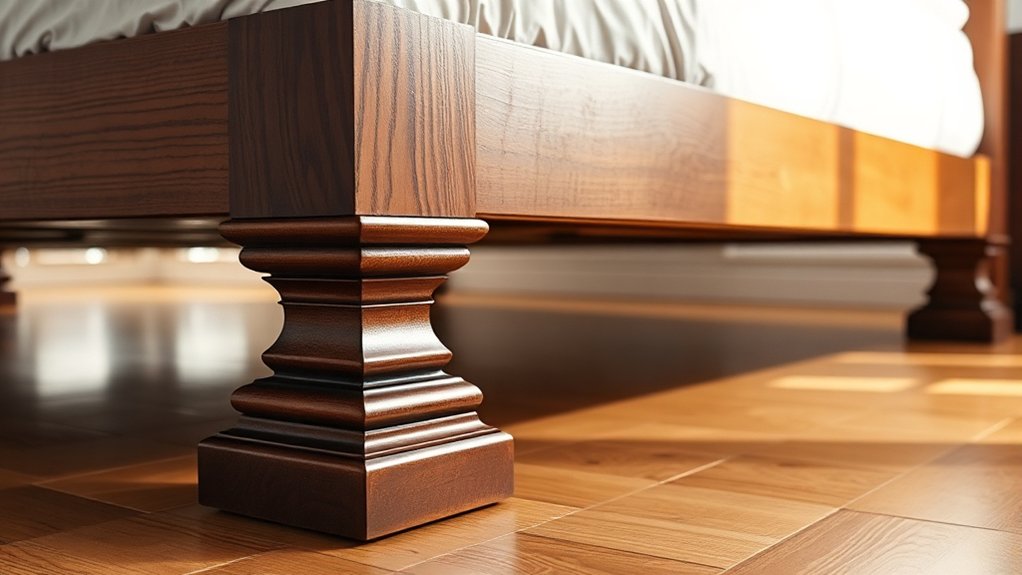
What Are the Big Queen Size Bed Feet Dimensions?
If you’ve ever struggled with choosing the perfect bed feet for your big queen size bed, you’re not alone. Many people find it tricky to balance style, support, and the right dimensions to fit their space.
Getting the bed feet right can make a huge difference in stability and how your bedroom feels overall.
For your big queen bed, bed feet typically range from 3 to 6 inches in height and 1.5 to 3 inches in width to provide solid support and style. You’ll want to measure from the floor to your bed frame’s bottom edge and consider leg attachment type and material.
Wood feet are thicker and classic, metal ones slimmer and modern. Choosing the right height affects stability and under-bed storage.
Keep going, and you’ll find how materials, floor types, and design styles play key roles.
Key Takeaways
- Big queen bed feet typically range from 4 to 6 inches in height for adequate support and storage space.
- Width of bed feet usually falls between 2 to 3 inches to maintain stability for larger bed frames.
- Wooden feet for big queen beds are often thicker, around 4 to 5 inches, to support heavier weight.
- Metal feet are slimmer, about 2 to 4 inches wide, offering modern strength with a minimal footprint.
- Choose feet height based on storage needs and floor type, balancing stability and ease of access for big queen beds.
What Are the Standard Dimensions of Big Queen Bed Feet?
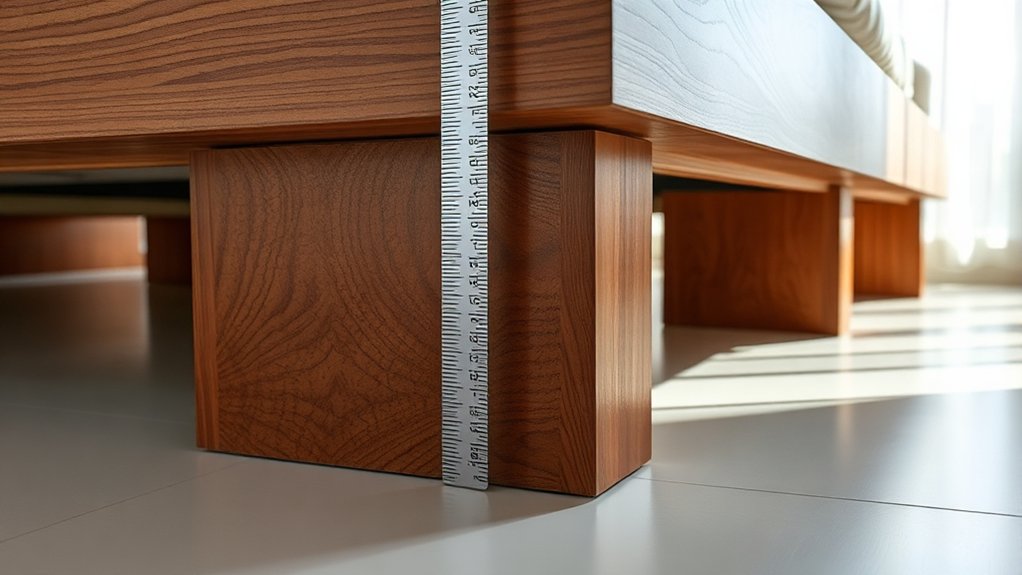
When selecting or replacing feet for a big queen bed, it’s important to know their standard dimensions. Typically, big queen bed feet range from 3 to 6 inches in height, with widths around 1.5 to 3 inches to guarantee stability.
You’ll find various bed foot types, including tapered, block, turned, and metal legs, each offering different aesthetic and functional benefits. The choice of bed foot materials also matters. You can pick from wood, metal, plastic, or even acrylic, depending on your bed frame’s style and the durability you need.
Wooden feet provide a classic look, while metal options often offer a modern touch and increased strength. Keep in mind, the size and shape of the feet should complement your bed frame while supporting its weight effectively. Understanding these standard dimensions, types, and materials helps you make a well-informed decision when upgrading or replacing your big queen bed feet.
How to Measure Your Bed Frame for the Right Bed Feet Size
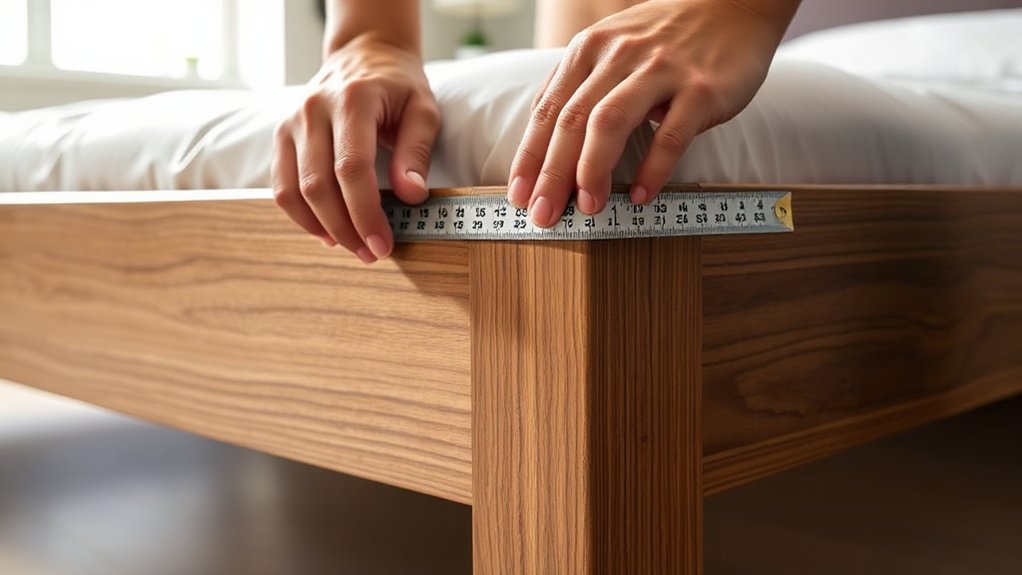
To find the right bed feet size, start by measuring your bed frame’s height carefully. This gives you a clear idea of how tall the feet need to be. Then, take a look at how the legs attach to your frame. It’s important to make sure they’ll be compatible with the new feet you choose. Lastly, check the width of the frame so you can pick feet that fit securely and provide proper support for your bed. That way, everything stays sturdy and looks just right.
Measure Bed Frame Height
Measuring your bed frame height accurately guarantees you choose bed feet that provide the perfect lift and stability. Start by placing a tape measure from the floor up to the bottom edge of the bed frame where the feet will attach.
Keep in mind that different bed frame materials, like wood, metal, or upholstered, may affect how you position the tape for an accurate reading. Also, consider any bed height adjustments you might want, like extra clearance for storage or ease of getting in and out.
Note down the current height, then decide if you want to increase or decrease it. This confirms the new bed feet fit properly and maintain the frame’s balance. Accurate height measurement is essential for both comfort and functionality.
Determine Leg Attachment Type
Choosing the right bed feet starts with identifying how your bed legs attach to the frame. Leg types vary, and knowing the attachment methods guarantees you pick compatible replacements. Most bed frames use one of these common leg attachment methods:
- Screw-in legs Threaded legs that twist directly into the frame.
- Bolt-on legs Legs secured with bolts requiring a wrench.
- Bracket-mounted legs Legs fixed onto metal brackets attached to the frame.
- Drop-in legs Legs that slot into pre-installed sockets.
Examine your current legs closely to determine which method they use. This helps you measure and select feet that fit properly, avoiding mismatches in size or style. Understanding leg types and attachment methods is key to upgrading your big queen size bed feet smoothly.
Assess Bed Frame Width
Once you know how your bed legs attach, the next step is figuring out your bed frame’s width. Measuring the width accurately guarantees you pick bed feet that fit perfectly and support your frame well.
Start by using a tape measure to record the distance between the outer edges of your bed frame’s side rails. Keep in mind that different bed frame styles, like platform, panel, or sleigh beds, may affect how you measure.
Also, consider the bed frame materials since metal frames often have thinner profiles than wooden ones. If your frame has extra features like decorative edges or built-in storage, factor those into your measurement.
Precise width assessment helps you select bed feet that complement your frame’s design and provide stable support.
How Big Queen Bed Feet Height Affects Stability and Comfort
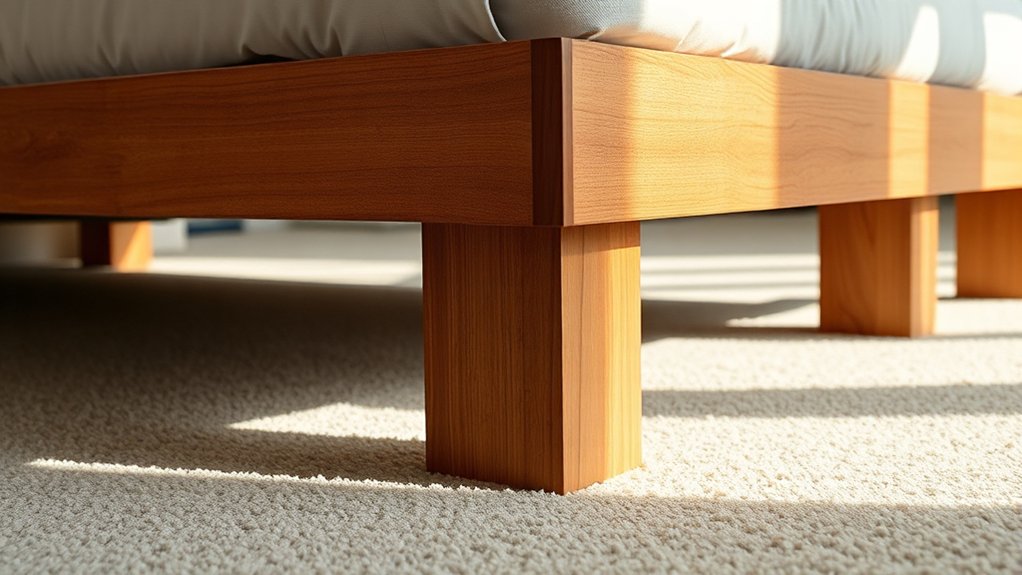
Although bed feet may seem like a small detail, their height plays a crucial role in both the stability and comfort of your big queen size bed. Choosing the right height helps address stability concerns and improves comfort factors, ensuring your bed feels secure and inviting.
The height of your bed feet is key to both stability and comfort in a big queen size bed.
Here’s how bed feet height affects your bed:
- Lower Feet Height: Increases stability by lowering the center of gravity, reducing wobbling.
- Higher Feet Height: Offers more under-bed storage but may compromise stability if too tall.
- Optimal Height: Balances stability and comfort, making it easier to get in and out of bed.
- Height and Mattress Support: Proper height supports mattress performance, contributing to overall comfort.
How Different Materials Affect Big Queen Bed Feet Dimensions
You’ll notice that wood and metal bed feet often come in different sizes to balance strength and style. It’s interesting how the choice of material really plays a role in the size you get. Plastic feet tend to be smaller, but they can vary quite a bit depending on the design needs. And when it comes to upholstered feet, they usually add some bulk, which definitely affects the overall dimensions. So, it’s something to keep in mind when you’re thinking about how your bed will fit in the room.
Wood Versus Metal Sizes
When choosing between wood and metal for your big queen bed feet, you’ll notice that the material directly impacts their size and stability. Wood benefits include a natural look and slightly larger dimensions to offer solid support without compromising style. Metal durability allows for sleeker, more compact feet since the material can handle weight without bulk. Here’s how they compare:
- Wood feet tend to be thicker, often ranging from 3 to 5 inches in height and width for stability.
- Metal feet are usually slimmer, around 2 to 4 inches, thanks to stronger structural integrity.
- Wood’s natural grain adds aesthetic warmth but requires more space.
- Metal feet offer a modern feel with a minimal footprint while maintaining durability.
Choose based on your style and space needs.
Plastic Bed Foot Dimensions
Plastic bed feet offer a lightweight and cost-effective option for supporting your big queen bed. When you choose plastic bed materials, you benefit from easy installation and resistance to moisture, which helps maintain the feet’s shape over time.
Typically, plastic bed feet for big queen beds measure around 4 to 6 inches in height, with a diameter of 1.5 to 3 inches. This size provides stable support without adding bulk.
However, plastic durability varies; some plastics resist wear well, while others may crack under heavy weight or impact. To guarantee your bed feet last, select high-quality plastic designed for furniture use.
Impact Of Upholstered Feet
Although upholstered feet add a touch of elegance and comfort to big queen beds, their materials significantly influence the feet’s dimensions and overall support. When choosing upholstered feet, you need to balance the benefits with practical design considerations. Different fabrics and padding thickness affect size and sturdiness, altering the bed’s height and footprint.
Here’s what to take into account:
- Material Thickness – Thicker padding increases feet height and width.
- Fabric Type – Durable fabrics provide better support but may add bulk.
- Frame Structure – A sturdy inner frame guarantees proper load distribution.
- Maintenance Needs – Some materials require more care, affecting longevity.
Understanding these factors helps you pick upholstered feet that improve both style and functionality without compromising stability.
Choosing Bed Feet Height for Different Floor Types
Selecting the right bed feet height is crucial to protect your floor and guarantee stability. When choosing bed feet height, consider floor compatibility carefully. For hardwood or laminate floors, opt for shorter feet with protective pads to prevent scratches.
Carpets allow for slightly taller feet, which help improve air circulation and make cleaning easier. If you have tile or stone floors, medium-height feet with rubber tips provide a good grip without causing damage.
Carpets suit taller feet for better airflow and cleaning; tile or stone floors benefit from medium feet with rubber tips.
Besides functionality, design aesthetics play a role in your choice. Taller feet create a more open, airy look, while shorter feet offer a low-profile, modern vibe.
Make certain the height you pick complements your bed frame’s style and the room’s overall decor. Balancing floor needs with design aesthetics guarantees your bed is both practical and visually appealing.
Why Bed Feet Width and Diameter Matter for Stability and Style
When you pick bed feet, their width and diameter directly affect your bed’s stability and overall look. These dimensions are essential stability factors that prevent wobbling and support the bed’s weight evenly. A wider base distributes pressure better, reducing floor damage and enhancing safety.
At the same time, the diameter influences how sturdy and balanced the bed feels when you move or sit on it.
Consider these points:
- Wider feet offer improved support for the mattress and frame, boosting stability.
- Narrow diameters might create pressure points, risking damage to flooring or the bed base.
- The right width and diameter complement your room’s design aesthetics by balancing proportion and style.
- Proper sizing avoids overhang or awkward spacing, ensuring your bed feet look intentional and polished.
How Style and Design Impact Bed Feet Size Choices
The size of your bed feet doesn’t just affect stability. It also plays a big role in the style and design of your bedroom. When choosing bed feet, think about current design trends and how they match your style preferences.
For example, chunky, wider feet often suit rustic or farmhouse styles. They provide a grounded, sturdy look. Sleeker, slimmer feet fit modern or minimalist décor, emphasizing clean lines and lightness.
Your style preferences will guide whether you pick taller or shorter feet too. Taller feet can make your bed feel more raised and airy, while shorter feet offer a low-profile, cozy vibe. Also, metallic or decorative feet might be smaller but still make a bold statement. They blend function with flair.
Adjusting Bed Feet Dimensions for Under-Bed Storage Needs
If you need extra storage space, adjusting your bed feet dimensions can make all the difference. By modifying the height or style of your big queen bed feet, you create more room underneath for under bed storage solutions. This simple change helps you maximize your bedroom’s functionality without sacrificing aesthetics.
Here’s how to approach bed feet adjustments for better under bed storage:
- Measure the current clearance between the floor and bed frame.
- Decide how much additional height you need for storage bins or drawers.
- Choose bed feet that provide the desired lift while maintaining stability.
- Install adjustable or taller bed feet to create the perfect storage space.
Pros and Cons of Taller vs. Shorter Bed Feet for Big Queen Beds
When you’re picking out the height of bed feet for your big queen, think about how taller feet can give you extra under-bed storage. That’s great if you need more space to tuck things away, but keep in mind it might make the bed feel a bit less stable. On the other hand, shorter feet tend to make the bed feel sturdier. Plus, they can change up the look of your room in a nice way, maybe matching your style better. So, it really comes down to what matters most to you—space, stability, or style. We’ll break down these factors to help you figure out what’s the best fit for your bedroom.
Space And Storage Benefits
Because space is often at a premium, choosing the right bed feet height can directly impact your storage options under a big queen bed. Taller bed feet maximize space optimization, giving you more room for storage solutions. Shorter feet reduce this space but create a cozier, low-profile look.
Consider these points when deciding:
- Taller feet offer ample under-bed space for bins or drawers.
- Shorter feet limit storage but make cleaning easier.
- Taller feet suit small rooms needing extra storage.
- Shorter feet fit rooms where floor space isn’t a concern.
Stability And Aesthetics
Although taller bed feet can improve storage, they may compromise stability and alter the bed’s overall look. When you choose taller feet, you increase the bed’s height, which can make it less stable if the feet aren’t sturdy enough. Stability factors like material strength and foot width become vital here.
On the other hand, shorter feet boost stability by keeping the bed closer to the ground, reducing wobble. However, they limit under-bed storage and might give a heavier, less elegant appearance.
To strike the right design balance, consider your room’s style and how often you need storage. Taller feet offer modern aesthetics and space but require careful selection to maintain stability. Shorter feet provide solid support and a grounded look but sacrifice height and storage.
Where to Buy Big Queen Bed Feet With Ideal Dimensions
Finding the right big queen bed feet with ideal dimensions is easier than you might think. You just need to know where to look for quality options that match your bed feet styles and bed feet materials preferences.
Start by exploring these places:
1. Specialty Furniture Stores
They often carry a variety of bed feet styles and materials, guaranteeing you find a perfect fit.
2. Online Marketplaces
Websites like Amazon and Etsy let you filter by dimensions, style, and material, making your search efficient.
3. Home Improvement Retailers
Stores like Home Depot or Lowe’s offer durable bed feet materials, ideal for long-lasting support.
4. Custom Woodworkers or Metalworkers
If you want unique styles or materials, commissioning custom bed feet assures perfect dimensions and design.
Frequently Asked Questions
Can Bed Feet Affect Mattress Warranty Coverage?
Yes, bed feet can affect mattress warranty coverage. If your bed feet don’t provide proper mattress support, it could lead to warranty claims being denied.
Manufacturers often require sturdy, even support to prevent damage. So, if your bed feet are too short, unstable, or uneven, you risk voiding your warranty.
Always check your mattress warranty terms and use bed feet that meet their support guidelines to protect your investment.
Are Bed Feet Compatible With Adjustable Bed Frames?
Think of your bed feet as puzzle pieces. They need to fit perfectly with your adjustable frame. Not all bed foot materials play nice with adjustable frame compatibility.
Metal or flexible rubber feet usually work best because they bend and move without breaking. Wooden or bulky feet might block movement or damage the frame.
How Do Bed Feet Influence Bed Assembly Time?
Bed feet can speed up your assembly time if they’re designed for easy installation, requiring minimal tools. When they provide strong bed stability, you won’t have to spend extra time adjusting or tightening them later.
However, complicated bed feet with multiple parts might slow you down. Choosing feet that balance quick setup and solid support helps you assemble your bed efficiently without compromising its stability.
Can Bed Feet Reduce Noise When Moving the Bed?
Yes, bed feet can definitely reduce noise when moving your bed. By boosting bed stability, they help minimize wobbling and creaking sounds that often occur with unstable frames.
When your bed feet fit securely and evenly, they absorb some of the movement, leading to better noise reduction. So, if you want a quieter bedroom, investing in sturdy, well-designed bed feet is a smart move that improves both comfort and peace.
Do Bed Feet Require Special Cleaning or Maintenance?
Don’t you want your bed feet to last and look great? Luckily, bed feet don’t require special cleaning or maintenance. You just need gentle cleaning materials like a soft cloth and mild soap to wipe them down. Avoid harsh chemicals to prevent damage.
For maintenance tips, regularly check for loose screws or wear and tighten or replace parts as needed. This simple care keeps your bed stable and noise-free.
Conclusion
Picture your big queen bed standing tall and steady, its feet perfectly sized to support your comfort and style. By measuring carefully and choosing the right height and material, you create a cozy retreat that fits your floor and storage needs.
Whether you want sleek, short feet or taller ones for extra space, the right bed feet make all the difference. Your dream bed awaits—solid, stylish, and just the right size for big queen size bed feet dimensions.