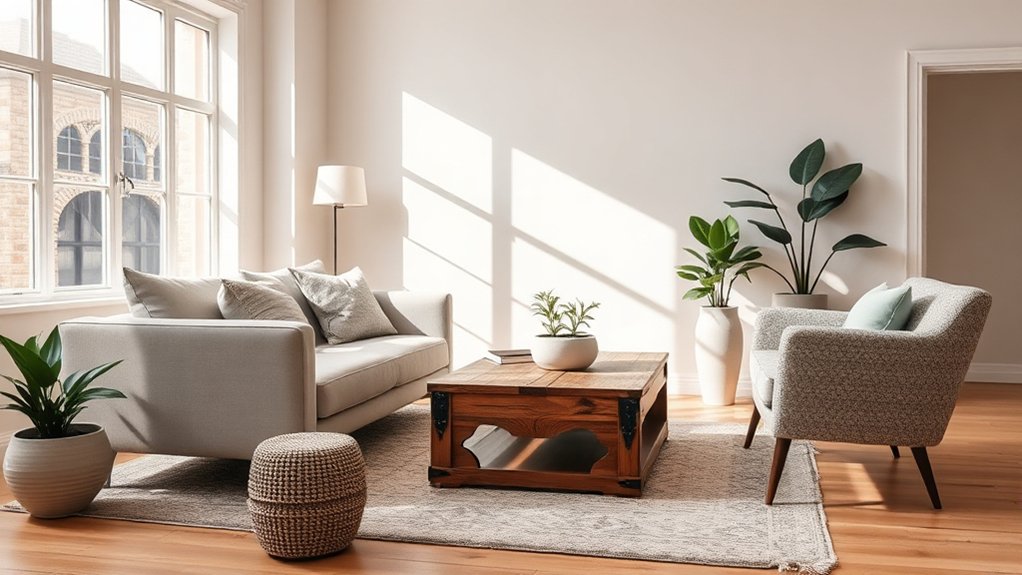
10 Tips how to Choose Furniture for a Room
Finding the perfect furniture for your room can feel overwhelming—you’re not alone if you’ve ever struggled to balance style, comfort, and practicality. Many people want their space to look great but also work well for everyday life, which isn’t always easy to achieve. How to Choose Furniture for a Room.
To choose furniture for your room, first decide how you’ll use the space and your preferred style. Set a realistic budget and measure your room carefully to guarantee pieces fit well.
Prioritize comfort and function, selecting durable, easy-to-clean materials. Think about storage needs and plan the layout for smooth traffic flow, keeping pathways clear.
By balancing style with practicality, you’ll create a welcoming and functional space. Keep exploring to uncover even more helpful tips.
Key Takeaways
- Measure the room precisely and compare with furniture sizes to ensure a proper fit without overcrowding or wasted space.
- Choose furniture styles that match your personal taste while maintaining a balanced and inviting room aesthetic.
- Prioritize comfort and functionality by testing seating and selecting multifunctional pieces with smart storage options.
- Plan furniture arrangement to support natural traffic flow, maintaining clear pathways of at least 30 inches wide.
- Set and stick to a budget, considering all costs including taxes, delivery, and assembly to avoid overspending.
Decide How You’ll Use the Room and Your Style
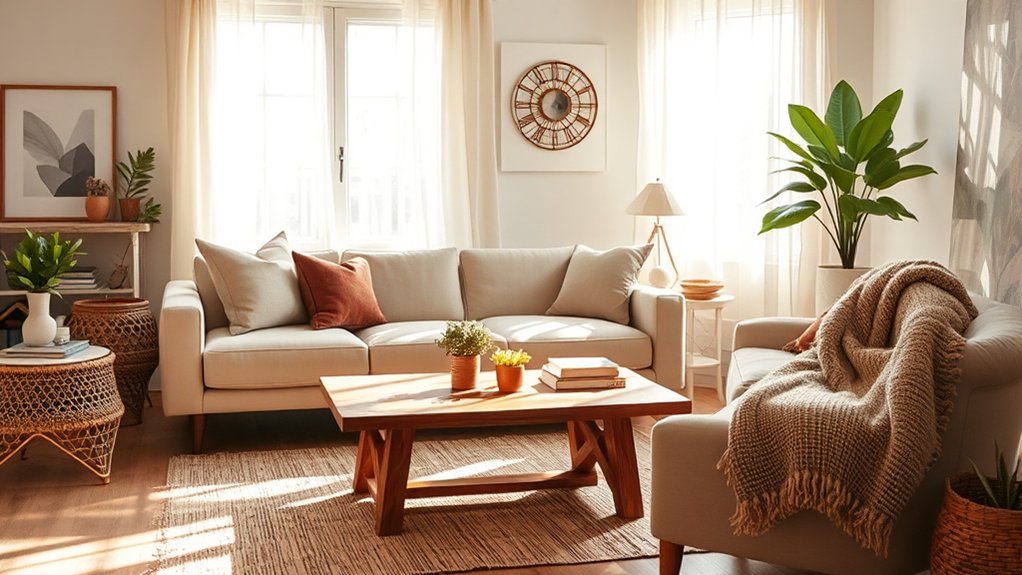
Before you pick out any furniture, think about how you’ll use the room and what style suits you best. Understanding the room functionality helps you choose pieces that fit your daily needs. For example, a living room meant for entertaining calls for comfortable seating and versatile tables.
Consider your room’s use and style preferences before selecting furniture to ensure it meets your daily needs.
Meanwhile, a home office demands ergonomic chairs and ample storage. Once you clarify the room’s purpose, investigate different furniture styles to find one that reflects your personality. Whether you prefer modern minimalism, rustic charm, or classic elegance, your chosen style should complement how you use the space.
Mixing styles can work, but keep balance in mind to avoid clutter. By focusing on both room functionality and furniture styles, you guarantee your space is practical and visually appealing.
This approach saves you from buying items that don’t fit your lifestyle or disrupt the room’s flow, making your furniture choices smarter and more satisfying.
Set a Realistic Budget for Furniture
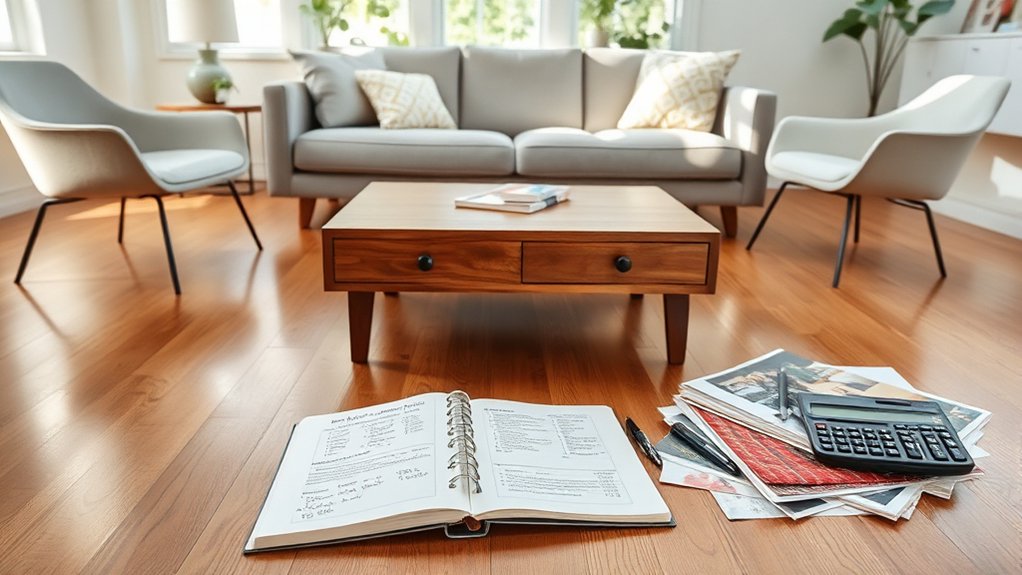
Setting a clear budget for your furniture helps you focus on options that fit your financial limits and prevents overspending. Start by listing the pieces you need and researching their average costs. Use effective budgeting strategies, like allocating funds based on priority. Invest more in items you’ll use frequently and choose budget-friendly options for less critical pieces. Don’t forget to factor in taxes, delivery fees, and assembly costs.
If upfront payment feels overwhelming, consider furniture financing options that fit your budget. Many stores offer interest-free plans or low monthly payments, making it easier to get quality furniture without stretching your finances. Still, be cautious. Only finance what you can repay comfortably.
Measure Your Space Accurately

Accurately measuring your space is the vital next step in choosing furniture that fits perfectly. Start by noting your room dimensions carefully, including length, width, and height.
Don’t forget to measure doorways, windows, and any architectural features like radiators or built-in shelves that could affect placement. Once you have the room dimensions, compare them with the furniture measurements of pieces you’re considering.
This guarantees nothing will be too big or too small and helps maintain a balanced look. Use a tape measure or a laser measuring tool for precise results.
Sketch a simple floor plan, marking all measurements to visualize how the furniture will fit. Remember, leaving enough clearance for walking paths is essential.
Taking these steps prevents costly mistakes and saves time by narrowing down your options to furniture that suits your room’s actual size. With accurate measurements, you’ll create a space that feels just right.
Make Comfort and Function Your Top Priorities
While aesthetics are important, you should prioritize comfort and function when choosing furniture for your room. Cozy seating is essential since furniture that looks good but feels uncomfortable won’t invite you or your guests to relax. Test sofas, chairs, and cushions to guarantee they provide the right support and softness. Remember, comfort encourages longer use and enjoyment.
Functional design also plays a key role. Select pieces that serve multiple purposes or have smart storage options to keep your space organized. Think about how you’ll use the room daily, whether for entertaining, working, or unwinding, and pick furniture that improves those activities. Avoid overly trendy items that sacrifice usability. By focusing on cozy seating and functional design, you make your room both inviting and practical, assuring your investment pays off in comfort and convenience every day.
Select Furniture Sized for Your Room
Choosing furniture that fits your room well makes all the difference in creating a balanced and comfortable space. When selecting pieces, always consider the furniture scale to guarantee each item complements the room’s size without overwhelming it.
Large, bulky furniture can make a small room feel cramped, while tiny pieces might look lost in a spacious area. Pay attention to furniture proportions, as this helps maintain visual harmony. For instance, match the height and width of your sofa to the room’s dimensions and avoid oversized coffee tables that block pathways.
Measure your room carefully before buying, and leave enough clearance for easy movement. Remember, well-sized furniture not only improves aesthetics but also boosts functionality. By choosing pieces that suit your room’s scale and proportions, you create an inviting, practical environment where everything feels just right.
Mix and Match Furniture Materials and Textures
Even if you prefer a cohesive look, mixing furniture materials and textures can add depth and interest to your room. Don’t be afraid to combine wood, metal, fabric, and glass pieces to create a layered, inviting space. The key is balancing texture combinations so they complement rather than clash. For example, pairing a smooth leather sofa with a rough wooden coffee table creates contrast while maintaining material harmony.
You can mix soft fabrics like velvet or linen with harder surfaces such as metal or stone to keep the room dynamic yet unified. Keep your color palette consistent to help different materials blend seamlessly. When you thoughtfully combine textures, your space gains personality and warmth without feeling chaotic. So, experiment with various finishes and tactile elements to find the perfect balance that suits your style and improves your room’s overall vibe.
Consider Furniture Storage Needs
Since clutter can quickly overwhelm a room, you’ll want to prioritize furniture that offers ample storage. Look for pieces that provide smart storage solutions, like ottomans with hidden compartments or beds with built-in drawers. These options help keep your space tidy without sacrificing style.
Multifunctional furniture is especially valuable in smaller rooms, where every inch counts. A coffee table that doubles as a storage chest or a sofa with under-seat storage can make a big difference in organization.
When choosing storage furniture, consider what items you need to store and how often you access them. Open shelving offers easy access but can look messy if not kept neat, while closed cabinets hide clutter and create a streamlined look.
Choose Durable Furniture That Lasts
While style and comfort matter, opting for durable furniture guarantees your investment stands the test of time. You want pieces made from sustainable materials like solid wood or metal, which resist wear and last longer. Checking warranty options is essential too; a strong warranty reflects the manufacturer’s confidence in their product’s durability. Don’t just focus on looks. Think about how the furniture will hold up daily.
Here’s a quick guide to help you pick durable furniture:
| Material | Durability Benefit |
|---|---|
| Solid Wood | Strong, repairs well |
| Metal | Resistant to damage and wear |
| Sustainable Fabrics | Eco-friendly and long-lasting |
| Warranty Options | Protects your purchase investment |
Choosing durable furniture reduces replacements and waste. You’ll save money and support sustainability, all while creating a lasting, functional space.
Pick Furniture That’s Easy to Clean and Maintain
Anyone can appreciate furniture that stays looking fresh with minimal effort. When you pick furniture that’s easy to clean and maintain, you save time and keep your space inviting.
Look for pieces upholstered in easy care fabrics like microfiber or treated cotton blends. They resist stains and wipe clean quickly. Choosing furniture with stain resistant surfaces, such as sealed wood or laminated finishes, also makes upkeep simple.
Avoid materials that show dirt or require special cleaning products. Those can complicate maintenance. Remember, regular quick cleanups prevent buildup and prolong your furniture’s life.
Plan Your Furniture Layout for Easy Movement
First, take some time to measure your room so you know exactly how much space you’re working with. Then, think about how people naturally move through the room — you want to avoid blocking those main pathways. Once you’ve got that figured out, go ahead and arrange your furniture in a way that leaves clear walkways, making it easy and comfortable to move around.
Measure Room Dimensions
To create a comfortable and functional space, you’ll need to measure your room’s dimensions accurately before choosing furniture. Start by noting the length, width, and height of your room. These measurements help you select furniture that fits the room proportion, ensuring the space doesn’t feel cramped or empty.
Keep furniture scale in mind. Oversized pieces overwhelm small rooms, while tiny furniture can look out of place in larger spaces. Use your measurements to sketch a layout, allowing you to visualize how each piece will fit.
This step prevents costly mistakes and makes sure your furniture complements the room’s size. Taking the time to measure precisely helps you create a balanced, inviting environment tailored to your space’s unique dimensions.
Identify Traffic Flow
After measuring your room and planning the furniture size, think about how people will move through the space. Identifying traffic flow is essential to creating a comfortable environment. You want your furniture arrangement to support natural traffic patterns without causing congestion or awkward detours.
Visualize the main routes people will take, whether from doorways, windows, or between key pieces like sofas and tables. Arrange your furniture to allow smooth movement along these paths, keeping in mind the room’s function and how many people will use it at once.
Allocate Clear Pathways
Creating at least one clear pathway through your room guarantees easy movement and prevents cramped spaces. When you plan your furniture placement, focus on leaving enough space for people to walk comfortably without bumping into anything.
Aim for pathways that are at least 30 inches wide to maintain flow and accessibility. Besides functionality, consider pathway aesthetics. Choose routes that complement your room’s design and avoid cutting through the middle of seating or focal points.
Arrange furniture to guide movement naturally, making your space feel open and inviting. By thoughtfully allocating clear pathways, you improve both comfort and style, ensuring your room is practical and visually pleasing.
Frequently Asked Questions
How Do I Choose Furniture That Complements My Existing Color Scheme?
You choose furniture that complements your existing color scheme by focusing on color harmony and texture balance. Pick pieces in shades that blend well with your walls and décor, like analogous or complementary colors.
Mix textures like smooth leather, soft fabrics, or rough wood to add depth without overwhelming the space. This approach keeps your room visually appealing and cozy, ensuring your furniture improves rather than clashes with your current palette.
What Are the Best Furniture Brands for Quality and Affordability?
You’ll find great quality and affordability from brands like IKEA, Wayfair, and Article. When making brand comparisons, consider durability, style, and customer reviews.
Don’t forget budget considerations. Set a clear spending limit to avoid overspending. Look for seasonal sales or outlet deals to get more value.
Balancing quality with price guarantees you’ll pick furniture that lasts without breaking the bank.
How Can I Incorporate Eco-Friendly Furniture Into My Room Design?
Think of your room as a canvas where every piece tells a story. You can incorporate eco-friendly furniture by choosing items made from sustainable materials like bamboo, reclaimed wood, or recycled metal.
Don’t sacrifice design aesthetics. Look for pieces that blend style with sustainability. Mixing textures and natural tones creates a warm, inviting space while supporting the planet.
What Lighting Works Best With Different Types of Furniture?
You’ll want ambient lighting to create a warm, inviting atmosphere around softer, upholstered furniture like sofas and armchairs.
For sleek, modern pieces with clean lines, bright task lighting works best to highlight their design and functionality.
Mixing both ambient and task lighting lets you balance comfort and practicality, enhancing your furniture’s appeal while making your space more usable for reading, working, or relaxing.
How Often Should I Update or Replace My Furniture Pieces?
You might think updating furniture frequently wastes money, but it’s really about balancing furniture lifespan with your style evolution. Typically, replace key pieces every 7-15 years, depending on wear and how your taste shifts.
If your furniture still feels comfortable and fits your aesthetic, no rush. Small updates like cushions or throws can refresh the look. Stay flexible and update when your space no longer reflects who you are.
Conclusion
Choosing furniture is like planting a garden. You need the right space, care, and planning to watch it flourish.
Imagine a friend who bought beautiful chairs without measuring, only to find they cramped the room and made it hard to move around.
By following these tips—measuring, prioritizing comfort, and planning layout—you’ll create a space that feels just right. Every piece will fit perfectly and welcome you home. Your room deserves furniture that grows with you, so choose furniture for a room wisely.