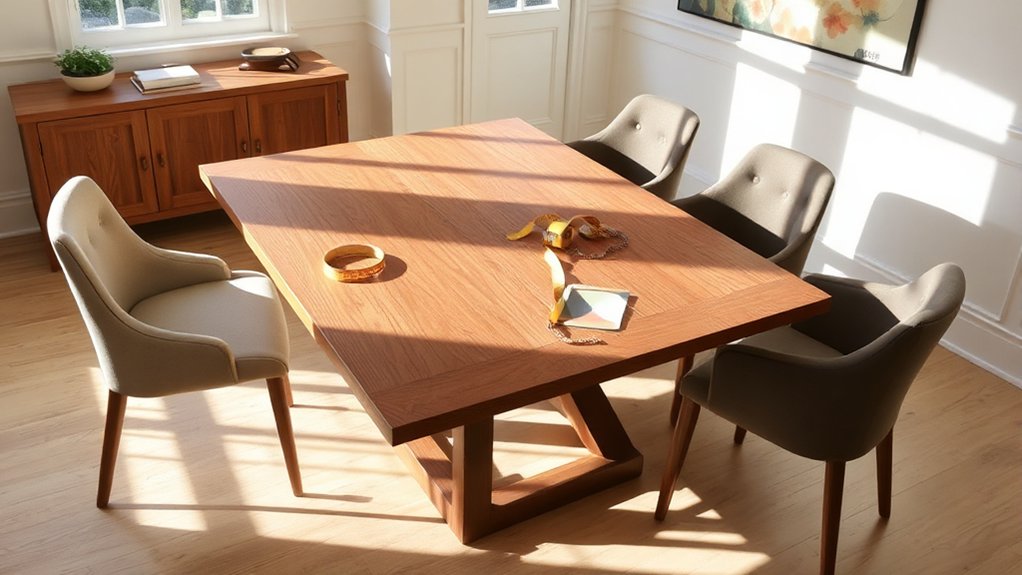
3 Essential Tips How to Choose a Dining Table
Choosing the perfect dining table can feel overwhelming, especially when you want it to fit your space, style, and lifestyle perfectly. You’re not alone—many people struggle with finding a table that balances comfort, durability, and design. How to Choose a Dining Table.
But with a few simple tips, you can make a confident choice that transforms your dining area into a welcoming spot for family and friends.
Start by measuring your dining space carefully, ensuring at least 36 inches of clearance around the table for comfort.
Next, pick materials that fit your lifestyle. Wood offers durability but needs upkeep, while metal or glass require less maintenance.
Finally, choose a table shape that suits your room’s layout and dining habits; round tables encourage interaction, while rectangular ones maximize seating.
Investigate these basics further to find the perfect table tailored just for you.
Key Takeaways
- Measure your dining area to ensure at least 36 inches of clearance around the table for comfortable movement.
- Choose a table size and shape that suits your room layout and seating needs. For example, rectangular tables work well for long rooms, while round ones fit smaller spaces.
- Select durable materials like oak or walnut for longevity. Balance your style preferences with maintenance requirements to find the right fit.
- Consider expandable tables if you often host larger gatherings. They help maximize flexibility without taking up extra space daily.
- Match the table’s style and color with your existing décor. At the same time, plan your budget carefully to avoid overspending.
Measure Your Dining Table Space and Seating Needs
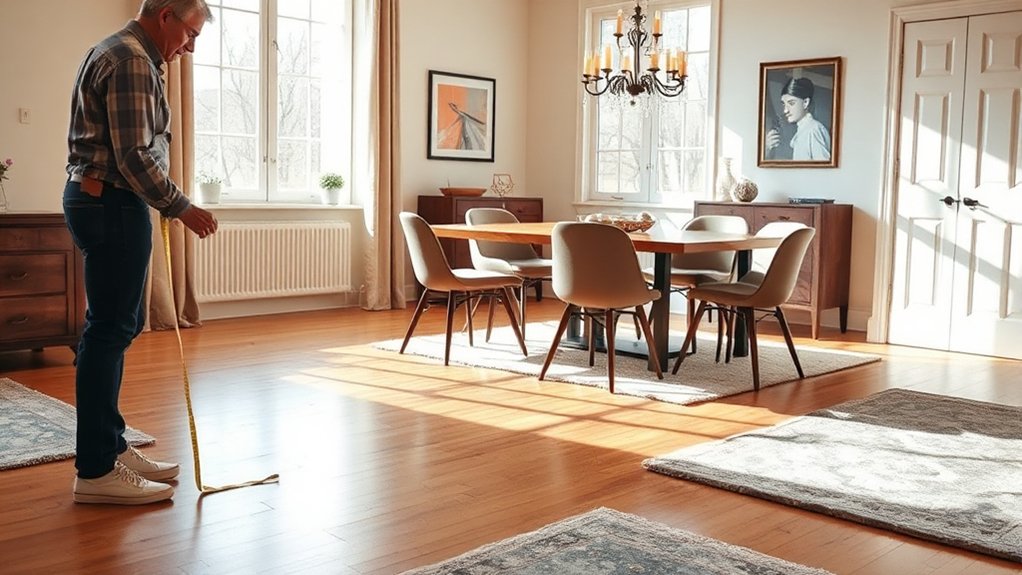
Before you pick out a dining table, measure the space where it will go and think about how many people you need to seat regularly. Knowing the dining table dimensions that fit your room guarantees you don’t overcrowd the area. You want enough clearance around the table, generally at least 36 inches, for chairs and movement.
Next, consider your seating capacity. Think about how many family members or guests you usually host. A table that’s too small will feel cramped, while one that’s too large wastes space. For example, a six-seater table typically measures around 60 inches long. But if you frequently host larger groups, look for expandable options to increase seating capacity when needed.
Select Dining Table Materials and Styles That Suit Your Lifestyle
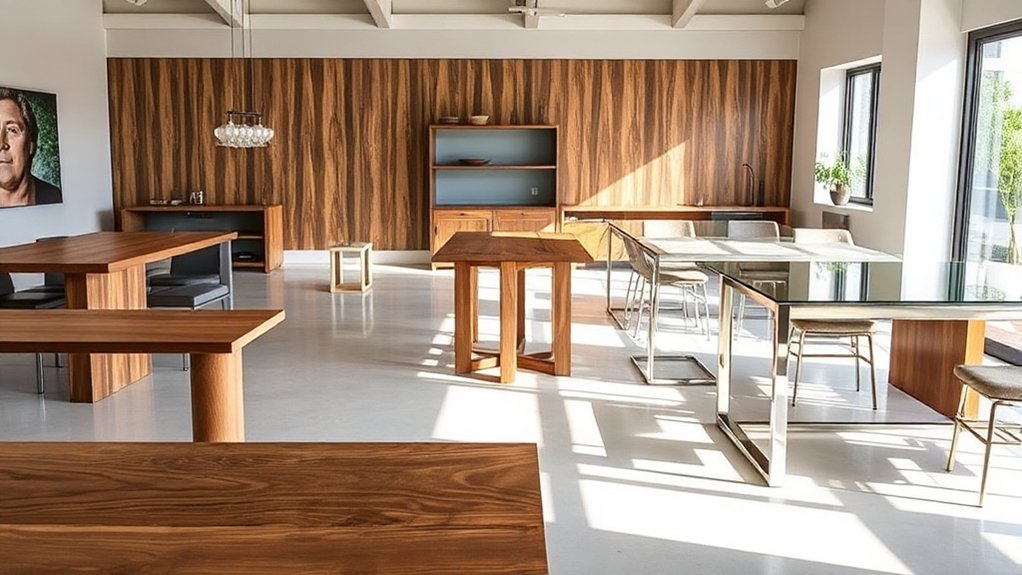
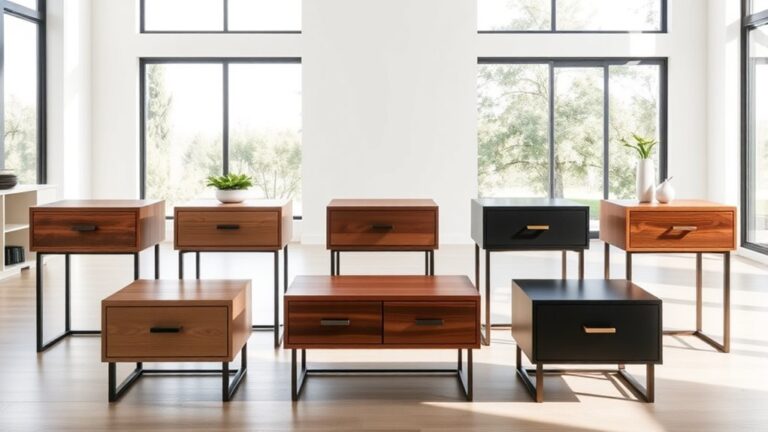
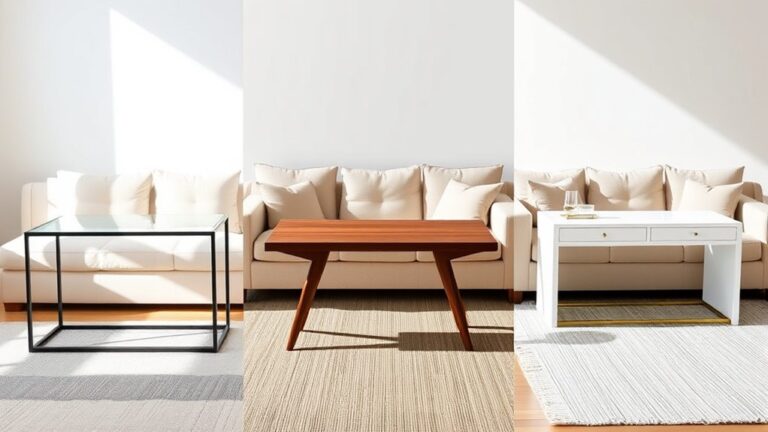
Once you know the size and seating needs for your dining table, focus on choosing materials and styles that fit your lifestyle. Consider wood types like oak for durability or walnut for a rich, warm look. Metal finishes add a modern touch and can suit industrial or minimalist aesthetics.
Think about color schemes that complement your room and design aesthetics that align with your taste. Maintenance tips are essential. Solid wood needs regular care, while metal or glass often requires less upkeep.
Factor in size considerations and style trends, but balance these with budget planning to avoid overspending.
| Material | Key Benefits |
|---|---|
| Wood Types | Durable, classic, various finishes |
| Metal Finishes | Modern, sturdy, low maintenance |
| Color Schemes | Coordinate with room decor |
Choose a table that matches your daily routine and style, ensuring it’s practical and visually appealing.
Choose a Dining Table Shape That Matches Your Room and Dining Habits
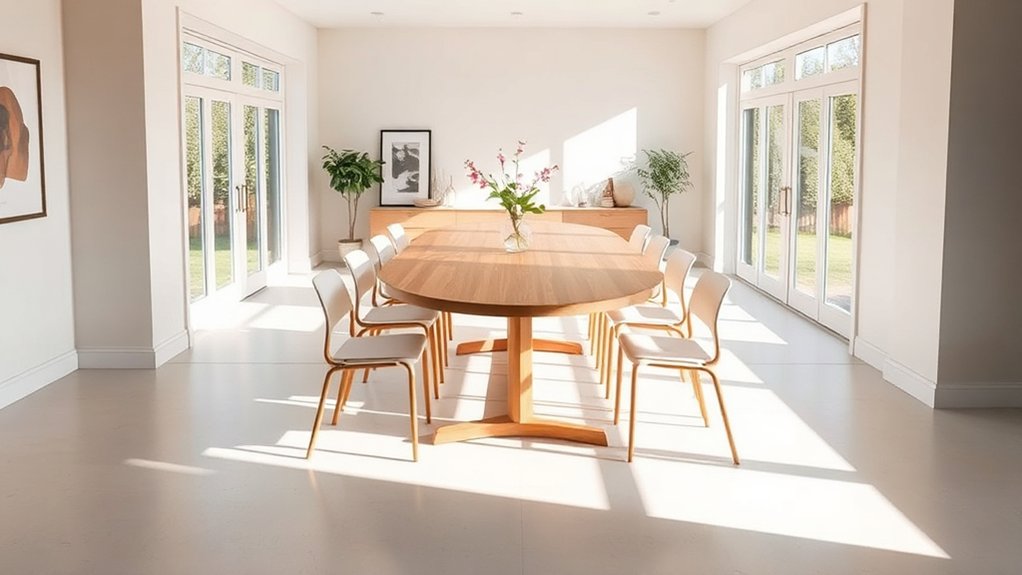
Three common dining table shapes, round, rectangular, and square, can dramatically influence the flow and feel of your room. When choosing a table shape, consider your preferences alongside room layout to create a comfortable and functional space.
If your room is narrow or long, a rectangular table fits perfectly, maximizing seating without crowding. For smaller or square rooms, a round or square table can open up the area and encourage easier conversation.
Round tables work well if you often host intimate gatherings since they promote interaction and eliminate sharp corners. This also makes movement around the table easier. On the other hand, if you regularly entertain larger groups, rectangular tables offer flexibility by accommodating more people.
Round tables foster intimate conversation and easy movement, while rectangular tables accommodate larger gatherings with flexibility.
Always measure your space to guarantee you leave enough clearance for chairs and movement. By aligning your table shape preferences with your room’s layout and dining habits, you’ll find a dining table that improves both style and practicality.
Frequently Asked Questions
How Do I Maintain and Clean Different Dining Table Materials?
To maintain and clean your dining table, focus on wood care by regularly dusting and using a gentle polish to keep it shiny. For glass maintenance, use a streak-free cleaner and a soft cloth.
With metal cleaning, avoid abrasive materials. Instead, opt for mild soap and a damp cloth. If your table has fabric, protect it by vacuuming often and treating spills immediately with a fabric-safe cleaner to prevent stains and wear.
What Is the Best Dining Table Height for Comfort?
Imagine sitting at a dining table that feels like you’re perched on a stage, awkward and uncomfortable. The best dining table height for comfort is typically 28 to 30 inches. This range suits most dining table styles and works well with various seating arrangements, letting you eat without straining.
When you pick the right height, your meals feel natural, and conversations flow easily, just like a perfectly balanced performance everyone enjoys.
Can I Use a Dining Table Outdoors?
Yes, you can definitely use a dining table outdoors, but you’ll want to choose one made from outdoor materials like teak, aluminum, or weather-resistant resin. These materials handle moisture, sun, and temperature changes better, so your table stays in great shape.
Avoid untreated wood or metal that can rust. By picking weather-resistant options, you’ll enjoy your outdoor dining space without worrying about damage from the elements.
How to Protect My Dining Table From Scratches and Stains?
Think of your dining table as a canvas, ready to be marred or preserved. To protect it from scratches and stains, you’ll want to use table covers. They act like a shield against daily wear.
Applying protective finishes creates an invisible armor, sealing the surface from spills and scratches. Together, these defenses keep your table looking fresh, letting you enjoy meals without worry or constant upkeep.
Are Extendable Dining Tables Worth the Investment?
Yes, extendable dining tables are definitely worth the investment. You get the benefits of accommodating more guests without permanently taking up extra space. They offer smart space-saving solutions, especially if you have a smaller dining area.
When you don’t need the extra surface, you keep your room open and uncluttered. Plus, they’re versatile and practical, making your dining experience more flexible and enjoyable.
Conclusion
When choosing your dining table, remember to measure your space and consider how many people you usually seat. For example, Sarah found a round oak table perfect for her cozy kitchen, matching her rustic style and family dinners.
By picking materials and shapes that fit your lifestyle and room, you’ll create a space everyone loves. Don’t rush; your ideal table balances function and style, making every meal more enjoyable.
Keep these tips in mind to choose a dining table that fits both your needs and your home beautifully.