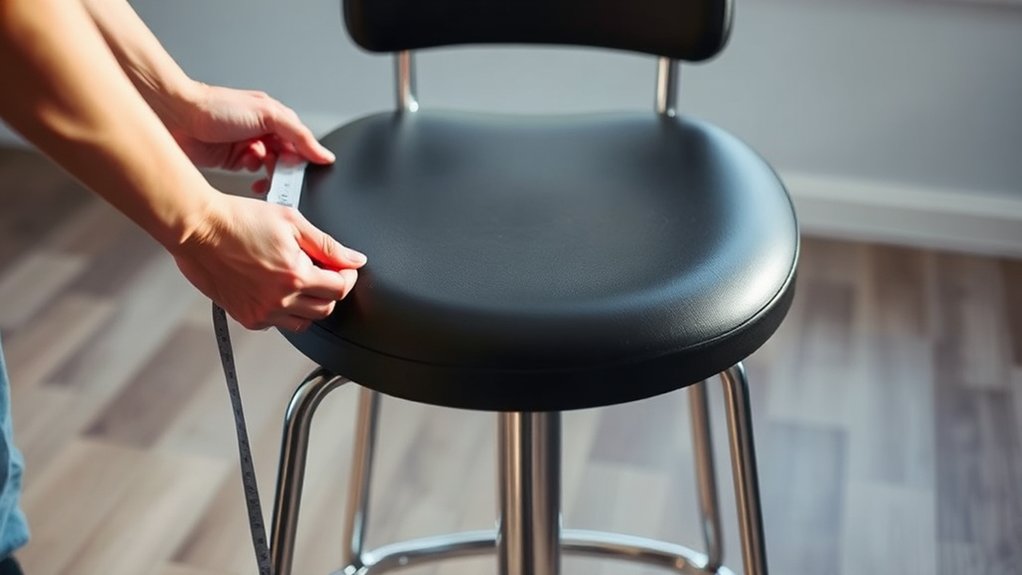
How Are Bar Stools Measured Step by Step?
Finding the perfect bar stool can feel overwhelming, especially when you’re unsure how to measure for the right fit. You’re not alone—many people struggle with choosing stools that are comfortable and look great with their space.
Knowing how to measure bar stools correctly can save you a lot of hassle and ensure you get the best match for your counter or bar area.
To measure bar stools, start by checking your counter height and subtract 10 to 12 inches to find the ideal seat height. Measure seat width from side to side, aiming for 15 to 18 inches, and allow at least 6 inches between stools.
Next, measure seat depth from front to back, ideally 16 to 18 inches, then note overall stool and backrest height. Don’t forget footrest height, which should be 7 to 9 inches below the seat.
Keep these steps in mind to choose a comfortable fit, and you’ll find even more helpful tips ahead.
Key Takeaways
- Measure counter height from floor to underside, then subtract 10-12 inches to find ideal seat height.
- Measure seat width at the widest point, ideally 15-18 inches, allowing 6 inches spacing between stools.
- Measure seat depth from front edge to backrest, aiming for 16-18 inches for optimal thigh support.
- Measure overall stool height from floor to highest point, including backrest height from seat top.
- Measure footrest height 7-9 inches below seat with proper clearance for comfortable leg support.
How to Measure Seat Height for Bar Stools
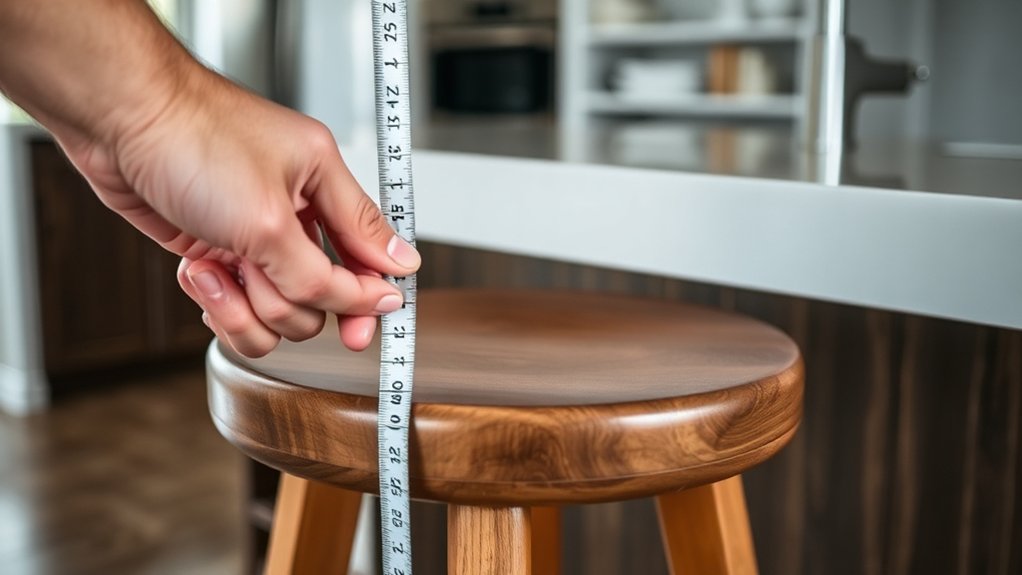
To measure the seat height for bar stools, start by determining the height of your bar or counter. Typically, the seat height should be about 10 to 12 inches lower than the surface height to allow comfortable legroom.
Begin by measuring your bar or counter height to set bar stool seats 10 to 12 inches lower for comfort.
Use a tape measure to get an accurate measurement from the floor to the underside of your counter or bar. Once you have that, subtract 10 to 12 inches to find the ideal seat height.
When applying measurement techniques, make certain the tape measure is straight and held firmly at both points for accuracy. You can also use a level to verify the floor and counter surface are even, as uneven surfaces can affect your seat height calculation.
Keep in mind that standard bar counters usually range from 40 to 42 inches tall, resulting in seat heights of roughly 28 to 30 inches. Following these steps will help you choose bar stools that fit perfectly and offer comfortable seating.
How to Measure Seat Width for Comfortable Seating
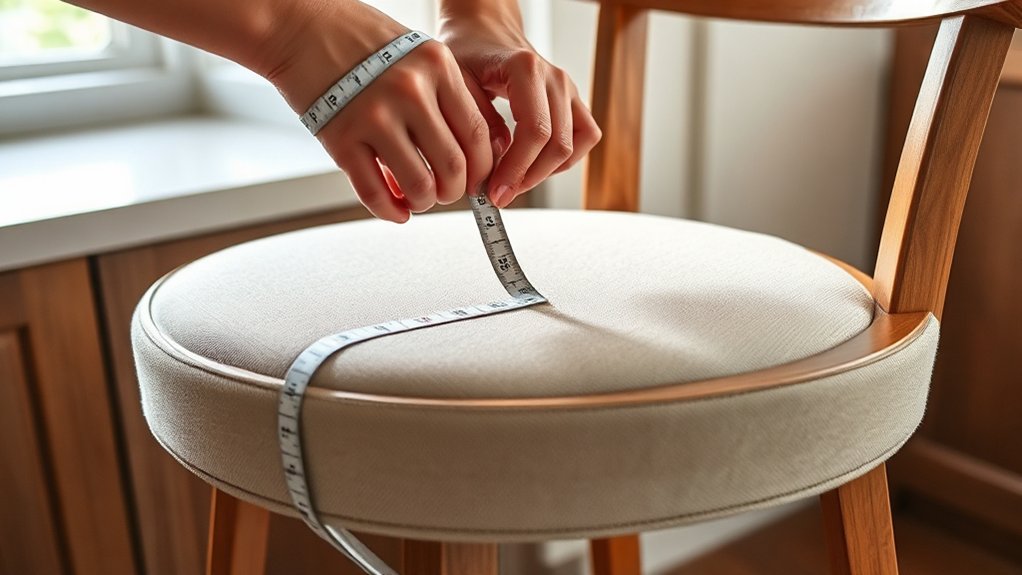
To make sure your bar stool feels comfortable, you’ll want to measure the seat width carefully. Think about finding the perfect width that supports your hips without feeling cramped or too wide.
Grab a tape measure and check the distance between the widest points of the seat. That way, you’ll get the best fit for your seating comfort.
Ideal Seat Width
Finding the ideal seat width is essential for ensuring your bar stools offer comfortable seating. You want a seat wide enough to support your body without feeling cramped or overly spacious. Consider the seat material, as softer cushions might require slightly less width than hard surfaces for comfort.
Also, think about your style preferences. Sleek, minimalist stools often have narrower seats, while more traditional or plush designs can afford extra width. Typically, a seat width between 15 to 18 inches suits most people, but if you expect larger guests, opting for wider seats can improve comfort.
Balancing these factors helps you select stools that not only fit your space but also provide the comfort you and your guests deserve during long conversations or meals.
Measuring Techniques
Accurately measuring seat width guarantees your bar stools provide comfortable seating without wasting space. Start by considering the average width needed for your users, typically between 15 to 18 inches, but adjust this based on height variations to make sure everyone sits comfortably.
Use a tape measure to check the widest part of the seat, including any cushioning or armrests. Keep style preferences in mind; sleek modern stools might have narrower seats, while traditional or upholstered styles often require extra width for comfort.
Don’t forget to account for how the stools will fit side by side. Allow at least 6 inches of space between seats to avoid crowding. By carefully measuring with these techniques, you’ll select bar stools that balance comfort, style, and practical spacing.
How to Measure Seat Depth for a Perfect Fit
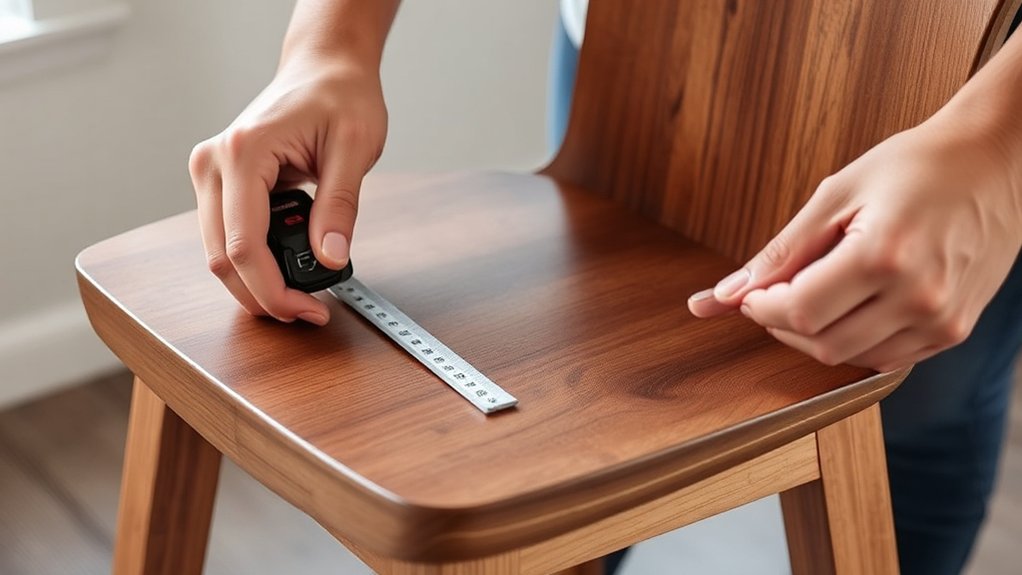
Measuring seat depth guarantees your bar stool provides comfortable support without feeling cramped or too loose. To achieve ideal seat comfort, you’ll want to measure from the front edge of the seat straight back to where the seat meets the stool’s backrest. This ensures your thighs are fully supported without pressure behind your knees.
Using proper measurement techniques, like a tape measure held parallel to the seat, helps you get precise results.
Here’s a quick guide to seat depth measurements for different stool types:
| Stool Type | Ideal Seat Depth (inches) | Notes |
|---|---|---|
| Kitchen Stool | 15-17 | Fits most kitchen counters |
| Bar Stool | 16-18 | Standard bar height comfort |
| Counter Stool | 14-16 | Slightly shallower, for counters |
| Extra Deep | 18-20 | For larger individuals |
| Adjustable | Varies | Customizable seat depth |
Measuring Overall Stool and Backrest Height
Now that you know how to measure seat depth, let’s move on to the total stool height and backrest height. Getting these measurements right is key to ensuring comfort and a proper fit for your space. So, grab a tape measure or ruler to take accurate readings before making your choice.
Measuring Total Stool Height
To find the total height of a bar stool, you’ll need to measure from the floor up to the highest point of the stool, including the backrest if it has one. Grab a tape measure and place it firmly on the floor, then extend it straight up to the tallest part of the stool.
This measurement captures the total stool dimensions, which is essential when comparing different bar stool styles. Keep in mind that stools with tall backrests or decorative tops will have greater total heights, so measuring accurately guarantees you pick the right fit for your space.
Always double-check your measurement to avoid errors, especially if you’re mixing various bar stool styles in one area. This step sets a clear foundation before moving to more specific parts of the stool.
Determining Backrest Height
Although you’ve already measured the total height of your bar stool, focusing specifically on the backrest height helps confirm comfort and proper support. To determine this, measure from the seat’s top surface to the highest point of the backrest.
Keep in mind that different backrest styles, like low, mid, or full back, affect how much support the stool provides. Also, pay attention to the backrest angle, as it influences posture and comfort. A slight recline can offer better lumbar support.
When measuring, verify you capture the vertical height regardless of the angle because the effective support depends on both height and tilt. By accurately determining backrest height alongside style and angle, you’ll choose a stool that’s both functional and comfortable.
Tools For Accurate Measurement
Accurate measurement of your bar stool’s overall height and backrest requires a few essential tools that guarantee precision and ease. To get the most reliable results, you’ll want to gather these:
- Tape measure for measuring the seat height, backrest height, and overall stool height accurately.
- Level tool to confirm the stool stands evenly and your measurements aren’t skewed by tilted surfaces.
- Pencil and notepad to record your measurements immediately and avoid errors.
- Step stool or ladder if the bar stool is tall; this helps you measure the backrest safely and precisely.
Using these tools will help you capture exact dimensions. It makes it easier to compare stools or find the perfect fit for your space.
How to Measure Bar Stool Footrest Height for Comfort
A well-measured footrest height can make all the difference in your bar stool’s comfort. To get it right, start by considering your footrest placement relative to the seat height. Typically, the footrest should sit about 7 to 9 inches below the seat to support your feet naturally.
Measure from the floor to where the footrest will be positioned, keeping in mind the overall stool height. Next, factor in your comfort preferences. If you prefer to sit with your knees slightly bent or your feet flat, adjust the footrest height accordingly.
Some people like the footrest higher for more leg support, while others prefer it lower to allow lounging. Use a tape measure or ruler to mark different heights and test what feels best when you sit down.
How to Find the Right Stool Height for Your Counter or Bar
First, measure your counter or bar height to get an accurate baseline. Then, think about what stool seat height will let you sit comfortably without any strain. And don’t forget to leave enough space below for your feet to rest on the footrest so you don’t feel cramped.
Measure Counter Height
To find the perfect stool height for your counter or bar, you’ll need to measure the height of the surface first. Counters come with various height variations, so knowing the exact counter dimensions helps you pick a stool that fits comfortably.
Follow these steps:
- Use a tape measure to determine the distance from the floor to the top of the counter.
- Record the measurement accurately, noting any uneven spots.
- Check if your counter height matches standard sizes (usually 34-36 inches for counters).
- Consider any additional features, like a raised edge, which might affect stool fit.
Determine Comfortable Seat Height
When you’ve measured your counter height, the next step involves determining the comfortable seat height for your stool. Typically, you want about 9 to 13 inches between the counter surface and the top of the stool seat to guarantee seat comfort.
This gap allows enough legroom and prevents you from feeling cramped or too low, which can cause discomfort over time. Keep in mind that height variations in counters or bars may require slightly different stool heights.
For example, a 36-inch counter usually pairs well with a 24-inch stool, while a 42-inch bar calls for a 30-inch stool. By focusing on these height variations and maintaining proper clearance, you’ll find the right stool height that offers both functionality and seat comfort.
Account For Footrest Clearance
Once you’ve chosen a comfortable seat height, the next step is to evaluate footrest clearance. Proper footrest positioning guarantees your feet rest comfortably without strain, especially when there’s height variation between stools or counters.
To account for this, follow these steps:
- Measure the distance from the floor to the footrest on your stool.
- Compare this with the height of your counter or bar’s footrail or any existing foot support.
- Confirm there’s at least 7-9 inches of clearance between the footrest and the underside of the counter for comfortable legroom.
- Adjust the stool’s footrest height if possible, or choose a stool with an appropriate footrest positioning to accommodate height variation.
This approach ensures comfort and proper ergonomics at your seating area.
Measuring Width and Spacing for Multiple Bar Stools
Measuring the width and spacing for multiple bar stools guarantees comfort and accessibility at your bar or counter. Start by checking the width considerations for each stool, including the seat plus any armrests. This helps you understand how much room each stool will require.
Next, follow spacing guidelines to confirm enough clearance between stools. Typically, you want 6 to 12 inches between each stool to allow easy movement and prevent crowding.
Measure the total length of your bar or counter, then divide it by the combined width and spacing needs of each stool. This calculation shows how many stools can fit comfortably.
Adjusting Measurements for Swivel and Adjustable Bar Stools
Considering the space each bar stool occupies is just the start, especially if your stools swivel or adjust in height. When dealing with a swivel mechanism and adjustable height, you need to be precise with your measurements to guarantee comfort and functionality.
- Measure the stool’s base diameter to account for the full rotation of the swivel mechanism, preventing collisions.
- Determine the minimum and maximum seat height by adjusting the bar stool to its lowest and highest points.
- Check the distance from the floor to the footrest at various heights, ensuring it remains comfortable for users.
- Add clearance space around the stool to accommodate the swivel range and height adjustments without restricting movement.
Tools and Tips for Accurate Bar Stool Measurements
To get precise measurements for your bar stools, you’ll need a few essential tools and some practical tips. Start with a reliable tape measure to capture seat height, width, and depth accurately. A level can help guarantee your measurements are straight, especially for the seat height.
Don’t forget a notepad or digital device to record measurements as you go. When measuring, consider design considerations like the stool’s intended use and the height of your bar or counter. Style preferences also matter. Some designs may require extra space for armrests or wider seats, so adjust your measurements accordingly.
Take multiple measurements to avoid errors, and measure stools in their final placement to account for flooring or counter variations. Finally, measure the space around your bar to guarantee stools fit comfortably without crowding. Following these tips will help you get accurate, useful measurements to guide your selection process.
Using Your Measurements to Select the Perfect Bar Stool
Once you have accurate measurements in hand, you can confidently choose a bar stool that fits both your space and style. Start by matching the stool height to your counter or bar, keeping height preferences in mind to guarantee comfort. Then, consider style considerations that complement your décor while serving your functional needs.
Accurate measurements ensure your bar stool perfectly fits both your space and style for ultimate comfort.
Follow these steps:
- Compare your seat height measurement with standard stool seat heights to find the best fit.
- Factor in legroom and clearance to avoid cramped seating.
- Choose a design that aligns with your room’s aesthetic, whether modern, rustic, or classic.
- Select materials and finishes that resist wear and coordinate with your existing furniture.
Frequently Asked Questions
What Materials Are Best for Durable Bar Stools?
You’ll find that durable bar stools often use hardwoods like oak, maple, or walnut for their strength and longevity. These wood types resist wear and add a classic look.
For a modern touch, metal finishes such as powder-coated steel or brushed aluminum provide excellent durability and resist rust. When choosing, consider how these materials handle daily use and match your style.
This way, your bar stools stay sturdy and stylish for years.
How Do I Clean and Maintain Bar Stools?
Don’t let the grass grow under your feet regarding cleaning techniques for your bar stools. Wipe down wooden or metal parts regularly with a damp cloth and mild soap.
For fabric or leather seats, vacuum or use appropriate cleaners to avoid damage. Maintenance tips include tightening screws and checking for wobbling to keep them sturdy.
Staying on top of these steps will keep your stools looking great and lasting longer.
Are Bar Stools Safe for Children to Use?
Bar stools can be safe for children if you prioritize child safety and height considerations. Make certain the stool is sturdy, has a wide base, and doesn’t tip easily. Choose stools with backrests or armrests to prevent falls.
Also, verify the height suits your child so their feet can rest comfortably without dangling. Always supervise young kids when they use bar stools to avoid accidents and keep them safe.
What Styles of Bar Stools Match Modern Kitchens?
You’ll find minimalist designs perfect for modern kitchens because they keep things sleek and uncluttered. Pairing stools in vibrant colors adds a fun, energetic touch without overwhelming your space.
Think clean lines with pops of bold hues like teal or mustard to create a stylish contrast. This combo helps your kitchen feel fresh and inviting while maintaining that contemporary vibe you’re aiming for. Don’t be afraid to mix and match!
Can Bar Stools Be Used Outdoors?
Yes, you can use bar stools outdoors, but you’ll want to pick ones with outdoor durability and weather resistance. Look for materials like treated wood, metal with rust-proof coatings, or synthetic wicker that withstand rain and sun.
Make certain cushions are water-resistant or removable. Choosing the right stools guarantees they stay sturdy and look great despite exposure to the elements, so your outdoor space stays stylish and functional year-round.
Conclusion
Measuring your bar stools is like crafting the perfect key; it releases comfort and style in your space. By knowing each dimension, you’re not just picking furniture, you’re shaping your gatherings and making sure every seat feels just right.
With these steps, you hold the power to create harmony between function and design. So, measure carefully and watch your bar stools become the welcoming throne for countless memorable moments.
In the end, understanding how are bar stools measured helps you choose pieces that fit perfectly and enhance your space’s vibe.