How Much Should I Spend on Kids Furniture?
Finding the right kids furniture can feel overwhelming, especially when you want to balance quality, safety, and cost. You’re not alone—many parents struggle with knowing how much to spend without breaking the bank or compromising on what’s best for their child’s space.
You should spend on kids furniture based on your budget while focusing on safety, durability, and functionality. Essential items like beds and desks deserve higher investment for long-term use, while you can save on decor or nonessential pieces.
Look for certified, sturdy materials and multifunctional designs to get the most value. Balancing quality with affordability guarantees comfort and safety as your child grows. Uncover how to make smart choices that suit both your needs and wallet.
Key Takeaways
- Spend $50 to $100 on basic pieces like beds and chairs, $150 to $400 on mid-range, and over $500 on high-end or designer kids furniture.
- Prioritize splurging on essential, durable items like beds and desks that support child development and long-term use.
- Save on nonessential items such as decorative shelves by shopping sales, secondhand stores, or budget-friendly retailers like IKEA and Target.
- Ensure furniture meets safety standards with certifications and uses durable, non-toxic materials to protect children and extend lifespan.
- Choose versatile, multifunctional pieces to accommodate future needs and evolving room styles, maximizing budget efficiency.
How Much Does Kids Furniture Usually Cost?
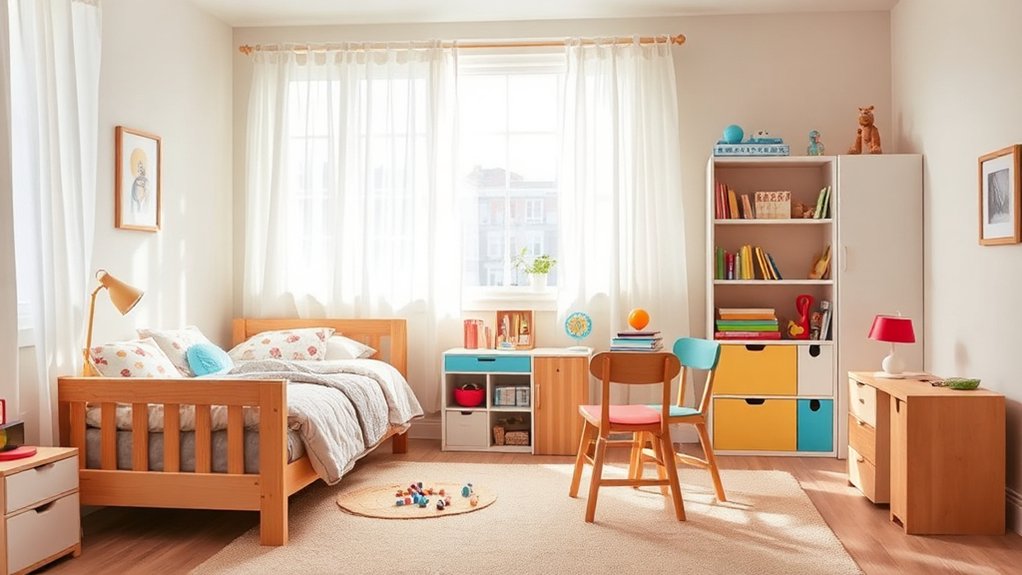
How much does kids furniture usually cost? It varies widely depending on the budget ranges and furniture styles you choose. You’ll find basic pieces like simple beds or chairs starting around $50 to $100, perfect if you’re on a tight budget.
Mid-range options, often featuring better materials and trendy furniture styles, typically fall between $150 and $400. These offer more durability and style, making them suitable for growing kids.
If you’re looking at high-end or designer kids furniture, prices can easily go beyond $500 per item, especially for multifunctional or customized pieces. Keep in mind, different furniture styles—modern, classic, themed—will influence the price, so you can find something that matches your taste without overspending.
What Key Factors Affect How Much to Spend on Kids Furniture?
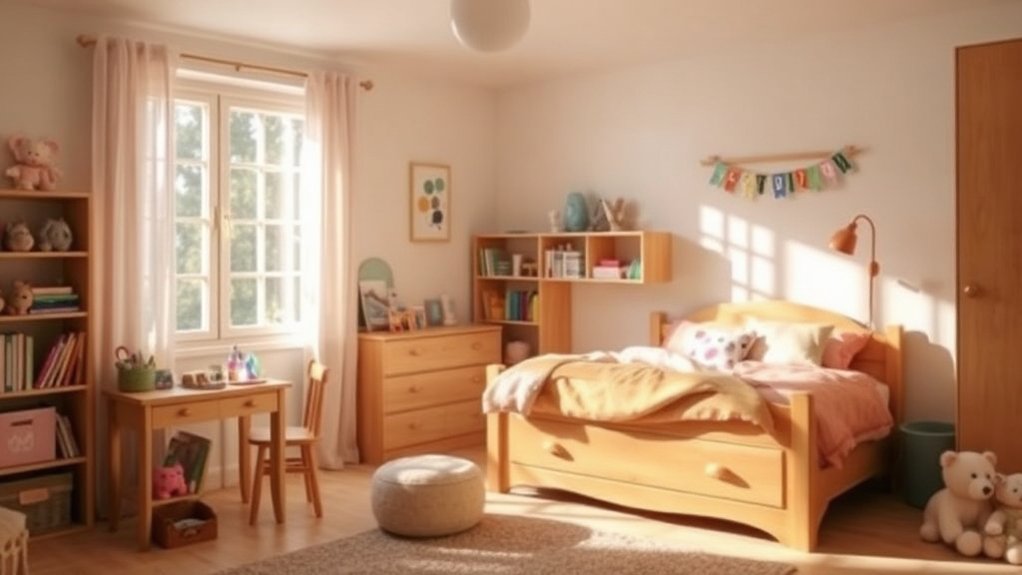
Why do prices for kids furniture vary so much? Several key factors influence how much you should spend. First, the design aesthetics play a big role. Furniture with unique styles or trendy looks often costs more.
Next, brand reputation matters. Well-known brands usually charge a premium for quality and trust. Material durability, safety features, and multifunctionality also impact price, ensuring the furniture lasts and meets your child’s needs.
Here’s a quick breakdown:
| Factor | Impact on Price |
|---|---|
| Design Aesthetics | Trendy designs cost more |
| Brand Reputation | Trusted brands command higher prices |
| Material Quality | Durable materials raise cost |
| Safety Features | Added safety increases price |
| Functionality | Multi-use furniture costs more |
Considering these factors helps you make a smart choice without overspending or sacrificing quality.
When Should You Splurge or Save on Kids Furniture?
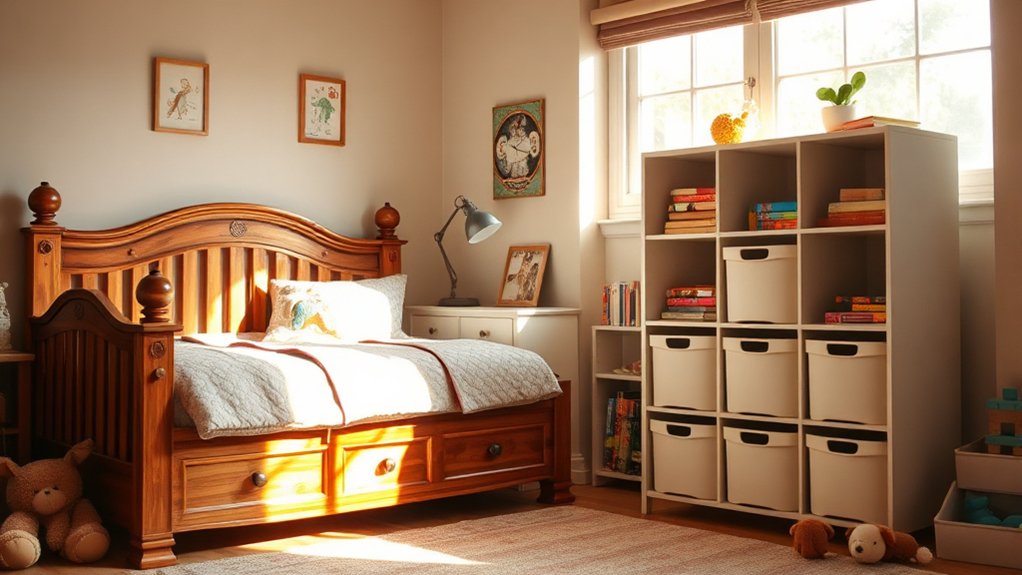
You should definitely splurge on essential items that need to last, like a sturdy bed or desk. Durability really matters with those pieces. But when it comes to nonessential furniture, it’s smarter to save a bit since they don’t get as much use or wear. So, knowing when to invest and when to cut costs helps you balance quality and budget without any stress.
Essential vs. Nonessential Items
Determining when to splurge or save on kids furniture often comes down to distinguishing essential pieces from nonessential ones. Focus your budget on items that support room functionality and child development, ensuring quality vs. cost balance. Nonessential items can reflect style preferences but don’t always justify high spending.
Consider furniture lifespan and future needs to avoid frequent replacements.
Here’s a quick guide:
- Essential pieces: beds, dressers, desks. Invest here for durability and safety.
- Nonessential items: decorative shelves, plush chairs. Save where possible.
- Check consumer reviews for quality insights.
- Prioritize functionality over trendy designs.
- Balance budget considerations with long-term use.
This approach helps you allocate funds wisely while meeting your child’s evolving needs.
Durability and Longevity
Although kids furniture can be tempting to buy cheaply, investing in durable pieces often pays off in the long run. As your child grows quickly, you want furniture that adapts to their changing needs without falling apart.
Splurge on high-quality materials that withstand wear and tear, reducing the need for frequent replacements. Durable furniture also means less hassle with material maintenance, saving you time and effort.
However, you can save on items your child will outgrow fast or use minimally. Look for solid wood or metal frames for longevity and easy-to-clean surfaces to handle spills and messes.
Balancing when to splurge or save guarantees you get furniture that lasts through growth spurts without breaking the bank or sacrificing quality.
How to Prioritize Safety and Durability on a Kids Furniture Budget
You’ll want to focus on furniture that meets safety standards to keep your kids protected from harm. It’s really important to choose durable materials too, so the pieces can handle rough play and everyday use without falling apart. When you prioritize these things, you get the best value without having to compromise on quality.
Safety Standards Compliance
When shopping for kids furniture on a budget, prioritizing safety standards guarantees you don’t sacrifice durability for cost. You want to verify every piece meets trusted safety certifications, so your child stays protected. Always check for any recent furniture recalls to avoid hazardous products.
Here’s how to stay compliant without overspending:
Look for certifications like ASTM, JPMA, or CPSC approval. Verify the absence of toxic finishes, lead paint, and sharp edges. Research the brand’s history regarding furniture recalls. Choose furniture tested for stability and tip-over resistance. Read reviews focusing on safety and long-term use.
Durable Material Choices
Since kids furniture faces daily wear and tear, choosing durable materials is essential to keep both safety and longevity in check. You want furniture that withstands rough play and frequent cleaning without compromising your child’s safety.
Prioritize materials known for durability like solid wood or high-quality plywood, which resist dents and scratches better than particleboard. Moreover, consider eco-friendly options such as bamboo or recycled materials, which are not only sturdy but also safer for your child and the environment.
Avoid toxic finishes or paints, and look for certifications that confirm non-toxic, durable construction. By focusing on these durable material choices, you balance budget constraints with long-term value, ensuring the furniture remains safe and functional as your child grows.
Which Kids Furniture Pieces Need Higher Quality Investments?
Although it might be tempting to save money on every item, investing in higher-quality kids furniture pieces can make a significant difference in safety, durability, and comfort. Prioritize spending on items that see heavy use or impact your child’s well-being directly.
Focus on these key pieces:
- Beds and mattresses: Opt for custom design options to guarantee proper support and comfort.
- Cribs and toddler beds: Safety standards here are vital; choose eco-friendly options with non-toxic finishes.
- Desks and study chairs: Durable, ergonomic furniture supports good posture and long-term use.
- Storage units: Sturdy materials prevent tipping hazards and last through years of clutter.
- High chairs: Look for easy-to-clean, stable designs built to last.
How Style and Trends Influence Your Kids Furniture Spending
After deciding which kids furniture pieces deserve higher-quality investments, you’ll notice that style and current trends often play a big role in what you choose to spend on. Design trends can influence your budget because trendy furniture styles usually come with higher price tags.
You might be tempted to buy the latest themed beds or colorful chairs that match popular characters or aesthetics. While these pieces can brighten your child’s room, keep in mind that furniture styles change quickly, and what’s trendy now may feel outdated soon.
To balance style and spending, focus on versatile designs that can adapt as your child grows. Classic furniture styles often provide longevity and better value over time.
Choose timeless, adaptable furniture that grows with your child for lasting value and style.
Ultimately, spending more on trendy items is fine if you love the look and it fits your budget, but don’t let fleeting design trends dictate your entire kids furniture budget. Prioritize quality and function alongside style.
How to Estimate Your Child’s Future Kids Furniture Needs
How can you predict what furniture your child will need as they grow? Estimating your child’s future needs helps you invest wisely and avoid frequent replacements. Think about how their tastes and requirements will evolve along with furniture styles that can adapt or grow with them.
To estimate future needs, focus on:
- Age milestones: Think about upcoming stages like toddler to school-age or pre-teen years.
- Functionality: Prioritize versatile pieces that serve multiple purposes.
- Durability: Choose sturdy materials to withstand active use.
- Room size changes: Anticipate space adjustments as your child’s room evolves.
- Style adaptability: Look for furniture styles that can blend with changing decor or your child’s preferences.
Where to Find Affordable, Good-Quality Kids Furniture
You can find affordable, good-quality kids furniture at budget-friendly retail stores that offer durable options without breaking the bank. And don’t forget to check online marketplaces—they often have deals and discounts that fit your budget perfectly. Plus, consider secondhand and thrift shops, where you might just score great pieces at a fraction of the cost.
Budget-Friendly Retail Stores
When searching for affordable, good-quality kids furniture, several budget-friendly retail stores stand out for their variety and value. You want to find budget friendly brands that don’t compromise on furniture quality. These stores offer durable, stylish options that fit your budget without sacrificing safety or design.
Here are five reliable retailers to check out:
- IKEA: Known for modern designs and sturdy kids furniture at wallet-friendly prices.
- Target: Offers trendy, functional pieces with a focus on affordability.
- Walmart: Provides a wide selection of budget-friendly brands with decent furniture quality.
- Wayfair: Features frequent sales and a broad range of styles to suit any kid’s room.
- Big Lots: Great for discounted furniture that balances price and quality well.
Shopping at these stores helps you get the best value while furnishing your child’s space.
Online Marketplaces Deals
Where can you find affordable, good-quality kids furniture without leaving your home? Online marketplaces are your go-to spots. Thanks to evolving online marketplace trends, you can easily compare styles, prices, and reviews in one place.
Many platforms offer flash sales, bundle deals, and seasonal discounts as part of their discount strategies, helping you save considerably. To snag the best deals, keep an eye on price drops and sign up for alerts.
Also, consider shopping during holiday sales or special promotions when discounts peak. With a bit of research and timing, you’ll find durable, stylish kids furniture that fits your budget without sacrificing quality.
Embracing online marketplaces lets you shop smart and stress-free, right from your couch.
Secondhand And Thrift Options
Although new furniture can be tempting, exploring secondhand and thrift options lets you find affordable, good-quality kids furniture without breaking the bank. You can score fantastic thrift store finds and benefit from local secondhand sales to furnish your child’s room smartly.
Keep an eye out for gently used items that meet safety standards and match your style.
Here are some great places to check out:
- Local thrift stores and charity shops
- Garage sales and estate sales
- Online secondhand marketplaces
- Community buy-and-sell groups
- Consignment shops specializing in kids’ items
How to Balance Functionality and Price for Growing Kids
Finding furniture that grows with your kids doesn’t have to drain your budget or sacrifice quality. Focus on pieces designed for space optimization, like adjustable beds or modular storage, that adapt as your child’s needs change. This way, you avoid frequent replacements and make the most of your space.
When considering color selection, choose versatile, neutral tones that can easily blend with different room themes over time. Bright colors might appeal now but may limit your options later, making redecoration costly.
Look for durable materials and simple designs that balance style and function. Prioritize furniture that serves multiple purposes, such as desks with built-in shelves or beds with storage drawers, to maximize usability without extra cost.
Smart Tips to Stretch Your Kids Furniture Budget Without Losing Quality
You can stretch your kids’ furniture budget without sacrificing quality by prioritizing key strategies. Focus on pieces that offer both durability and flexibility, so you get the most value for your money.
Smart shopping means looking for furniture that grows with your child and serves multiple functions.
Choose furniture that adapts as your child grows and offers versatile uses for lasting value.
Here are five tips to help you maximize your budget:
- Choose multipurpose designs, like beds with built-in storage or desks that double as art stations.
- Invest in durable materials that withstand wear and tear, reducing replacement costs.
- Utilize smart storage solutions to keep rooms tidy, making smaller spaces feel larger and more functional.
- Shop sales, clearance events, or gently used items to find high-quality pieces at lower prices.
- Prioritize essentials first, then add decorative or less critical items over time.
Frequently Asked Questions
How Do I Safely Dispose of Old Kids Furniture?
To safely dispose of old kids furniture, start by checking donation options like local charities or shelters. They often welcome gently used items.
If the furniture is worn out, look for recycling centers that accept wood, metal, or fabric materials to reduce landfill waste. Always remove any hazardous parts or sharp edges before donating or recycling.
This way, you’re responsibly clearing out space while helping others or the environment.
What Are Eco-Friendly Materials for Kids Furniture?
You should look for kids furniture made from sustainably sourced wood, bamboo, or recycled materials to keep it eco-friendly. Always check for non-toxic finishes like water-based paints or natural oils, so your child stays safe from harmful chemicals.
These options not only protect the environment but also create a healthier space for your little one. Choosing furniture with these features means you’re making a responsible and safe choice.
How to Involve Kids in Choosing Their Furniture?
Did you know 75% of kids feel more comfortable in spaces they helped create? To involve your kids in choosing their furniture, start by exploring various furniture styles together.
Ask about their preferences—colors, themes, and shapes they like. Let them pick a few options so they feel included and excited.
This way, you create a room that reflects their personality and encourages them to take pride in their space.
Are There Furniture Options Suitable for Children With Allergies?
Yes, you can find furniture options suitable for children with allergies. Look for pieces made with allergy-friendly fabrics like organic cotton or hypoallergenic materials.
Also, choose furniture finished with non-toxic finishes to avoid harsh chemicals that might trigger reactions. These options help create a safer environment for your child.
Don’t forget to check labels and certifications to verify the materials meet allergy-friendly and non-toxic standards before buying.
How to Customize Kids Furniture for Small Spaces?
You’ll feel like a magician when you turn tiny rooms into spacious havens! To customize kids furniture for small spaces, focus on space-saving solutions like wall-mounted shelves or foldable desks.
Choose multifunctional designs. Think beds with storage drawers underneath or desks that double as art stations. These clever pieces maximize every inch, keeping the room clutter-free and fun.
You’ll create an organized, cozy space your kid will love without feeling cramped!
Conclusion
As far as kids’ furniture goes, spending wisely matters. Did you know that parents typically spend between $200 and $600 per piece? You don’t always have to splurge, but investing in safety and durability pays off.
Prioritize key items like beds and cribs, and look for affordable options without sacrificing quality. By balancing function and cost, you’ll create a safe, lasting space for your child without breaking the bank.
When deciding how much to spend on kids furniture, remember that smart choices help you get the best value while keeping your little one comfortable and secure.