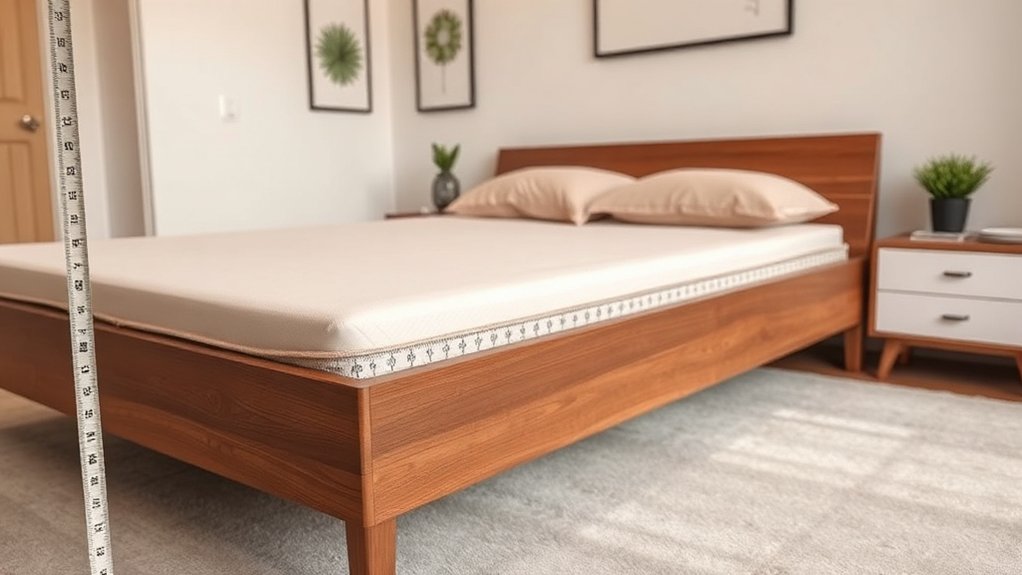
How Many Inches Long Is a Queen Size Bed?
Finding the perfect bed size can be a real challenge, especially when you want enough space to sleep comfortably without overwhelming your room. If you’ve ever wondered, “How many inches long is a queen size bed?” you’re not alone. Many people struggle with choosing the right mattress that fits their space and sleeping needs.
A standard queen size bed is 80 inches long, giving you plenty of space for comfortable sleep. Some variations, like the California queen, extend to 84 inches for extra legroom.
Keep in mind mattress thickness and bed frame style can slightly affect the overall length. Choosing the right size is important for bedding fit and room layout.
If you want to investigate how bed sizes compare and how to pick the perfect frame, there’s more helpful info ahead.
Key Takeaways
- A standard queen size bed is 80 inches long.
- Olympic and California queen beds extend the length to about 84 inches.
- Mattress thickness typically ranges from 8 to 14 inches, affecting overall height, not length.
- Bed frames and headboards can add extra length beyond the mattress size.
- Standard queen bedding is designed specifically for an 80-inch mattress length.
What Are the Standard Dimensions of a Queen Size Bed?
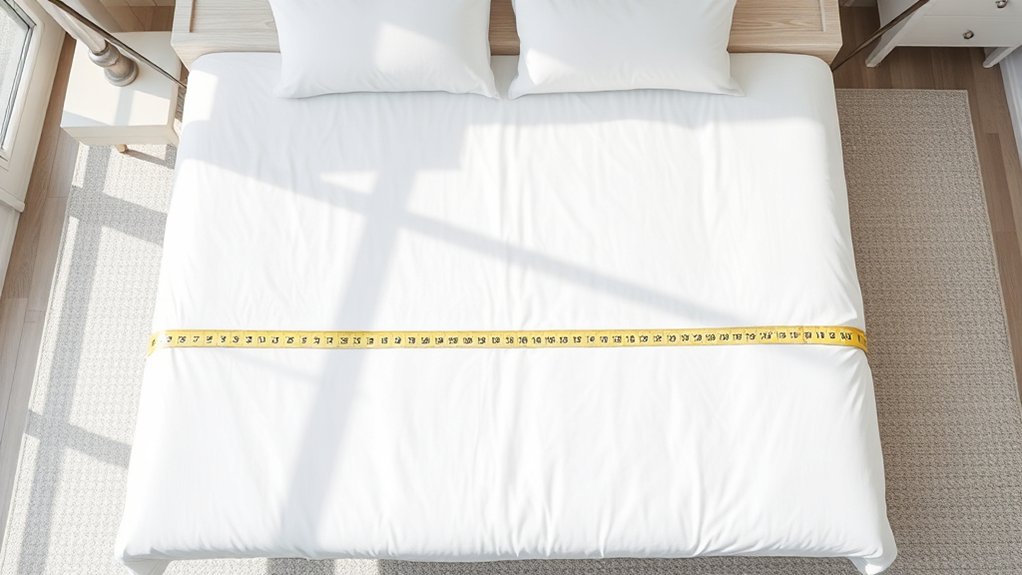
A standard queen size bed measures 60 inches wide and 80 inches long. When choosing your bed frame, you’ll find various bed frame types designed to support this size, from platform beds to adjustable frames.
Keep in mind, mattress thickness can vary widely, typically ranging from 8 to 14 inches, and this affects how your bed sits within the frame. If your mattress is thicker, some bed frames might require extra clearance or sturdier support.
Knowing these exact dimensions helps you pick the right frame and bedding accessories without guesswork. Whether you want a sleek, low-profile frame or something with storage underneath, your queen size mattress will fit comfortably as long as the frame matches the 60-by-80-inch footprint.
This clarity guarantees your setup looks balanced and feels just right every night.
How Long Is a Queen Size Bed in Inches?
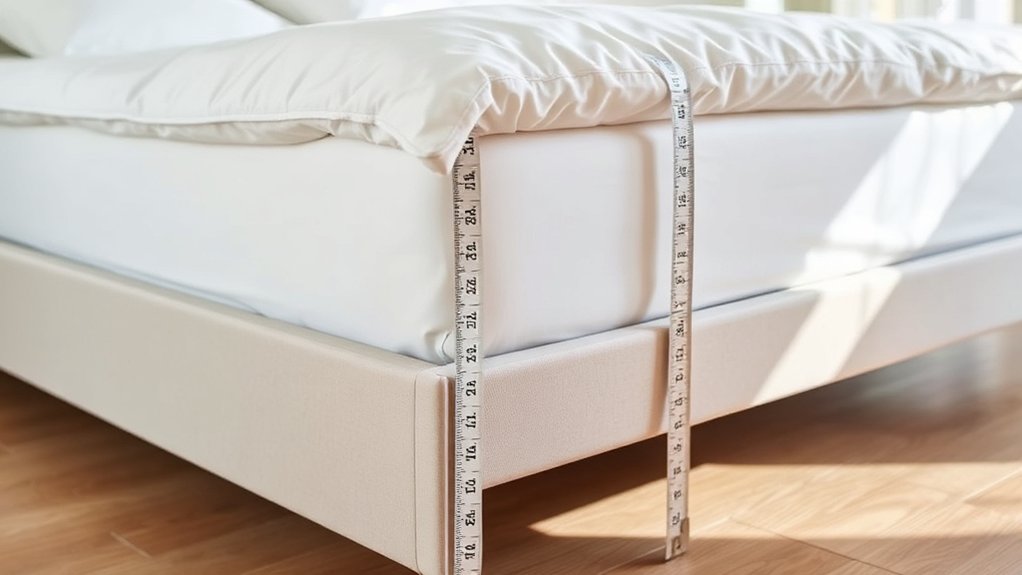
You’ll find that a standard queen size bed is typically 80 inches long. But, there are some variations out there. For example, the Olympic queen can be longer, which is great if you’re taller and need the extra length. Knowing these differences can really help you pick the right bed length for your space and comfort.
Standard Queen Bed Length
Queen size beds typically measure 80 inches in length, providing ample space for most adults to stretch out comfortably. This standard bed length suits a wide range of sleepers, ensuring you won’t feel cramped during the night.
When choosing a mattress, it’s important to take into account mattress compatibility with this bed length to avoid any fit issues. Most queen mattresses are designed specifically for this size, so you’ll find plenty of options that fit perfectly without extra adjustments.
Knowing the standard bed length helps you select the right bedding and accessories, like sheets and bed frames, that align with your mattress. By understanding the standard queen bed length, you can make informed decisions for a comfortable and well-fitted sleep setup.
Variations In Bed Length
Several factors can cause variations in the length of queen size beds, so the standard 80 inches might not always apply. When you shop for a queen bed, you’ll notice bed length variations influenced by design, mattress type, and manufacturer differences.
For instance, some queen mattresses come in extended lengths like the Olympic queen at 84 inches or the California queen reaching 84 inches as well, offering mattress length options for taller sleepers. These variations affect not only comfort but also the bedding and frame you’ll need.
Understanding these differences helps you pick the right fit for your space and sleeping habits. So, don’t assume every queen bed measures exactly 80 inches; examine mattress length options to find what works best for you.
How Does Queen Size Bed Length Compare to Other Bed Sizes?

How does the length of a queen size bed stack up against other common bed sizes? A standard queen bed measures 80 inches long, making it longer than a full-size bed, which typically measures 75 inches. It’s also shorter than a king bed, which generally stretches to 80 inches in length as well but offers more width.
When you consider mattress thickness and bed frame materials, these differences become even more relevant. Queen mattresses usually come in various thicknesses, from 8 to 14 inches, and your choice of bed frame materials—wood, metal, or upholstery—can add to the overall height but won’t affect length.
Compared to twin beds, which are about 75 inches long, the queen size bed offers extra legroom, making it ideal for taller individuals. So, if length is a priority, a queen bed strikes a good balance between comfort and space in your bedroom.
Why Queen Bed Length Matters for Mattress and Bedding Choices
Because the length of your bed directly affects the mattress and bedding you choose, it’s important to get these measurements right. A queen bed’s length, typically 80 inches, guarantees you select a mattress that provides proper support and comfort. Choosing a mattress that’s too short can leave your feet hanging off, disrupting restful sleep.
When it comes to bedding styles, the queen bed’s length influences your options for sheets, comforters, and bed skirts. Standard queen bedding is designed to fit this length perfectly, preventing excess fabric or tight fits that can be uncomfortable. If you pick bedding that doesn’t match your bed’s length, you risk improper coverage or a messy look.
Understanding the queen bed length helps you avoid common mistakes, assuring your mattress supports you well and your bedding fits beautifully. This way, you create a cozy, functional sleep environment tailored to your needs.
How Room Size Impacts Your Queen Size Bed Placement
You’ll want to take a good look at your room’s dimensions before deciding where to put your queen size bed. The size and shape of your space really play a big role in figuring out the best spot for the bed without making the room feel cramped. When you find the right place, it helps the bedroom feel more comfortable and keeps the flow nice and easy.
Room Dimensions Matter
When planning to place a queen size bed, the dimensions of your room play an essential role in determining how comfortably it will fit. You need to evaluate your room layout carefully to guarantee the bed doesn’t overwhelm the space or block pathways.
A smaller room means you’ll have to plan your furniture arrangement strategically to maintain balance and avoid clutter. For example, placing bulky furniture near the bed can limit movement and make the room feel cramped.
On the other hand, a larger room offers more flexibility, allowing you to position your queen bed without sacrificing other essentials like dressers or nightstands. Measuring your room accurately before buying the bed helps you visualize the setup and make the best use of your space.
Optimal Bed Positioning
Room size not only influences whether a queen size bed fits but also guides where you place it for the best flow and comfort. When considering bed arrangement, you want to maximize space while ensuring easy movement around the room.
In smaller rooms, placing the bed against a wall frees up floor space, making the room feel less cramped. Larger rooms offer more flexibility, allowing you to center the bed or create a cozy nook with bedside tables.
Placement strategies should also factor in natural light sources and doorways to avoid obstruction. By thoughtfully arranging your queen size bed, you improve both aesthetics and functionality, creating a restful environment that suits your room’s dimensions perfectly.
How to Measure Your Bedroom for a Queen Size Bed Fit
Before placing a queen size bed in your space, measure your bedroom carefully to secure a comfortable fit. Start by using a tape measure to note the room’s length and width. Pay close attention to your bedroom layout, including doorways, windows, and built-in furniture that could impact bed placement. Mark these measurements on a sketch to visualize how the bed will fit.
Next, consider space optimization. A queen size bed typically measures 60 inches wide by 80 inches long, so make sure you leave at least 24 inches of clearance around the bed for easy movement. Don’t forget to factor in additional furniture like nightstands or dressers. By measuring accurately and analyzing your bedroom layout, you can confidently choose the best spot for your queen bed, maximizing comfort and functionality without overcrowding your room.
Choosing a Queen Mattress: What Length Should You Consider?
After measuring your bedroom and planning where to place your queen size bed, it’s time to focus on the mattress length that suits your needs. Standard queen mattresses are typically 80 inches long, which fits most adults comfortably.
However, if you’re taller or share the bed with a partner, consider a California queen mattress, which extends to about 84 inches. Your sleeping positions also play a role; if you often stretch out or sleep on your side, a longer mattress can provide extra comfort.
Don’t forget to think about mattress materials, as memory foam or latex mattresses may offer better support and contouring for various sleeping postures. Choosing the right length guarantees you won’t feel cramped, and the right materials help maintain proper spinal alignment.
Ultimately, pick a mattress length that matches your height and sleeping habits to enjoy restful nights without sacrificing bedroom space.
How Bed Frames Affect Queen Size Bed Length
When you pick out a bed frame, keep in mind that its size can add some extra length beyond just the mattress. You’ll find that platform frames and box spring setups are different in this way—they each affect the overall length a bit. Also, don’t forget about headboards; they can add even more length to your bed. So, it’s a good idea to think about all these factors when you’re planning your space.
Standard Frame Dimensions
Several factors influence the overall length of a queen size bed, and one of the most important is the frame. When choosing a frame, you’ll notice that standard dimensions typically add a few inches beyond the mattress size, depending on frame materials and design styles.
For example, metal frames often have a slimmer profile, adding less length, while wooden frames might extend further due to thicker legs or decorative elements. Design styles like sleigh beds or those with footboards can increase the bed’s length noticeably.
Knowing these variations helps you plan your bedroom layout better and avoid surprises. So, when measuring for a queen bed, always account for the frame’s dimensions, not just the mattress, to guarantee a perfect fit.
Platform vs. Box Spring
Although both platform beds and box spring setups support your queen mattress effectively, they impact the bed’s overall length in different ways. Platform benefits include a sturdy, low-profile design that often adds minimal extra length beyond the mattress itself. This means your bed stays closer to the standard 80 inches, making it ideal for smaller rooms or modern aesthetics.
On the other hand, box spring alternatives tend to raise the mattress higher, potentially adding a few inches to the total bed length. If you choose a box spring, expect the overall length to increase slightly due to its thickness. Understanding these differences helps you pick the right frame to fit your space while accommodating your queen mattress comfortably.
Impact of Headboards
Because headboards come in various styles and sizes, they can greatly change the overall length of your queen size bed. When you choose a headboard, consider how its dimensions add to the bed’s total length, especially if your space is limited.
Some headboard styles extend considerably beyond the mattress, adding several inches or more. This not only affects room layout but also influences your bed’s aesthetic impact.
Sleek, minimalist headboards add little length but create a modern look, while ornate, bulky designs increase length and command attention. You’ll want to balance practical space considerations with the aesthetic impact that headboard styles bring.
Ultimately, knowing how your chosen headboard affects dimensions helps you fit your queen bed perfectly in your room.
Can You Customize the Length of a Queen Size Bed?
Wondering if you can customize the length of a queen size bed? The good news is, yes, you can. Many manufacturers offer custom bed options that allow you to tweak the length to better fit your space or personal comfort needs.
Yes, many manufacturers let you customize the length of a queen size bed to suit your space and comfort.
Whether you need a longer bed for extra legroom or a shorter one to fit a cozy room, custom sizes are available.
Adjustable frames also play a key role in customization. These frames let you modify the bed’s position and sometimes the overall length, providing flexibility without compromising support.
Keep in mind, custom beds may cost more and take longer to deliver, but the tailored fit can be worth it. So if the standard 80-inch length doesn’t work for you, exploring custom bed options and adjustable frames can help you create a queen size bed that fits perfectly.
Tips for Choosing Bedding That Fits a Queen Size Bed Perfectly
When choosing bedding for a queen size bed, you’ll want to prioritize both fit and comfort to guarantee a perfect match. Ill-fitting bedding can disrupt your sleep and detract from your room’s aesthetic. To help you pick the right options, keep these tips in mind:
- Measure accurately. Confirm your mattress dimensions before buying sheets or comforters to ensure a snug fit.
- Select quality bedding materials. Opt for breathable fabrics like cotton or bamboo for comfort and durability.
- Consider color coordination. Choose colors and patterns that complement your bedroom decor to create a cohesive look.
- Check for appropriate depth. If your mattress has a topper, pick fitted sheets with deep pockets to avoid slipping.
Frequently Asked Questions
What Is the Average Weight of a Queen Size Mattress?
You’ll find the average weight of a queen size mattress ranges between 60 to 150 pounds, depending on mattress materials like memory foam, innerspring, or hybrid. Different materials affect weight distribution, making some mattresses heavier or lighter.
For example, memory foam tends to be denser and heavier, while innerspring mattresses might be lighter but bulkier. Knowing this helps you handle, move, or choose the best mattress for your needs.
How Long Do Queen Size Mattresses Typically Last?
You might think all queen size mattresses last the same, but mattress lifespan varies quite a bit. Typically, you can expect yours to last around 7-10 years.
Durability factors like materials, usage, and care play a big role. If you take good care of it and choose high-quality materials, you’ll extend your mattress lifespan considerably.
Are Queen Size Beds Suitable for Pets?
Yes, queen size beds are great for pets, especially if you’re into bed sharing. You’ve got enough space to keep your pet comfortable without feeling cramped.
When you share your bed, your pet enjoys better comfort because they have room to stretch out. Plus, queen beds balance personal space and coziness, making it easier for both you and your beloved companion to relax and sleep soundly through the night.
What Is the Best Type of Mattress for a Queen Bed?
Choosing the best mattress for your queen bed feels like finding the holy grail of sleep! You want a mattress firmness that supports your body perfectly. Too soft or too firm can wreck your sleep quality.
Memory foam offers great contouring, while hybrid mattresses balance support and bounce. Think about your sleeping position and preferences, then pick a mattress that helps you wake up refreshed, ready to conquer the day with zero aches.
How Much Does a Queen Size Bed Cost on Average?
A queen size bed typically costs between $300 and $1,200, depending on budget considerations and brand comparisons. If you’re on a tight budget, you can find affordable options from lesser-known brands without sacrificing comfort.
However, premium brands often offer better materials and durability, which might be worth the investment. You should compare features, warranties, and customer reviews to find the best value that fits your needs and budget.
Conclusion
Now that you know a queen size bed stretches about 80 inches long, you’re ready to make your sleep space a cozy haven. Think of it as the perfect canvas, where comfort meets style, fitting snugly into your room’s rhythm.
Whether you’re picking mattresses, bedding, or frames, keep length in mind. It’s the key that opens up restful nights and sweet dreams wrapped in just the right size for a queen size bed.