7 Tips How to Choose Living Room Furniture
Choosing the perfect how to choose living room furniture can feel overwhelming. You want pieces that fit your space, look great, and stay within budget, but many people struggle with where to start. If that sounds familiar, you’re not alone — finding the right balance between style, comfort, and functionality is a common challenge.
Measure your space carefully to guarantee furniture fits well and allows at least 18-24 inches of clearance. Set a realistic budget that prioritizes quality and essential pieces. Choose styles that match your taste and coordinate colors and textures for harmony.
Focus on comfort and functionality, arranging items for easy traffic flow. Opt for durable materials like leather or hardwood for longevity. Mix and match thoughtfully for a cohesive look.
Keep exploring to uncover how each tip improves your living room.
Key Takeaways
- Measure your living room accurately, including doorways and windows, to ensure furniture fits without obstructing pathways.
- Set a realistic budget focusing on essential pieces. Prioritize quality to get long-term value.
- Choose furniture styles that match your personal taste and create a harmonious color and texture balance.
- Prioritize comfort and functionality by selecting cozy, multifunctional pieces. Arrange them to maintain clear traffic flow.
- Select durable materials like leather or hardwood. Coordinate colors and sizes for visual harmony and longevity.
Measure Your Space Before Buying Living Room Furniture
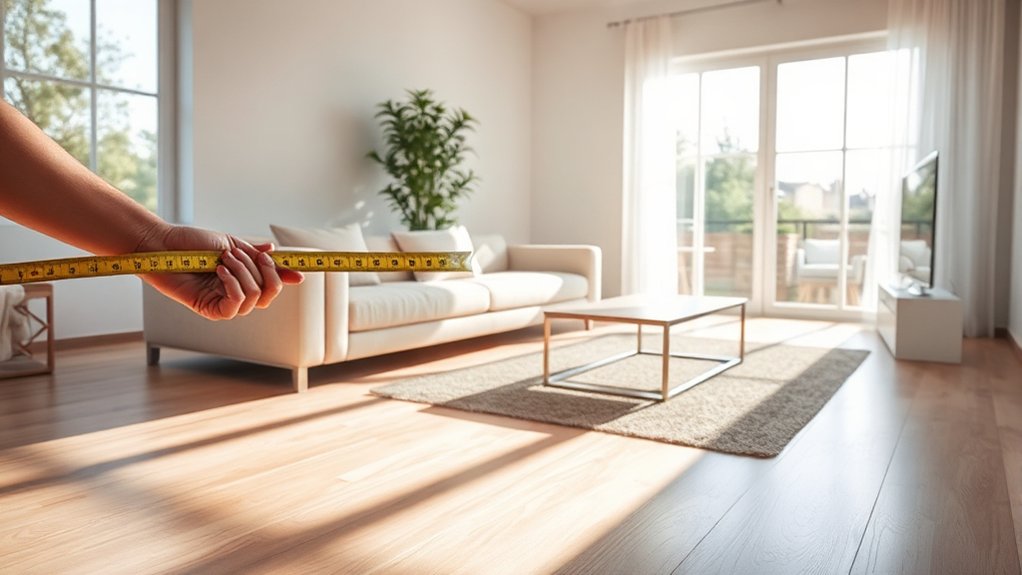
Before you buy any living room furniture, measure your space carefully. Taking accurate measurements is key to effective space planning and guarantees your new pieces fit perfectly.
Start by noting the length, width, and height of your room, then consider doorways and windows to avoid blocking pathways. Next, check the furniture dimensions of the items you’re interested in. Compare those dimensions against your measurements to see how much room each piece will occupy.
Don’t forget to factor in clearance space for easy movement. Ideally, leave 18-24 inches between furniture. Using a tape measure or a floor plan app can help you visualize how everything will fit together.
Set a Realistic Budget for Your Living Room Furniture
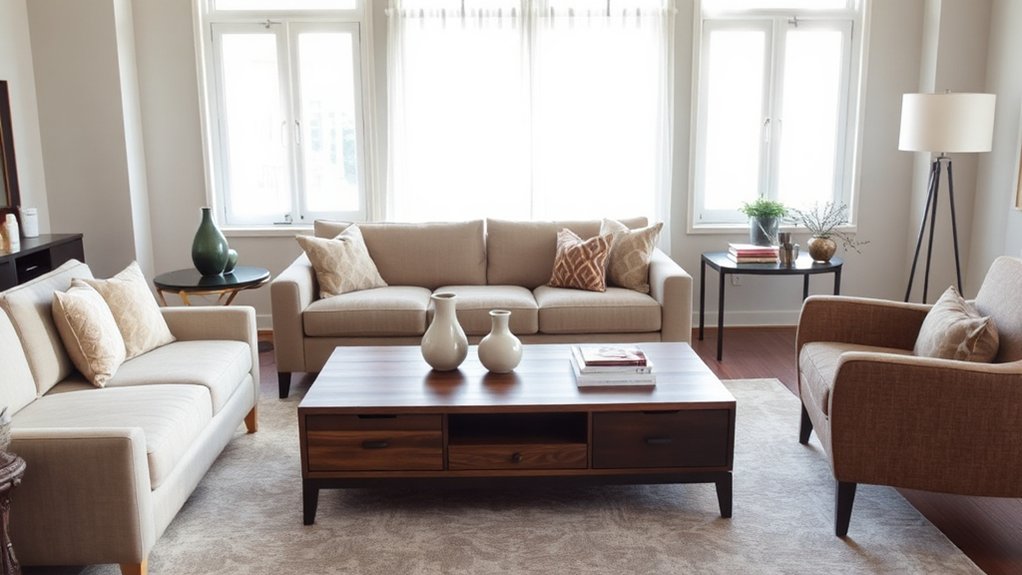
Before you start shopping for living room furniture, take a moment to figure out your budget. It’s important to know what you can comfortably spend. Then, think about which pieces are absolutely essential for your space and lifestyle. This way, you’re focusing on what really matters. Also, don’t forget to set aside enough money for quality items—those will stand the test of time and save you money in the long run.
Assess Your Financial Limits
Although selecting the perfect pieces can be exciting, setting a realistic budget for your living room furniture will keep your spending on track. To assess your financial limits, start by reviewing your income and monthly expenses to determine how much you can comfortably allocate.
Consider any upcoming costs that might affect your budget and guarantee you leave room for financial flexibility to handle unexpected expenses. Being clear about your budget considerations helps you avoid overspending and stress later.
Prioritize Essential Furniture Pieces
When furnishing your living room, focusing on essential pieces guarantees you invest your budget wisely. Start by identifying must-have items like a comfortable sofa, a coffee table, and adequate seating. These foundational pieces set the tone for your space and influence your furniture layouts.
Keep your chosen color schemes in mind to make sure your selections complement the room’s overall vibe. Avoid splurging on trendy extras that might not last or fit well with your design.
Prioritizing essentials helps you create a functional, inviting space without overspending. By concentrating on what truly matters, you’ll have a cohesive living room that balances style and comfort while staying within your realistic budget.
This approach makes future additions simpler and smarter.
Allocate Funds for Quality
Focusing on the key furniture pieces gives you a clear idea of where to allocate your budget. You want to invest in quality materials for items you use daily, like sofas and coffee tables, ensuring durability and comfort.
Setting a realistic budget helps you balance style and longevity without overspending. Use budget allocation to prioritize essential pieces first, then add accent items if funds allow.
| Furniture Piece | Priority Level | Suggested Budget % |
|---|---|---|
| Sofa | High | 40% |
| Coffee Table | Medium | 20% |
| TV Stand | Medium | 15% |
| Accent Chairs | Low | 10% |
This table guides your budget allocation, focusing on quality materials where it matters most.
Choose Living Room Furniture Styles That Suit You
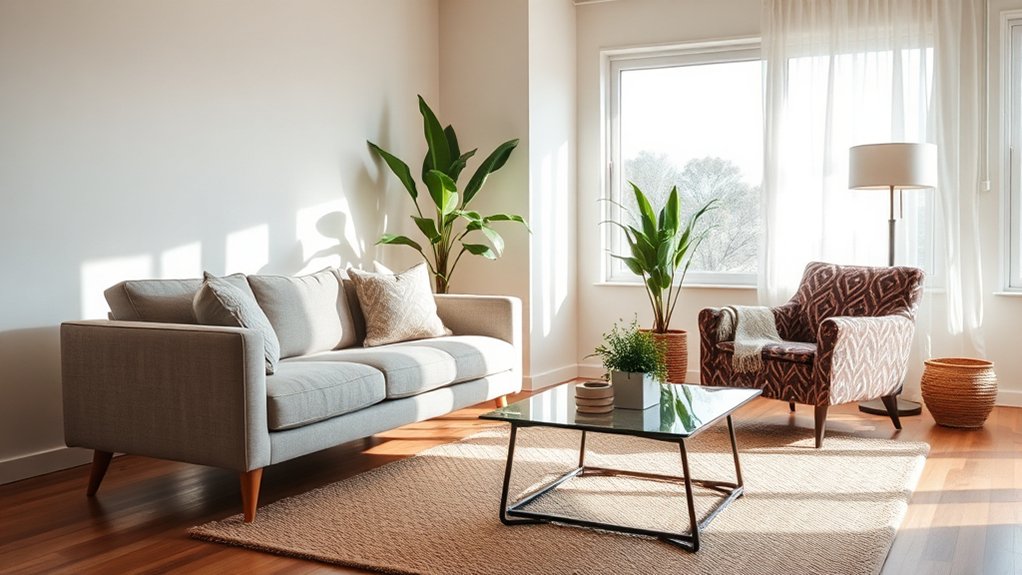
Your living room reflects your personality, so choosing furniture styles that suit you is essential. If you love clean lines and sleek looks, modern aesthetics might be your go-to. For those who appreciate cozy warmth, traditional charm offers timeless appeal.
You might prefer a minimalist approach if simplicity and decluttered spaces make you feel at ease. Alternatively, adopt eclectic vibes by mixing colors, textures, and patterns for a unique, personalized feel.
Consider color coordination to keep the room harmonious, and incorporate texture variety to add depth. Space-saving solutions work wonders if you want to maximize your living area without sacrificing style.
Don’t shy away from statement pieces; they can become focal points that express your taste and spark conversation. Ultimately, choose styles that resonate with you, reflecting both your lifestyle and aesthetic preferences. This way, your living room becomes a true extension of who you are.
Prioritize Comfort and Functionality in Living Room Furniture
Anyone selecting living room furniture should prioritize comfort and functionality to create a space that feels inviting and works for everyday use. Start by choosing cozy seating that encourages relaxation, like plush sofas or cushioned armchairs. You want furniture that’s comfortable enough for long chats or movie nights.
Also, consider multifunctional pieces to maximize your space. A coffee table with storage or a sofa bed can serve multiple purposes without cluttering your room. These smart choices help your living room stay organized and adaptable to different needs.
Don’t overlook the flow. Arrange your furniture so it’s easy to move around while still offering plenty of seating. By focusing on comfort and functionality, you’ll design a living area that’s not only stylish but also practical and welcoming for you and your guests.
Select Durable Materials for Easy Care and Longevity
Although style matters, choosing durable materials guarantees your living room furniture lasts through daily use and stays looking great. When selecting fabric types, consider options like microfiber, leather, or performance fabrics designed to resist stains and wear. These materials not only hold up well but also make cleaning easier, saving you time and effort.
For wooden furniture, opt for hardwoods such as oak or maple, which are known for their strength and longevity. To keep your furniture looking fresh, follow simple maintenance tips: vacuum fabric surfaces regularly to prevent dust buildup, wipe wooden pieces with a damp cloth, and address spills immediately to avoid stains. Avoid harsh chemicals that can damage finishes or fabrics.
Choosing durable materials combined with consistent care guarantees your living room furniture remains functional and visually appealing for years, making your investment worthwhile and your space inviting.
Mix and Match Living Room Furniture for a Cohesive Look
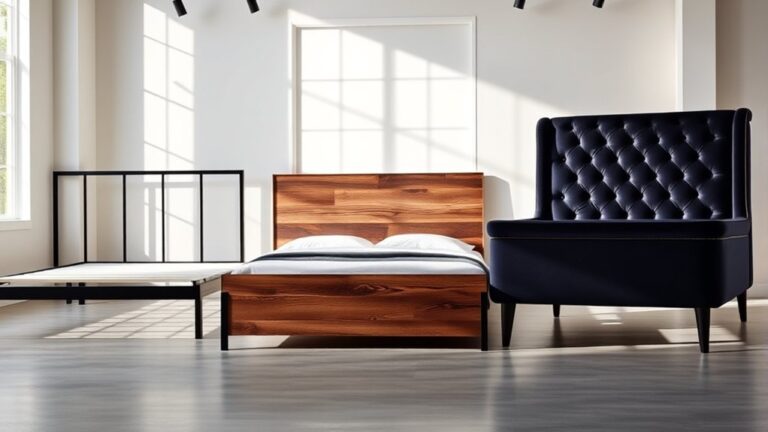
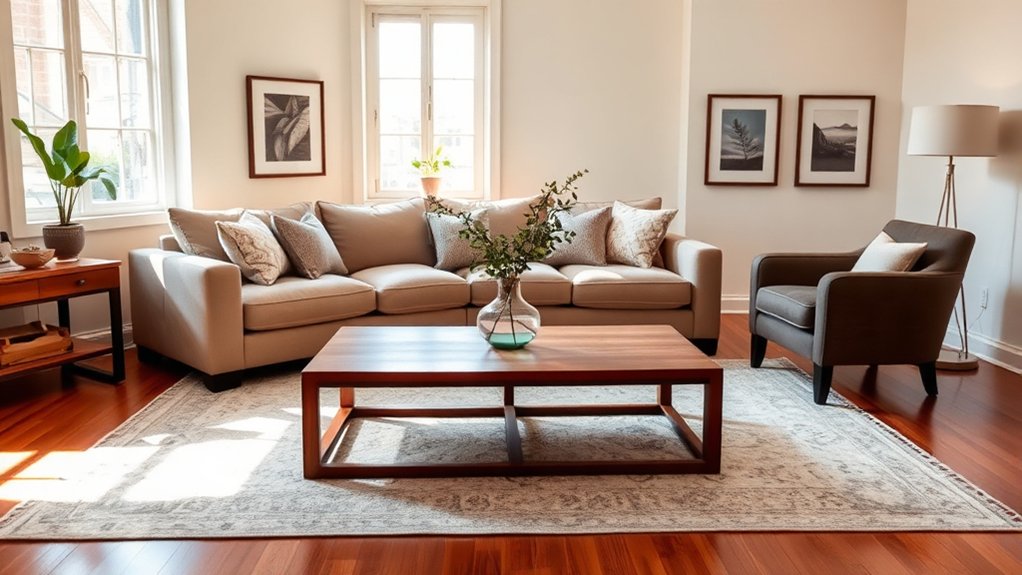
When you mix and match living room furniture thoughtfully, you create a space that feels both dynamic and harmonious. Start by focusing on color coordination to tie different pieces together. Choose a consistent color palette with complementary hues to maintain balance. For example, pairing a navy sofa with mustard accent chairs works well if you include neutral elements like a beige rug or wooden coffee table.
Next, consider furniture textures to add depth and interest. Combining smooth leather, soft velvet, and natural wood surfaces can make the room inviting without overwhelming the eye. Don’t hesitate to blend styles, but keep proportions in mind so your furniture doesn’t compete for attention.
Lastly, repeat key colors and textures across pieces to unify the look. This approach lets you showcase your personality while ensuring your living room remains cohesive and stylish. Mixing and matching is all about balance, so trust your instincts and experiment until you find the perfect combination.
Arrange Your Living Room Furniture for Comfort and Flow
You’ll want to arrange your furniture so that traffic flows smoothly, without any obstacles in the way. And it’s a good idea to balance the seating, too, so everyone feels included and comfortable. That way, your living room will invite conversation and make moving around easy.
Optimize Traffic Pathways
Arranging your living room furniture to optimize traffic pathways means creating clear, comfortable routes for movement. When planning your furniture layout, keep the traffic flow smooth by avoiding cluttered walkways. This improves accessibility and prevents accidents.
Here are key tips to improve traffic flow:
- Leave at least 2 to 3 feet of walking space between furniture pieces.
- Position larger items like sofas against walls to open central pathways.
- Use rugs or lighting to subtly guide movement through the room.
- Avoid placing furniture directly in front of doorways or entry points.
Balance Seating Arrangement
Clear traffic pathways set the foundation, but balancing your seating arrangement brings comfort and flow to the living room. You want to position furniture so it encourages conversation while highlighting focal points like a fireplace or TV. Use color coordination to unify the space and create visual harmony.
Here’s a quick guide to balance your seating arrangement effectively:
| Seating Element | Placement Tip |
|---|---|
| Sofa | Centered facing focal point |
| Armchairs | Opposite or adjacent to sofa |
| Coffee Table | Within easy reach of seating |
| Side Tables | Next to chairs for convenience |
| Rugs | Anchor all seating for cohesion |
Frequently Asked Questions
How Do I Clean Different Types of Upholstery Effectively?
To clean different upholstery materials effectively, first identify the fabric type. Use vacuuming for dust and dirt on all upholstery materials.
For cotton or linen, mild soap and water work well. Leather needs a damp cloth and leather cleaner, while synthetic fabrics often tolerate gentle detergents.
Always test cleaning techniques on a hidden spot to avoid damage. Regularly spot-clean stains and avoid harsh chemicals to keep your upholstery looking fresh and lasting longer.
What Are the Best Lighting Options to Complement Living Room Furniture?
You’ll want to combine ambient lighting with task lighting to complement your living room furniture perfectly. Ambient lighting, like ceiling fixtures or wall sconces, sets a warm, inviting tone.
Task lighting, such as floor or table lamps, helps you focus on specific activities like reading or working. Make sure your lighting fixtures match your furniture’s style and colors to create a cohesive, comfortable space you’ll love spending time in.
How Can I Incorporate Pet-Friendly Furniture Into My Living Room?
You’d think finding pet-friendly furniture is tougher than taming a wild beast! Start by choosing durable materials like leather or tightly woven fabrics that resist scratches and stains.
Look for stylish designs that blend with your decor but can handle pet wear and tear. Opt for furniture with removable, washable covers to keep things fresh. This way, you get pieces that survive your pet’s antics without sacrificing your living room’s style.
What Are Eco-Friendly Furniture Brands to Consider?
You should check out brands like West Elm, Article, and Medley for eco-friendly furniture options. They focus on sustainable materials and ethical sourcing to minimize environmental impact.
West Elm uses FSC-certified wood, while Article offers responsibly sourced hardwood. Medley even lets you customize pieces with non-toxic finishes.
Choosing these brands means you’re supporting fair labor practices and reducing your carbon footprint while stylishly furnishing your living room.
How Often Should I Replace Living Room Furniture?
Think of your living room furniture like the chapters of a book. They don’t need replacing all at once but as their story fades. Typically, furniture lifespan ranges from 7 to 15 years.
You should replace pieces when comfort dips, damage appears, or style trends no longer inspire you. Keep an eye on wear and how your tastes evolve. When the old feels tired, it’s time for a fresh chapter in your space.
Conclusion
You want a living room that feels cozy yet stylish, spacious yet inviting. By measuring your space, budgeting wisely, and picking furniture that’s both comfy and durable, you balance practicality with personality.
Mixing styles might seem risky, but it creates a unique, harmonious vibe. Arranging your furniture for flow might take effort, but it rewards you with comfort and ease.
In the end, thoughtful choices turn your living room from just a room into your favorite place to be. Choosing the right living room furniture is what makes all the difference.