How Big Is a Loveseat – Practical Size Guide
Finding the perfect loveseat can be tricky, especially when you’re worried about whether it will fit comfortably in your space. You’re not alone—many people struggle with balancing style, comfort, and size without overcrowding their rooms. How Big Is a Loveseat.
Knowing the right dimensions can save you time and stress when shopping for that cozy two-seater.
A typical loveseat is designed for two people, usually measuring between 48 and 72 inches wide, 30 to 40 inches deep, and 30 to 36 inches high.
You’ll find seat heights around 17 to 20 inches, offering comfort without taking up too much space. Sizes vary by style and brand, so measuring your room and considering clearance is key.
If you want to perfectly match your loveseat to your space and style, there’s plenty more to discover.
Key Takeaways
- Loveseats typically measure 48 to 72 inches wide, 30 to 40 inches deep, and 30 to 36 inches high. They comfortably seat two people, with some oversized models accommodating three.
- Allow at least 18 inches of clearance around the loveseat for movement and room flow. Measure floor space and consider doorways, windows, and existing furniture before selecting a loveseat size.
- Popular brands vary in width: IKEA (55-60″), Ashley Furniture (60-65″), West Elm (58-62″), La-Z-Boy (60-66″).
What Is a Loveseat and How Is It Different From a Sofa?
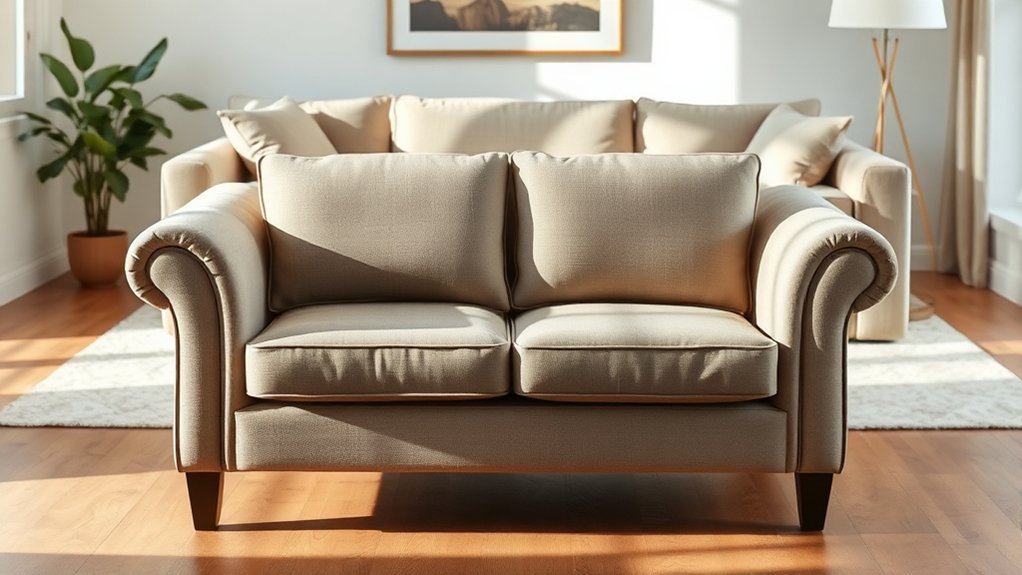
Anyone looking to furnish a cozy space will want to understand what sets a loveseat apart from a sofa. Loveseat history shows it originated in the 18th century as a smaller seat designed for two people to sit comfortably close together.
Unlike sofas, which accommodate three or more people, loveseats focus on intimacy and space efficiency. When you examine loveseat styles, you’ll find a range from traditional to modern, each offering unique design elements while maintaining compact dimensions.
You’ll notice that loveseats often have a more streamlined frame compared to bulkier sofas, making them ideal for smaller rooms or as complementary seating. Knowing these differences helps you choose the perfect piece for your living area without sacrificing comfort or style.
How Big Is a Typical Loveseat?
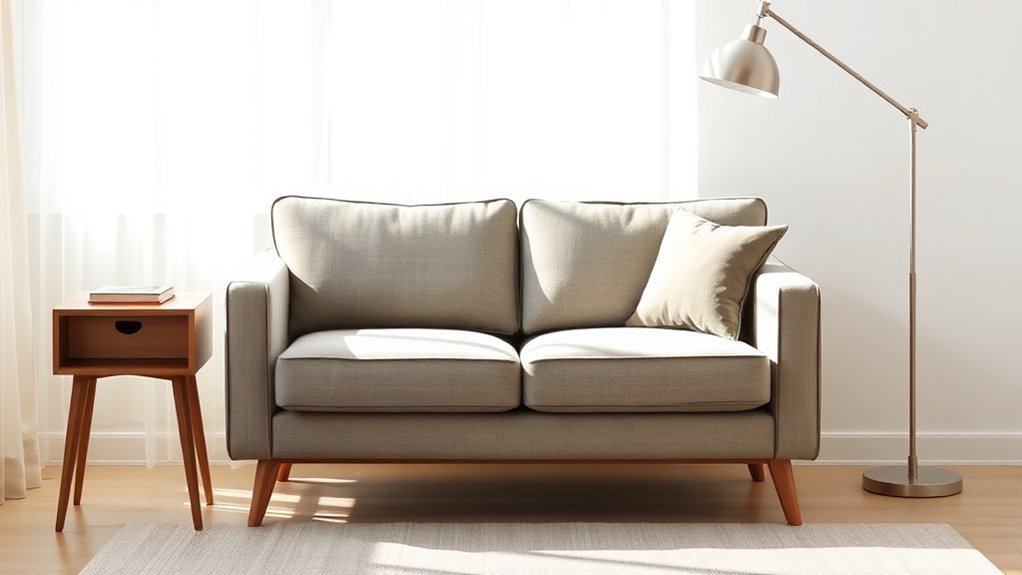
You’ll find that a typical loveseat measures around 52 to 72 inches wide, which is just right for comfortably seating two people. Knowing these standard dimensions really helps when you’re planning how much space it’ll take up in your room. So, let’s take a closer look at the seating capacity and space requirements to figure out if a loveseat fits your needs.
Standard Loveseat Dimensions
Most standard loveseats measure between 48 and 72 inches in width, making them a cozy fit for two people. When choosing the right size, keep these dimensions in mind:
- Width: Typically 48-72 inches, depending on loveseat styles and design.
- Depth: Usually between 30 and 40 inches, affecting comfort and footprint.
- Height: Around 30 to 36 inches, including the backrest.
- Seat Height: Often 17 to 20 inches from the floor, ensuring ease of sitting.
Loveseat materials like leather or fabric can also influence the overall bulk, so factor that in when measuring your space. Understanding these dimensions helps you pick a loveseat that fits perfectly without overwhelming your room.
Seating Capacity Explained
Understanding the dimensions of a loveseat gives you a clear idea of its physical size, but knowing how many people it can comfortably seat is just as important. Typically, a loveseat accommodates two people, making it ideal for cozy seating styles.
The compact design offers loveseat benefits like saving space while providing intimate comfort. Depending on the style, whether it’s a traditional cushioned model or a more modern, streamlined version, the seating capacity remains around two. Some oversized loveseats can fit three.
When choosing your loveseat, consider how you plan to use it. Do you want snug seating for two or a bit more room for guests? This balance between size and function is at the heart of loveseat benefits and seating styles.
Space Requirements Overview
Although loveseats are designed to save space, you still need to evaluate their dimensions carefully to confirm they fit your room. Different loveseat styles impact their size, so measuring is key before choosing.
To plan your furniture arrangement effectively, consider these points:
- Measure the available space to confirm the loveseat fits without overcrowding.
- Account for clearance around the loveseat for movement and comfort.
- Choose a loveseat style that complements your room’s scale and layout.
- Factor in additional furniture to maintain balance and avoid clutter.
How Loveseat Sizes Vary by Style
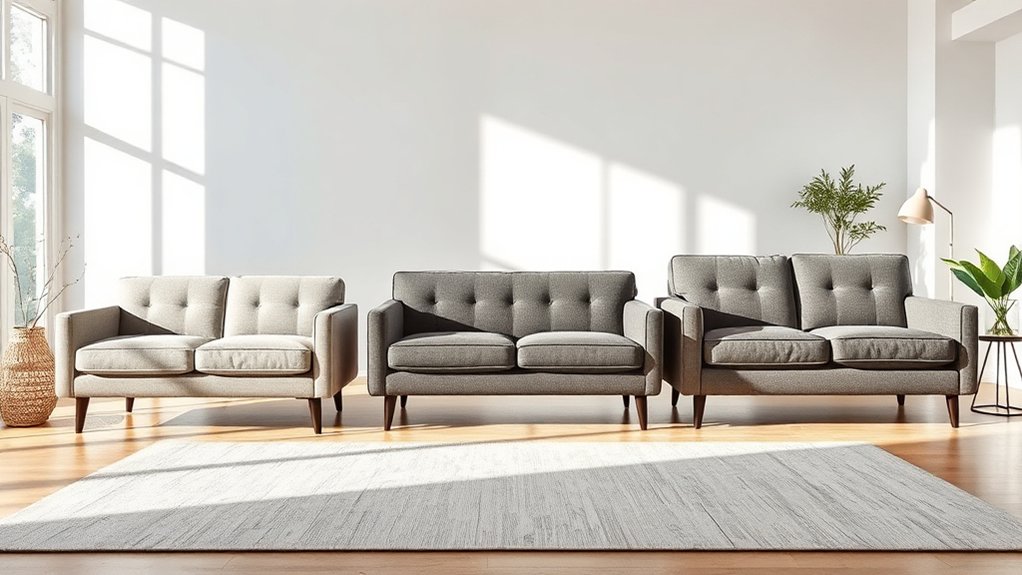
Because loveseats come in various styles, their sizes can differ considerably. When you’re choosing a loveseat, it’s important to understand how loveseat styles affect dimensions.
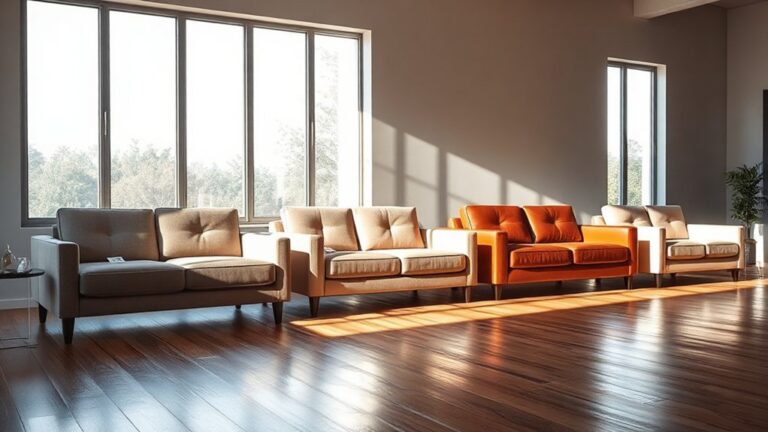
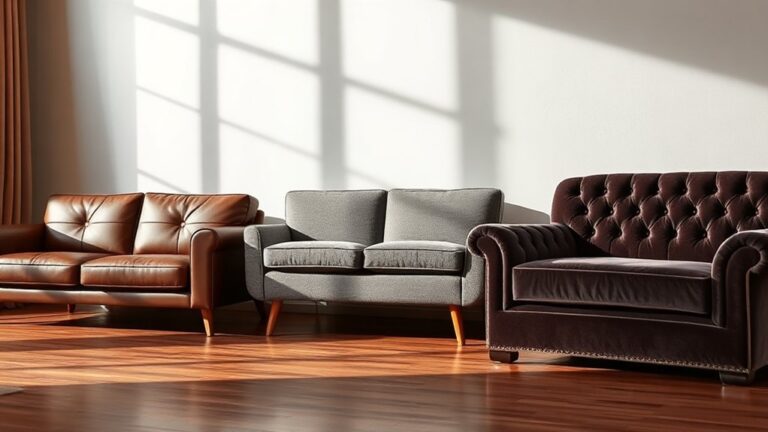
Traditional loveseats typically have a classic design with moderate width and height, making them a safe choice for most spaces. Meanwhile, modern or sectional loveseats often feature sleeker lines or modular components, which can make them either more compact or larger depending on the design variations.
For example, a tufted or rolled-arm loveseat might be bulkier, while a minimalist, armless style can save space. Furthermore, some loveseats include recliners or extendable footrests, which add to the overall size when in use.
Understanding Loveseat Size: Depth and Height Explained
Once you’ve considered how style influences loveseat size, it’s time to focus on two key measurements: depth and height. These dimensions are essential for comfort and fit in your space.
- Depth This measures from the front edge of the seat to the backrest. A deeper seat offers more lounging space but might feel too bulky in smaller rooms.
- Height From the floor to the top of the backrest, this affects support and how the loveseat looks in a room. Taller backs provide more support but may dominate a space.
- Loveseat dimensions vary widely, so check these measurements carefully before buying to guarantee the piece suits your needs.
- Upholstery options also impact depth and height, as thicker padding or cushions can change the effective size you experience.
Understanding these helps you pick a loveseat that’s both comfortable and proportional.
How to Choose Loveseat Size for Your Room
To pick the right loveseat size, start by measuring the floor space you have available. Then, think about your room’s layout and how the loveseat will fit with your current furniture. This way, you’ll make sure your new piece complements the space without overcrowding it.
Measure Available Floor Space
Start by measuring the exact amount of floor space you have available for your loveseat. Accurate measurements help you create a clear floor plan and guarantee efficient space planning.
Follow these steps:
- Clear the area where you plan to place the loveseat to get an unobstructed measurement.
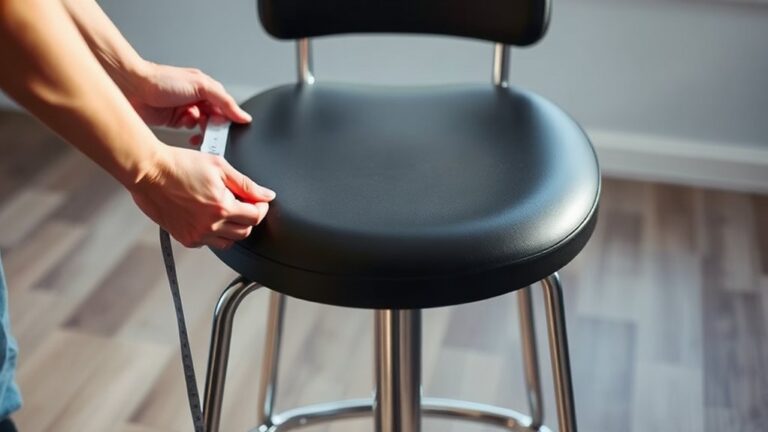
- Use a tape measure to record the length and width of the available space.
- Note any obstacles like doorways, radiators, or windows that might limit loveseat placement.
- Sketch your floor plan, marking the measured space, to visualize how the loveseat fits.
Consider Room Layout
Choosing the right loveseat size depends heavily on your room’s layout and how you plan to use the space. You want to guarantee the loveseat fits without disrupting furniture flow or making the room feel cramped.
Start by visualizing where the loveseat will sit relative to other key pieces. Leave enough space for easy movement and avoid blocking pathways. Consider how the loveseat’s size affects layout functionality. Will it encourage conversation, provide a cozy reading nook, or serve as extra seating?
Keep in mind doorways, windows, and focal points to create balance. By thoughtfully considering your room’s layout, you’ll select a loveseat that complements your space while maintaining comfort and practicality. This makes the room both inviting and functional.
Match Existing Furniture
Once you’ve figured out where the loveseat will go, think about how its size and style will fit with your existing furniture. To guarantee a cohesive look, focus on color coordination and style compatibility. Here’s how to match your loveseat perfectly:
- Measure your current pieces to check if the loveseat will balance the room without crowding.
- Choose a loveseat size that complements other seating, maintaining visual harmony.
- Match or complement colors to unify the space. Consider cushions or throws to tie in different tones.
- Pick a style that fits your room’s vibe, whether modern, traditional, or eclectic, for seamless integration.
How to Measure Your Space for a Loveseat
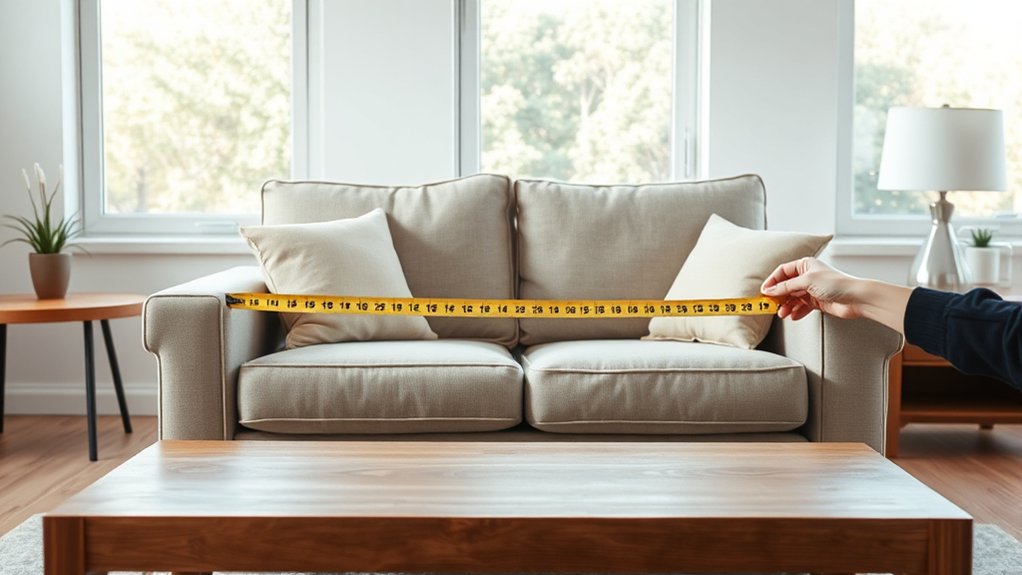
Measuring your space accurately is key to finding a loveseat that fits perfectly without overcrowding the room. Start by measuring the room dimensions where you plan to place the loveseat, noting length, width, and any architectural features like doorways or windows that could affect placement.
Use a tape measure to get precise numbers, and jot them down for easy reference. Next, consider your existing furniture styles to guarantee the loveseat complements rather than clashes with your current setup.
Visualize how much clearance you’ll need around the loveseat for comfortable movement. Typically, allow at least 18 inches between furniture pieces. Don’t forget to factor in space for side tables or floor lamps you might want nearby.
Sketch a simple floor plan with these measurements to help you decide on the ideal size. This approach guarantees you pick a loveseat that fits your space perfectly and harmonizes with your room’s aesthetic.
Popular Brand Loveseat Size Comparison
Several popular loveseat brands offer a range of sizes to fit different spaces and styles, making it easier for you to find one that suits your room perfectly. When exploring brand comparisons, you’ll notice size variations that reflect each brand’s approach to loveseat styles.
- IKEA loveseats typically measure around 55-60 inches wide, ideal for compact spaces.
- Ashley Furniture offers larger options, often 60-65 inches wide, blending comfort with roominess.
- West Elm focuses on modern styles with widths ranging from 58-62 inches, balancing sleek design and functionality.
- La-Z-Boy emphasizes plush comfort, with loveseats generally between 60-66 inches wide, perfect if you want extra cushioning.
How to Match Loveseat Size With Your Seating Needs
To find the perfect loveseat, start by measuring your room to make sure it fits comfortably. Then, think about how many people you want to seat regularly without crowding the space. Balancing comfort with the available space will help you pick a loveseat that works best for your needs. It’s all about finding that sweet spot between cozy and spacious.
Assess Room Dimensions
Where you place your loveseat can make all the difference in how comfortable and functional your space feels. To assess room dimensions effectively, keep these steps in mind:
- Measure the full room layout, noting doors, windows, and other fixed elements.
- Plan your furniture placement carefully, ensuring enough walking space around the loveseat.
- Consider the scale of other pieces to avoid overcrowding or awkward gaps.
- Test potential spots by marking the loveseat’s footprint on the floor with tape.
Consider Seating Capacity
Although loveseats are typically designed for two people, you should consider how many individuals you want to accommodate regularly before choosing the size. Think about your usual seating arrangement. Do you often host guests, or is the loveseat mainly for daily use by one or two people?
If you frequently have visitors, opting for a slightly larger loveseat or one with a wider seat can improve the comfort level for everyone. Also, consider the space each person needs to sit comfortably without feeling cramped.
Assess whether the loveseat will be the primary seating or part of a larger setup, as this impacts your choice too. Matching the loveseat size with your seating needs guarantees you create a cozy, functional space that suits your lifestyle.
Balance Comfort And Space
Finding the right balance between comfort and space means choosing a loveseat that fits your room without overwhelming it. To match your seating needs effectively, consider these steps:
- Measure your room to guarantee space efficiency and avoid crowding.
- Assess comfort levels by testing seat depth and cushion firmness.
- Think about your typical number of users to select an appropriate size.
- Factor in additional furniture to maintain a balanced layout.
Tips to Arrange a Loveseat in Small and Large Rooms
Arranging a loveseat effectively can transform both small and large rooms, maximizing comfort and style. In small spaces, place your loveseat against a wall or in a corner to free up floor area, improving space optimization. Pair it with a slim coffee table or floating shelves to maintain open pathways and elevate aesthetic appeal without overcrowding. Use light colors or patterns to keep the room feeling airy and inviting.
In larger rooms, position your loveseat to create intimate seating zones. Placing it opposite a sofa or near a fireplace encourages conversation and balances the room. You can also float the loveseat away from walls, allowing for versatile traffic flow and layered décor. Adding complementary chairs or side tables can improve both comfort and style.
No matter the room size, thoughtful loveseat placement guarantees your space looks cohesive while meeting your functional needs.
When Should You Choose a Loveseat Alternative?
When your space demands more versatility or different seating needs, choosing a loveseat alternative can make a big difference. While loveseat benefits like compact size and coziness are great, sometimes they just don’t fit your room’s vibe or function. Here are four situations when opting for something else works better:
When a loveseat’s charm doesn’t suit your space, exploring alternatives enhances both style and functionality.
- You face tight space constraints but need more seating than a loveseat offers. Consider modular or sectional pieces.
- Your room requires flexible arrangements for gatherings. Folding chairs or ottomans might serve you well.
- You want a statement piece that adds style and comfort. An accent chair or bench could be ideal.
- The loveseat’s fixed seating limits your comfort. Recliners or adjustable chairs give more personalized support.
Frequently Asked Questions
What Materials Are Commonly Used to Make Loveseats?
You’ll find loveseats commonly made with hardwood frames for loveseat durability, ensuring they last through daily use. For loveseat upholstery, fabrics like cotton, linen, and polyester are popular because they’re soft and easy to clean.
Leather is another common choice, offering a sleek look and added durability. Some loveseats also use microfiber, which resists stains and feels cozy. Choosing the right materials helps you enjoy comfort and longevity in your loveseat.
How Do I Clean and Maintain a Loveseat?
Think of your loveseat as a loyal garden that needs daily care. For cleaning techniques, vacuum crumbs and dust regularly, then spot-clean stains with mild soap and water. Avoid harsh chemicals; they’re like weeds that can ruin fabric.
For maintenance tips, fluff cushions to keep their shape and rotate them often. This way, your loveseat stays fresh and inviting, just like a well-tended garden ready for relaxation and warmth.
Are Loveseats Pet-Friendly Furniture Options?
Yes, loveseats can be pet-friendly furniture options if you choose pieces with pet-friendly features like stain-resistant fabric and sturdy frames. You’ll want to look for loveseat durability to withstand scratching and jumping.
Materials like microfiber or leather work well because they’re easy to clean and resist wear. Adding washable slipcovers can also protect your loveseat while keeping it comfy for both you and your four-legged companion.
Can Loveseats Be Customized in Fabric and Color?
You might be surprised to know that yes, loveseats can be customized! When you pick a loveseat, you’re not stuck with just one look.
You get to choose from a wide range of fabric options, whether you want something soft, durable, or luxurious. Plus, the color choices are extensive, letting you match your style perfectly.
What Is the Average Price Range for Quality Loveseats?
You’ll find loveseat pricing typically ranges from $300 to $1,500 depending on materials and brand. If you want quality, expect to spend around $700 to $1,200.
When shopping, keep budget considerations in mind. Custom fabrics or designer pieces will push the price higher. Remember, investing a bit more often means better durability and comfort, so balance your budget with what you need in the long run.
Conclusion
Choosing the perfect loveseat is like finding a cozy hug for your room. It wraps your space in comfort without overwhelming it. By understanding sizes and styles, you’ll create a spot that invites relaxation and sparks connection.
Whether your room whispers for something petite or shouts for a bold statement, your loveseat will fit just right. It turns your space into a warm, inviting haven you’ll never want to leave. Knowing how big is a loveseat helps you make that perfect choice.