How Long Is a Loveseat – Complete Size Guide
Finding the perfect loveseat can be tricky, especially when you want something cozy but not overwhelming your space. You’re not alone—many people struggle with choosing the right size loveseat that fits both their room and lifestyle.
Whether you’re furnishing a small apartment or adding a comfy spot in a larger living area, knowing the dimensions can make all the difference. How Long Is a Loveseat.
A loveseat typically ranges from 48 to 72 inches long, with the standard size around 60 inches, making it perfect for two people without taking up too much space. Its width usually sits between 30 to 40 inches, and height is about 30 to 36 inches.
Sizes vary by style, material, and armrest type, affecting comfort and room fit. Understanding these dimensions helps you pick the best loveseat for your space, and there’s plenty more to evaluate to get it just right.
Key Takeaways
- Loveseats typically range from 48 to 72 inches in length, with 60 inches being the standard size. Widths usually vary between 30 to 40 inches, and heights range from 30 to 36 inches.
- Seat depth commonly falls between 20 to 24 inches, affecting seating comfort and posture. Frame materials and armrest styles significantly influence the overall loveseat dimensions.
- Choosing the right size loveseat balances comfort and space, preventing overcrowding or cramped seating.
What Is a Loveseat? How It Differs From Sofas
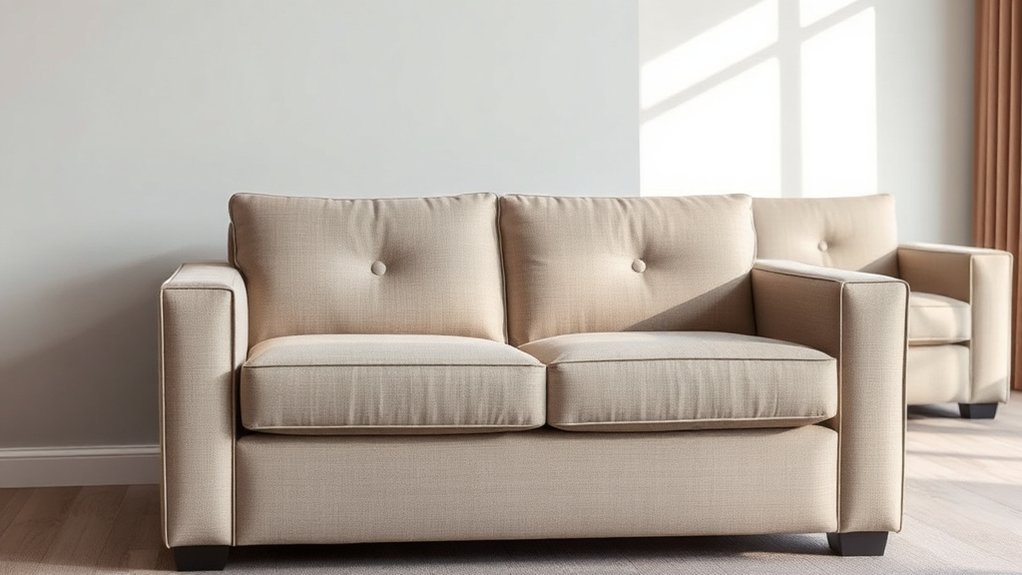
A loveseat is a smaller type of seating designed to comfortably fit two people. You’ll find that its love seat history dates back to the 18th century when furniture makers crafted intimate seating to encourage closeness.
Unlike sofas, which are larger and can accommodate three or more people, loveseats prioritize space efficiency without sacrificing comfort. When choosing loveseat materials, you’ll see a variety—from classic leather and durable microfiber to soft cotton and velvet. These options affect both the look and feel of your loveseat, making it easy to match your décor.
Loveseats are perfect if you want cozy seating without overwhelming your room. They differ from sofas not just in size but also in purpose. While sofas serve larger groups, loveseats create a more personal, intimate seating experience. Understanding these differences helps you select the right piece to fit your space and lifestyle.
Loveseat Dimensions: Length, Width & Height
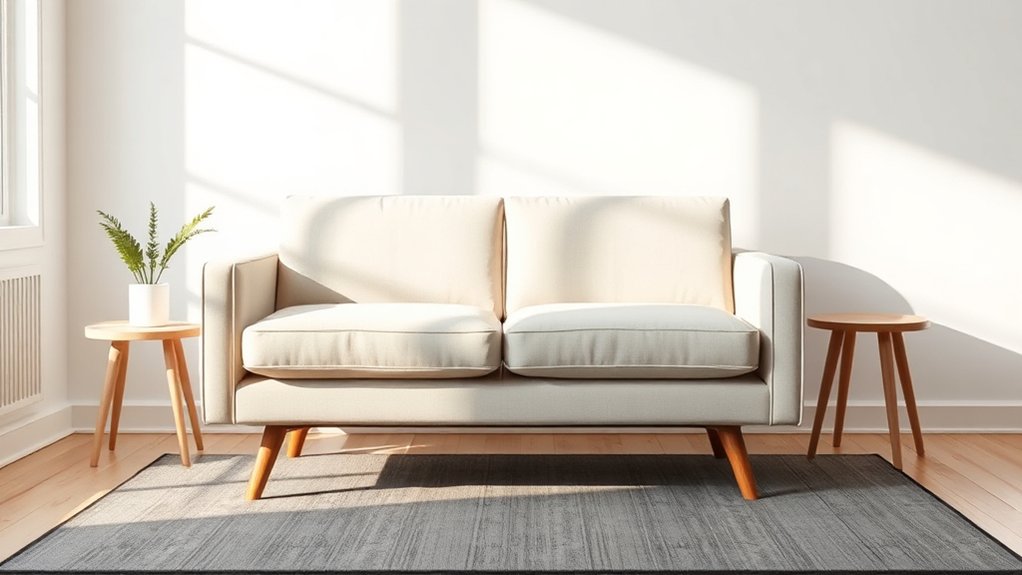
Understanding loveseat dimensions is key to choosing the right piece for your space. Typically, loveseats range between 48 to 72 inches in length, 30 to 40 inches in width, and about 30 to 36 inches in height.
These dimensions can vary depending on the loveseat styles you prefer. Some have a more compact, modern design, while others lean towards a traditional, bulky look.
When considering loveseat materials, keep in mind that heavier fabrics like leather and velvet might add to the overall bulk, affecting how the piece fits in your room. Lighter materials such as linen or microfiber can make the loveseat feel less imposing.
How Long Is a Standard Loveseat?
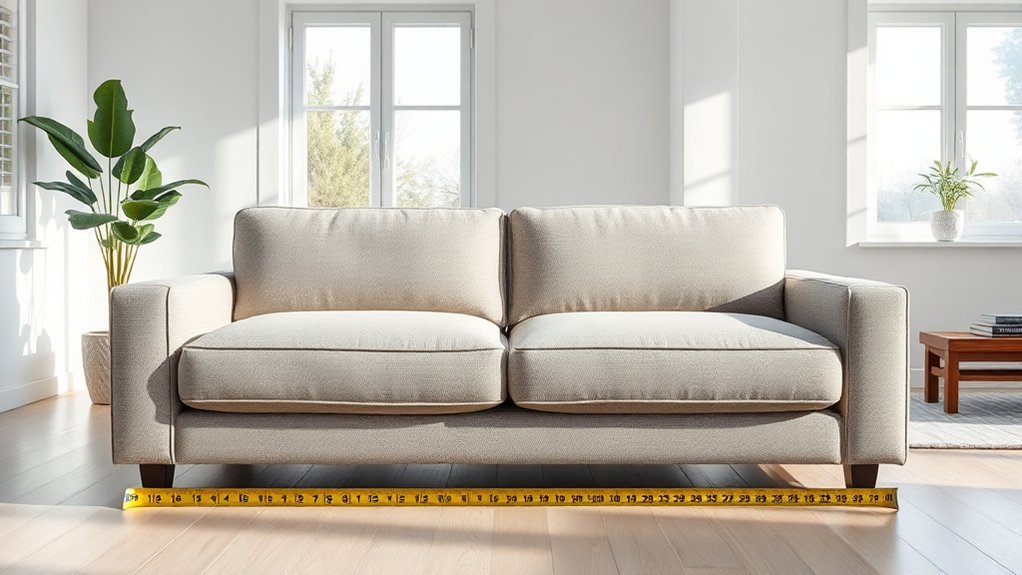
While loveseat sizes can vary, a standard loveseat typically measures around 60 inches in length. This size has roots in loveseat history, designed to comfortably seat two people without occupying too much space.
When you shop for a loveseat, you’ll often find it made from common materials like leather, fabric, or microfiber, each affecting durability and style.
Here’s a quick glance at typical loveseat dimensions:
| Dimension | Size (inches) |
|---|---|
| Length | 58 – 62 |
| Width | 30 – 40 |
| Height | 30 – 40 |
| Seat Depth | 20 – 24 |
Knowing these measurements helps you choose a loveseat that fits your space perfectly. Stick to the standard length if you want something versatile and familiar, reflecting the timeless design that has defined loveseats through the years.
How Loveseat Size Changes by Style and Design
You’ll notice that loveseat sizes can vary quite a bit depending on the style you choose. The frame design plays a big role, and so do the cushions and armrests. These elements can add extra width or depth. So, let’s take a closer look at how these factors affect the overall size.
Popular Loveseat Styles
Because loveseats come in various styles, their sizes can differ considerably depending on the design you choose. Understanding popular loveseat styles helps you pick the perfect fit for your space.
- Modern Designs: Sleek lines and minimalist shapes, often compact, fit well in smaller rooms.
- Vintage Styles: Bulky with ornate details, these tend to be larger but add character.
- Sectional Options: Modular and versatile, these vary widely in size and often include multifunctional furniture features.
- Outdoor Loveseats: Designed with weather-resistant fabric choices and space-saving designs, perfect for patios and balconies.
Color trends also influence your selection, letting you match the loveseat seamlessly with your decor while keeping functionality in mind.
Impact of Frame Design
Although loveseat sizes vary across styles, the frame design plays an essential role in determining their overall dimensions. When you choose a loveseat, the frame materials, whether solid wood, metal, or engineered wood, impact its sturdiness and bulkiness. This directly affects size.
For example, metal frames often allow for sleeker, more compact designs, while hardwood frames might add heft and width. Design aesthetics also influence size. A minimalist frame with clean lines usually results in a smaller footprint, whereas ornate or heavily detailed frames increase dimensions.
Cushion and Arm Variations
When selecting a loveseat, the style and design of cushions and arms greatly influence its size and comfort. Different cushion materials and armrest styles can change the overall dimensions and feel of your loveseat. Here’s what to take into account:
- Foam cushions offer firm support and usually keep the loveseat compact.
- Down-filled cushions add plushness but increase depth and width.
- Track arms have a sleek, narrow profile, saving space.
- Rolled arms are bulkier, making the loveseat wider and more traditional.
Why Loveseat Size Matters for Comfort
Choosing the right loveseat size directly impacts your comfort and the overall feel of your living space. When the loveseat fits well, it improves your comfort levels, making it a cozy spot for relaxing or entertaining guests. If it’s too small, you might feel cramped, reducing seating capacity and limiting how many people can sit comfortably. On the other hand, a loveseat that’s too large can overwhelm your room, making the space feel crowded or awkward.
Your loveseat’s size affects how you use the seating area daily. Proper dimensions guarantee that you and your guests have enough room to stretch out without feeling confined. It also influences posture and support, which play significant roles in comfort. Ultimately, choosing the right size balances your seating capacity needs with a comfortable fit, creating an inviting and functional space you’ll enjoy for years.
How to Choose the Right Loveseat Length
How do you determine the ideal loveseat length for your space? Choosing the right size means balancing loveseat proportions with your seating preferences to guarantee comfort and style. Here’s how to pick the perfect length:
- Consider your room’s layout. Think about the available wall or floor space without overcrowding the area.
- Match loveseat proportions to the room size. A longer loveseat suits spacious rooms, while compact ones work better in smaller spaces.
- Factor in seating preferences. Do you want cozy seating for two or extra space for stretching out? Your needs influence the ideal length.
- Visualize flow and accessibility. Confirm there’s enough room to move around and for other furniture pieces without obstruction.
Measuring Your Room to Fit a Loveseat
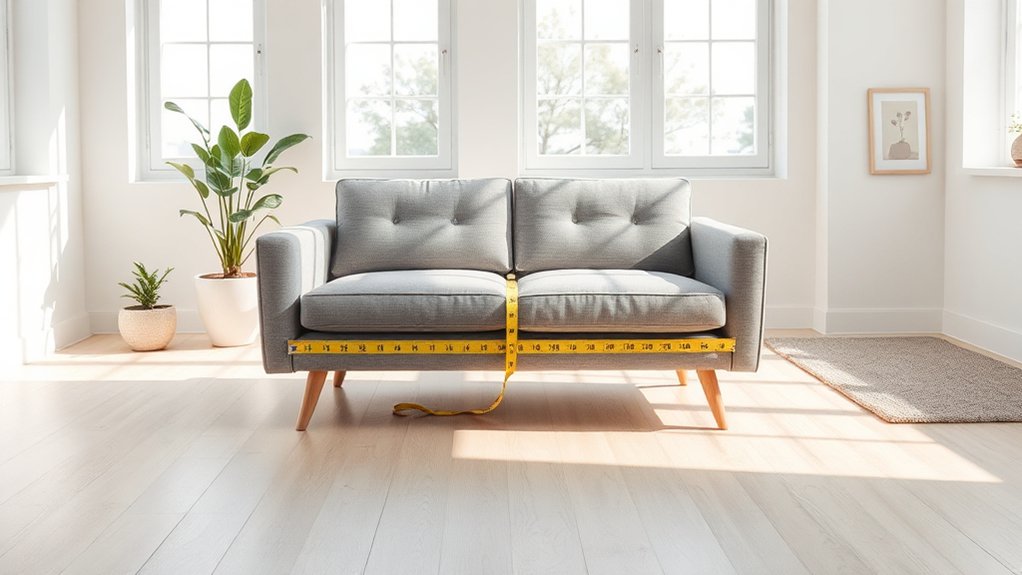
Measuring your room accurately is the first step to guarantee your loveseat fits perfectly without crowding the space. Start by noting your room dimensions: length, width, and any architectural features like doorways or windows that could affect placement. Use a tape measure to get precise numbers and jot them down.
Next, consider your furniture layout. Sketch a rough floor plan or use an app to visualize where the loveseat will go in relation to other pieces. Leave enough clearance for traffic flow, typically at least 18 inches between furniture. Don’t forget to account for additional items like side tables or lamps.
Comparing Loveseats to Sofas and Chairs
A loveseat offers a unique balance between the spaciousness of a sofa and the compactness of a chair, making it a versatile seating option. When weighing loveseat advantages, you’ll notice it provides cozy seating for two without overwhelming your space.
Unlike sofas, loveseats save room but still offer more comfort than a single chair. Considering space considerations, loveseats fit perfectly in smaller areas where a full sofa might feel cramped.
Loveseats save space while providing more comfort than a chair, ideal for cozy, smaller rooms.
Here’s how loveseats compare to sofas and chairs:
- Size: Loveseats are typically 48-72 inches long, smaller than sofas but larger than chairs.
- Seating: They comfortably seat two people, ideal for intimate settings.
- Flexibility: Easier to move and fit in tight spaces compared to bulky sofas.
- Style: Loveseats often blend well with other furniture, adding balance without dominating the room.
Choosing a loveseat helps you maximize comfort without sacrificing space.
Arranging Loveseats in Small and Large Rooms
When you’re arranging a loveseat, placement is really key to making the most of your space. In small rooms, you’ll want to optimize every inch without overcrowding. On the other hand, large rooms give you more flexibility to create cozy little seating areas.
Loveseat Placement Tips
Placing loveseats effectively can transform both small and large rooms, maximizing comfort and flow. To improve loveseat aesthetics and guarantee practical placement, consider these strategies:
In small rooms, position the loveseat against a wall to open floor space and create a cozy nook.
For larger rooms, float the loveseat in the center to define seating areas and encourage conversation.
Use placement strategies that complement natural light sources, avoiding blocking windows to keep the room bright.
Pair your loveseat with complementary furniture, like side tables or rugs, to balance the space and maintain proportion.
Space Optimization Strategies
Though loveseats are compact by design, arranging them thoughtfully can make your space feel larger and more inviting. If you’re working with a small room, place your loveseat against a wall to open up floor space. Choose space-saving furniture like ottomans with storage to reduce clutter.
In larger rooms, use your loveseat to create cozy seating areas by pairing it with chairs or a coffee table. This layout encourages conversation and makes the space feel welcoming. Opt for multifunctional designs that can double as storage or a sleeper for added utility.
Remember to keep pathways clear and avoid overcrowding to maintain flow. By combining strategic placement with smart furniture choices, you’ll optimize your room’s size without sacrificing comfort or style.
Where to Buy Loveseats in Various Sizes and Styles
Finding the perfect loveseat means knowing where to look for a variety of sizes and styles that fit your space and taste. Whether you want something compact or spacious, several loveseat retailers and online shopping platforms can help you find the right match quickly.
Here are four great places to start your search:
- Wayfair offers a huge selection of loveseats in different sizes and styles with user reviews to guide you.
- IKEA is known for affordable, stylish loveseats that often come in space-saving designs.
- Amazon features countless loveseat options with the convenience of fast shipping and easy returns.
- Local Furniture Stores allow you to see and test loveseats in person, ensuring the size and style meet your needs.
Frequently Asked Questions
What Materials Are Commonly Used to Make Loveseats?
You’ll find loveseats made from various fabric types like cotton, linen, velvet, and leather, each offering a different look and feel. The construction methods usually involve sturdy hardwood frames combined with high-density foam cushions for comfort and durability.
Some use sinuous spring systems or webbing to support the seating area. When choosing a loveseat, consider both the fabric types and construction methods to guarantee it suits your style and lasts through everyday use.
How Do You Clean and Maintain a Loveseat?
Think of your loveseat as a cherished garden. Regular care keeps it blooming. For cleaning, vacuum crumbs and dust weekly, and spot-clean stains with mild soap or upholstery cleaner.
Rotate cushions to prevent wear, and avoid direct sunlight to maintain fabric color. Maintenance tips include tightening screws and checking for loose threads. By staying consistent, you’ll keep your loveseat inviting and fresh, just like a well-tended garden thriving through every season.
Can Loveseats Be Customized or Reupholstered?
Yes, loveseats can definitely be customized or reupholstered to fit your style and space perfectly. By exploring custom loveseat options, you can choose fabric, color, and even dimensions that suit your needs.
Reupholstery benefits include revitalizing your loveseat without buying new furniture, saving money, and reducing waste. You’ll also get to keep a piece you love while giving it a brand-new look tailored just for you.
What Are the Best Colors for Loveseats in Small Spaces?
You’ll want to choose light, neutral colors like soft grays, creams, or pastels for your loveseat in small spaces. Research shows that 60% of people feel lighter hues make rooms appear larger.
Using color psychology, these shades evoke calm and openness, helping with space optimization by reflecting more light. Avoid dark, heavy colors that can make the area feel cramped. Instead, pick colors that brighten and visually expand your cozy nook.
Are Loveseats Pet-Friendly Furniture Options?
Yes, loveseats can be pet-friendly furniture options if you choose the right fabric. You’ll want to opt for durable, stain-resistant materials like microfiber or leather. These are easier to clean and help protect pet safety.
Avoid delicate fabrics that snag or trap pet hair. With proper care and mindful fabric selection, your loveseat can comfortably accommodate both you and your animal companions without compromising style or safety.
Conclusion
Choosing the perfect loveseat isn’t just about picking a piece of furniture. It’s about finding a cozy companion for your space.
Remember, size matters: the right dimensions can turn a room from cramped to comfy in an instant. So, whether you’re curling up solo or sharing moments with a friend, measure wisely and choose smartly.
After all, your ideal loveseat is waiting to hug you just right, and knowing how long a loveseat should be makes all the difference.