7 Tips How to Choose the Right Kitchen Table for Your Family
Choosing the right kitchen table for your family can feel overwhelming. You’re not alone—many people struggle to find a table that fits their space, style, and daily needs.
Whether you’re juggling mealtime chaos or planning for guests, the perfect table makes all the difference in creating a cozy, functional kitchen. How to Choose the Right Kitchen Table for Your Family.
To choose the right kitchen table for your family, start by evaluating your daily needs and how often you host guests. Measure your kitchen space carefully, allowing enough room for movement and seating.
Pick a size and shape that fits your family and space, and opt for durable materials that suit your lifestyle. Match the table’s style to your home’s décor and set a budget that balances quality and features.
Keep these basics in mind, and you’ll uncover tips to make the perfect choice.
Key Takeaways
- Assess your family’s dining habits, seating needs, and multitasking requirements to choose a functional and appropriately sized kitchen table.
- Measure available space, ensuring at least 36 inches clearance around the table for comfortable movement and optimal layout.
- Select table shape and size based on kitchen dimensions, family size, and guest frequency to ensure practical seating and flow.
- Choose durable, easy-to-maintain materials like hardwood, laminate, or treated wood for long-lasting kitchen table use.
- Match the table style, finish, and budget with your home decor and hosting frequency for a balanced and functional choice.
Start By Understanding Your Kitchen Table Needs
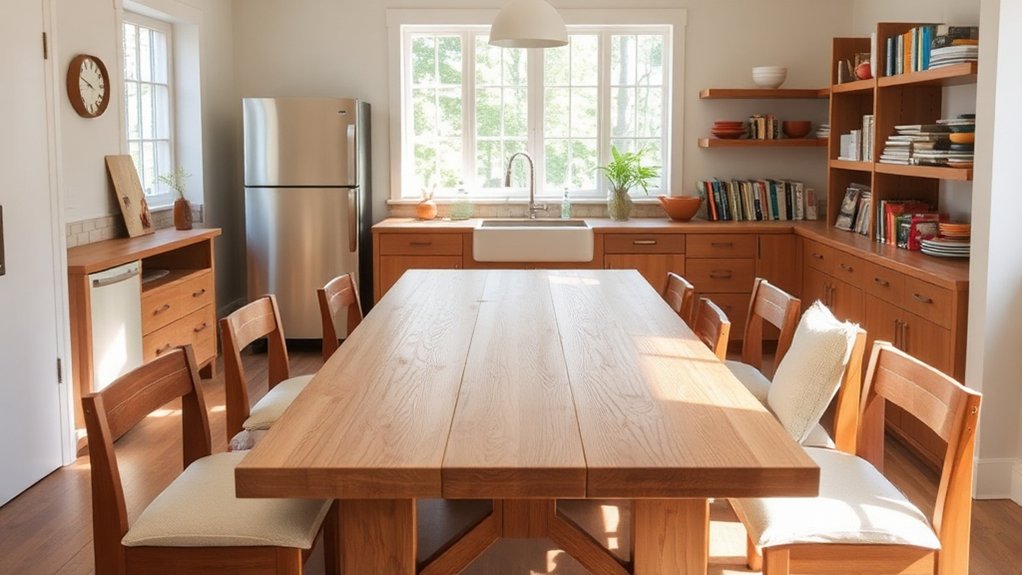
Before choosing a kitchen table, you need to assess how you’ll use it. Think about your daily dining activities. Do you mostly eat quick breakfasts or enjoy long family dinners? Your table’s functionality depends heavily on these habits.
If you often host gatherings, you’ll want a larger table that accommodates more people comfortably. If space is tight, consider a compact or extendable table that adapts to your needs.
Also, consider if you’ll use the table for other tasks like homework or meal prep. This requires durable surfaces and enough room. Understanding your lifestyle helps you select a table that supports your activities without overcrowding your space.
Keep in mind how often you entertain guests versus everyday use to balance size and style. By focusing on table functionality from the start, you guarantee your kitchen table becomes a versatile, practical centerpiece for your home.
Measure Your Space and Plan the Layout
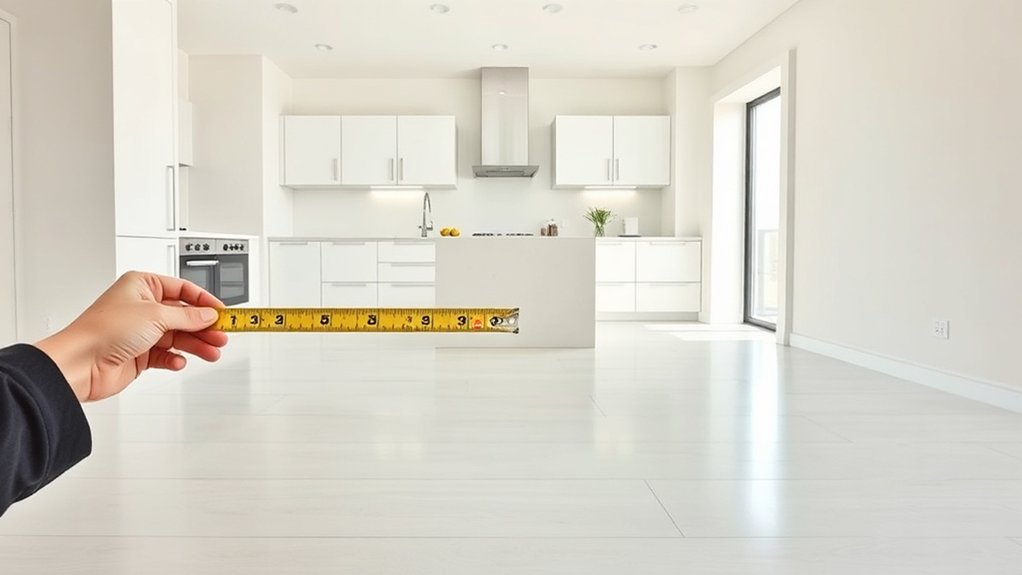
First, measure your kitchen’s dimensions so you know exactly how much space you have to work with. Next, think about where the table will fit best—make sure it doesn’t block any walkways or get in the way of appliances. Doing this will help you pick the right size and shape that fits your kitchen layout perfectly.
Assess Room Dimensions
Measuring your kitchen space accurately is essential to choosing a table that fits comfortably without crowding the room. Before shopping, take these steps to assess room dimensions effectively:
- Measure the total floor area where you plan to place the table, noting length and width.
- Consider kitchen traffic flow, ensuring at least 36 inches of clearance around the table for easy movement.
- Factor in other furniture or appliances nearby to avoid blocking access or disrupting function.
Optimize Table Placement
One key to making your kitchen table both functional and inviting is to carefully plan its placement within your space. Optimize table placement by measuring your room and considering table orientation to improve dining flow.
Position your table to allow easy movement around it and keep pathways clear. Think about natural light and proximity to kitchen essentials for convenience. Planning layout with these factors keeps your space comfortable and efficient.
| Factor | Tip |
|---|---|
| Table Orientation | Align parallel to traffic flow |
| Clearance Space | Allow 36-48 inches around |
| Lighting | Position near natural light |
| Proximity | Close to kitchen for serving |
| Dining Flow | Maintain unobstructed pathways |
Choose the Right Size and Shape for Your Kitchen Table
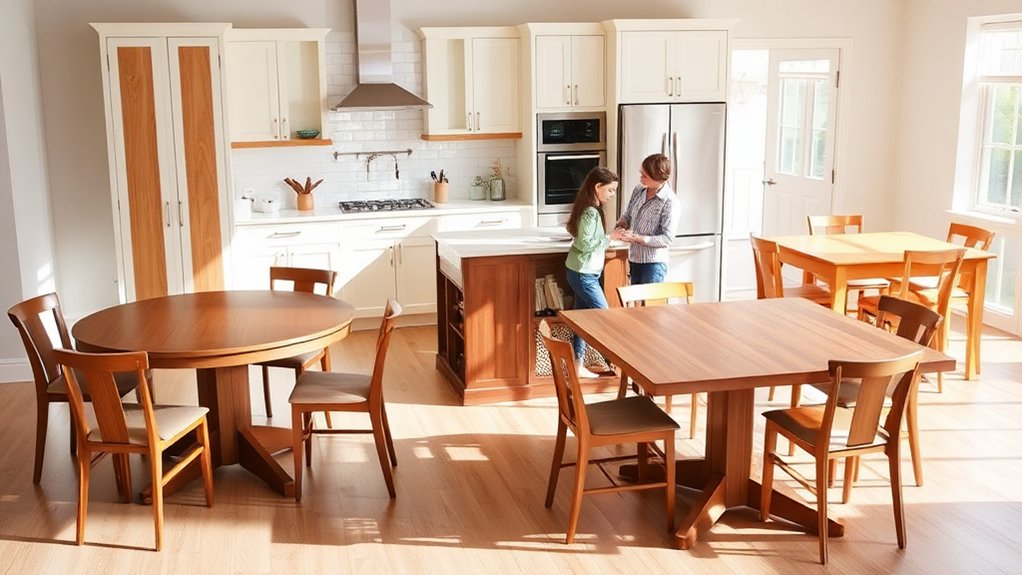
First, take a good look at your space and measure it carefully to make sure the table will fit comfortably. You’ll want to think about how many people you usually have sitting around the table, too, so you can pick the right size. After that, choose a shape that works well with your kitchen layout and suits your family’s needs.
Measure Your Space
Finding the perfect kitchen table begins with knowing exactly how much space you have to work with. Start by taking accurate kitchen measurements to guarantee your new table fits comfortably without crowding the room. Good space planning helps maintain smooth traffic flow and usability.
Here’s how to measure your space effectively:
- Measure the total area where you want the table, including clearance for chairs.
- Leave at least 36 inches around the table for easy movement.
- Consider obstacles like doors, cabinets, and appliances that affect placement.
Consider Family Size
Choosing the right kitchen table means matching its size and shape to your family’s needs. Start by considering family dynamics and seating preferences. How many people regularly gather? Do you often host guests? This helps you pick a table that fits comfortably without overcrowding.
Here’s a simple guide to help:
| Family Size | Recommended Seats | Table Size (inches) |
|---|---|---|
| Small (1-2) | 2-4 | 30-48 |
| Medium (3-5) | 4-6 | 48-72 |
| Large (6+) | 6-8+ | 72+ |
Match Table Shape
While size is essential, matching the table shape to your kitchen’s layout and your lifestyle can make a big difference in comfort and flow. When deciding between round vs. rectangular tables, consider how each fits your space and seating needs. Here’s what you should think about:
- Space Efficiency: Rectangular tables work well in narrow kitchens. Round tables fit cozy, square spaces better.
- Seating Capacity: Rectangular tables often seat more people, but round tables encourage conversation and allow flexible seating.
- Movement and Flow: Round tables offer smooth traffic flow with no sharp corners. They’re ideal for tight areas or homes with kids.
Pick Durable Kitchen Table Materials for Your Lifestyle
Durability plays a key role when you pick a kitchen table material because it needs to withstand daily use, spills, and occasional heat. You want a table that holds up well over time without constant repairs or worry.
Consider material durability carefully. Hardwoods like oak or maple offer strong resistance to scratches and dents, making them ideal for busy households. If your lifestyle includes kids or pets, you’ll benefit from surfaces that resist stains and are easy to clean, such as laminate or treated wood.
Metal and glass options provide modern looks but may require more upkeep to avoid scratches or fingerprints. Think about how your family uses the table daily. If you often eat at the table or do crafts, you’ll want a surface that balances durability with maintenance ease.
Prioritizing lifestyle compatibility guarantees your kitchen table stays functional and attractive for years to come, fitting seamlessly into your family’s routine.
Match Your Kitchen Table Style to Your Home Decor
When you match your kitchen table style to your home decor, you create a cohesive and inviting space that reflects your personality. To do this effectively, consider the overall vibe of your home. Are you drawn to modern aesthetics or do you prefer classic charm? Your kitchen table should harmonize with these elements to improve the room’s flow.
Here are three key tips to guide your choice:
- Identify dominant decor themes. Whether it’s minimalist, rustic, or traditional, your table should complement these styles without overpowering them.
- Choose materials and finishes accordingly. Sleek metals and glass fit modern aesthetics, while warm woods and ornate details suit classic charm.
- Consider color coordination. Match or contrast your table’s colors with surrounding furniture and walls to create balance and visual interest.
Set Your Budget and Choose Quality Kitchen Tables
After choosing a kitchen table that fits your style and complements your decor, it’s just as vital to set a budget that balances quality with affordability. Start by evaluating your budget considerations realistically. Determine how much you’re willing to spend without compromising on essential features.
Keep in mind that investing in quality materials pays off in durability and long-term satisfaction. Solid wood, metal frames, and tempered glass tops often offer lasting value compared to cheaper alternatives. Don’t just focus on the upfront cost; think about how the table will withstand daily use by your family.
Decide Between Fixed and Extendable Kitchen Tables
Although both fixed and extendable kitchen tables have their merits, choosing the right type depends on how you use your space and entertain guests. Fixed tables offer durability and a stable surface, ideal if you rarely need extra seating. Their fixed advantages include simplicity and often lower cost. On the other hand, extendable tables provide flexibility, allowing you to adjust size for gatherings or daily use.
Choosing between fixed and extendable kitchen tables depends on space use and entertaining needs.
To decide, consider these points:
- Space availability. Fixed tables fit well in compact kitchens, while extendable tables suit larger or multipurpose areas.
- Frequency of guests. If you often host, extendable flexibility lets you expand the table easily.
- Maintenance and style. Fixed tables typically require less upkeep and come in solid designs; extendable ones may need more care but offer versatility.
Think about how often you need extra seating and how much space you have to pick the best fit for your family.
Frequently Asked Questions
How Do I Protect My Kitchen Table From Heat and Stains?
To protect your kitchen table from heat and stains, use heat resistant materials like silicone or cork trivets under hot pots and pans. Apply table surface treatments such as sealants or varnishes to create a protective barrier.
Wipe up spills quickly to prevent stains from setting in. Using coasters for drinks also helps. These simple steps will keep your table looking great and shield it from everyday damage.
What Are the Best Cleaning Products for Different Table Materials?
You wouldn’t use the same soap on glass as on wood, right? The best cleaning techniques rely on material specific cleaners: use mild soap and water for glass, a wood cleaner or vinegar mix for wood, and a gentle dish soap for laminate.
Avoid harsh chemicals on delicate surfaces to prevent damage. Tailoring your cleaning approach keeps your table spotless and lasting longer, no matter the material.
Can I Customize My Kitchen Table With Built-In Storage?
Yes, you can customize your kitchen table with built-in storage to fit your needs perfectly. Custom designs allow you to incorporate storage solutions like drawers, shelves, or hidden compartments. This helps you keep essentials handy and your space clutter-free.
When working with a carpenter or choosing a manufacturer, discuss your storage preferences to create a functional and stylish table. Make sure it matches your kitchen’s vibe and maximizes convenience every day.
How Do I Incorporate Seating for Children Safely?
To incorporate seating for children safely, choose child-friendly designs with rounded edges and sturdy construction. Make sure the seating height suits your child’s size, so they can sit comfortably without slipping or straining.
You can use booster seats or stools with non-slip bases to add stability. Avoid sharp corners and unstable chairs to prevent accidents. By focusing on the right seating height and safe designs, you’ll create a secure space for your kids to enjoy mealtime.
What Are Eco-Friendly Kitchen Table Options?
You can choose eco-friendly kitchen tables made from sustainable materials like reclaimed wood, bamboo, or recycled metal. These options not only reduce environmental impact but also offer durability.
Plus, you’ll find a variety of design styles, from rustic to modern, that fit your kitchen’s vibe. Look for certifications like FSC to guarantee the wood is responsibly sourced.
Conclusion
Choosing the right kitchen table is like planting a seed. You want it to grow with your family and fit perfectly in your space. By understanding your needs, measuring carefully, and picking the right size, shape, and material, you’ll create a spot everyone loves.
Keep your budget in mind, match your style, and decide if an extendable table fits your lifestyle. These thoughtful choices make all the difference.
With these tips, your kitchen table will be the heart of many happy memories. Choosing the right kitchen table truly brings your family together.