What Is a Flat Sheet Used For?
You’re probably wondering whether that flat sheet used draped over your mattress is actually worth keeping around. Sure, it looks simple enough, but there’s more to this bedding staple than you might think. From protecting your investment to solving problems you didn’t know you had, flat sheets do far more than most people realize. Let’s explore what you’ve been missing.
The Primary Purpose: Protecting Your Bedding Investment
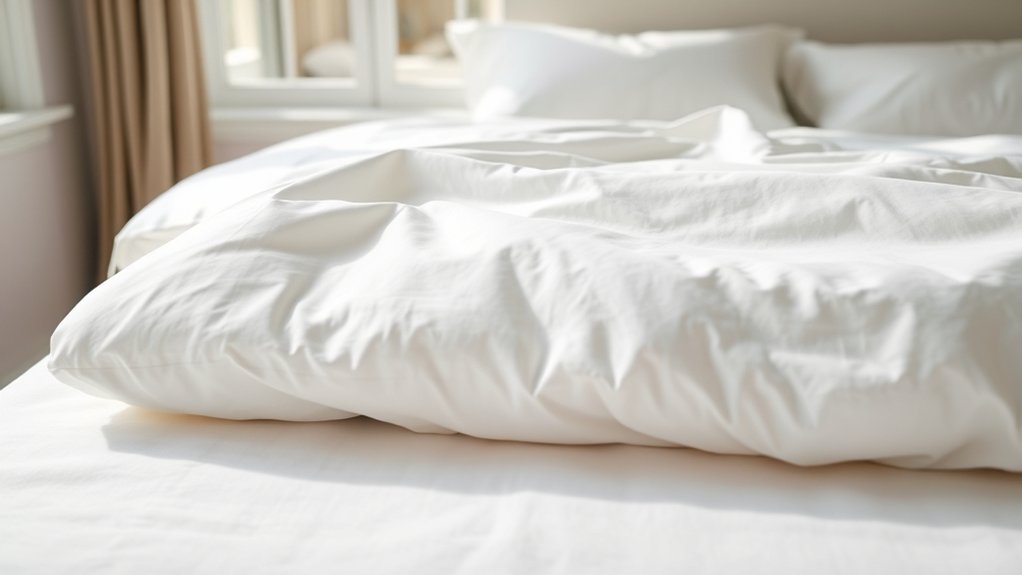
When you invest in quality mattresses and pillows, a flat sheet serves as your first line of defense against wear and tear. You’re creating a protective barrier that shields your mattress from sweat, oils, and dust that’d otherwise accumulate directly on its surface.
This barrier significantly extends your mattress’s lifespan, saving you money on replacements. Your pillows benefit similarly—a flat sheet protects them from body oils and dead skin cells that break down filling materials over time.
By using a flat sheet, you’re essentially reducing the frequency of deep cleaning your expensive bedding. You’ll notice your mattress stays fresher longer, and your pillows maintain their shape and support.
It’s a simple yet effective investment strategy that protects your bedroom’s most costly components.
Why Flat Sheets Regulate Temperature Better Than Duvets
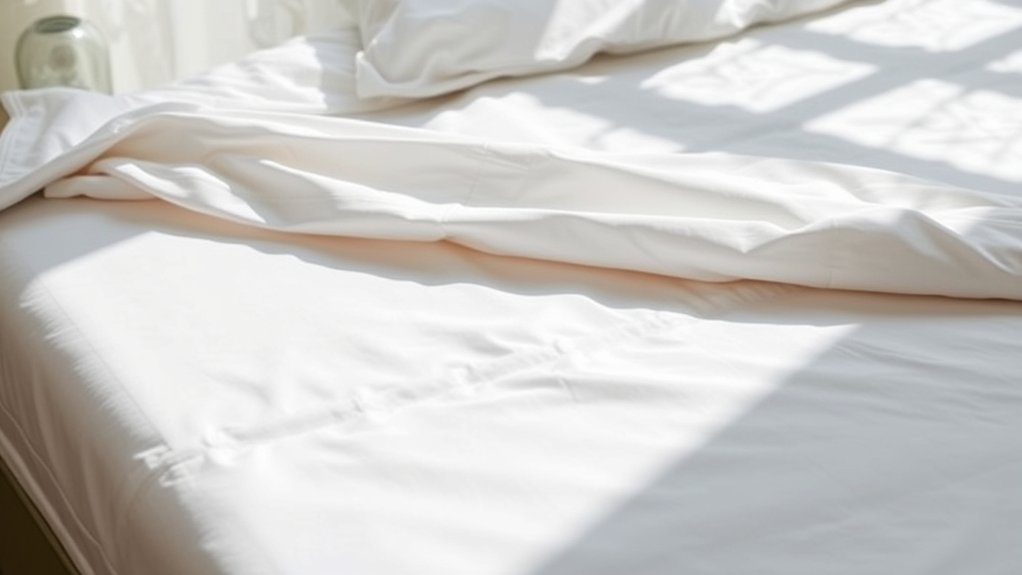
Beyond protecting your bedding investment, flat sheets offer another compelling advantage: superior temperature regulation. Unlike duvets that trap heat uniformly, flat sheets allow you to adjust your layers throughout the night. You can easily fold them back when you’re too warm or pull them up when you need extra warmth without completely removing your comforter.
Flat sheets breathe better than heavy duvets, enabling air circulation that prevents overheating. Their lightweight fabric won’t suffocate you during warmer months or create excessive perspiration. You’ll find yourself sleeping more comfortably because you’re not fighting against fixed insulation.
Additionally, flat sheets work harmoniously with your body’s natural temperature fluctuations. You gain precise control over your thermal environment, adapting quickly to changing conditions. This flexibility means better sleep quality year-round, making flat sheets an indispensable bedding component.
Flat Sheets vs. Fitted Sheets: Key Differences
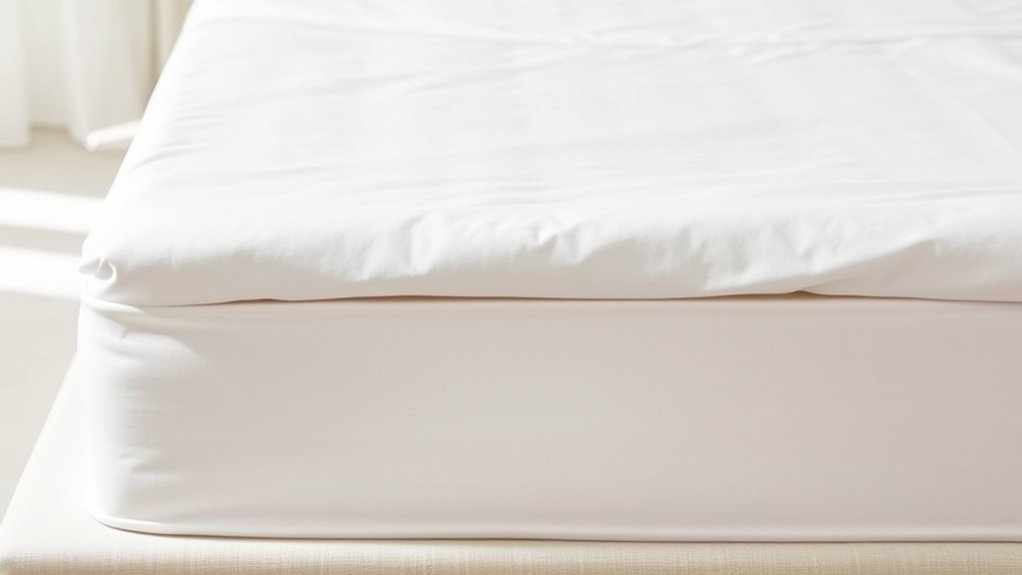
While flat sheets and fitted sheets both serve essential roles in your bed setup, they’re fundamentally different in design and function. Fitted sheets feature elasticized corners that grip your mattress securely, preventing slipping and bunching. They’re designed specifically to fit snugly over your mattress, making bed-making effortless.
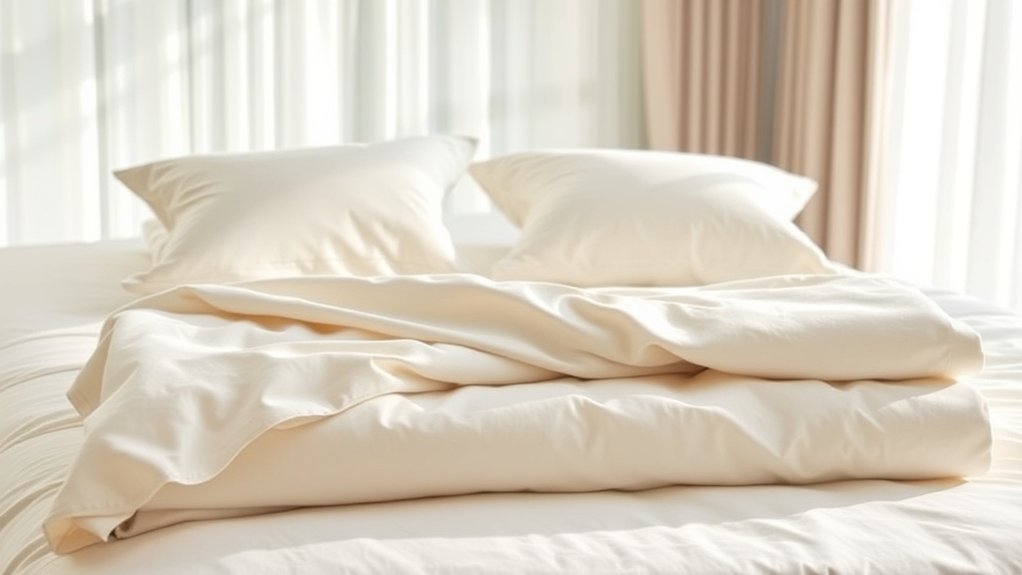
Flat sheets, conversely, are rectangular pieces of fabric without elastic. You’ll layer them over fitted sheets or directly on your mattress, giving you flexibility in positioning. Flat sheets work as a barrier between you and your comforter or duvet, protecting both from body oils and sweat.
The key distinction lies in their purposes: fitted sheets anchor your bed’s foundation, while flat sheets provide a comfortable, protective layer. Many sleepers prefer using both together for optimal comfort and hygiene.
Using Flat Sheets on Your Bed: Positioning, Tucking, and Draping
Now that you understand how flat sheets differ from fitted sheets, it’s time to master the practical skills of using them effectively. Start by laying your flat sheet over your mattress with equal overhang on all sides. Tuck the top edge under your pillows, then work your way around the bed, creating hospital corners for a crisp, polished look.
At each corner, fold the sheet at a 45-degree angle and tuck it tightly beneath the mattress. Smooth out wrinkles as you progress to ensure a neat appearance.
Finally, fold the top portion down over your blanket or comforter, creating an elegant frame that protects your bedding while adding visual appeal to your bedroom.
Choosing the Right Flat Sheet Material and Size
Selecting the appropriate material and size for your flat sheet directly impacts your comfort, durability, and bedding aesthetic. You’ll want to consider cotton for breathability and softness, or cotton-blend options for easier maintenance. Linen offers durability and temperature regulation, while microfiber provides affordability and wrinkle resistance.
Size matters equally. You’ll need to match your flat sheet to your mattress dimensions—twin, full, queen, king, or California king. An oversized sheet gives you extra fabric for tucking and draping, which many people prefer for security and aesthetics. Check your mattress depth too; deeper mattresses require sheets with appropriate pocket depths.
Thread count influences feel; look for 300-600 for optimal balance between softness and durability. Higher counts don’t always mean better quality.
Caring for Flat Sheets to Extend Their Life
Because proper care significantly impacts your flat sheet’s longevity and performance, you’ll want to establish a maintenance routine from the start.
Wash your sheets in cold water using mild detergent to prevent fading and shrinkage. Avoid bleach, which weakens fibers over time.
Dry them on low heat or air-dry to minimize damage. Iron on medium heat if needed, working quickly to avoid scorching.
Store sheets in a cool, dry place away from direct sunlight. Rotate between multiple sets to reduce wear on individual sheets.
Don’t overload your washing machine, as crowding prevents thorough cleaning. Address stains promptly using appropriate treatments.
Beyond the Bed: Using Flat Sheets as Drop Cloths and Cleaning Supplies
While flat sheets excel at providing comfort in the bedroom, they’re equally valuable throughout your home for practical tasks. You can repurpose old or worn flat sheets as drop cloths during painting projects, protecting your floors and furniture from spills and splatters. Their large surface area makes them ideal for this purpose, and they’re much more affordable than purchasing dedicated drop cloths.
Beyond painting, you’ll find flat sheets useful as cleaning supplies. Use them as dust cloths for furniture and baseboards, or cut them into smaller pieces for general household cleaning. Their absorbent cotton material works well for wiping surfaces and mopping floors.
You can also use flat sheets to wrap fragile items during storage or moving, providing cushioning protection. This versatility makes flat sheets an economical choice for various household needs.
Creative Flat Sheet Hacks: Curtains, Blankets, and Emergency Covers
Flat sheets unlock surprising creative possibilities when you’re willing to think beyond their traditional bedroom role. You can repurpose them as instant curtains by hanging them from rods or tension wires, creating affordable window treatments without sewing. They’re perfect emergency blankets when you’re caught without proper bedding or need extra warmth during power outages.
You can also transform flat sheets into room dividers, privacy screens, or backdrop curtains for video calls and photography. Drape them over furniture to create cozy fort-like spaces for kids. Use them as fabric for DIY projects like tote bags or pillow covers.
When camping or traveling, flat sheets serve as protective barriers against insects and weather. They’re lightweight, packable, and versatile—making them invaluable for improvised solutions whenever you need quick, practical fixes.
Do You Really Need a Flat Sheet? When to Skip It?
Though flat sheets offer impressive versatility beyond the bedroom, you might wonder if they’re truly necessary for your bed at all. The answer depends on your preferences and lifestyle.
You can skip flat sheets if you prefer a simpler bedding setup or have sensitive skin that reacts poorly to additional fabric layers. Duvet covers alone provide adequate protection and warmth. If you live in a hot climate, eliminating the flat sheet reduces bulk and improves breathability.
However, you’ll want to keep flat sheets if you enjoy their versatility, need an extra layer for temperature control, or prefer easy laundering. They’re also ideal if you use lightweight comforters that require additional protection from body oils and sweat.
Ultimately, flat sheets are optional—choose based on your comfort needs and lifestyle.
Conclusion
You’ll find that flat sheets used offer remarkable versatility beyond basic bedding protection. They’re protecting your mattress and comforter while regulating your sleep temperature effectively. You can easily launder them separately, customize your bedding comfort, and repurpose them around your home as drop cloths or creative solutions. Whether you’re prioritizing hygiene, extending your bedding’s lifespan, or exploring alternative uses, you’re investing in a practical, multifunctional household essential that adapts to your needs.