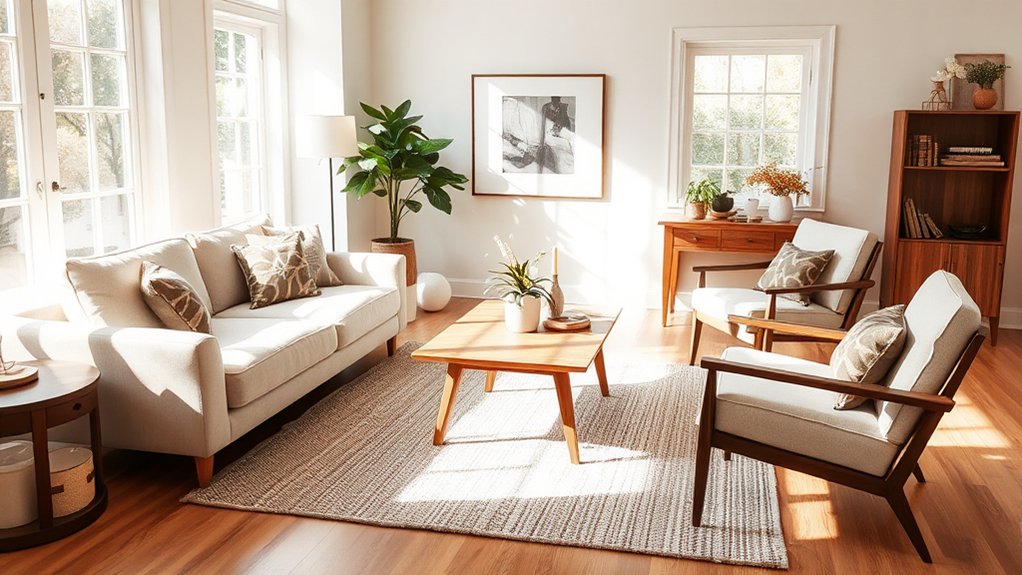
10 Tips to Choose Furniture for Your Living Room
Choosing the perfect furniture for your living room can feel overwhelming—you’re not alone. Many people struggle with finding pieces that fit well, look great, and feel comfortable all at once.
Whether you’re redecorating or starting fresh, getting it right is key to creating a space you love.
To choose the right living room furniture, start by measuring your space accurately to guarantee a perfect fit. Match your furniture style with your décor, balancing colors and textures for a cohesive look.
Prioritize comfort and durability, and select multi-functional pieces to maximize space. Plan a layout that allows easy movement without overcrowding, and set a budget you can stick to.
Keep these tips in mind, and you’ll uncover even more ways to create a stylish, functional living room.
Key Takeaways
- Measure your living room and doorways accurately to ensure furniture fits well and allows comfortable movement.
- Choose furniture that matches your décor theme, balancing colors and textures to create a cohesive space.
- Prioritize comfortable, ergonomic seating made from durable, sustainable materials suited for daily use.
- Opt for multi-functional furniture like sofa beds and storage ottomans to maximize space and maintain flow.
- Set and stick to a clear furniture budget, prioritizing essential pieces and exploring affordable quality options.
Measure Your Living Room Before Shopping

Before you buy any furniture, take the time to measure your living room accurately. Knowing your room dimensions helps you avoid purchasing pieces that won’t fit or overcrowd the space.
Measuring your living room first prevents buying furniture that doesn’t fit or clutters your space.
Grab a tape measure and jot down the length, width, and height of your living room. Don’t forget to note the size of doorways, windows, and any architectural features that may affect furniture placement.
Add these measurements to your shopping checklist to keep your buying process organized. When you’re out shopping or browsing online, you’ll be able to cross-check each item against your room dimensions, ensuring it suits your space perfectly.
This step saves you from costly returns and frustration later on. Measuring first also helps you visualize how much space you have for walking paths and other essentials. Taking this simple action upfront makes your furniture hunt smoother and more efficient.
Pick Living Room Furniture Styles That Match Your Décor
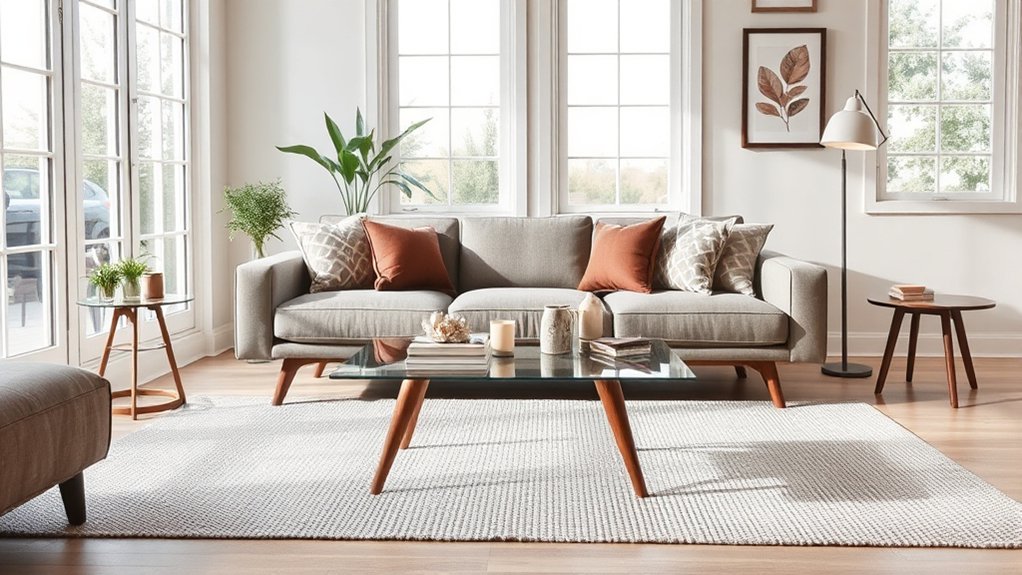
Start by figuring out your décor theme. This way, your furniture will fit seamlessly into the room. Make sure to pay close attention to coordinating colors and textures, so everything feels balanced and inviting. Doing this helps you create a cohesive look that really reflects your style.
Identify Your Décor Theme
How do you want your living room to feel when you walk into it? Start by identifying your décor theme, blending modern aesthetics or traditional influences with your personal preferences. Consider cultural inspirations that resonate with you, creating an emotional connection to the space.
Think about color psychology to evoke the right mood and how space functionality impacts your daily life. Your décor theme should balance style with practicality, guaranteeing comfort and flow. Don’t forget seasonal trends, as they can inspire timely updates without overwhelming your core style.
Coordinate Colors and Textures
When you coordinate colors and textures in your living room, you create a cohesive look that boosts your décor theme. Start by understanding color psychology to choose hues that evoke the right mood, like calming blues or energizing yellows.
Then, mix and match textures to add depth and interest. Combine smooth leather with soft velvet or rough wood with sleek metal for texture layering that feels intentional.
Make sure your furniture styles complement your existing décor without overwhelming it. Paying attention to how colors and textures interact helps you craft a balanced space where every piece feels connected.
This thoughtful coordination not only improves aesthetics but also makes your living room inviting and visually engaging.
Choose Comfortable Living Room Furniture for Your Lifestyle
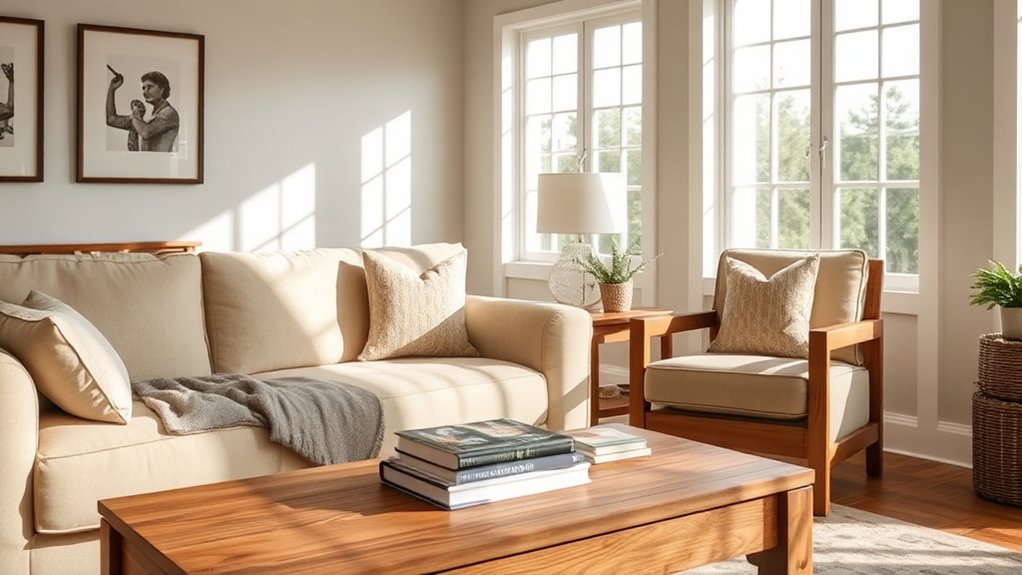
Although style is important, you’ll want to prioritize comfort when choosing living room furniture. Focus on ergonomic seating that supports your body and suits your lifestyle needs, whether you enjoy family activities or quiet reading time.
Consider your personal preferences for comfort levels. Do you prefer firm cushions or plush, sink-in sofas? Keep an eye on current furniture trends, but don’t sacrifice comfort for fleeting styles. Your living room should invite relaxation and accommodate how you actually live.
Balance comfort with space efficiency by selecting pieces that fit well without cramping your room, ensuring they provide both aesthetic appeal and function. For example, modular sofas can adapt to different family activities and room layouts.
Balance Size and Scale to Avoid Overcrowding
Selecting the right size and scale for your living room furniture is essential to prevent overcrowding and maintain a comfortable flow. To achieve visual harmony, focus on furniture proportions that complement your room’s dimensions and existing décor.
Here’s how you can balance size and scale effectively:
- Measure your space carefully before buying to know what fits without overwhelming the room.
- Choose furniture pieces with proportions that match the room’s scale. Large sofas suit spacious rooms, while compact chairs work better in smaller areas.
- Mix furniture heights and shapes to create balance, avoiding too many bulky or tall items in one area.
- Leave enough clearance around furniture for easy movement, ensuring your living room feels open, not cramped.
Select Durable Living Room Furniture Materials
You’ll want to choose living room furniture materials that stand up to daily wear and tear. So, think about the pros and cons of options like hardwood, metal, and upholstery fabrics. This way, you can find what fits your lifestyle best. Plus, knowing some simple maintenance tips can really help keep your furniture looking great for years.
Best Durable Material Options
When choosing living room furniture, focusing on durable materials helps guarantee your investment lasts for years. Prioritizing material sustainability alongside furniture longevity ensures you make eco-friendly and lasting choices. Here are four of the best durable material options to evaluate:
- Solid hardwood is known for strength and longevity. It resists wear and can be refinished multiple times.
- Metal frames offer sturdy support and resist damage. They’re perfect for modern, long-lasting pieces.
- Leather upholstery is durable and ages well, providing comfort and style that improves over time.
- High-quality synthetic fabrics are designed for durability and easy maintenance. They combine resilience with material sustainability.
Pros And Cons Comparison
Although durable materials offer long-lasting benefits, each option comes with its own set of advantages and drawbacks. When selecting furniture materials, you’ll find wood offers timeless living room aesthetics and style versatility but may require more upkeep.
Metal pieces provide strong, functional design and space optimization, yet they might sacrifice some comfort factors. Upholstered options boost comfort and follow current furniture trends but can be less eco friendly and harder to maintain.
Eco friendly options like bamboo or recycled materials appeal to sustainability-minded decorators but may limit style choices. By weighing these pros and cons, you can better align your furniture choices with your living room’s look, your lifestyle needs, and long-term durability goals.
Maintenance Tips For Durability
Since living room furniture often faces daily wear, maintaining durable materials properly can extend their lifespan considerably. To keep your pieces looking fresh and sturdy, follow these maintenance tips:
- Use gentle cleaning techniques specific to the material. Leather needs conditioning, while wood benefits from dusting with a soft cloth.
- Address spills immediately to prevent stains and damage, especially on fabrics and porous surfaces.
- Inspect joints and screws regularly. Tighten or reinforce them as part of simple repair tips to avoid wobbling or breakage.
- Rotate cushions and pads periodically to guarantee even wear and maintain shape.
Mix Furniture Styles Without Clashing
Blending different furniture styles can create a unique and inviting living room, but you’ll want to balance contrast with cohesion. To achieve contrast harmony, start by selecting a unifying element, like a consistent color palette or material finish. This helps eclectic combinations feel intentional rather than chaotic.
Don’t be afraid to mix modern pieces with vintage finds, but make sure they share a common thread, whether it’s texture, tone, or shape. Focus on scale and proportion to avoid visual clutter. Pairing a sleek sofa with a rustic wooden coffee table works well when their sizes complement each other.
You can also tie styles together using accessories like cushions or rugs that echo colors or patterns across different furniture. Ultimately, mixing styles without clashing means thoughtfully combining elements that highlight their differences while creating a cohesive whole. This way, your living room feels balanced and stylish.
Prioritize Multi-Functional Furniture to Maximize Space
When you want to make the most of your living room, choosing multi-functional furniture is key. These space-saving solutions help you maximize every inch without sacrificing style or comfort. Look for versatile designs that easily adapt to your daily needs.
Here are four smart options to explore:
- Sofa beds provide seating by day and a comfortable bed by night, perfect for guests.
- Storage ottomans combine seating, footrests, and hidden storage in one piece.
- Nesting tables offer flexible surface space that you can expand or tuck away as needed.
- Convertible desks or shelves serve multiple purposes, like working, displaying items, or storing essentials.
Add Personality With Color and Texture
Adding color and texture can instantly transform your living room from plain to personal. When you choose colors, think about color psychology. Warm tones like reds and oranges energize, while blues and greens calm. Pick hues that match the mood you want your space to evoke. Don’t shy away from bold accent pieces; they add a spark of personality.
Texture layering is just as essential. Mix smooth leather with soft velvet or woven fabrics to create depth and interest. Throw pillows, rugs, and curtains offer easy ways to introduce contrasting textures. This layering not only adds visual appeal but also invites comfort and warmth.
Plan Your Furniture Layout for Flow and Function
Color and texture set the mood, but how you arrange your furniture shapes how you experience the space. To guarantee a smooth furniture flow and a functional layout, you need to think about movement and purpose. Here’s how to plan it effectively:
- Measure your space before placing any furniture to avoid overcrowding or awkward gaps.
- Create clear pathways that allow easy movement, keeping at least 2-3 feet between pieces.
- Anchor your seating around a focal point, like a fireplace or TV, to encourage conversation and functionality.
- Balance the room by distributing furniture evenly, avoiding heavy clusters that block flow.
Set and Stick to Your Furniture Budget
Before you start shopping, it’s a good idea to set a clear budget so you can keep your spending on track. Think about what you really need first—like a sofa and a coffee table—to make sure your living room works well for you.
If you stick to your budget, you’ll avoid overspending and end up making smarter choices overall. It just makes the whole process a lot easier and less stressful.
Determine Your Budget Limit
Although picking out new furniture is exciting, you need to determine your budget limit first to avoid overspending. Setting a clear budget helps you focus on pieces that fit your financial plan and prevents impulse buys.
Follow these steps to establish your budget:
- Assess your current finances, including savings and monthly expenses, to know what you can comfortably spend.
- Research furniture financing options if you need flexibility without stretching your finances thin.
- Investigate budget-friendly brands that offer quality pieces without breaking the bank.
- Allocate funds based on priorities, leaving room for unexpected costs like delivery or accessories.
Prioritize Essential Furniture
Once you’ve set your budget, focus on selecting the furniture pieces you truly need for your living room. Prioritize essential pieces that serve multiple purposes and offer maximum functionality to make the most of your space and money.
Start with basics like a comfortable sofa, a coffee table, and adequate seating. Avoid splurging on trendy or unnecessary items that don’t improve everyday use. By sticking to this core group, you guarantee your living room remains practical and inviting without overspending.
Frequently Asked Questions
How Do I Clean and Maintain Different Types of Living Room Furniture?
To clean and maintain your living room furniture, you should start with upholstery care by vacuuming regularly and spot-cleaning stains promptly using fabric-safe cleaners. For wood treatment, dust your pieces often and apply a quality wood polish or oil to keep them nourished and shiny.
Avoid harsh chemicals on both upholstery and wood. Rotate cushions to prevent uneven wear, and always follow the manufacturer’s care instructions to keep your furniture looking great longer.
What Are the Best Furniture Brands for Quality and Affordability?
Picture walking into a store, scanning endless options, and wondering which brand truly offers quality without breaking the bank. Regarding brand comparisons, IKEA, West Elm, and Article often top the list for balancing style and affordability.
You’ll want to weigh budget considerations carefully, comparing materials and warranties. Don’t rush. Taking time to research these brands guarantees you get the best value and lasting comfort for your living room.
How Can I Incorporate Eco-Friendly Furniture Options in My Living Room?
You can incorporate eco-friendly furniture by choosing pieces made from sustainable materials like bamboo, reclaimed wood, or recycled metal. Look for furniture certifications such as FSC or GREENGUARD to guarantee the products meet environmental and health standards.
Also, consider buying secondhand or upcycled furniture to reduce waste. By focusing on these options, you’ll create a stylish living room that’s kind to the planet and fits your eco-conscious values.
What Lighting Works Best With Various Living Room Furniture Styles?
You’ll want to match lighting colors and fixture styles to your living room furniture for the best effect. Warm lighting colors work great with traditional or rustic furniture, while cool tones complement modern or minimalist styles.
Choose fixture styles that echo your furniture’s vibe. Sleek metal fixtures suit contemporary pieces, and ornate chandeliers improve classic looks. Don’t forget adjustable lighting to highlight different areas and create the right mood throughout your space.
How Often Should I Replace or Update My Living Room Furniture?
You should consider replacing or updating your living room furniture every 7 to 15 years, depending on the furniture lifespan and how well you maintain it. If your style evolves and you start craving a fresh look or your pieces become uncomfortable or worn, it’s time for a change.
Keep an eye on wear and tear, and don’t hesitate to update when your furniture no longer fits your lifestyle or aesthetic.
Conclusion
Now that you’ve got these 10 tips, you’re ready to transform your living room into a space that truly feels like home. Remember, measuring first is your knight in shining armor against costly mistakes.
Don’t rush. Choose styles and materials that suit your lifestyle, and keep comfort and function front and center. Stick to your budget, and you’ll create a cozy, stylish room where every piece has its perfect place.
Happy decorating your living room furniture!