How Wide Is a Queen Size Bed in Feet?
Finding the perfect bed size can be a real challenge, especially when you want enough space to sleep comfortably without overwhelming your bedroom. If you’ve ever felt cramped or struggled to find a bed that fits just right, you’re not alone. Many people face this dilemma when choosing the right mattress size for their space and lifestyle.
A queen size bed is 5 feet wide, giving you plenty of room to sleep comfortably alone or with a partner. It measures 80 inches long, making it ideal for various sleeping positions without feeling cramped.
This size strikes a great balance, bigger than a full bed but more space-efficient than a king. It works well in bedrooms at least 10 by 10 feet with enough clearance around the bed.
Keep exploring, and you’ll find tips on bedding, frame styles, and layout.
Key Takeaways
- A queen size bed is 5 feet wide, which is the same as 60 inches in width.
- The standard length of a queen size bed is 80 inches, or about 6.67 feet.
- Queen beds give couples plenty of space without making the room feel cramped.
- They work well with different mattress types and bedding accessories.
- For comfort and easy furniture placement, a room of at least 10 feet by 10 feet is ideal for a queen bed.
How Wide Is a Queen Size Bed in Feet?
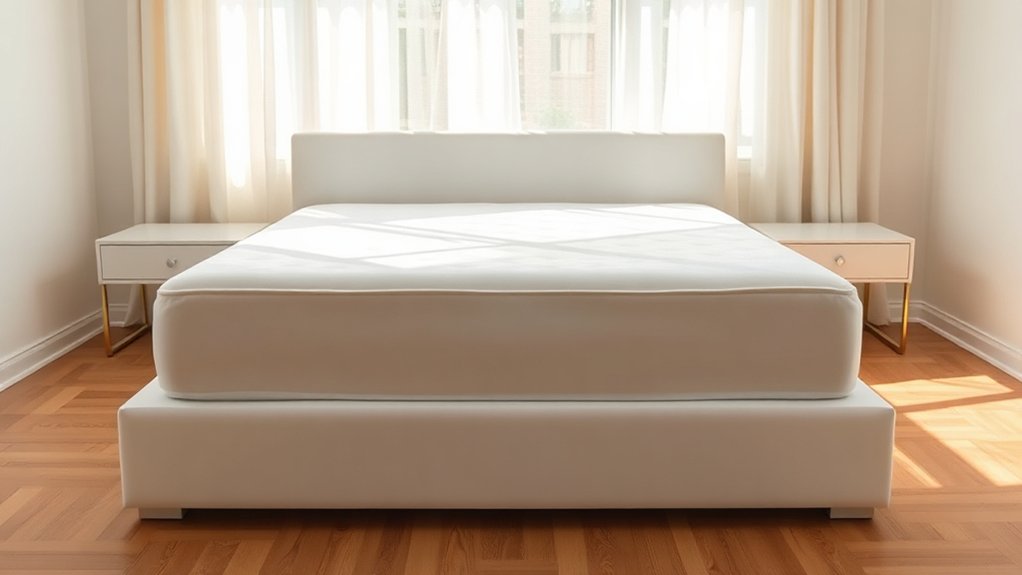
A standard queen size bed is 5 feet wide, giving you plenty of room to stretch out comfortably. When considering bed width, this size strikes a perfect balance between spaciousness and space efficiency.
The mattress dimensions typically measure 60 inches in width and 80 inches in length. This means you get enough surface area to share the bed with a partner without feeling cramped.
A queen mattress measures 60 by 80 inches, offering ample space for couples to sleep comfortably.
If you’re shopping for bedding or new mattresses, knowing these mattress dimensions guarantees you pick the right fit for your frame and room. Unlike narrower beds, a queen size offers a generous sleeping space, accommodating various sleeping positions.
It’s also wide enough to fit most bedrooms without overwhelming the space. When you choose a queen, you’re opting for a bed width that suits couples and individuals alike, providing a comfortable and practical sleeping area.
Knowing these dimensions helps you plan your bedroom layout effectively.
Queen Bed vs. Full, King, and Twin Sizes
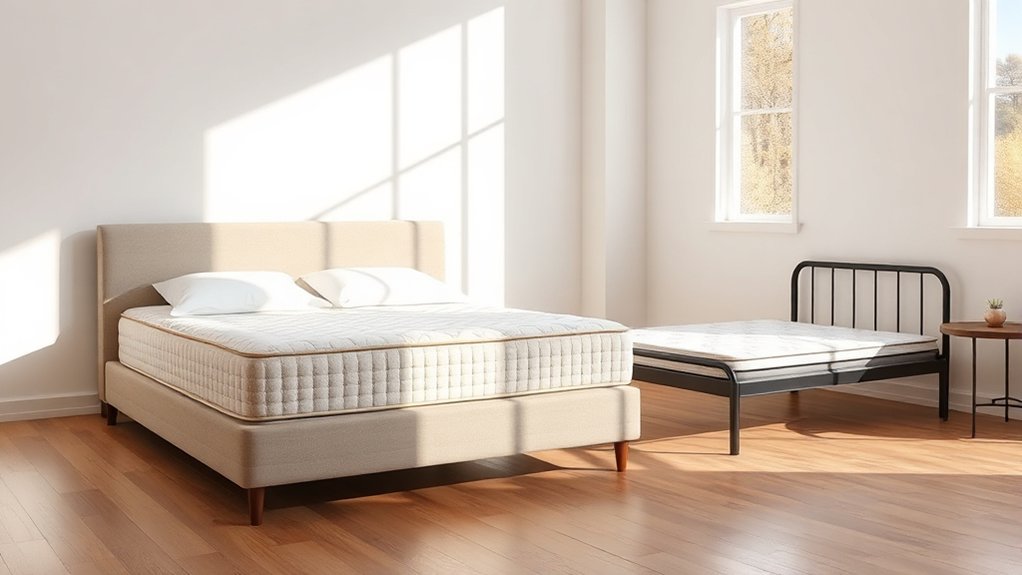
When choosing the right bed size, you’ll want to compare how a queen size stacks up against full, king, and twin beds. A queen offers a balanced size advantage, perfect for couples who value personal space without sacrificing bedroom space optimization.
Unlike a full bed, which suits solo sleepers or smaller rooms, the queen supports more diverse mattress types and bed accessories, enhancing comfort and style. In contrast, a king bed excels in couple dynamics, providing maximum space but requiring more room and often limiting bedroom themes.
Twin beds are ideal for single sleepers or kids, fitting tight spaces but lacking the versatility of a queen. Your sleep preferences also matter; if you prefer extra room to stretch, a queen or king works best.
Plus, queen beds often complement a wide range of bed aesthetics, fitting modern or traditional décor seamlessly. Ultimately, a queen bed strikes a practical balance, meeting most needs without overwhelming your space.
Bedroom Space Needed for a Queen Bed
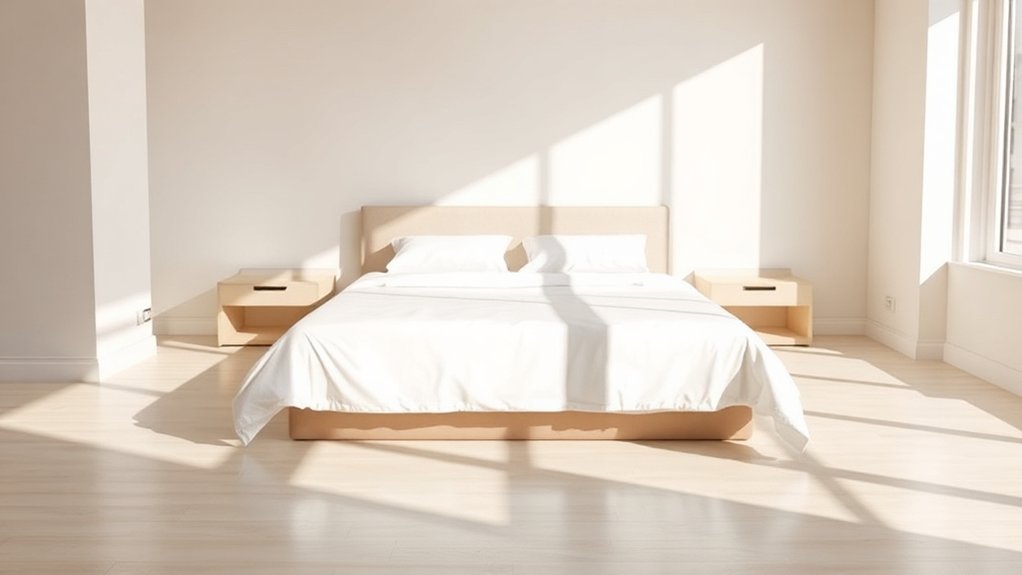
You’ll want to know the minimum room dimensions needed to comfortably fit a queen bed. It’s important to leave enough clearance around the bed for easy movement. Plus, thinking about furniture placement will help you make the most of your bedroom space. So, when planning, make sure there’s enough space not just for the bed but also for walking around and other pieces like nightstands or dressers. That way, your room will feel cozy but not cramped.
Minimum Room Dimensions
Determining the minimum room dimensions for a queen size bed guarantees you have enough space to move comfortably and arrange furniture. Since a queen bed measures about 5 feet wide and 6.7 feet long, your room should be at least 10 feet by 10 feet.
This size accounts for the bed dimensions plus enough room for essential furniture like nightstands and dressers. When planning your room layout, consider how doorways, windows, and built-in closets affect usable space.
A well-planned layout maximizes functionality without overcrowding. Keep in mind that smaller rooms might fit a queen bed, but tight spaces can limit movement and furniture placement. Prioritizing minimum room dimensions ensures your bedroom remains a comfortable, inviting retreat.
Clearance Around Bed
At least 24 inches of clearance around a queen size bed lets you move freely and access furniture without feeling cramped. This bedside clearance is essential for comfort and functionality, ensuring you don’t bump into walls or other items.
Ideal spacing around the bed not only improves safety but also boosts the room’s flow, making daily routines easier. While 24 inches is the minimum, aiming for 30 inches provides even more comfort, especially if you share the bed.
Furniture Placement Tips
Placing furniture around a queen size bed requires careful planning to maximize space and maintain comfort. You’ll want to leave at least 2 feet of clearance on each side for easy movement. When considering furniture arrangement, position nightstands close to the bed for convenience without crowding the room.
If space is tight, opt for smaller or multifunctional pieces to keep the area open. Think about decor considerations too. Light colors and minimal accessories can make the room feel larger. Avoid bulky furniture that overwhelms the space.
Also, placing a dresser or chair opposite the bed helps balance the room without blocking walkways. By planning your furniture arrangement thoughtfully, you’ll create a bedroom that’s functional, inviting, and perfectly suited to the queen bed’s size.
Measuring Your Room for a Queen Bed
To fit a queen size bed comfortably, you’ll need to measure your room carefully before making any decisions. Start by considering your room layout and existing furniture dimensions to guarantee the bed won’t overcrowd the space. Measure the length and width of your room, noting windows, doors, and built-ins that might affect placement.
Use the table below to visualize space requirements:
| Item | Standard Dimensions (ft) | Suggested Clearance (ft) |
|---|---|---|
| Queen Size Bed | 5 x 6.67 | 2 |
| Nightstands (each) | 1.5 x 1.5 | 1 |
| Dresser | 3 x 1.5 | 2 |
Make sure to leave at least 2 feet of clearance around the bed for easy movement. Also, account for all furniture dimensions and your room layout to avoid cramped spaces and keep a balanced, functional bedroom.
Comfort Considerations for Couples and Singles
When you’re picking out a queen size bed, it’s good to think about how much space you and your partner need to sleep comfortably. If you’re flying solo, then consider how much room you like for moving around and having your own space. These little details can really change how restful your sleep feels.
Space Needs for Couples
Choosing the right bed size can make a huge difference in how well you and your partner sleep. When you reflect on couples’ preferences, the amount of shared space becomes essential.
A queen size bed offers enough width to balance closeness and personal room, helping both of you rest peacefully. You’ll want to ponder how much space each person needs to feel comfortable without feeling cramped or isolated.
Here’s what to reflect on for your shared space:
- Enough room to move freely without disturbing each other
- Space to stretch out comfortably after a long day
- Personal zones that prevent overheating or crowding
- A cozy size that supports intimacy without sacrificing sleep quality
Choosing wisely means better rest and happier mornings together.
Single Sleep Comfort
While sharing a queen size bed works well for many couples, your comfort needs might look different if you’re sleeping alone. Single sleep lets you fully customize your mattress preferences without compromise.
You can choose firmness, material, and support levels that perfectly suit your body and sleeping style. A queen bed provides ample space for you to stretch out, which enhances your overall comfort and rest quality.
Since you don’t have to consider a partner’s needs, you can focus solely on what feels best for you. Whether you prefer a softer memory foam or a firmer innerspring mattress, the queen’s width supports your personal preferences.
This makes it an excellent choice for solo sleepers who prioritize comfort and space.
Movement and Personal Space
Because movement during sleep can disrupt rest, understanding how much personal space a queen size bed offers is essential for both couples and singles. With a width of 60 inches, a queen size bed provides a balance of bed mobility and personal comfort. It allows you to shift positions without constantly disturbing your partner.
This spatial awareness helps improve sleep quality by giving you enough room to stretch and move freely. Whether you sleep alone or with someone, the queen size bed offers a cozy yet spacious environment that supports restful nights.
- Feel the freedom to turn without bumping your partner
- Enjoy personal comfort without feeling cramped
- Experience less sleep interruption from tossing and turning
- Wake up refreshed with better sleep quality and space awareness
How Mattress Thickness Changes Bed Size
Even though the mattress width stays the same, its thickness can affect the overall feel and fit of your queen size bed. When you choose a mattress, the mattress height plays an essential role in how the bed feels and functions.
A thicker mattress adds more bulk, changing how you get in and out of bed and how the bedding fits. You might notice that a mattress with greater thickness impact makes the bed feel more luxurious or supportive, but it can also make the bed seem larger vertically, which might affect your bedroom’s visual space.
Additionally, a thicker mattress can change how your sheets and bed accessories fit since they need to accommodate this extra height. It doesn’t alter the mattress’s width or length, but it definitely influences your overall sleeping experience and space perception.
Frame Styles That Affect Queen Bed Dimensions
When you’re picking out a queen bed, the frame style can actually change the overall size more than you might think. Platform beds, upholstered frames, and storage beds each add a bit of extra width and length beyond just the mattress itself. So, let’s take a look at how each style can affect the space in your room.
Platform Bed Variations
Several popular platform bed variations can influence the overall dimensions of your queen size bed. Depending on the platform bed styles you choose, the frame’s width and length might slightly differ, affecting how much space your bed occupies.
Platform bed materials also play a role. Heavier woods or metal frames often come with bulkier designs, while minimalist styles stay sleek and compact.
Consider these variations to find the perfect fit and style for your room:
- Low-profile frames offer a modern look with minimal height and width.
- Floating platform beds create an airy feel but may extend slightly beyond the mattress.
- Storage platforms add depth with built-in drawers or compartments.
- Slatted designs vary in thickness, subtly impacting the frame’s footprint.
Choose wisely to balance style, comfort, and room space.
Upholstered Frame Impact
Upholstered frames can add a few inches to your queen size bed’s overall width and length, depending on their design. These frames often feature padded headboards and side rails that extend beyond the mattress, influencing the bed’s footprint.
Different upholstered styles and frame materials, like wood or metal bases wrapped in fabric or leather, also affect dimensions. When choosing an upholstered queen bed, consider how the frame’s bulk impacts your room space.
| Upholstered Style | Typical Dimension Impact |
|---|---|
| Classic Padded Frame | +3 to 5 inches width |
| Modern Minimalist | +1 to 2 inches width |
| Chunky Wood Wrapped | +4 to 6 inches width |
Each style adds unique thickness, so measure carefully before buying.
Storage Bed Dimensions
Storage beds can add significant bulk to your queen size bed’s dimensions, thanks to built-in drawers, lift-up platforms, or side compartments. These storage solutions maximize under bed organization, turning your sleeping area into a smart, space-saving haven. When choosing a storage bed, keep in mind the extra width and length the frame adds beyond the mattress size. This can affect room layout and walking space.
Consider these benefits of storage beds:
- Declutter your bedroom effortlessly with hidden compartments
- Access seasonal items without bulky dressers
- Utilize every inch of space for a cleaner, cozier room
- Enjoy easy organization that simplifies daily life
Choosing Bedding for Queen Beds
When choosing bedding for a queen size bed, you’ll want to focus on fit and comfort to guarantee a restful night. Selecting the right bedding materials affects how cozy and breathable your bed feels. Cotton is popular for its softness and durability, while microfiber offers affordability and wrinkle resistance.
Don’t forget to pick duvet sizes that properly cover your queen mattress without excess fabric hanging awkwardly.
Here’s a quick guide to help you pick the perfect queen bedding:
| Bedding Item | Recommended Size |
|---|---|
| Fitted Sheet | 60″ x 80″ |
| Flat Sheet | 90″ x 102″ |
| Duvet Cover | 88″ x 90″ or 90″ x 90″ |
| Pillowcases | 20″ x 30″ (standard) |
| Mattress Topper | Queen size (60″ x 80″) |
Choosing the right size and material guarantees your bedding complements your queen bed perfectly.
Queen Bed Width and Bedroom Layout
A queen bed typically measures 60 inches wide, making it a popular choice for many bedrooms. When planning your bedroom layout, understanding this width helps you balance comfort and style. You want enough space to move around without crowding your furniture.
Consider how your queen bed fits with your bedroom aesthetics and furniture styles to create a harmonious environment.
To optimize your space and feel proud of your room, think about:
- Choosing nightstands that complement your bed without overwhelming the space
- Positioning your bed to maximize natural light and flow
- Using rugs and lighting to improve the bedroom aesthetics
- Selecting furniture styles that provide both function and visual appeal
Is a Queen Bed Right for Your Space?
How much space do you really have to work with in your bedroom? Before choosing a queen bed, measure your room carefully to guarantee it fits comfortably without crowding other furniture.
The queen bed benefits include offering ample sleeping space for couples while being more compact than a king bed, making it ideal for medium-sized rooms. If you’re focused on space optimization, a queen bed strikes a good balance between comfort and efficient use of your bedroom.
A queen bed provides ample space for couples while fitting comfortably in medium-sized bedrooms.
It allows room for nightstands and walking space, preventing a cramped feeling. However, if your room is particularly small, you might want to take into account a full or twin bed instead.
Ultimately, reflect on how you use your bedroom daily. If you want a cozy yet spacious sleep area without sacrificing too much floor space, a queen bed is likely right for your space.
Frequently Asked Questions
What Materials Are Commonly Used in Queen Size Mattress Construction?
You’ll find queen size mattresses made from memory foam, innerspring coils, latex layers, or a combination known as hybrid mattresses. Memory foam contours to your body, offering pressure relief, while innerspring coils provide bounce and support.
Latex layers add durability and natural responsiveness. Hybrid mattresses blend these materials, giving you both comfort and support. Choosing the right material depends on your sleep preferences and comfort needs.
How Often Should You Replace a Queen Size Mattress?
You might think your mattress lasts forever, but you should replace your queen size mattress every 7 to 10 years. Mattress longevity depends on materials and usage, but over time, it loses support and comfort, harming your sleep quality.
If you notice sagging, lumps, or waking up sore, it’s time for a new one. Don’t compromise your rest. Investing in a fresh mattress boosts your nightly recharge and overall health.
What Is the Average Weight of a Queen Size Mattress?
A queen size mattress typically weighs between 60 to 90 pounds, depending on mattress density and support layers. If your mattress has high-density foam or multiple support layers like coils and memory foam, it’ll be heavier.
Lighter mattresses usually have fewer or less dense layers. Keep this in mind when moving or setting up your bed, as weight affects how easy it is to handle and how sturdy the support feels.
Are Adjustable Bases Compatible With Queen Size Beds?
Imagine Sarah, who struggled with back pain until she found adjustable base compatibility with her queen bed features. Yes, adjustable bases work perfectly with queen size beds, letting you raise your head or feet for comfort.
These bases support the standard queen mattress dimensions and improve sleep quality. When you choose an adjustable base designed for queen beds, you get personalized comfort without sacrificing style or space.
It’s a game-changer for restful nights.
How Do Temperature and Humidity Affect Mattress Lifespan?
Temperature and humidity directly impact your mattress lifespan. High humidity can cause mold and mildew, while extreme temperatures may weaken materials.
To extend your mattress’s life, focus on mattress maintenance by ensuring proper humidity control in your bedroom. Use a dehumidifier if needed and keep the room well-ventilated.
Regularly cleaning and rotating your mattress also helps it stay in great condition despite environmental changes.
Conclusion
Now that you know a queen size bed is typically 5 feet wide, you can better imagine how it will fit in your space. Isn’t it exciting to picture your room with just the right balance of comfort and style?
Whether you sleep alone or with a partner, choosing the right bed size helps you maximize both space and relaxation. So, are you ready to make your bedroom the cozy retreat you deserve with a queen size bed?