How Many Inches Are in a Queen Bed?
Finding the right bed size can be surprisingly tricky, and you’re not alone if you’ve ever felt overwhelmed by all the options. Many people struggle to balance comfort, space, and style when choosing a mattress that fits their room perfectly.
That’s why understanding the exact dimensions of popular bed sizes is so important—it takes the guesswork out of your decision and helps you create a cozy, functional bedroom.
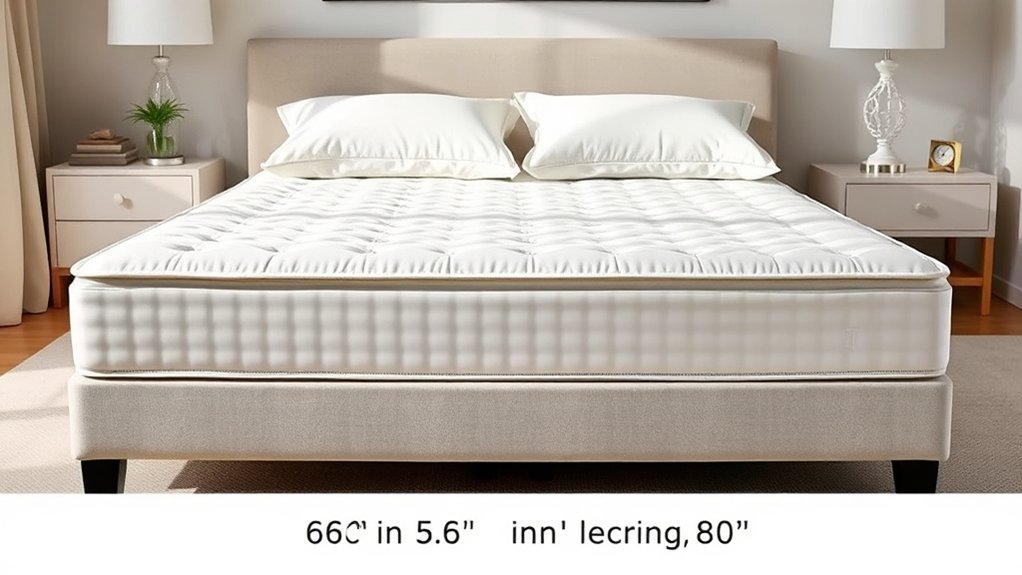
A standard queen bed measures 60 inches wide and 80 inches long, giving you plenty of space without overwhelming your room. Mattress thickness generally ranges from 8 to 14 inches, affecting overall bed height. Knowing these exact dimensions helps you pick the right bedding and guarantees your furniture fits well.
Whether you’re comparing sizes or figuring out floor space, understanding these details makes setting up your bedroom easier and more comfortable.
Keep going to investigate how this size fits your space and style.
Key Takeaways
- A standard queen bed measures 60 inches wide by 80 inches long.
- Mattress thickness for queen beds ranges from 8 to 14 inches.
- Overall bed height typically falls between 18 to 25 inches, including mattress and frame.
- Queen beds are wider than full beds (54 inches) but narrower than king beds (76 inches).
- Proper bedding for queen beds fits 60 by 80 inches for fitted sheets and about 90 by 90 inches for blankets.
Exact Dimensions of a Queen Bed (Inches)
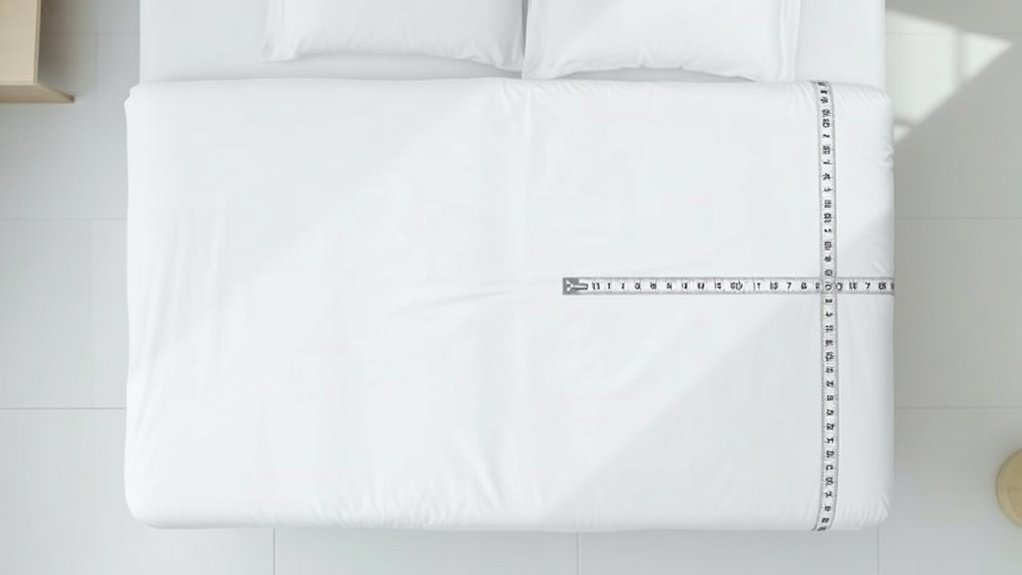
A standard queen bed measures 60 inches wide by 80 inches long, giving you ample space to sleep comfortably. When choosing a queen bed, you’ll encounter various mattress types, including memory foam, innerspring, and hybrid options. Each offers different levels of support and comfort.
Keep in mind that mattress thickness can affect the overall bed height, which usually ranges from 18 to 25 inches depending on the mattress and foundation you select. Bed height is important because it influences ease of getting in and out of bed, as well as the room’s aesthetics.
If you prefer a higher or lower bed, consider how mattress types and box springs contribute to the final height. Knowing these exact dimensions helps you pick bedding and accessories that fit perfectly, ensuring your queen bed not only feels right but looks great in your space.
How a Queen Bed Compares to Other Mattress Sizes
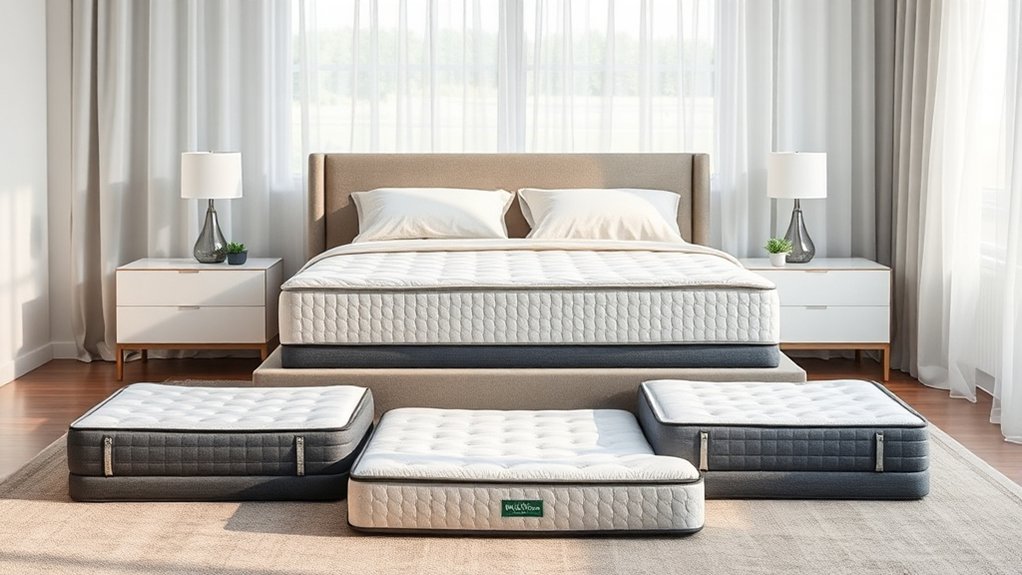
Understanding the exact dimensions of a queen bed sets a solid foundation for comparing it to other mattress sizes. When you look at a bed size comparison, a standard queen mattress measures 60 inches wide and 80 inches long. This width is wider than a full mattress, which is typically 54 inches wide, giving you extra personal space.
However, it’s narrower than a king mattress, which spans 76 inches in width, offering more room if you share your bed. If you’re weighing mattress width options, the queen size strikes a balance between comfort and space efficiency.
It fits well in most bedrooms without overwhelming the room, unlike king or California king sizes. Meanwhile, twin and full sizes might feel cramped if you prefer more space. So, the queen bed is often the go-to choice for couples or individuals who want a roomy yet manageable mattress size.
Why Queen Bed Size Matters for Bedding and Furniture
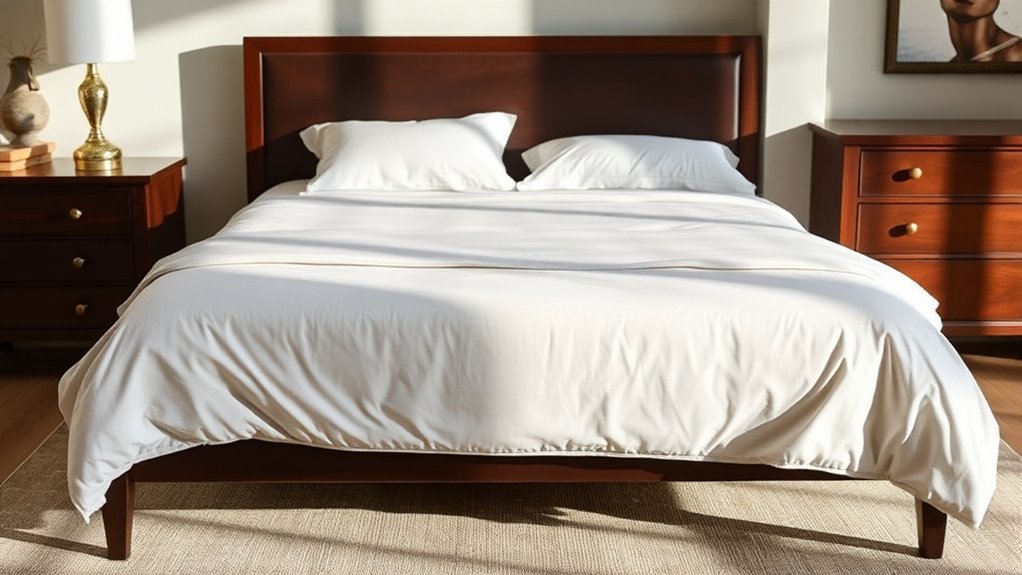
Knowing the exact dimensions of a queen bed really helps when you’re picking out bedding that fits just right—no awkward gaps or bunching. Plus, it’s important to think about how much space the bed will take up in your room.
That way, you can choose furniture that complements the bed without making the room feel cramped. Getting these details right not only keeps your bedroom functional but also makes it look stylish and inviting.
Accurate Mattress Dimensions
Queen bed dimensions directly impact your choice of bedding and furniture, so getting the measurements right is crucial. Different mattress types and your preferred sleep positions influence the ideal size and thickness.
Knowing exact dimensions helps you pick sheets, frames, and accessories that fit perfectly, avoiding discomfort or wasted space.
| Mattress Type | Dimensions (inches) |
|---|---|
| Standard Queen | 60 x 80 |
| Olympic Queen | 66 x 80 |
| California Queen | 60 x 84 |
| Thickness Range | 8 to 14 |
| Ideal Sleep Position | Back, Side, Stomach |
Accurate mattress dimensions guarantee you select bedding and furniture that complement your space and sleep style seamlessly.
Coordinating Bedding Sets
Choosing the right bedding sets depends heavily on the exact size of your mattress. With a queen bed, knowing the precise dimensions helps you pick bedding color and fabric choices that fit perfectly without excess bulk or tightness.
You can focus on style coordination, matching your bedding to seasonal themes or room decor effortlessly. Layering techniques become easier when each piece fits well, enhancing comfort and aesthetics.
Moreover, maintenance tips like easy-to-wash fabrics matter more when bedding fits properly. Budget options also improve since you avoid spending on ill-fitting sets.
Finally, pattern mixing works best when your bedding complements the bed size, creating a balanced, inviting look. Understanding your queen bed’s dimensions guarantees your bedding looks great and functions well.
Furniture Space Requirements
A standard queen bed measures 60 inches wide by 80 inches long, and this size directly impacts how you arrange your bedroom furniture. When planning your furniture layout, you need to take into account the space the bed occupies to guarantee there’s enough room for nightstands, dressers, and walking paths.
Proper space optimization prevents your room from feeling cramped and allows for comfortable movement. You’ll want at least 24 inches of clearance on each side of the bed for easy access and functional use of surrounding furniture.
How Much Floor Space Does a Queen Bed Need?
To comfortably fit a queen bed in your room, you’ll need at least 63 square feet of floor space just for the mattress itself, which measures 60 inches wide by 80 inches long. However, for practical use, you should consider additional space around the bed.
Ideally, leave at least 24 inches of clearance on each side and at the foot of the bed to guarantee easy movement and furniture placement. When planning your floor layout, think about how the bed’s position affects traffic flow and access to other furniture.
Space optimization becomes essential, especially in smaller rooms, so you might arrange nightstands or dressers to maximize available space without overcrowding. You can also investigate multi-functional furniture to improve room functionality.
What Bedding Sizes Fit a Queen Bed Best
Finding the right bedding sizes for your queen bed guarantees both comfort and a polished look. Typically, queen beds need fitted sheets measuring 60 by 80 inches, while flat sheets should be around 90 by 102 inches to drape nicely.
For blankets and quilts, sizes between 90 by 90 inches and 90 by 94 inches work best. When choosing bedding materials, consider your comfort preferences, like cotton for breathability or flannel for warmth.
Match fabric choices and color schemes to your room’s decor to create a cohesive feel. Seasonal changes call for layering techniques, such as adding lightweight quilts in summer and heavier quilt types in winter.
Remember to follow maintenance tips, such as washing bedding regularly and avoiding harsh detergents, to keep fabrics soft and durable. By selecting the right sizes and materials, you guarantee your queen bed looks inviting and suits your lifestyle year-round.
How to Measure Your Room for a Queen Bed
Before buying a queen bed, you’ll want to measure your room’s dimensions carefully. Make sure to leave enough clearance space around the bed so you can move around comfortably. This way, you’ll ensure the bed fits well without making the room feel cramped.
Room Dimensions Check
Although you might already have a good sense of your room’s size, measuring it accurately guarantees your queen bed fits comfortably without crowding the space. Start by measuring the length and width of your room, noting any architectural features like closets or windows that affect your room layout.
Use these measurements to envision how the queen bed will fit alongside other furniture. Consider space optimization by planning for walking paths and storage areas to keep your room functional.
Sketching a simple floor plan can help you visualize the arrangement and confirm nothing feels cramped. Taking the time to check your room dimensions carefully prevents surprises and helps you make informed decisions when purchasing your queen bed. This step is vital for creating a balanced, comfortable bedroom environment.
Clearance Space Needed
To guarantee your queen bed fits comfortably, you need at least 24 inches of clearance space around it for easy movement and access. Meeting these clearance requirements guarantees ideal spacing, so your room doesn’t feel cramped.
Measure your room carefully, accounting for furniture placement and door swings. Here’s a quick guide to clearance needs based on room size and bed placement:
| Room Size (ft) | Minimum Clearance (in) | Recommended Use |
|---|---|---|
| 10 x 10 | 24 | Single access side |
| 12 x 12 | 30 | Walk around both sides |
| 14 x 14 | 36 | Spacious access |
| 16 x 16 | 40 | Extra furniture space |
| 18+ x 18+ | 48 | Ideal spaciousness |
This table helps you plan your space for comfort and convenience.
Can a Queen Bed Fit in a Small Bedroom?
Wondering if a queen bed can fit comfortably in your small bedroom? The answer depends on how well you plan your bed arrangement and use space optimization techniques.
A queen bed measures 60 inches wide and 80 inches long, so it takes up a significant portion of floor space. To make it work, start by measuring your room and mapping out furniture placement to maintain at least 24 inches of clearance around the bed for easy movement.
Consider positioning the bed against a wall or corner to free up more floor area. Use multifunctional furniture like storage ottomans or wall-mounted shelves to reduce clutter.
Avoid bulky nightstands and opt for slim, vertical storage options. By thoughtfully arranging your bed and maximizing vertical space, you can fit a queen bed in a small bedroom without sacrificing comfort or functionality.
Standard Thicknesses of Queen Mattresses
When choosing a queen mattress, understanding its standard thickness can help you pick the right fit for your comfort and bed frame. Most queen mattresses range from 8 to 14 inches in mattress thickness. This range covers various comfort levels and firmness options, accommodating different sleeping positions, whether you sleep on your back, side, or stomach.
The material types, like memory foam, innerspring, or hybrid, affect both support systems and temperature regulation. For example, memory foam offers excellent contouring and temperature control, while innerspring mattresses provide robust support and durability factors.
Thicker mattresses often combine layers to improve both comfort and longevity, but your bed frame height and design also play a role in selecting the ideal thickness. By considering these elements, you can find a queen mattress that balances support, comfort, and temperature regulation tailored to your unique needs, ensuring restful sleep every night.
Size Differences in Adjustable and Specialty Queen Mattresses
Although standard queen mattresses have consistent dimensions, adjustable and specialty queen beds often differ in size to accommodate unique features or user needs. When you choose a queen mattress with adjustable features, such as split designs or motorized bases, you might notice variations in thickness or length to guarantee compatibility with the mechanisms.
These mattresses can be slightly thicker or have reinforced edges, impacting the overall size. Specialty designs, like pillow-top or hybrid queens, also vary in thickness and firmness, sometimes adding extra inches to the mattress height. You’ll find that these specialty options are tailored to provide specific comfort levels or support, which can influence the mattress dimensions beyond the standard 60 by 80 inches.
Understanding these size differences helps you pick the right mattress without surprises. When selecting adjustable or specialty queen mattresses, consider how their unique features affect size to guarantee a proper fit for your bed frame and bedding.
How to Choose the Right Queen Bed Frame
When you’re picking out a queen bed frame, the first thing to do is measure your room. You want to make sure the frame fits comfortably without cramping the space. Next, think about the material and style—choose something that matches your decor and suits your personal taste. And don’t forget to check the weight capacity, so it can safely support both your mattress and anyone who sleeps on it.
Measuring Your Room Space
Measuring your room accurately is the first step to choosing the right queen bed frame. Start by noting the exact dimensions of your space, including doorways and windows. This helps guarantee the frame fits without crowding your room layout.
Consider the furniture arrangement carefully. You’ll need enough clearance for walking and other pieces like nightstands or dressers. Sketch a simple floor plan to visualize how the bed will interact with existing furniture.
Don’t forget to measure the ceiling height if you’re thinking about a taller frame. Taking these measurements prevents surprises and helps you pick a bed frame that complements your room’s flow. When you measure with precision, you’ll confidently select a frame that fits your space and lifestyle perfectly.
Material and Style Options
Choosing the right material and style for your queen bed frame can transform your bedroom’s look and feel. When selecting material types, consider wood for a classic, warm vibe or metal for a modern, sleek appearance.
Upholstered frames add softness and comfort, perfect if you want a cozy atmosphere. Style variations range from minimalist platform beds to ornate, traditional designs, so pick one that complements your décor and personal taste.
Don’t forget to think about maintenance. Wood might need polishing, while metal frames are easier to clean. By evaluating material types and style variations, you can find a queen bed frame that not only fits your space but also improves your bedroom’s overall aesthetic seamlessly.
Weight Capacity Considerations
Since your bed frame supports your mattress and body weight, you need to evaluate its weight capacity carefully. Choosing a frame with adequate weight capacity guarantees it handles the combined load without sagging or breaking.
Consider how weight distribution affects mattress support. Frames with center support bars or multiple slats provide better stability, especially for heavier mattresses or couples.
If you use a memory foam or hybrid mattress, which tend to be heavier, prioritize a frame designed to evenly distribute weight. This helps prevent pressure points and prolong mattress life.
Don’t forget to check the manufacturer’s specified weight limits. Picking the right queen bed frame with proper weight capacity and support assures comfort, durability, and safety, making your investment worthwhile.
Frequently Asked Questions
How Do I Clean and Maintain a Queen Mattress?
To clean and maintain your queen mattress, start by vacuuming it regularly to remove dust and allergens. Spot clean stains with a mild detergent and warm water, but avoid soaking the mattress.
Use a mattress protector to prevent spills and dirt. Rotate your mattress every three months to guarantee even wear.
These mattress cleaning and maintenance tips help extend your mattress’s life and keep it fresh, so you can sleep comfortably night after night.
What Materials Are Queen Mattresses Commonly Made From?
Queen mattresses commonly come in various mattress types like memory foam, innerspring, hybrid, and latex. Each type offers different comfort levels to suit your preferences.
Memory foam molds to your body, providing excellent pressure relief, while innerspring offers a bouncier feel with strong support. Hybrids combine both for balanced comfort, and latex is great if you want a natural, durable option. Pick what feels best for your sleeping style!
Are Queen Beds Suitable for Pets to Sleep On?
Queen beds are perfect islands of comfort for you and your pets. When you invite your four-legged companions onto this shared space, you create a haven where pet comfort and your sleeping habits harmonize.
Your pets feel secure, and you enjoy their warmth without sacrificing rest. Just make sure to maintain cleanliness and consider their size, so everyone sleeps peacefully, turning your queen bed into a sanctuary for both you and your beloved companions.
How Long Does a Queen Mattress Typically Last?
A queen mattress typically lasts about 7 to 10 years, depending on its quality and usage. You’ll want to watch for replacement signs like sagging, lumps, or increased discomfort when sleeping.
If you’re waking up with aches or allergies worsen, it’s probably time to get a new one. Keeping an eye on your mattress lifespan helps guarantee you’re getting good rest and maintaining proper support throughout the years.
Can Queen Bed Sizes Vary Internationally?
Yes, queen bed sizes can vary internationally. When you shop globally, you’ll notice international sizing differences influenced by cultural preferences and manufacturing standards.
For example, a queen bed in the U.S. usually measures 60 by 80 inches, but in Australia or Japan, dimensions might differ slightly to suit local tastes and room sizes. So, always check specific measurements before buying to verify your new bed fits perfectly.
Conclusion
Now that you know a queen bed measures about 60 by 80 inches, you can confidently choose the perfect mattress and bedding. Think of your queen bed as the heart of your bedroom, big enough to offer comfort without overwhelming the space.
With the right frame and accessories, it’ll fit snugly in most rooms, making your sleep sanctuary both stylish and practical. Your cozy retreat awaits, ready to welcome you every night. Knowing how many inches are in a queen bed helps you create that perfect setup.