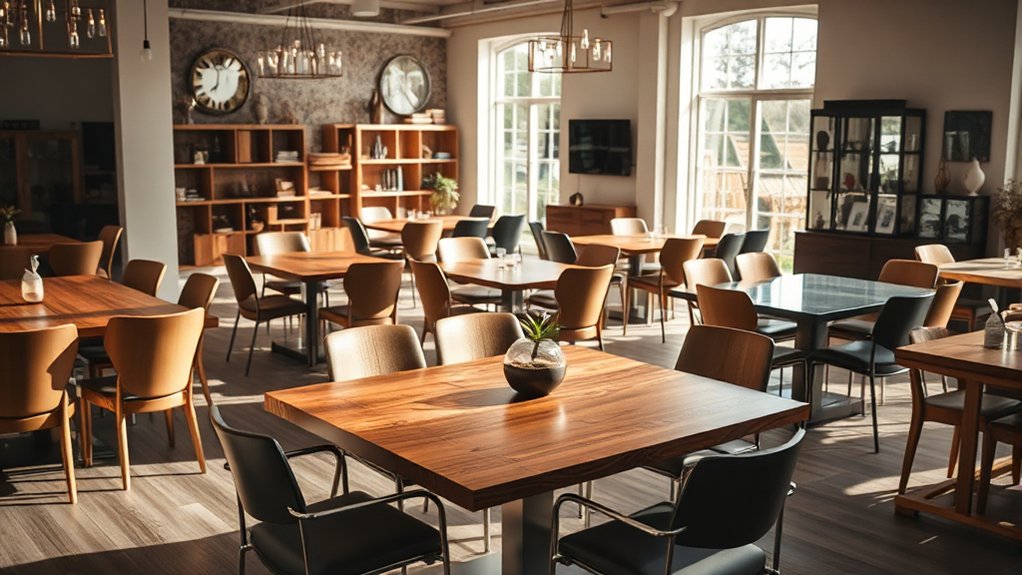
10 Tips on How to Pick a Dining Room Table
Finding the perfect dining room table can feel overwhelming, especially when you want something that fits your space, style, and lifestyle. You’re not alone—many people struggle to balance all these factors while making a choice that will last for years. How to Pick a Dining Room Table.
But with the right guidance, you can confidently pick a table that truly enhances your home.
To pick the perfect dining room table, start by measuring your space carefully and leaving room for movement. Think about how many people you’ll seat regularly and choose a shape that fits your room and social style.
Set a budget that balances quality with your design taste, then choose materials that suit your lifestyle. Don’t forget to check table height for comfort and consider features like extendable tops or storage.
Keep exploring to uncover tips that make your choice even smarter.
Key Takeaways
- Measure your dining area accurately, leaving at least 36 inches clearance around the table for comfortable movement.
- Choose a table shape and size based on seating needs and room layout, balancing daily use and special occasions.
- Set a budget prioritizing durable, quality materials like oak or sealed wood to ensure longevity and easy maintenance.
- Ensure table height and legroom provide comfort, and test chairs with the table for proper fit and support.
- Look for practical features like extendable surfaces and easy-to-clean finishes. Also, compare options through showroom visits and reviews.
Measure Your Dining Space Accurately
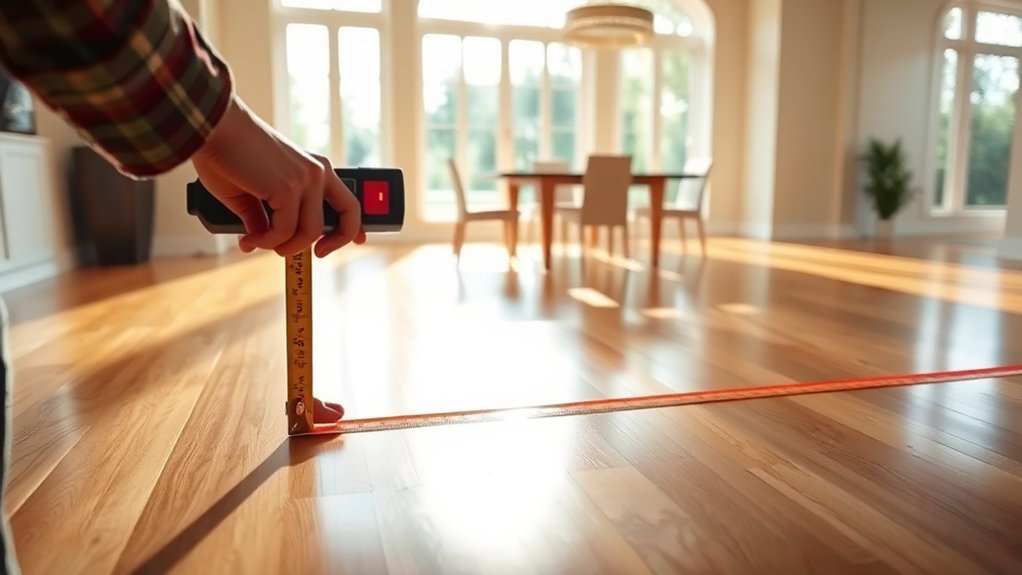
Before you choose a dining table, measure your dining space carefully to guarantee a comfortable fit. Start by noting the dining space dimensions, including the length, width, and any architectural features like windows or doorways. This helps you understand the exact area available and prevents choosing a table that overwhelms the room.
Next, consider furniture arrangement tips. Leave at least 36 inches of clearance around the table to allow easy movement and chair pull-out space. If you have other furniture in the room, measure their placement too, ensuring the table won’t crowd the space or block pathways.
Determine How Many People You Need to Seat
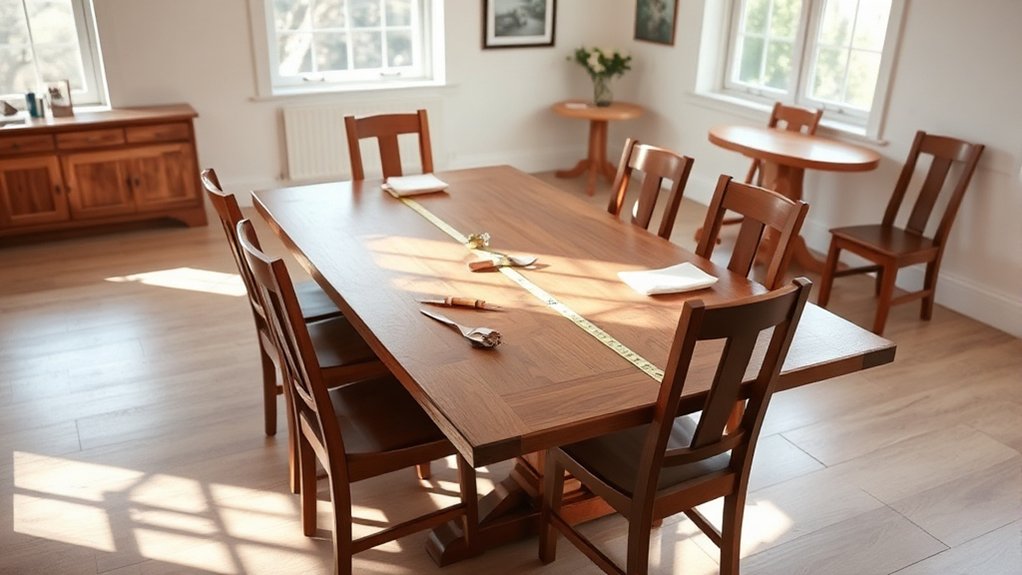
First, think about how many people you usually seat at your dining table. Also, don’t forget to consider those occasional guests or family gatherings when you might need some extra space. This way, you can pick a table size that works well for both everyday meals and special occasions.
Identify Regular Seating Needs
How many people do you regularly need to seat at your dining table? Knowing this helps you choose a table that fits your space and lifestyle. Consider your seating preferences and how your family uses the table during family activities. For example:
- Count the number of family members who eat together daily.
- Think about whether you prefer extra space for comfort or a cozier setup.
- Reflect on other activities, like homework or crafts, that require seating beyond meals.
Consider Occasional Guests
Although your daily seating needs set the baseline, you’ll want to factor in occasional guests when choosing a dining table. Thinking about guest preferences and seating flexibility guarantees you’re prepared for unexpected company or holiday dinners.
A table that accommodates a few extra seats lets everyone feel welcome without crowding the space.
Here’s a quick guide to help visualize your options:
| Number of Guests | Seating Flexibility Needed |
|---|---|
| 4 | Low |
| 6 | Moderate |
| 8+ | High |
Pick the Right Dining Table Shape for Your Room
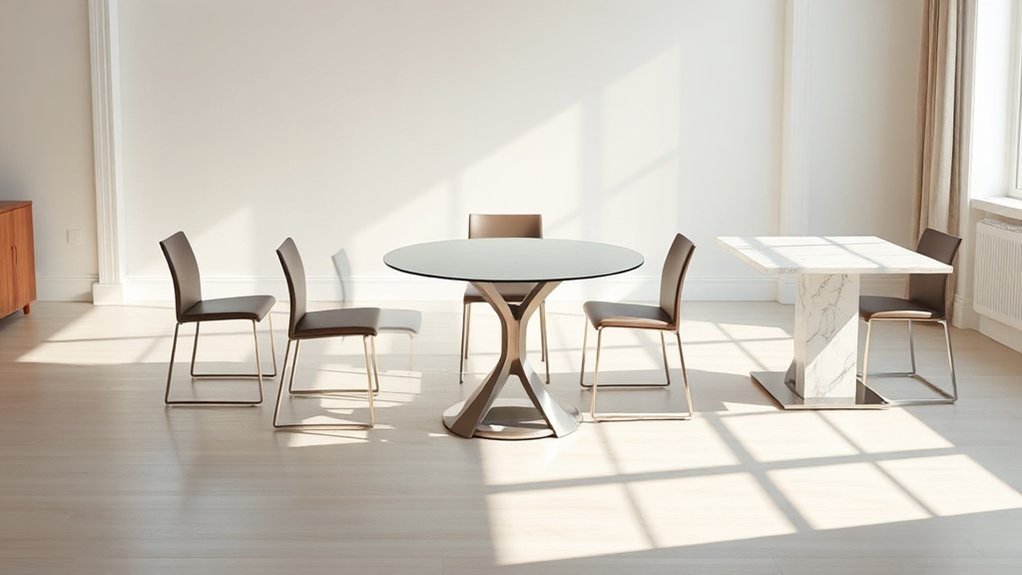
Choosing the right dining table shape can transform your space and improve functionality. The shape you pick affects how people interact and how well the table fits your room. Here’s how to choose wisely:
- Rectangular and Oval Tables: Perfect for longer rooms, these shapes provide plenty of seating and often come with expandable options to accommodate guests. They’re timeless and fit many style trends.
- Round and Square Tables: These shapes excel at space optimization in smaller or square rooms. Round tables encourage conversation, while square tables offer a modern, structured look.
- Unique Shapes: If you want to make a statement or have an irregular space, consider unique shapes like hexagons or trapezoids. They add personality and can be functional if chosen carefully.
Set a Budget That Balances Quality & Style
Before you start shopping, it’s a good idea to set a clear budget that works with your finances. Try to focus on durable materials that will last, even if they cost a little more upfront. Finding the right balance between quality and style means you’ll get a table that not only looks great but also stands the test of time.
Determine Your Price Range
How much you’re willing to spend on a dining room table shapes your options more than any other factor. Before browsing, determine your price range by balancing your budget constraints with quality expectations.
Setting this range helps you focus on tables that fit both your style and durability needs without overspending.
Consider these steps:
- Assess your overall budget to know your spending limit.
- Research typical prices for materials and styles you like.
- Decide where quality matters most, so you can allocate funds wisely.
Prioritize Durable Materials
While setting your budget, focus on materials that offer lasting durability without sacrificing style. Choose wood types known for long term durability, such as oak, maple, or walnut, which also boost resale value.
Consider finish choices that protect your table from spills and scratches, reducing maintenance needs. If you prefer eco-friendly options, bamboo and reclaimed wood align well with current style trends and sustainability goals.
Pay attention to color pairing too. Select a finish that complements your room’s palette to create a cohesive look. Following maintenance tips, like regular cleaning and conditioning, extends your table’s life.
Prioritizing these durable materials guarantees you invest in a piece that stays beautiful and functional, balancing quality with timeless style.
Balance Cost With Design
Although quality materials are essential, you’ll want to set a budget that balances durability with style without overspending. When picking a dining room table, consider current design trends, but don’t let them dictate your entire budget. Smart budget strategies help you invest in pieces that last and look great.
Here are three tips to balance cost with design:
- Prioritize features that matter most, like sturdy construction over trendy finishes.
- Look for sales or timeless designs that complement your style without breaking the bank.
- Mix and match affordable chairs with a high-quality table to save money while staying stylish.
Choose Dining Table Materials That Fit Your Lifestyle
When selecting a dining table, you’ll want to pick materials that match your daily habits and household needs. Consider different wood types. Oak offers durability, while pine provides a lighter budget option.
Material finishes also affect maintenance needs. A glossy finish resists stains but shows scratches, whereas matte finishes hide wear better. Think about durability factors like resistance to spills or heat, especially if you have kids or entertain often.
Lifestyle compatibility means choosing something you can care for without hassle. Also, weigh the environmental impact. Opting for sustainably sourced wood or recycled materials supports eco-friendly choices.
Align your selection with aesthetic preferences to guarantee the table complements your space without clashing. Finally, balance your budget considerations with quality. Investing a bit more upfront can mean less repair or replacement later.
Match Your Dining Table Style to Your Decor
Selecting the right material for your dining table is just one part of creating a cohesive space. To truly match your dining table style to your decor, focus on maintaining theme consistency and achieving aesthetic balance. Consider how your table’s design interacts with the room’s overall style fusion and visual continuity to improve room flow.
Choosing a dining table involves more than material—ensure style consistency and visual harmony for cohesive decor.
Here are three key steps to guide you:
- Color Coordination: Choose table colors that complement your walls, flooring, and chairs to create a harmonious palette.
- Material Harmony: Pair your table material with other furniture finishes, like wood or metal, to guarantee smooth integration.
- Design Themes: Align your table’s design with existing decor themes, whether modern, rustic, or traditional, to reinforce a unified look.
Consider Table Height and Chair Compatibility
You’ll want to keep in mind the standard table height, which is usually around 28 to 30 inches. Then, make sure your chairs have the right seat height to fit comfortably under the table. That way, everyone can sit and eat without feeling cramped or awkward.
Standard Table Height
Although table height might seem like a minor detail, it plays an essential role in comfort and functionality. Knowing table height standards helps you pick a dining table that suits your space and seating. Most dining tables have a height between 28 to 30 inches, which fits most chairs and allows comfortable legroom. If you want versatility, adjustable tables offer flexibility, letting you change the height for different occasions or users.
Here are three things to take into account about standard table height:
- Stick to 28-30 inches for typical dining tables to guarantee comfort.
- Adjustable tables can accommodate various chair heights and needs.
- Avoid tables too tall or too short, which may cause discomfort or awkward posture.
Choosing the right height improves your dining experience notably.
Matching Chair Dimensions
Three key dimensions determine how well your chairs fit with your dining table: seat height, seat depth, and backrest height. First, make sure the seat height allows enough legroom between the chair and table. Usually, around 10-12 inches from seat to tabletop works best.
Next, consider seat depth. If it’s too deep, it might be uncomfortable, especially without sufficient cushion comfort. Finally, backrest height should complement your table’s style and provide good support.
When selecting chair styles, think about how their dimensions align with your table’s height and overall design. Matching these dimensions guarantees you’ll enjoy both comfort and functionality during meals, avoiding awkward seating that disrupts your dining experience. Always test chairs with your table before buying to confirm the perfect fit.
Explore Storage and Extendable Table Features
When choosing a dining room table, considering storage and extendable features can greatly boost both functionality and convenience. These options help you maximize space without sacrificing style. Look for tables with hidden compartments that keep essentials like napkins, placemats, or cutlery tucked away but easily accessible. Stylish finishes can also elevate your room’s aesthetic while offering practical benefits.
Here are three key points to investigate:
- Hidden Compartments: Ideal for storing dining accessories discreetly, helping keep your table clutter-free.
- Extendable Designs: Great for adjusting the table size when hosting guests, offering flexibility without extra furniture.
- Stylish Finishes: Choose finishes that complement your decor and withstand daily use, ensuring the table stays attractive over time.
Pick a Table That’s Easy to Clean and Maintain
Beyond choosing features like hidden compartments and extendable designs, you’ll want a dining table that’s easy to clean and maintain. Opt for easy to clean surfaces such as sealed wood, tempered glass, or laminate, which resist stains and wipe down quickly. Avoid materials that absorb spills or require special cleaners, as they demand more effort and time.
To keep your table looking its best, follow simple maintenance tips: clean spills immediately with a soft cloth, use coasters to prevent rings, and avoid placing hot items directly on the surface. Regularly dust your table to prevent buildup and occasionally apply a suitable polish or conditioner based on the material. These small steps protect your table from damage and extend its lifespan.
Shop Around and Compare Dining Table Options
Although finding the perfect dining table might feel overwhelming, shopping around and comparing options can help you make a confident choice. Start by examining various table styles and material options to see what fits your space and lifestyle.
Don’t forget to check both online shopping platforms and local showrooms to get a real feel for the tables.
Here’s how to shop smart:
- Compare brand comparisons and customer reviews online to understand quality and reputation.
- Visit local showrooms to examine finish choices and test comfort, plus investigate custom designs if you want something unique.
- Engage in price negotiations, especially at physical stores, to get the best deal without compromising quality.
Frequently Asked Questions
How Do I Protect My Dining Table From Heat Damage?
To protect your dining table from heat damage, always use heat resistant coatings or placemats before setting hot dishes down. Different table materials handle heat differently; wood and glass need extra care compared to metal or stone.
Avoid placing hot pots or pans directly on the surface, and consider investing in heat resistant pads. Regularly applying protective finishes can also help maintain your table’s look and durability over time.
What Lighting Works Best Above a Dining Table?
Lighting above your dining table is the crown jewel that sets the mood. You’ll want ambient lighting that’s soft yet bright enough to see faces and food clearly.
Chandelier styles work wonders here. They come in all shapes and sizes, so you can pick one that complements your space and adds personality. Just make sure it’s dimmable, so you can adjust the glow for every dinner, from casual meals to romantic evenings.
How Can I Prevent Scratches on a Glass Dining Table?
To prevent scratches on your glass dining table, focus on proper glass care and table maintenance. Always use placemats and coasters to protect the surface from sharp or abrasive objects.
Avoid dragging items across the glass; instead, lift them. Clean the table regularly with a soft, non-abrasive cloth and gentle glass cleaner.
Keeping these habits will help maintain your table’s pristine look and guarantee it stays scratch-free for years to come.
Are Dining Tables With Rounded Edges Safer for Kids?
Yes, dining tables with rounded edges are definitely safer for kids. When you choose kid friendly designs, rounded edges help prevent injuries from sharp corners.
You should also consider edge materials. Soft or cushioned edges reduce impact even more. By picking a table with these features, you’ll create a safer environment for your little ones while still maintaining style and functionality in your dining space.
How Do I Choose Dining Chairs That Complement the Table?
Choosing dining chairs that complement your table is like finding the perfect dance partner. They need to move in harmony. Start by matching styles; if your table is modern, pick sleek chairs.
Consider chair materials too. Wood pairs well with wood, while metal or upholstered chairs add contrast and texture. Don’t be afraid to mix materials, but keep colors and proportions balanced so everything feels connected and inviting.
Conclusion
When picking your dining room table, keep in mind that 70% of people say their dining table is the heart of their home. So, choose one that fits your space, lifestyle, and style perfectly. Measure carefully, consider seating needs, and don’t forget comfort and maintenance.
With the right table, you’ll create a welcoming spot for meals and memories. Take your time, shop smart, and enjoy every gathering around your new centerpiece. Remember, selecting the perfect dining room table will truly bring your space to life.