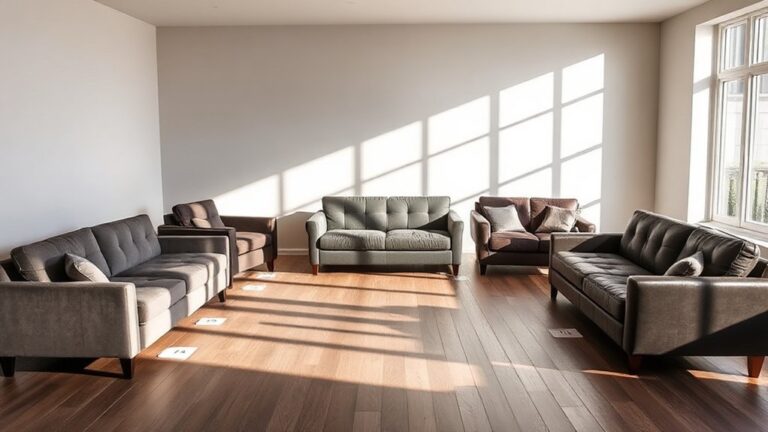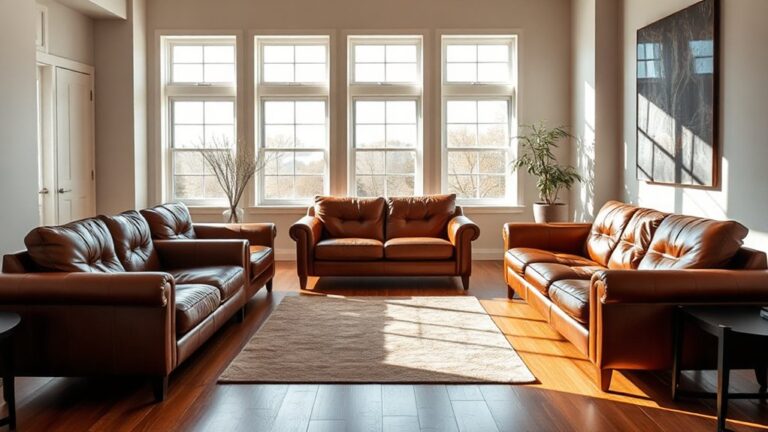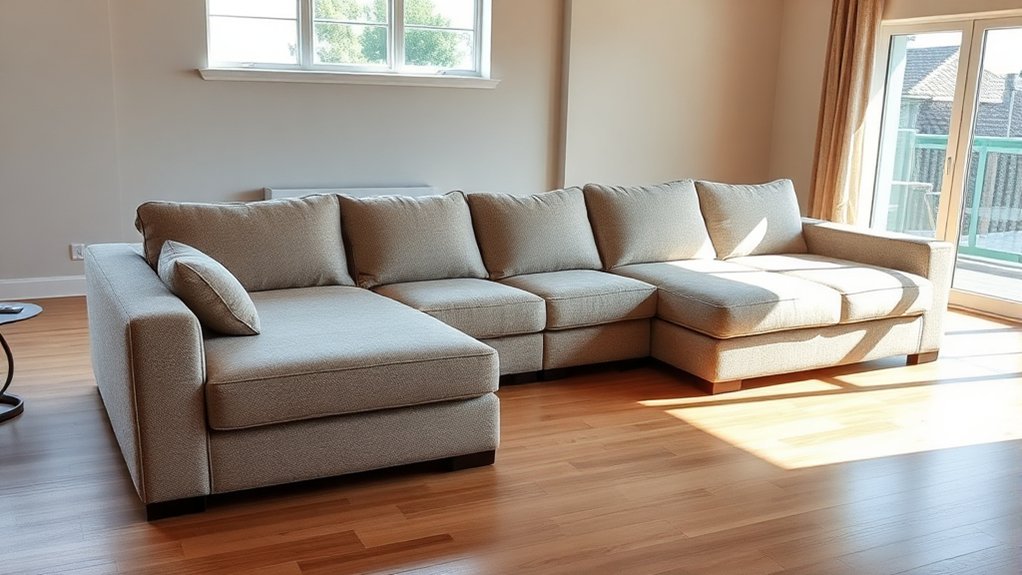
What Are the Typical How Big is a Sectional Couch Dimensions?
Finding the perfect big sectional couch can feel overwhelming, especially when you’re not sure what size will fit your space without making it feel cramped. You’re not alone—many people struggle with balancing comfort, style, and room dimensions when shopping for a large sectional.
Getting the size right is key to creating a cozy and inviting living area you’ll love. How Big is a Sectional Couch.
If you’re looking for typical big sectional couch dimensions, expect L-shaped models to range from 90 to 120 inches per side, with chaise lounges adding up to 70 inches in length.
U-shaped sectionals often span 110 to 130 inches per side, comfortably seating six to eight people. Depth usually falls between 35 to 45 inches, balancing comfort and space.
Getting the size right means measuring your room carefully to avoid overcrowding. There’s more to investigate about fitting and styling your sectional perfectly.
Key Takeaways
- Large L-shaped sectionals typically measure 90 to 120 inches on each side with depths of 35 to 40 inches.
- U-shaped sectionals generally range from 110 to 130 inches per side, seating six to eight people comfortably.
- Chaise lounge extensions add 60 to 70 inches in length, which impacts the overall sectional size and room layout.
- Corner units usually measure 40 to 50 inches on each side, significantly affecting the sectional’s footprint and shape.
- Individual sectional pieces often range from 70 to 95 inches in length and 35 to 45 inches in width, allowing for flexible arrangements.
Typical Dimensions of L-Shaped Sectional Couches
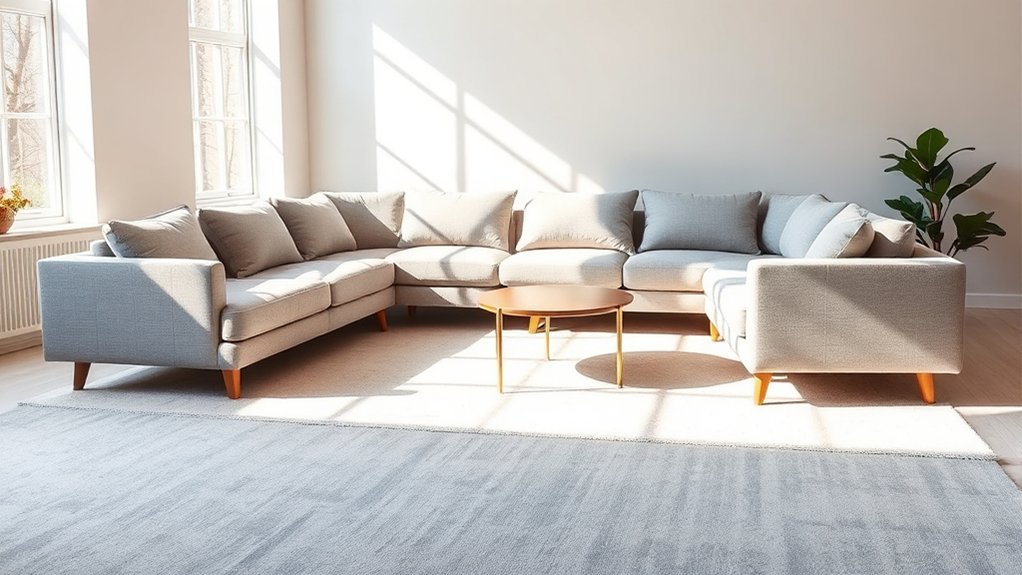
When you choose an L-shaped sectional couch, you’ll find that its dimensions typically range between 90 to 120 inches on each side. This size offers a perfect balance of ample seating and space efficiency, fitting comfortably in most living rooms.
L shaped configurations are popular because they naturally define seating areas and provide versatile layouts to suit your room’s flow. You can find sectional styles ranging from sleek modern designs to plush, cozy options, all within these common dimensions.
Keep in mind that the depth usually falls between 35 to 40 inches, giving enough room to stretch out without overwhelming your space. Some L-shaped sectionals include a chaise on one end, which often extends the length by an additional 60 to 70 inches.
Knowing these typical dimensions helps you visualize how the sectional will fit and function, ensuring you pick a style and size that improves your living area without overcrowding it.
Measuring Your Space for a Sectional Couch
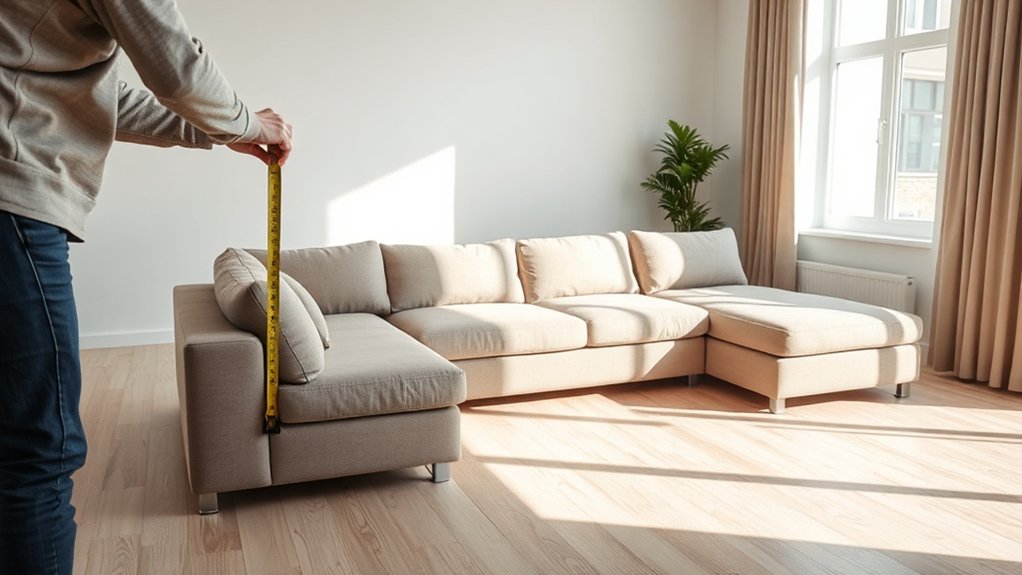
Understanding the typical dimensions of L-shaped sectional couches helps you picture how one might fit into your living room, but measuring your space accurately guarantees the perfect fit. Start by noting your room dimensions, including length, width, and any architectural features like doors or windows that could affect placement. Use a tape measure to get precise measurements and jot them down.
Next, consider your furniture layout. Sketch a simple floor plan to scale, marking existing pieces and available space. Measure walkways and confirm there’s enough clearance around the sectional for comfortable movement. Remember to account for extra space if you plan to add a coffee table or other accessories.
Standard Sizes of U-Shaped Sectional Sofas
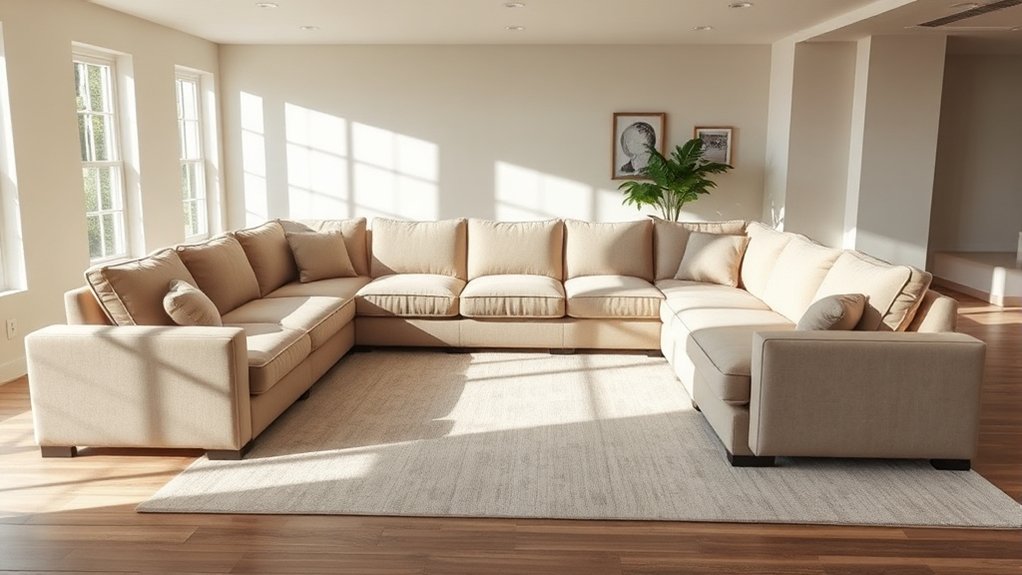
U-shaped sectional sofas offer ample seating and define large living spaces with their distinctive layout. When considering standard sizes of U-shaped sectional sofas, you’ll find most models range from 110 to 130 inches on each side. These U-shaped designs create a cozy, enclosed seating arrangement that’s perfect for family gatherings or entertaining guests.
The middle section often forms a connecting piece, completing the U and providing additional seating or a chaise lounge. With seating arrangements designed to maximize space, U-shaped sectionals typically accommodate six to eight people comfortably.
Keep in mind that while these sofas are roomy, their footprint requires careful planning to fit your living area without overcrowding. Because of their size, you’ll want to measure doorways and room dimensions precisely before purchasing. By understanding these standard sizes and seating arrangements, you can confidently choose a U-shaped sectional that improves your space both functionally and aesthetically.
Common Length and Width Ranges for Sectional Pieces
Sectional sofas come in various shapes, but their individual pieces share common size ranges that help you plan your space effectively. Typically, the length of a single sectional piece, like a sofa or chaise, ranges from 70 to 95 inches.
Individual sectional pieces typically measure 70 to 95 inches in length for flexible space planning.
Widths usually fall between 35 and 45 inches, depending on the style and functionality. Corner pieces, essential in L-shaped or U-shaped sectional configurations, generally measure around 40 to 50 inches on each side to provide a seamless connection.
When arranging your sectional, understanding these dimensions allows you to optimize furniture placement without overcrowding your room. You’ll find that the modular nature of sectional pieces lets you mix and match sizes to fit your living area perfectly.
Keeping these common length and width ranges in mind guarantees your sectional complements your space, making it both comfortable and visually balanced. This knowledge is key for creating an inviting, well-proportioned seating area.
Comparing Seat Depth and Height in Large Sectional Sofas
Although large sectional sofas often steal the spotlight for their size, the seat depth and height play essential roles in how comfortable and functional they feel. When comparing seat depth, deeper seats offer a relaxed lounging experience, perfect if you like to curl up or stretch out. Shallower seats, however, provide more upright support, which can be better for social settings or formal living spaces.
Seat height also impacts comfort. Higher seats make it easier to stand up, while lower seats give a cozy, laid-back vibe.
Your style preferences influence these choices, too. Modern designs often favor lower, deeper seats for a casual look, while traditional styles might stick to standard heights and moderate depths. Think about who’ll use the couch most and how you want to sit.
Prioritizing seat comfort alongside style preferences guarantees your big sectional sofa fits both your space and lifestyle perfectly.
How Corner Units Affect Sectional Couch Dimensions
When you add a corner unit to your sectional, it really changes the overall size and shape. Depending on the style of the corner, it can either save you some space or make the couch feel a bit bulkier. So, knowing these differences can help you make the most of your room layout without any surprises.
Corner Unit Size Impact
Because corner units serve as the connecting element in a sectional couch, their size directly influences the overall dimensions and layout possibilities. When you choose a larger corner unit, it naturally expands the footprint of your sectional, affecting how much floor space it occupies.
Different corner configurations, like wedge-shaped or rounded corners, impact how the adjoining sections align and the overall comfort. In various sectional styles, the corner unit design can either create a seamless flow or add bulk, so you’ll want to take this into account carefully.
If you’re aiming for a spacious, open feel, a smaller corner unit might work best. But if you want a more defined, cozy corner, a larger unit fits the bill. Understanding corner unit size helps you select the right sectional to match your room’s dimensions and style.
Shape Variations Influence
The shape of the corner unit plays a significant role in determining how your sectional fits and feels in your space. Different shape styles like rounded, square, or wedge-shaped corners can change the overall dimensions and flow of your sectional layout.
For example, a rounded corner unit softens the edges and may add extra seating without extending too far into your room. A square corner often creates a sharper, more defined footprint. Wedge-shaped corners can stretch the sectional’s length or width, impacting how much floor space it occupies.
When choosing a sectional, consider how these shape styles affect both comfort and room navigation. Your sectional layout isn’t just about length and depth; corner shapes influence how your couch interacts with your living area and daily use.
Space Optimization Tips
Although corner units greatly influence your sectional’s overall size, you can strategically choose and arrange them to maximize your living space. Corner pieces often dictate the sectional’s footprint, so selecting compact or modular corners can help optimize room flow without sacrificing seating arrangements.
Consider how the corner unit’s shape complements your design aesthetics. Rounded corners soften sharp lines, while sharp angles create a modern look. You can also rotate or reposition corner units to open up pathways or create cozy conversation nooks.
Balancing the size of corner units with adjacent sections guarantees you get ample seating without overwhelming the room. By thoughtfully integrating corner pieces, you maintain functionality and style while making the most of your available space.
Typical Dimensions for Sectional Chaise Lounges
When you’re picking out a sectional chaise lounge, you’ll usually see lengths that range from about 60 to 80 inches. Widths can be a bit all over the place, so it’s really important to think about how much floor space you actually have.
Keep these dimensions in mind when you’re planning your room layout—it’ll help you make sure there’s enough space for comfortable seating without feeling cramped.
Standard Chaise Length
Sectional chaise lounges typically measure between 60 and 75 inches in length, giving you enough space to stretch out comfortably without overwhelming your living room. When considering chaise design, the length plays an essential role in balancing style and practicality.
You want a chaise long enough to support your legs fully, enhancing chaise functionality as a relaxing extension of your sectional. This length range guarantees you can recline or lounge without feeling cramped.
Keep in mind that the chaise length also affects how the sectional fits in your space, so measuring your room beforehand helps avoid overcrowding. By choosing a standard chaise length within this range, you get a versatile piece that complements your sectional’s overall comfort and design.
Width Variations Overview
You’ll find that chaise lounges come in a variety of widths, typically ranging from 30 to 40 inches. This range allows you to choose a size that best fits your room and complements your sectional styles.
Narrower chaises around 30 inches suit compact spaces or tighter furniture arrangements, while wider options nearing 40 inches provide extra lounging comfort and a more substantial look. When selecting the width, consider how it integrates with the rest of your sectional pieces to maintain balanced proportions.
Different sectional styles, like L-shaped or U-shaped, might call for varying chaise widths to optimize flow and usability. Ultimately, understanding these width variations helps you create a cohesive furniture arrangement that maximizes both comfort and style in your living area.
Space Planning Tips
Choosing the right chaise width is just one piece of the puzzle. Planning the overall space around your sectional chaise lounge guarantees it fits comfortably without overcrowding your room.
Start by measuring your room’s dimensions and leave at least 30 inches of clearance around the chaise for easy movement. Consider how the chaise’s length, typically between 60 to 80 inches, affects your furniture arrangement.
You want to maintain a balanced flow that complements your design aesthetics. Position the chaise to create a natural conversation area or to highlight a focal point like a fireplace or TV.
Keep pathways clear and avoid blocking windows or doorways. By thoughtfully arranging your sectional chaise lounge, you’ll improve both comfort and style in your living space.
How to Adjust Sectional Size to Fit Your Room
When fitting a large sectional into your room, start by measuring the available space carefully. Knowing your room’s exact dimensions lets you apply sectional arrangement tips effectively. Use space utilization strategies like positioning the sectional against walls or in corners to maximize floor space.
Consider modular sectionals that let you adjust size and shape to fit your layout perfectly.
Here’s a quick guide to adjusting sectional size:
| Adjustment Aspect | Tip |
|---|---|
| Length | Choose a length that leaves 3+ ft clearance for traffic flow |
| Depth | Opt for shallower seats in smaller rooms |
| Configuration | Use L-shape or U-shape based on room shape |
Why Cushion Size Matters for Your Sectional’s Fit
Comfort plays an essential role in how your sectional fits and feels in your space, and cushion size directly influences that comfort. When you choose cushions, consider both cushion materials and cushion shapes, as they affect the overall fit and usability of your sectional. Here’s why cushion size matters:
- Space Optimization Larger cushions can make your sectional feel bulky, while smaller cushions help fit tighter spaces.
- Visual Balance Cushion shapes that complement the sectional’s design improve its aesthetic appeal.
- Comfort Level Cushion materials like memory foam or down impact firmness and support, influencing how the sectional feels.
- Functionality Cushion size affects how many people can comfortably sit and how easily you can rearrange sections.
Tips for Choosing Sectional Dimensions That Maximize Comfort
To maximize comfort, start by measuring your room space carefully to make sure the sectional fits without overcrowding. You don’t want it to feel cramped, right? Next, think about how many people you want to seat regularly and pick dimensions that can accommodate them comfortably. And hey, don’t forget about cushion firmness—it really makes a big difference in how cozy your sectional feels.
Measure Room Space
Before choosing a sectional couch, you’ll want to carefully measure your room to guarantee the piece fits well without overwhelming the space. Accurate measurements help you optimize your furniture arrangement and complement your room layout. Here’s how to measure effectively:
- Measure the total length and width of your room to understand available space.
- Identify obstacles like doors, windows, and vents that might affect couch placement.
- Consider walkways and leave at least 30 inches of clearance around the sectional for easy movement.
- Sketch your room layout to visualize how different sectional sizes will fit and flow with existing furniture.
Consider Seating Capacity
How many people do you want your sectional couch to seat comfortably? Identifying your ideal seating capacity helps you choose the right dimensions and seating arrangements.
Think about your typical gatherings. Do you often host large groups, or is it just your family? Your user preferences, like whether you prefer sprawling out or sitting upright, also influence the sectional size.
Keep in mind that bigger isn’t always better. A sectional that overwhelms your space can reduce comfort. Opt for a design that balances capacity with ease of movement.
Modular sectionals offer flexible seating arrangements, allowing you to customize based on your needs. Ultimately, selecting a sectional that fits both your space and user preferences guarantees everyone enjoys a cozy, inviting spot.
Prioritize Cushion Firmness
Once you’ve settled on the right seating capacity, the next factor that shapes your comfort is cushion firmness. Your firmness preference directly affects how well the sofa cushions support your body, so it’s essential to prioritize cushion support when choosing sectional dimensions. Here’s how you can make the best decision:
- Test different cushions to find your ideal firmness preference, from soft to firm.
- Consider cushions with high-density foam or memory foam for lasting support.
- Opt for removable cushions to easily swap or adjust firmness over time.
- Balance firmness with the sectional’s dimensions. Deeper seats may need firmer cushions to prevent sinking.
Frequently Asked Questions
What Materials Are Commonly Used in Big Sectional Couches?
You’ll find big sectional couches commonly use fabric types like microfiber, leather, and velvet, each offering different looks and feels. When choosing, consider cushion firmness. Firmer cushions provide more support, while softer ones offer extra comfort.
Many sectionals combine durable fabrics with high-density foam cushions to balance comfort and longevity. You can also find options with removable covers for easy cleaning, making these materials both practical and stylish for your living space.
How Do Sectional Couch Styles Vary by Region?
You might think sectional couches look the same everywhere, but regional preferences turn them into style chameleons! In the South, you’ll find plush, oversized pieces perfect for sprawling family gatherings, while in urban Northern lofts, sleek, minimalist designs dominate.
Cultural influences shape fabric choices and configurations, too. So, when you pick a sectional, you’re not just choosing furniture; you’re embracing a region’s vibe and traditions.
What Are the Maintenance Tips for Large Sectional Sofas?
To keep your large sectional sofa looking great, use proper cleaning techniques like vacuuming regularly and spot-cleaning spills promptly. You’ll want to avoid harsh chemicals that can damage the fabric.
Applying fabric protection sprays helps repel stains and extends your couch’s life. Rotate cushions often to prevent uneven wear, and consider professional cleaning yearly. These steps make maintenance easier and keep your sectional comfy and fresh for years.
Are There Eco-Friendly Options for Big Sectional Couches?
Yes, you can definitely find eco-friendly big sectional couches made from sustainable materials like organic cotton, recycled wood, and natural latex foam. When shopping, look for design certifications such as GREENGUARD or FSC, which guarantee the couch meets environmental and health standards.
Choosing these options helps reduce your carbon footprint and supports responsible manufacturing. You’ll enjoy a stylish, comfortable sofa while making a positive impact on the planet.
How Does Sectional Couch Color Impact Room Aesthetics?
You’ll be surprised to learn that 90% of people say color influences their mood at home. Sectional couch color plays a huge role in room aesthetics by affecting color psychology and setting the vibe.
Choosing calming blues can promote relaxation, while vibrant reds energize the space. Picking a color that complements your walls and décor guarantees design harmony, making your room feel balanced and inviting.
Conclusion
So, you’re ready to pick a big sectional couch, huh? Just remember, it’s not a spaceship. Measure your room before you bring home a sofa that swallows your entire living space. L-shaped, U-shaped, chaise lounges—they all have their quirks, just like your in-laws.
But seriously, choose dimensions that fit your room and your comfort. Otherwise, you might end up sitting on the floor, wondering why you didn’t check those measurements first! When it comes to big sectional couch dimensions, planning ahead is key.