How Big Is a Sectional Sofa?
Finding the perfect sectional sofa can feel overwhelming, especially when you’re trying to balance style, comfort, and space. You’re not alone—many people struggle with choosing the right size that fits their room without crowding it.
But don’t worry, we’re here to help you navigate those choices and find the ideal sectional for your home.
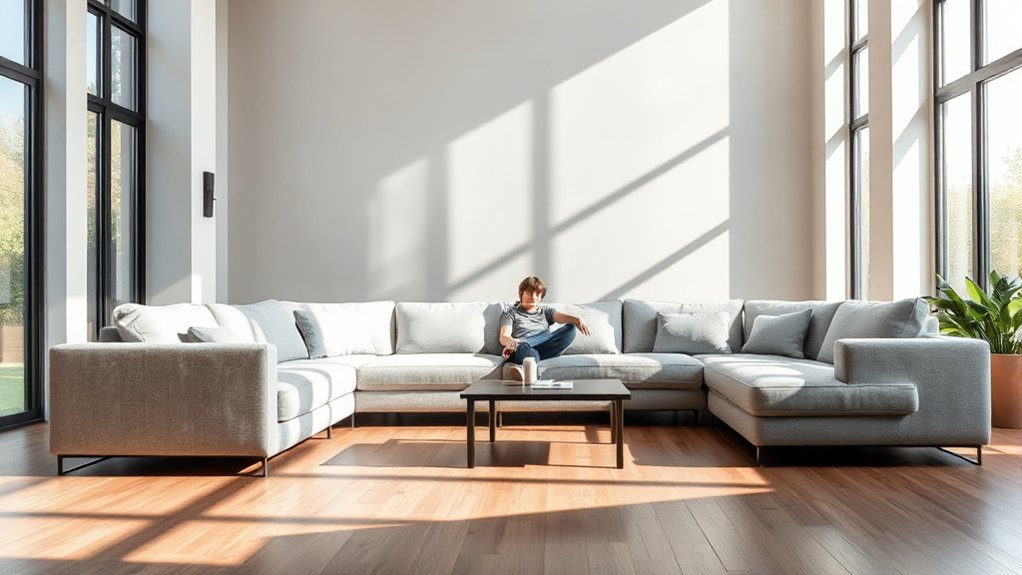
A sectional sofa typically ranges from 90 to 150 inches per side, depending on its shape and configuration. L-shaped sectionals usually span 90 to 120 inches per side, while U-shaped ones can be larger.
You’ll want to measure your space carefully, allowing at least 30 to 36 inches of clearance around it for comfortable movement.
If you’re working with a small room, compact or modular options can help maximize space.
Keep exploring to find the perfect size and layout for your home.
Key Takeaways
- Sectional sofas typically range from 90 to 150 inches per side, with most around 100 to 120 inches in length.
- L-shaped sectionals measure about 90 to 120 inches per side, while U-shaped models often exceed 120 inches.
- Compact sectionals for small spaces usually range from 70 to 90 inches in length with slim profiles.
- Allow at least 36 inches of clearance around the sectional for comfortable movement and room flow.
- Modular sectionals vary in size and offer flexible arrangements to fit different room layouts and sizes.
What Is a Sectional Sofa and How Is It Measured?
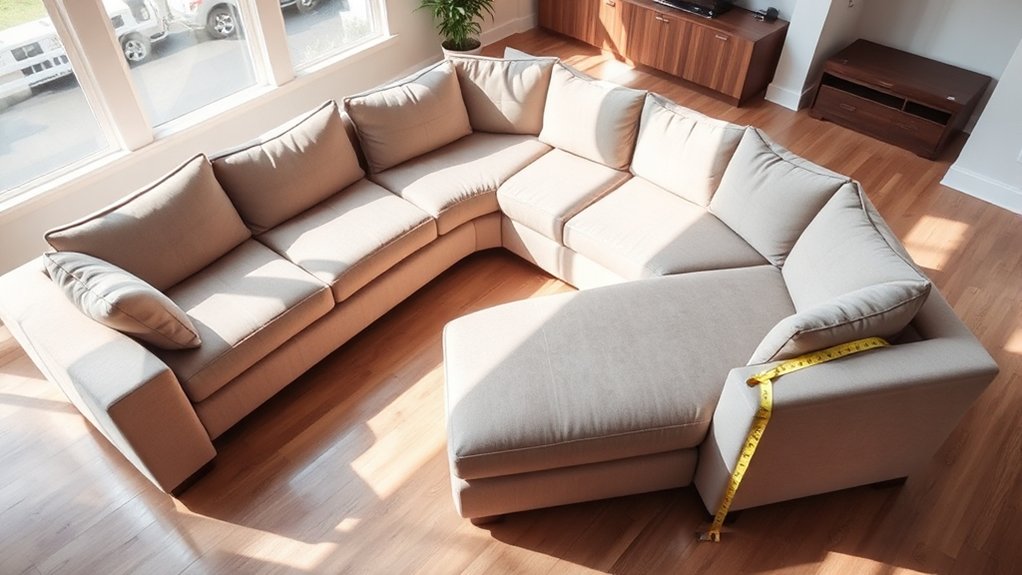
A sectional sofa is a versatile seating option made up of multiple connected pieces that you can arrange to fit your space. You’ll find various sectional styles, from L-shaped to U-shaped and modular designs, each offering unique configurations. Before buying, it’s essential you know how to measure your sectional sofa accurately.
Start by measuring the total length and width, accounting for all connected sections. Use a tape measure to capture the depth of each seat and the height from floor to the top of the backrest. Don’t forget to note any chaise or recliner extensions, as they affect overall dimensions.
Measuring techniques also include considering doorways, staircases, and room layouts to guarantee your sectional fits comfortably. It’s all about making sure your new sofa fits just right in your space.
Typical Sectional Sofa Dimensions
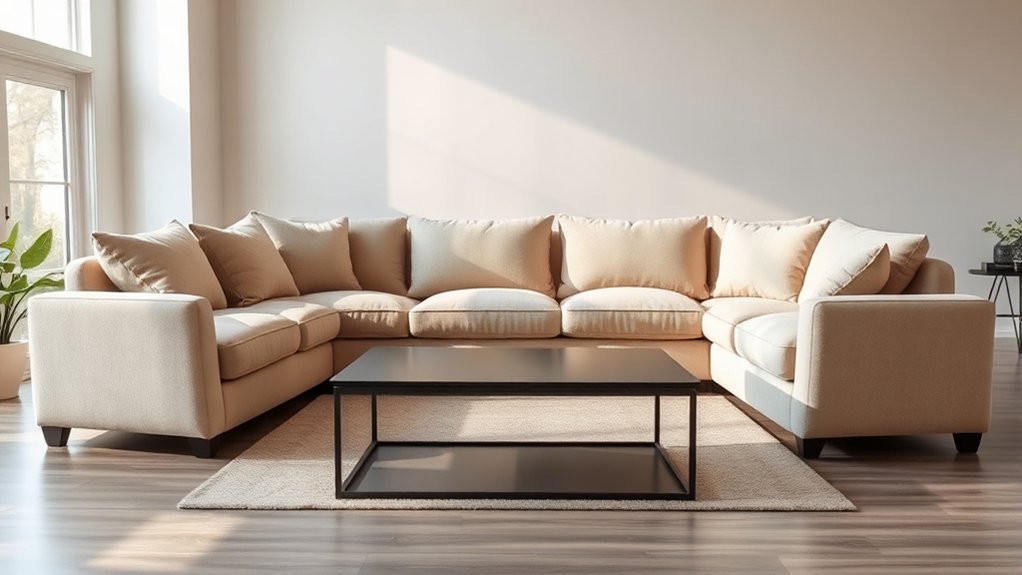
You’ll want to know the standard sizes of sectional sofas so you can find one that fits your space perfectly. Common shapes, like L-shaped and U-shaped, each have typical dimensions you should keep in mind. And understanding the space requirements will definitely help you plan your room layout without any surprises.
Standard Sectional Sofa Sizes
Sectional sofas typically range from 90 to 150 inches in length on each side, making it easier for you to find one that fits your living space. Most standard sectionals measure about 100 to 120 inches per side, giving you ample seating without overwhelming your room.
When choosing, consider the sectional styles available, like L-shaped or U-shaped, since their sizes vary slightly. Also, keep in mind the sectional upholstery, which affects the sofa’s bulk and comfort.
Fabric options like leather or microfiber can add to the overall dimensions due to padding differences. By knowing these typical sizes, you can better plan where your sectional sofa will sit, ensuring it complements your room’s layout and doesn’t crowd your space.
Common Shape Dimensions
Understanding the dimensions of common sectional shapes helps you choose the right fit for your room. Typical sectional styles include L-shaped, U-shaped, and curved configurations, each offering different lengths and depths.
For example, an L-shaped sectional usually measures around 90 to 120 inches per side, while U-shaped models can extend beyond 120 inches, providing more seating. Curved sectionals tend to be slightly deeper, around 40 to 45 inches, to accommodate their design.
When selecting sectional fabrics, keep in mind that bulkier materials might add to the perceived size, affecting how the sofa fits your space. Knowing these typical dimensions helps you balance comfort with room layout, ensuring your sectional complements both your lifestyle and interior design effortlessly.
Space Requirements Guide
Anyone planning to add a sectional sofa to their living space should consider the specific space requirements to guarantee a comfortable fit. Typical sectional sofa dimensions vary by sectional styles. L-shaped, U-shaped, or curved options each demand different footprints.
For space optimization, measure your room carefully, allowing at least 36 inches of clearance around the sofa for easy movement. Standard L-shaped sectionals usually range from 90 to 120 inches per side. U-shaped models can extend beyond 120 inches in length and width.
Curved sectionals depend on design but generally require similar or larger spaces. Keep in mind your room’s flow and other furniture placement to verify the sectional improves your space without overcrowding it. Prioritizing these dimensions helps you choose the right sectional that fits perfectly.
How Different Sectional Shapes Affect Size and Layout
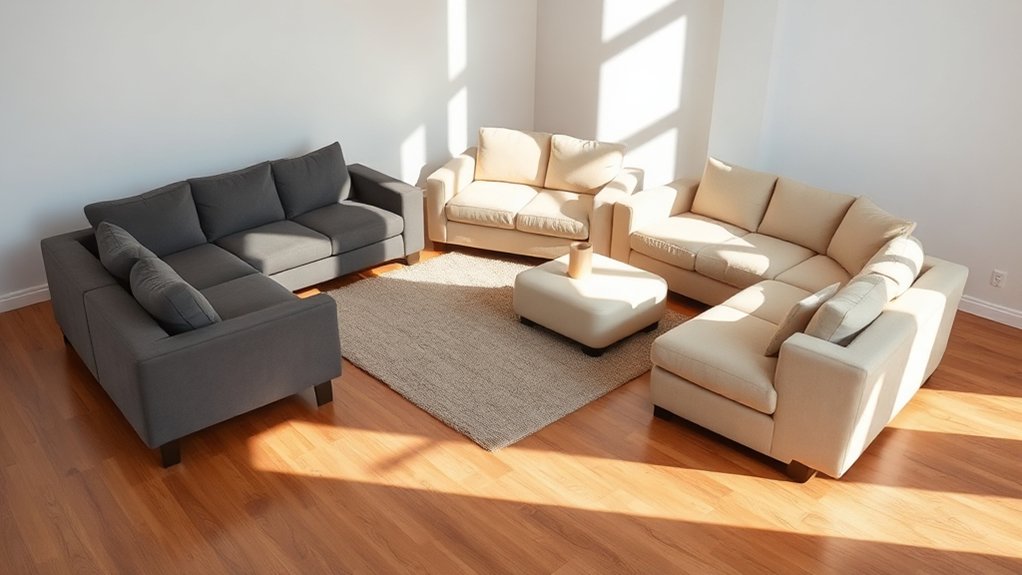
When you choose a sectional shape, it directly influences both the size of your sofa and how it fits into your room’s layout. The shape impact is significant because each design offers different dimensions and seating arrangements. For example, L-shaped sectionals work well in corners, maximizing space without overwhelming the room, while U-shaped sectionals provide more seating but demand a larger footprint.
You’ll find layout flexibility varies with shape too. Modular sectionals let you rearrange pieces to fit changing needs, ideal if you like switching things up. Chaise sectionals add lounging space but require extra room on one side.
Knowing these differences helps you pick a shape that complements your space without crowding it. By understanding how different sectional shapes affect size and layout, you can create a comfortable, functional living area that suits your style and space perfectly.
How to Measure Your Room for a Sectional Sofa
Measuring your room accurately is the first essential step before buying a sectional sofa. Start by gathering your measuring tools: tape measure, pencil, and graph paper or a digital app.
Accurate room measurements are crucial before purchasing a sectional sofa; gather your tape measure, pencil, and graph paper.
Sketch your room layout, marking doors, windows, and any architectural features that could affect placement. Measure the length and width of the space where you plan to place the sectional, noting clearances for walking paths and other furniture.
Be certain to measure ceiling height if your sofa has a tall back or if you want to add tall accessories nearby. Double-check your numbers to avoid surprises.
Keep your room layout scale consistent to visualize how different sectional sizes will fit. This process helps you pick a sectional sofa that complements your space without overcrowding it.
Taking precise measurements guarantees you’ll choose the right size, making your living area both functional and comfortable.
Right Sectional Sizes for Small Spaces
If you’re working with limited square footage, choosing a compact sectional can make all the difference. You’ll want to focus on dimensions that fit snugly without overwhelming your space.
Compact Sectional Dimensions
Choosing the right compact sectional means balancing size with comfort to fit your small space perfectly. Look for a compact design that maximizes seating without overwhelming your room.
Typically, these sectionals range from 70 to 90 inches in length, making them ideal for apartments or cozy living areas. Prioritize layout versatility; modular pieces can be rearranged to suit different needs or room shapes.
A compact sectional with a slim profile and lower backrest can open up the room visually while still offering ample seating. Don’t forget to measure your space carefully and consider pathways to keep the flow natural.
Space-Saving Layout Ideas
Maximizing every inch in a small space means selecting a right-sized sectional that fits seamlessly without crowding. To optimize your room, choose space-efficient designs that combine style and function. Multifunctional furniture, like sectionals with built-in storage or reversible chaise lounges, helps you save space while adding versatility.
Here’s a quick guide to sectional sizes that work best in small spaces:
| Sectional Type | Typical Dimensions (L x W) | Space-Saving Features |
|---|---|---|
| Loveseat Sectional | 60″ x 36″ | Compact footprint |
| L-Shaped | 72″ x 72″ | Fits snugly in corners |
| Modular | Varies (30″-45″ per unit) | Customize to available space |
| Storage Sectional | 80″ x 60″ | Hidden compartments |
| Sleeper Sectional | 85″ x 60″ | Doubles as guest bed |
Picking the right sectional lets you maximize comfort without sacrificing space.
Sectional Sizes for Large Living Rooms
When you have a large living room, you can confidently select sectional sofas that span 120 inches or more in length and width. These expansive pieces not only fill the space but also create a striking centerpiece.
You’ll find a variety of sectional styles designed to complement big rooms, from oversized L-shaped configurations to sprawling U-shaped designs. Keeping up with current design trends, many large sectionals feature modular components, allowing you to customize the layout to fit your space perfectly.
Incorporate bold fabrics or sleek leather to match your aesthetic while maximizing comfort and seating. Remember, a large sectional can anchor your living room, enhancing both style and function.
Sectional Sofa Seat Depth and Height: Impact on Comfort and Size
Although sectional sofas come in various sizes, seat depth and height play an essential role in how comfortable and spacious they feel. When you choose a sectional, understanding how seat comfort and height influence your experience helps you pick one that fits your body and room perfectly.
Deeper seats offer a relaxed lounging experience, while shallower seats provide more upright support. In a similar way, the height of the seat affects how easy it is to sit down and stand up.
Consider these factors when evaluating seat depth and height:
- Deeper seats improve lounging but may reduce floor space.
- Taller seats ease movement, especially for taller individuals.
- Shorter seats create a cozier seating arrangement.
- Seat height influence can impact posture and overall comfort.
Modular or Fixed Sectionals? Which Size Works Best?
How do you decide between a modular or fixed sectional sofa? It really depends on your space and lifestyle. If you want to frequently change your room’s layout or adjust the seating to fit different occasions, modular flexibility is your best bet.
Modular sectionals let you rearrange individual pieces easily, offering versatility if you move or like to refresh your decor often.
On the other hand, if you prefer a streamlined, consistent look and know your space won’t change much, a fixed design might work better. Fixed sectionals come as one solid piece, which can save space and provide a sturdy, cohesive appearance.
They often have a defined shape that fits well in a corner or specific area without the need for adjustments.
Ultimately, choose a sectional that fits your room’s size and suits how you use your space. Modular flexibility offers adaptability, while fixed designs deliver stability and simplicity.
Arranging Sectional Sofas Without Overcrowding
To arrange a sectional sofa without overcrowding your room, you need to balance comfort and flow carefully. Start by considering your room’s size and focal points to achieve visual balance. Keep pathways clear to maintain easy movement, and avoid pushing the sectional too close to walls, which can make the space feel cramped.
Here are some key arrangement tips to keep in mind:
- Measure your space before placing the sectional to guarantee it fits comfortably.
- Leave at least 30 inches of walking space around the sofa for smooth traffic flow.
- Pair the sectional with smaller furniture pieces to prevent overwhelming the room.
- Use area rugs or lighting to define the seating area and improve visual balance.
Visualization Tips for Sectional Sofa Size Before Buying
Wondering how to guarantee your new sectional sofa fits perfectly in your space? Start by using smart visualization techniques to get an accurate size estimation before buying.
First, measure your room carefully, noting doorways and walkways. Then, create a to-scale floor plan on graph paper or use a digital app to map out your space.
Cut out paper templates matching the sectional’s dimensions and place them in your room to see how much space they occupy. This hands-on approach helps you visualize how the sofa fits alongside other furniture.
You can also use augmented reality apps that let you virtually place the sectional in your room for a real-time size check. These visualization techniques reduce guesswork, ensuring you pick a sectional that complements your layout without overcrowding.
Frequently Asked Questions
What Materials Are Commonly Used to Make Sectional Sofas?
You’ll find that sectional sofas commonly use hardwood frames for durability, while cushions often feature high-density foam or down for comfort. The sectional design incorporates various materials for upholstery, like leather, microfiber, or fabric blends, depending on the sectional styles you prefer.
These materials not only affect the look but also the feel and maintenance. Choosing the right materials helps your sectional sofa stay comfy and stylish for years.
How Do I Clean and Maintain a Sectional Sofa?
Don’t worry about ruining your sectional while cleaning; it’s easier than you think. For effective cleaning, vacuum regularly to remove dust and crumbs.
Spot-clean stains promptly using mild soap and water or a fabric cleaner that’s suited for your sofa’s material.
For maintenance, fluff cushions often and rotate them to keep their shape. Avoid direct sunlight to prevent fading.
You might also consider professional cleaning once a year to keep your sectional looking fresh and inviting.
Are Sectional Sofas Pet-Friendly?
Yes, sectional sofas can be pet-friendly if you choose the right sectional designs. You’ll want fabrics that resist scratches and stains, like microfiber or leather, to keep your sofa looking great.
Prioritize pet safety by avoiding sharp edges or loose cushions that pets might chew on or swallow. By picking durable materials and thoughtful designs, you can enjoy your sectional sofa without worrying about damage or your pet’s well-being.
What Are the Best Fabric Choices for Sectional Sofas?
Imagine sinking into a sectional sofa wrapped in soft, durable fabric that complements your room’s color options perfectly. You’ll want to pick materials like microfiber or leather for their durability factors. They resist stains and wear, making your sofa last longer.
If you prefer something cozier, consider a tightly woven cotton blend that balances comfort with resilience. Choosing the right fabric guarantees your sectional stays stylish and sturdy, no matter what life throws at it.
How Long Do Sectional Sofas Typically Last?
Sectional sofas typically last between 7 to 15 years, depending on durability factors like frame quality, fabric strength, and how often you use it. If you choose hardwood frames and high-quality upholstery, you can expect a longer lifespan.
Regular maintenance, such as cleaning and fluffing cushions, also extends durability. So, if you pick a well-made sectional and care for it properly, you’ll enjoy comfort and style for many years.
Conclusion
Choosing the right sectional sofa means finding a balance between comfort and space without letting your room feel too “cozy.” By understanding dimensions, shapes, and how to measure your space, you’ll avoid that “tight squeeze” feeling.
Whether you opt for modular flexibility or a fixed design, keeping flow in mind guarantees your living area feels inviting, not cramped. With a little planning, your sectional will fit just right, welcoming yet not overwhelming.
Remember, knowing how big is a sectional sofa helps you make the best choice for your room’s layout and comfort.