10 Tips to Choose Furniture for a Small Dining Area
Struggling to find the perfect furniture for your small dining area? You’re not alone. Many people face the challenge of making the most out of limited space while still creating a functional and stylish dining spot.
Choosing the right pieces can feel overwhelming, but with the right tips, you can transform your small dining area into a cozy and practical haven.
Measure your dining space carefully and create a floor plan to visualize arrangements before buying. Choose compact, multi-functional furniture like extendable tables and storage benches to maximize utility.
Opt for round or square tables and chairs that slide under easily to save space.
Use light colors and textures to open up the room. Prioritize ergonomic seating and keep pathways clear to guarantee smooth traffic flow.
Blend style with function for a cozy, inviting area. Keep exploring to uncover more practical tips.
Key Takeaways
- Measure your dining area carefully and maintain at least 36 inches clearance around the table for easy movement and to avoid overcrowding.
- Select compact, multi-functional furniture like extendable tables and benches with hidden storage to maximize space and utility.
- Choose round or square tables to save space. Prefer lightweight, stackable, or foldable chairs that tuck neatly under the table.
- Use light colors and textures on furniture and walls to create a sense of openness and add depth without visual heaviness.
- Prioritize ergonomic, sleek designs that balance comfort and style while maximizing space and maintaining an inviting atmosphere.
Measure Your Small Dining Area Before Buying Furniture
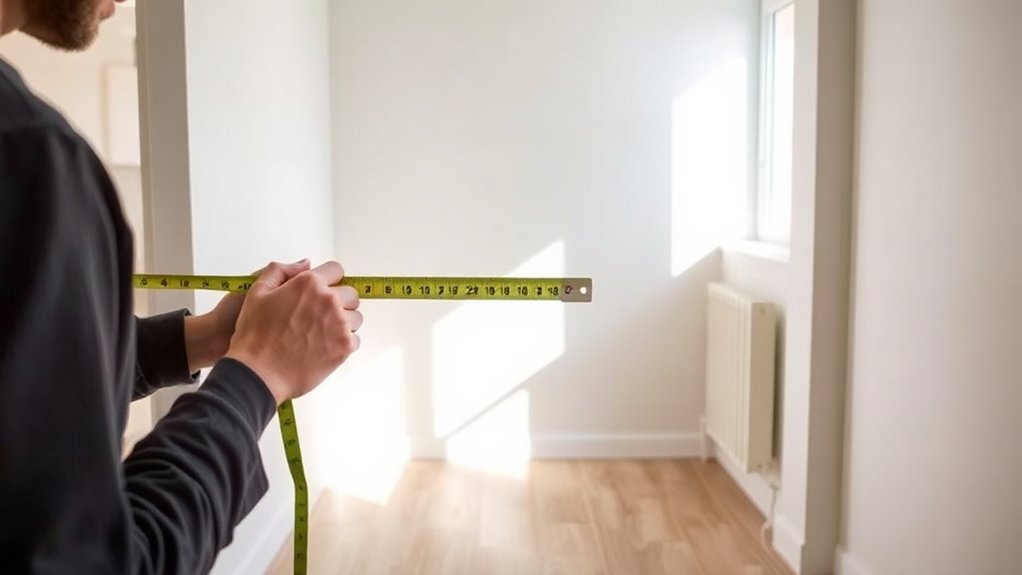
Before you buy any furniture, measure your small dining area carefully. Knowing your dining area dimensions helps you avoid purchasing pieces that overcrowd the space or look out of place.
Grab a tape measure and note the length, width, and any irregularities like doorways or windows that could affect your furniture layout. Once you have these measurements, sketch a simple floor plan to visualize how different furniture sizes and arrangements will fit.
This approach lets you experiment with various layouts without moving heavy items repeatedly. Also, consider the clearance needed around the table for comfortable movement, typically at least 36 inches on all sides.
Choose Compact, Multi-Functional Furniture for Small Dining Areas
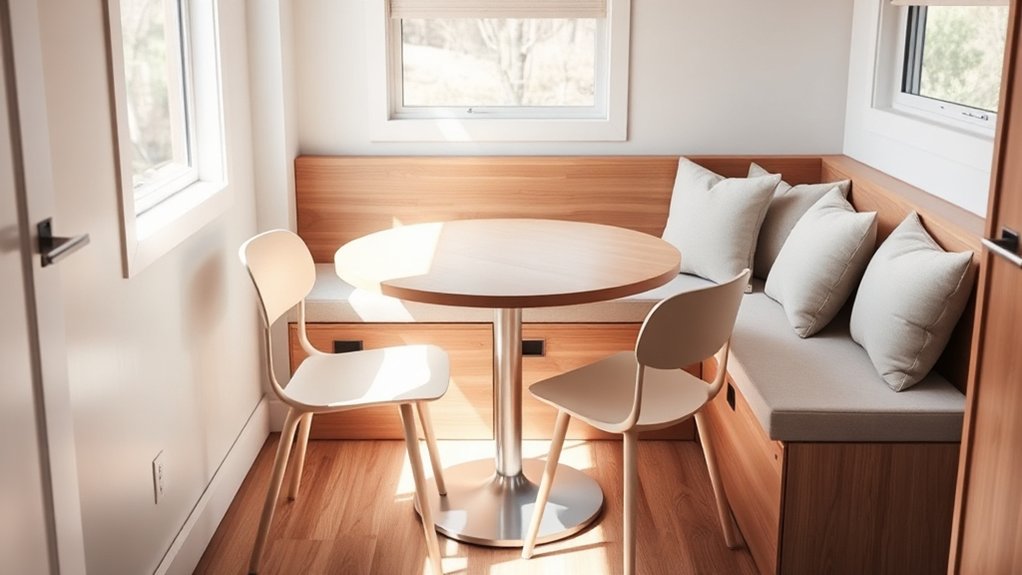
Once you’ve measured your space and planned your layout, focus on selecting furniture that maximizes both style and function. Choosing compact, multi-functional pieces is crucial for space optimization in small dining areas.
Look for items like extendable tables, benches with hidden storage, or chairs that can be stacked or folded away when not in use. These options let you adapt your dining space according to your needs without sacrificing aesthetic choices.
Opt for sleek designs with clean lines to maintain an open, uncluttered feel. Furniture that serves dual purposes not only frees up room but also adds versatility, making your small dining area more practical and inviting.
Opt for Round or Square Tables to Save Space
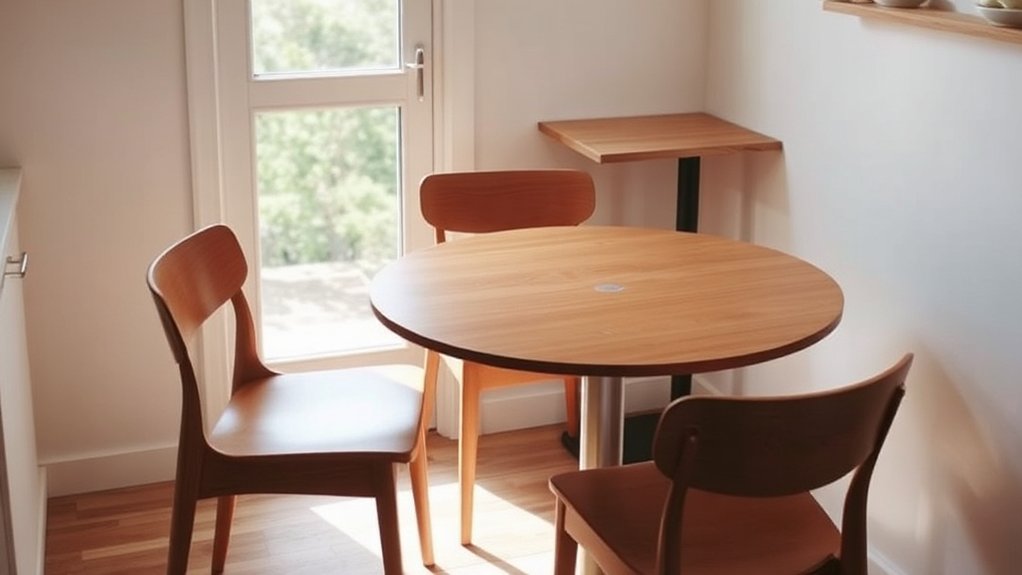
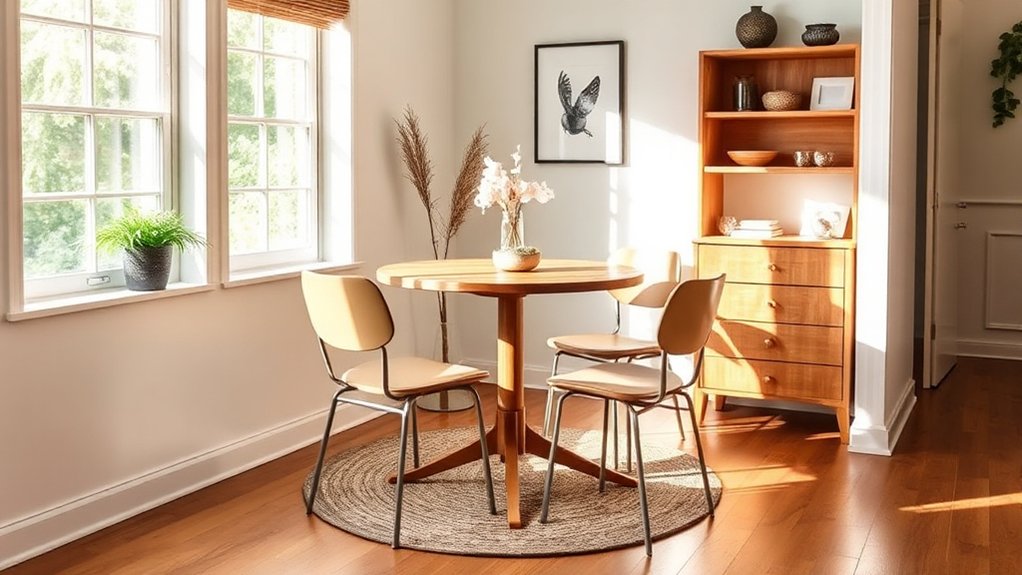
When you choose round or square tables, you make the most of your small dining area’s limited space. Round tables eliminate sharp corners, allowing easier movement around the dining area and enhancing space efficiency.
They create a cozy, intimate setting, perfect for small gatherings, while adding a soft aesthetic appeal to your room. Square tables, on the other hand, fit neatly against walls or corners, maximizing usable floor space without compromising seating capacity.
Their clean lines contribute to a modern, streamlined look that complements various décor styles. Both shapes help you avoid bulky, rectangular tables that can overwhelm a compact dining area.
Pick Chairs That Slide Under Your Table Easily
You’ll want chairs with a compact design that tuck neatly under your table to keep your space open. And it’s a good idea to look for smooth sliding mechanisms so moving them in and out feels effortless. That way, your small dining area stays clutter-free and easy to navigate.
Compact Chair Designs
Selecting the right compact chair designs can transform your small dining area by maximizing space and maintaining comfort. When choosing, focus on pieces that fit neatly under your table to keep the space open and clutter-free.
Here’s what to reflect on:
- Opt for stackable chairs to easily store extras without crowding your room.
- Choose minimalist designs that reduce bulk but don’t compromise style.
- Look for chairs with slim legs or armless frames to improve mobility.
- Select lightweight materials so you can move chairs effortlessly when needed.
Smooth Sliding Mechanisms
Although space is limited, chairs with smooth sliding mechanisms can make a big difference in how easily you tuck them under your table. Look for chairs equipped with quality sliding tracks that allow effortless movement. These tracks reduce friction, so you can slide chairs in and out without struggle, maximizing your small dining area’s functionality.
When shopping, test the ease of use by sliding chairs under the table several times. Chairs that glide smoothly not only save space but also prevent scuff marks on your flooring. Prioritize furniture with well-designed sliding tracks to guarantee your dining area remains neat and accessible.
With the right chairs, you’ll enjoy more room to move without sacrificing comfort or style.
Use Light Colors to Open Up Your Small Dining Area
When you choose light colors for your small dining area, you instantly create a sense of openness and brightness. Light textures on furniture, walls, and flooring reflect natural light, making the space feel larger and more inviting. You can improve this effect by adding bright accents that bring visual interest without overwhelming the room.
Here’s how to use light colors effectively:
- Select dining chairs and tables in soft shades like white, cream, or pastel tones.
- Incorporate light textures such as linen or cotton upholstery to add depth without heaviness.
- Paint walls in pale hues to bounce light around the room.
- Add bright accents through accessories like cushions, artwork, or table runners to create focal points.
Consider Foldable or Extendable Dining Tables
You’ll love how foldable or extendable dining tables save space when you don’t need the extra surface. They’re super handy because they adapt easily to your needs. Plus, when guests come over, you can quickly create more room without crowding your area. Choosing one really boosts both the versatility and functionality of your small dining space.
Space-Saving Benefits
Anyone looking to maximize a small dining area will find foldable or extendable dining tables incredibly practical. These tables offer excellent space optimization, allowing you to adapt your furniture arrangement based on your needs. Here’s how they help:
- Save floor space when folded, keeping the area open and less cluttered.
- Expand seating capacity effortlessly for guests, without permanent bulk.
- Allow flexible placement, making it easy to rearrange furniture as needed.
- Create a balanced look by minimizing oversized pieces in tight spaces.
Versatility and Functionality
Foldable and extendable dining tables bring unmatched versatility to small dining areas, adapting easily to your changing needs. When space is tight, these adaptive designs let you expand your table for guests or fold it down to save room during everyday use.
Choosing modular solutions means you can customize your dining setup without compromising style or function. You’ll appreciate how these tables make hosting dinners effortless while keeping your space clutter-free.
Plus, many models combine lightweight materials with sturdy construction, so you can move and adjust them with ease. By investing in a foldable or extendable table, you gain flexibility that suits various occasions and fits perfectly in compact spaces, making your small dining area both practical and inviting.
Choose Furniture With Built-In Storage
When space is limited, selecting furniture with built-in storage can make a big difference in keeping your dining area organized. You get the benefit of hidden storage that hides clutter and promotes stylish organization.
Here are four ways to choose smart storage furniture:
- Opt for dining tables with drawers or shelves underneath to store utensils, napkins, or placemats.
- Select benches or ottomans with lift-up seats to tuck away extra cushions or table linens.
- Look for sideboards or buffets with cabinets and drawers to keep dishes and glassware accessible yet out of sight.
- Consider wall-mounted storage units that combine shelves and cabinets. They save floor space while providing elegant storage.
Choose Comfortable, Space-Saving Seating
Maximizing storage is a great start, but choosing the right seating can make an even bigger impact on your small dining area. Opt for ergonomic seating that supports comfort during meals without overwhelming the space.
Look for chairs with slim profiles, curved backs, or armless designs to save room while still providing proper posture support. Material choices matter: lightweight materials like molded plastic, metal, or wood make it easier to move and rearrange seating as needed.
Consider benches or stools that tuck neatly under the table to keep the area open when not in use. Upholstered options with durable, easy-to-clean fabrics add comfort without bulk.
Avoid bulky cushions or overly ornate designs that reduce usable space. By focusing on ergonomic seating and smart material choices, you’ll create a cozy dining spot that feels spacious, inviting, and practical for everyday use.
Keep Traffic Flow Clear in Your Small Dining Area
Clear pathways in your small dining area help prevent congestion and make the space feel more open. When planning your dining layout, consider how traffic patterns naturally flow through the room. You want to avoid placing furniture where people will need to squeeze past or disrupt others seated.
Here are four tips to keep traffic flow clear:
- Position your table centrally but allow at least 36 inches around it for easy movement.
- Choose slim or round furniture to minimize obstructions in key walkways.
- Use benches instead of chairs on one side to reduce the number of seats that block paths.
- Avoid bulky storage or decor items near entry points that interrupt natural traffic patterns.
Mix Furniture Style and Function for a Cozy Look
You’ll want to balance style with utility to make your small dining area both attractive and practical. It’s all about combining comfort and design so the space feels inviting without losing any functionality.
Think about choosing multi-functional pieces—they save space and add to that cozy atmosphere you’re aiming for. That way, you get the best of both worlds: a beautiful room that works just as hard as it looks.
Balance Style With Utility
Although small dining areas can feel limiting, blending style with utility lets you create a space that’s both functional and inviting. To achieve the perfect utility balance while keeping up with style trends, consider these tips:
- Choose multi-functional furniture like storage benches or expandable tables.
- Opt for sleek designs that don’t overpower the room but still add character.
- Prioritize pieces that serve both practical needs and aesthetic appeal.
- Mix materials and finishes to keep the space visually interesting without clutter.
Combine Comfort And Design
Blending style with utility sets a strong foundation, but comfort should never take a backseat in a small dining area. You want furniture that invites you to linger, so prioritize comfort aesthetics without sacrificing design materials that suit your space.
Choose chairs with ergonomic shapes and soft cushions that complement your table’s finish. Mixing textures like a smooth wooden table paired with upholstered seats adds warmth and depth. Think about fabrics that feel good against your skin and materials that are easy to clean, ensuring your space stays cozy and practical.
Use Multi-Functional Pieces
When space is limited, choosing furniture that serves multiple purposes can transform your small dining area into a cozy, efficient haven. Embracing multipurpose design helps you maximize every inch without sacrificing style or comfort.
Consider pieces that blend aesthetics with storage solutions to keep clutter at bay. Here are four ideas to get you started:
- Opt for a dining table with built-in shelves or drawers to store utensils and linens.
- Choose stackable or foldable chairs that tuck away easily when not in use.
- Use benches with hidden compartments to double as seating and storage.
- Select a sideboard that functions as both a buffet and extra storage space.
Mixing style and function creates a warm, inviting space that feels larger and more organized.
Frequently Asked Questions
How Do I Maintain Wooden Furniture in a Small Dining Area?
To maintain wooden furniture in your small dining area, focus on regular wood care by dusting and polishing with appropriate products. Avoid placing furniture near direct sunlight or heat sources to prevent warping.
Pay attention to furniture placement to guarantee good air circulation, reducing moisture buildup. Use coasters and placemats to protect surfaces from spills and scratches.
With consistent care and smart placement, your wooden pieces will stay beautiful and last longer.
What Lighting Works Best for Small Dining Spaces?
You’ll want to use ambient lighting to create a warm, inviting atmosphere in your small dining space. Pendant fixtures work best since they provide focused light without overwhelming the area.
Choose fixtures with a slim profile or adjustable height so they don’t crowd the room. Dimmer switches are great, too. They let you control brightness and set the perfect mood for any meal or gathering.
How Can I Decorate Without Cluttering a Small Dining Area?
You can decorate without cluttering a small dining area by choosing multi-functional pieces that serve more than one purpose, like a bench with storage. Keep your color coordination simple and cohesive to create a sense of space and calm.
Opt for light, neutral tones with a few accent colors to avoid overwhelming the room. Remember, less is more. Select a few meaningful decor items instead of overcrowding every surface.
Are Rugs Recommended for Small Dining Spaces?
Yes, rugs can work well in small dining spaces if you pick the right rug size and material. Choose a rug that’s large enough to fit under the table and chairs even when pulled out, so it doesn’t look cramped.
Opt for durable, easy-to-clean materials like low-pile wool or synthetic fibers to handle spills and foot traffic. This way, your rug adds style without overwhelming your dining area.
How to Choose Furniture That Matches My Existing Décor?
Choosing furniture that matches your existing décor is like finding the perfect dance partner. It’s all about color coordination and style harmony. Pick pieces that echo your room’s dominant colors or complement accent shades.
Match furniture style with your current décor theme, whether it’s modern, rustic, or classic, to create a seamless flow. Don’t be afraid to mix textures, but keep the overall vibe balanced so everything dances together beautifully in your space.
Conclusion
When furnishing your small dining area, keep in mind that 85% of people feel more comfortable in well-organized spaces. By measuring carefully, choosing multi-functional pieces, and opting for light colors, you’ll create a cozy yet spacious feel.
Prioritize comfort and clear traffic flow to make every meal enjoyable. With these tips, your small dining area can be both stylish and practical, proving that smart choices truly maximize your space without compromising on style.
Remember, choosing the right furniture for a small dining area is key to making the most of your space while keeping it inviting and functional.