What Size Are King Sheets?
If you’ve ever struggled to fit your sheets snugly around a king mattress, you’re not alone. You might assume all king sheets are created equal, but there’s more to consider than just width and length. The depth of your mattress—and the corresponding pocket depth of your sheets—plays a crucial role in achieving that perfect fit. Before you make your next purchase, you’ll want to understand what actually matters.
Standard King Sheet Dimensions
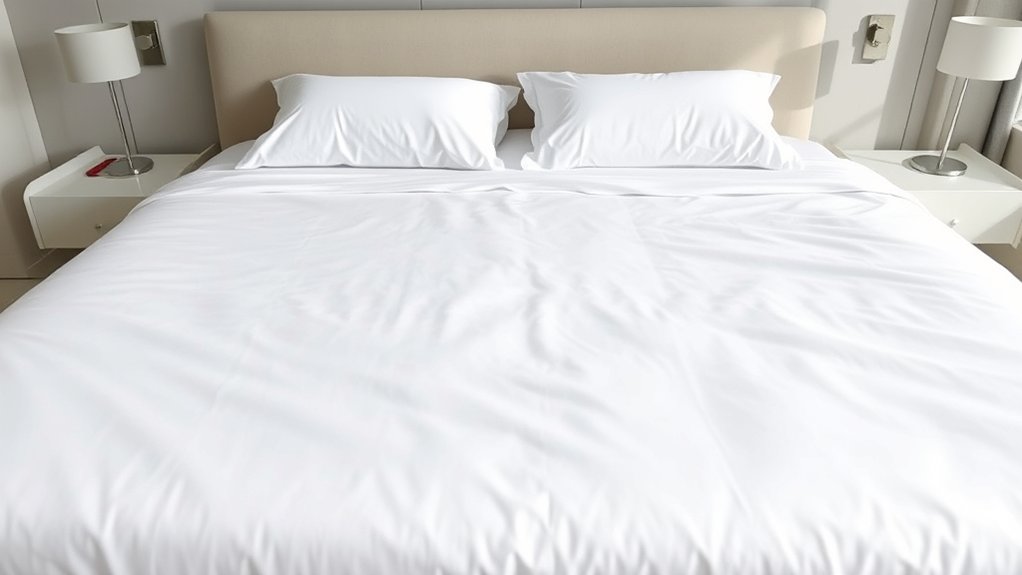
King sheets measure 76 inches wide by 80 inches long, giving you a spacious sleeping surface that’s significantly larger than a queen bed. This extra space accommodates two sleepers comfortably without compromising personal space.
You’ll appreciate the additional width, which provides roughly 16 more inches than a queen mattress.
When you’re shopping for king sheets, you’ll notice they’re deeper than standard options to fit mattresses with varying thicknesses. Most king sheets work with mattresses up to 15 inches deep, though some are designed for thicker models reaching 18 inches.
These dimensions make king sheets ideal if you sleep with a partner, have restless sleep habits, or simply prefer extra room.
You’ll find king sheets widely available from most bedding retailers in various materials and price points.
King vs. Queen and Full: Size Comparisons Explained
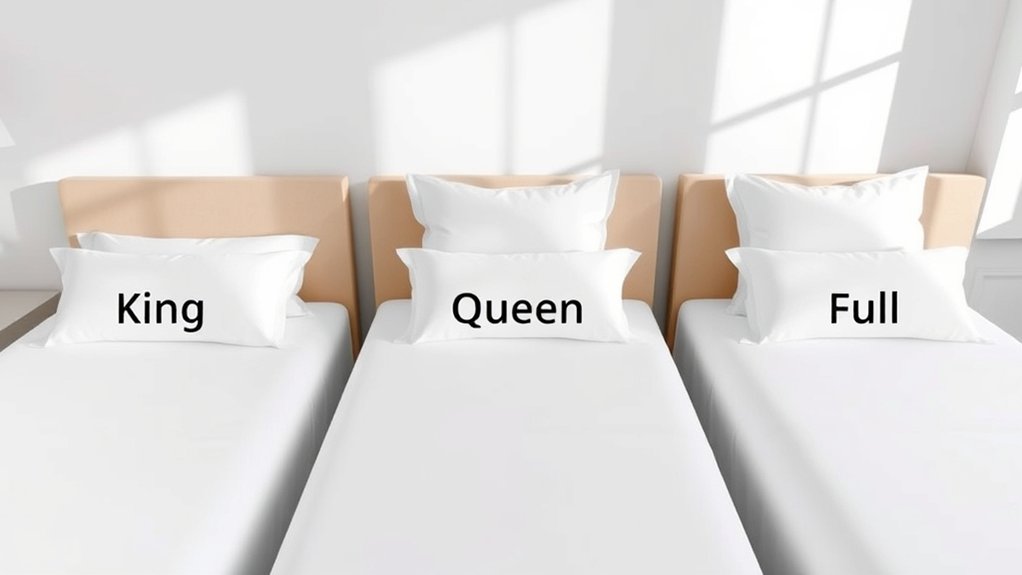
When you’re deciding between bed sizes, understanding how king sheets compare to queen and full options helps you make an informed choice.
A king mattress measures 76 inches wide by 80 inches long, while a queen is 60 inches wide by 80 inches long. Full-size beds are narrower still at 54 inches wide by 75 inches long.
The width difference matters most. You’ll gain an extra 16 inches of sleeping space with a king compared to a queen. If you’re sharing your bed or prefer extra room to stretch out, that additional width significantly improves comfort.
King sheets won’t fit queen or full mattresses, and vice versa. You’ll need appropriately sized linens for your bed frame.
Consider your bedroom dimensions and sleeping preferences when selecting your ideal mattress size.
Will King Sheets Fit Your Mattress?
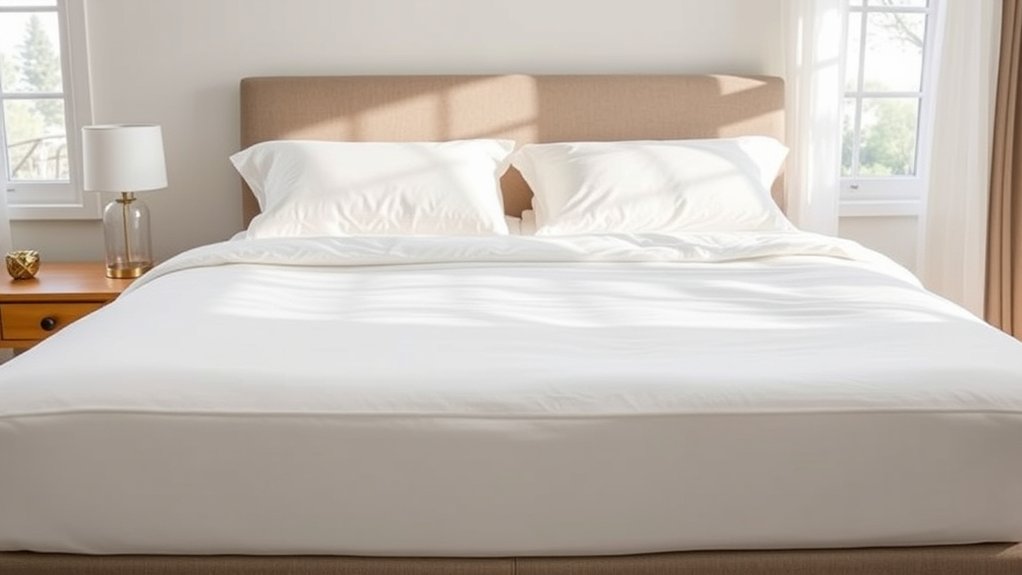
Since mattress dimensions vary significantly across bed sizes, you’ll need to verify that your linens match your specific mattress before purchasing.
King sheets are specifically designed for 76-by-80-inch mattresses, so they won’t fit queen or full-size beds properly. If you try using king sheets on a smaller mattress, you’ll experience excessive bunching, wrinkles, and poor corner coverage that compromises both comfort and appearance.
Conversely, standard or queen sheets won’t adequately cover a king mattress. You’ll find gaps around the edges and insufficient fabric to tuck properly underneath.
Always measure your mattress dimensions before buying sheets, and confirm the labeled size matches your bed frame. This simple verification prevents frustration and ensures you’re investing in linens that’ll actually work for your specific mattress.
California King or Standard King? Which One Do You Have?
Before you purchase king sheets, you’ll need to determine which type of king bed you actually own, because California king and standard king mattresses have different dimensions.
A standard king measures 76 inches wide by 80 inches long, while a California king is narrower and longer at 72 inches wide by 84 inches long.
This four-inch difference in both width and length means sheets designed for one won’t fit properly on the other.
To identify your mattress type, measure your bed from edge to edge.
Check your mattress tag or original purchase documentation.
You can also contact your mattress retailer for confirmation.
Getting this detail right ensures your sheets fit snugly without bunching or gaps, providing the comfort and neat appearance you deserve.
Deep Pocket vs. Regular: Fitting Thicker Mattresses
Once you’ve identified your king bed type, you’ll want to consider mattress depth when selecting sheets. Standard sheets typically have 12-inch pockets designed for regular mattresses.
If you’ve invested in a thicker mattress—pillow-top, memory foam, or hybrid models—you’ll need deep pocket sheets instead.
Deep pocket sheets feature 15 to 18-inch pockets, accommodating mattresses up to 16 inches thick.
Using regular sheets on a deep mattress results in slipping, bunching, and poor fit around corners.
Conversely, forcing deep pocket sheets onto a thin mattress creates excess fabric and wrinkles.
Check your mattress thickness before purchasing. Most manufacturers clearly indicate pocket depth on packaging.
This simple step ensures your sheets fit properly, stay secure throughout the night, and maintain their appearance longer.
Cotton, Polyester, and Blends: What Thread Count Really Means
Now that you’ve selected the right pocket depth, you’ll want to understand what makes sheets feel comfortable and durable. Thread count measures the number of threads woven per square inch, directly affecting quality and longevity. Higher thread counts don’t always guarantee better sheets—anything above 1200 is often inflated marketing.
Cotton sheets offer superior breathability and comfort, while polyester provides durability and wrinkle resistance. Blends combine both benefits, giving you affordability without sacrificing performance.
You’ll find that 100% cotton sheets feel softer but require more maintenance, whereas polyester blends need less ironing.
When shopping for king sheets, look for quality cotton blends with thread counts between 300 and 600. This sweet spot balances comfort, durability, and value for your investment.
Measuring Your Mattress: A Pre-Purchase Checklist
While you’ve learned what to look for in sheet quality, getting accurate mattress measurements is equally crucial before you buy. Start by measuring your mattress length, width, and depth from corner to corner. Don’t rely on the labeled size alone—manufacturers’ specifications vary slightly. Use a flexible measuring tape and record measurements in inches.
Check your bed frame’s dimensions too, as it affects how sheets fit. Measure the depth of your mattress carefully, since deeper mattresses require sheets with deeper pockets. If your mattress is extra-thick or pillow-topped, you’ll need king sheets with 16 to 18-inch pocket depths.
Document everything before shopping. These precise measurements ensure you’ll select king sheets that fit properly and stay secure throughout the night.
Common Mistakes People Make When Buying King Sheets
Even with accurate measurements in hand, many shoppers still end up with ill-fitting sheets. You’ll often confuse king and California king dimensions—they’re different. King sheets measure 76″ by 80″, while California king sheets are 72″ by 84″.
Another common mistake you make is ignoring pocket depth. If your mattress is deeper than your sheets’ pocket depth, they’ll slip off constantly.
You might also overlook thread count claims, assuming higher numbers always mean better quality. That’s not always true.
Additionally, you don’t account for shrinkage. Most sheets shrink slightly after washing, so buying exact-fit sheets leaves no margin for error.
Finally, you rush your purchase without reading product descriptions carefully. Take time to verify dimensions, pocket depth, and material composition before buying.
Where to Buy Quality King Sheets
Once you’ve learned what to avoid, you’ll want to know where to find quality options. Department stores like Macy’s and Target offer reliable selections with reasonable prices.
You’ll find competitive options at Bed Bath & Beyond and Kohl’s, where sales frequently reduce costs.
For premium sheets, explore specialty bedding retailers like Brooklinen or Parachute. These companies focus exclusively on sleep products and provide detailed material information.
Online marketplaces like Amazon give you access to countless brands with customer reviews that help you make informed decisions.
Don’t overlook direct-to-consumer brands that eliminate middlemen, reducing prices while maintaining quality.
Check luxury options at Pottery Barn or Williams-Sonoma if you’re seeking high-end materials.
Always compare thread counts, fiber types, and return policies before purchasing to ensure you’re getting genuine value for your investment.
When to Replace Your King Sheets
Like any bedding investment, king sheets don’t last forever—knowing when to replace them helps you maintain comfort and hygiene. You’ll want to retire your sheets when they develop tears, holes, or irreparable stains that won’t wash out. Pilling and thinning fabric are also clear signs that your sheets have reached the end of their lifespan.
Most quality king sheets last three to five years with proper care, though cheaper options may wear out sooner. If you notice your sheets feel rough, uncomfortable, or emit odors despite washing, it’s time for replacements.
Don’t wait until your bedding falls apart—replacing worn sheets every few years ensures you’re sleeping on fresh, clean, and durable fabric that supports better rest and protects your mattress investment.
Conclusion
You’ll want to verify your mattress dimensions before purchasing king sheets, since you need the right fit for comfort and durability. You should measure your bed’s depth and width to ensure you’re getting standard king or California king sizing. When you’ve confirmed your mattress type and thickness, you can confidently select sheets with appropriate pocket depths. You’ll then enjoy a wrinkle-free, secure fit that lasts for years.