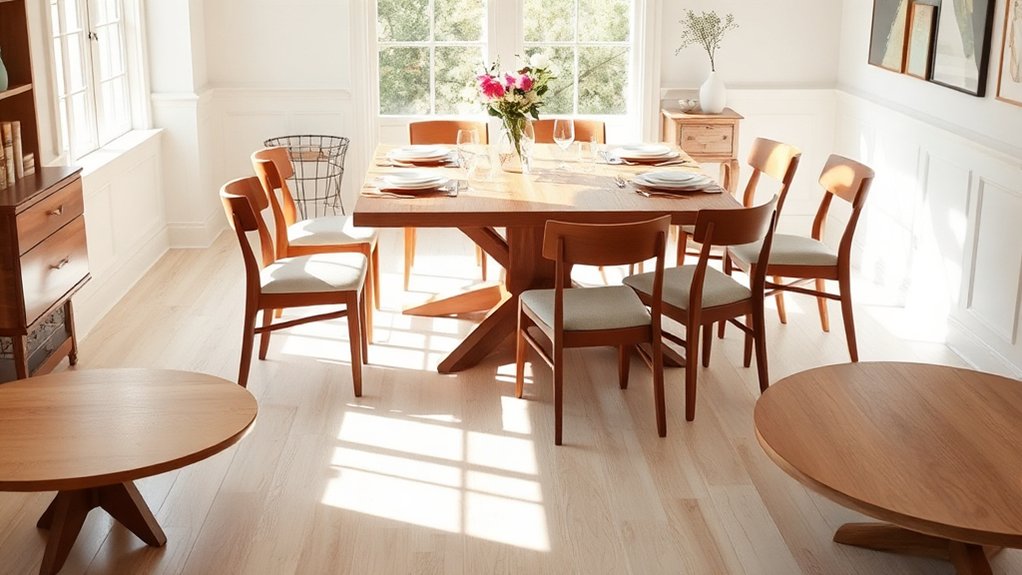
7 Tips How to Choose a Dining Room Table
Choosing the perfect dining room table can feel overwhelming. You want something that fits your space, matches your style, and works for your family’s needs. If you’ve ever struggled to find that balance, you’re not alone—many people face the same challenge when updating their dining area.
When choosing a dining room table, start by measuring your space carefully to guarantee comfort and flow. Pick a table size and shape that suits your room’s dimensions and seating needs.
Choose durable materials that fit your lifestyle and match your home’s style for a cohesive look. Plan for flexible seating and features that improve usability. Set a realistic budget to focus your search and avoid overspending. How to Choose a Dining Room Table.
Keep these tips in mind while exploring options that fit your space and style perfectly.
Key Takeaways
- Measure your dining area and leave at least 36 inches around the table for comfortable movement and furniture flow.
- Choose a dining table size that fits your regular seating needs while allowing space for occasional guests.
- Select a table shape that complements your room’s dimensions and enhances the layout. Rectangular works well for narrow spaces.
- Pick durable materials that match your style and maintenance preferences, like wood for timeless appeal or metal for modern durability.
- Set a clear budget with prioritized must-have features to guide your purchase and avoid overspending.
Measure Your Space
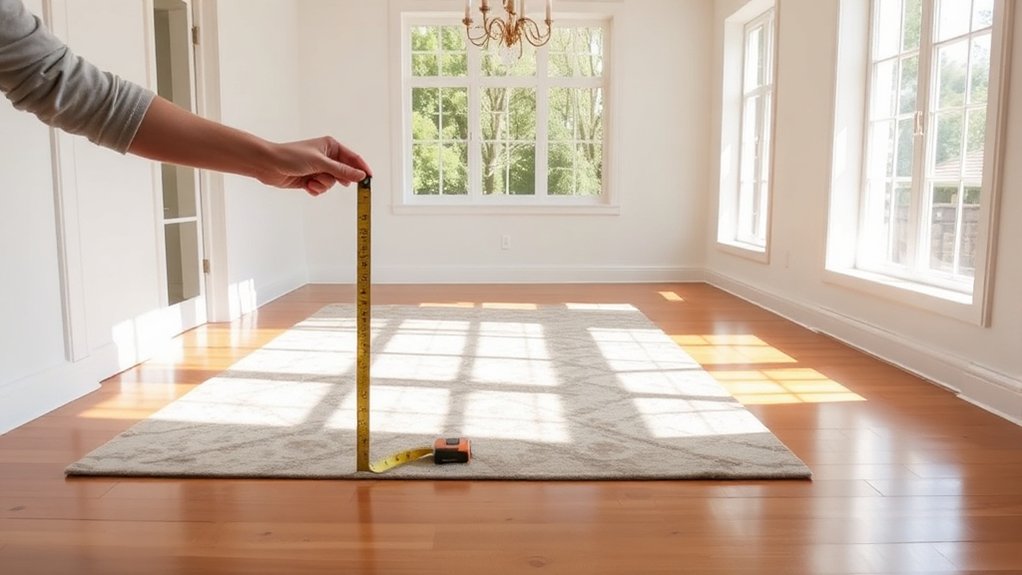
Before you pick out any tables, measure your dining area carefully. Understanding your space layout is essential to guarantee your table fits comfortably without crowding the room. Start by noting the length and width of the entire dining space. This will help you visualize how much room you have to work with and prevent choosing a table that overwhelms the area.
Next, consider the furniture flow. Think about how people will move around the table and access seats. You’ll want to leave at least 36 inches between the table edge and walls or other furniture to allow easy passage. This distance keeps the room feeling open and guarantees guests won’t feel cramped.
Also, think about other items in the room like sideboards, cabinets, or serving carts and how they impact movement. Measuring your space layout and planning for smooth furniture flow helps you pick a dining table that fits perfectly and keeps the room functional and inviting.
Choose the Right Dining Table Size
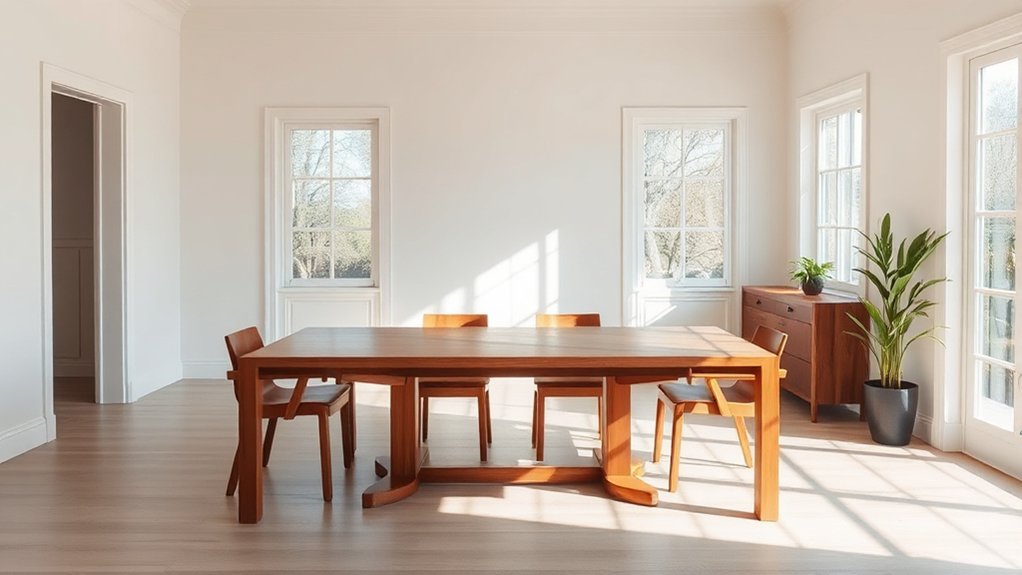
Selecting the right dining table size starts with knowing how many people you want to seat regularly. This helps guarantee your table fits well without overcrowding your dining area. To choose the ideal table size, consider these key points:
- Measure your dining area carefully, leaving at least 36 inches around the table for comfortable movement.
- Account for table proportions. A narrow, longer table suits tight spaces, while a wider table works best in spacious rooms.
- Think about future needs, like occasional guests or family growth, so your table accommodates more people when needed.
Pick the Right Dining Table Shape
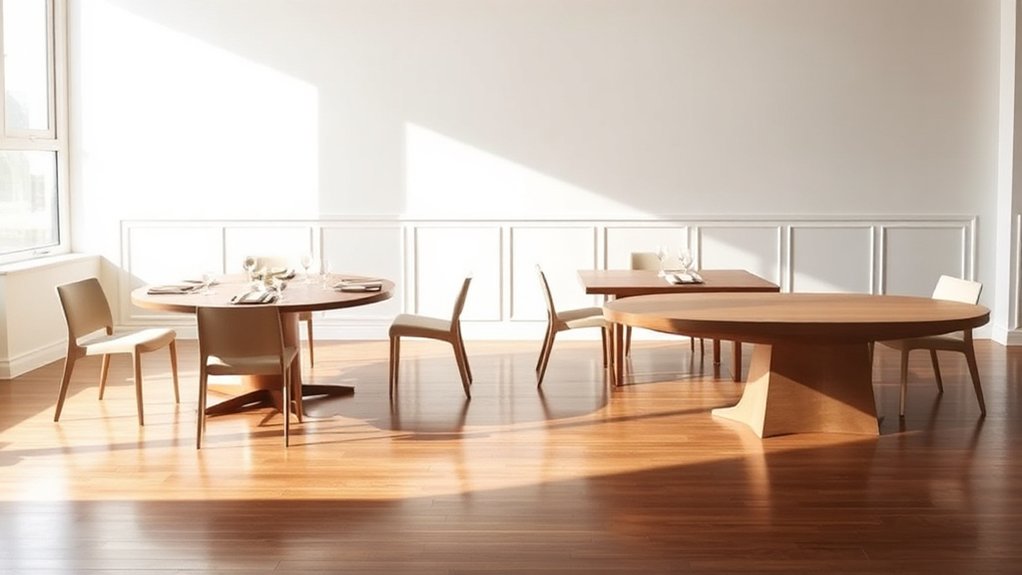
You’ll want to pick a table shape that fits your room’s dimensions without crowding the space. Think about how the shape matches your style and the vibe you want to create. Also, consider how many people you need to seat comfortably around the table.
Consider Room Dimensions
When choosing a dining table, understanding your room’s dimensions is essential to pick the right shape. Proper table placement guarantees you maintain a good space flow and avoid overcrowding.
Consider these three key points:
- Measure your room’s length and width to determine how much space you have for the table and chairs without blocking walkways.
- Allow at least 36 inches around the table to provide comfortable movement and chair pulling space.
- Visualize how the table shape fits into the room’s layout. Rectangular tables suit narrow spaces, while round or square tables work better in square rooms.
Match Table Shape Style
The shape of your dining table sets the tone for your entire room and influences how people interact during meals. When choosing, consider both table aesthetics and shape functionality.
Round tables promote conversation by allowing everyone to face each other, making them ideal for intimate gatherings. Rectangular tables offer a classic look and fit well in long, narrow rooms, maximizing seating along the sides.
Square tables suit smaller spaces and create a balanced, modern vibe. Oval tables blend the benefits of round and rectangular shapes, offering smooth edges and ample seating.
Match your table’s shape to your room’s layout and your lifestyle to guarantee it looks great and operates well. By focusing on these details, you’ll pick a dining table that complements your space and elevates mealtime interactions effortlessly.
Evaluate Seating Capacity
Choosing the right table shape sets the foundation, but understanding how many people it can comfortably seat guarantees your dining experience feels natural and inviting. To evaluate seating capacity effectively, consider these key aspects:
- Family size: Think about how many family members regularly dine together and if your table can accommodate them without feeling cramped.
- Guest preferences: Keep in mind your typical number of guests and their seating needs, ensuring everyone has enough elbow room.
- Space allowance: Measure your dining area to balance seating capacity with free movement around the table.
Choose Dining Table Materials That Suit Your Lifestyle
You’ll want to pick a dining table material that can handle your daily routine without constant worry. Think about how durable each option is and what kind of maintenance it needs.
That way, you’ll choose the right material to keep your table looking great and make it last longer.
Durable Material Options
Because your dining table endures daily use, picking a durable material that matches your lifestyle is essential. Consider these top options to find the perfect fit:
- Wood options and stone tops offer natural strength and timeless appeal. They bring texture contrasts that add visual interest.
- Metal finishes and glass choices provide sleek, modern durability. These are ideal if you want a clean, contemporary look.
- Composite materials and laminate surfaces deliver budget-friendly, resilient solutions. Often, they feature eco-friendly selections to reduce environmental impact.
Each material suits different needs, whether you want warmth, easy upkeep, or sustainability. By focusing on these durable materials, you guarantee your dining table stands up to everyday wear while matching your personal style seamlessly.
Maintenance And Care
Maintaining your dining table’s appearance and functionality depends largely on the material you pick. Different materials require specific cleaning techniques to keep them looking their best.
For example, wood tables benefit from gentle cleaning with a damp cloth and mild soap, while glass surfaces need streak-free cleaners. Protective finishes on wood can help resist stains and scratches, so consider tables with durable coatings if you want low-maintenance care.
If you choose metal or laminate, routine wiping to prevent buildup usually suffices. Also, avoid harsh chemicals that can damage surfaces.
Knowing how to care for your table’s material means you can enjoy it longer without extra effort. Pick a material that fits your lifestyle and cleaning preferences to guarantee your dining room remains inviting and functional.
Match Your Dining Table Style to Home Decor
Choosing a dining table style that complements your home decor can transform your space and create a cohesive look. To achieve design harmony, you’ll want to focus on how your table’s style interacts with the rest of your room. Here are three key steps to guide you:
- Consider color coordination: Match or complement your table’s finish with existing furniture, walls, or flooring. This balance makes your dining area feel intentional and unified.
- Evaluate your home’s overall style: Whether your decor is modern, rustic, or traditional, pick a table that reflects that vibe to keep your space consistent.
- Think about scale and proportion: Confirm your table fits well with other elements in the room so it doesn’t overpower or get lost in the design.
Plan for Seating Flexibility and Table Features
When you plan your dining area, think about how many people you’ll regularly seat and whether you’ll need extra room for guests. Flexible seating arrangements help you accommodate different group sizes without crowding.
Consider tables with table extensions, like leaves or drop-down sides, so you can expand your table when needed and keep it compact otherwise. This way, you won’t feel cramped during everyday meals, but you’ll have space when friends or family visit.
Also, think about the shape of the table. Round or oval tables often allow more adaptable seating and easier conversation. If you often host gatherings, a table with built-in storage or a sturdy surface that resists scratches and spills might be useful.
Set a Budget That Works for You
Although you might be enthusiastic to pick the perfect dining table, setting a clear budget first helps you focus your search and avoid overspending. Budget considerations guarantee you don’t fall for options beyond your means or settle for less than you deserve.
Start by determining a maximum amount that feels comfortable, keeping in mind your overall room design and future needs.
Begin by setting a comfortable spending limit that aligns with your room’s style and long-term plans.
Next, conduct a cost comparison across different styles and materials. Prices can vary greatly, so knowing your range helps you prioritize features like size, shape, or craftsmanship.
Here’s a simple approach to set a budget that works:
- Identify your spending limit based on your finances and priorities.
- Research prices online and in stores to get realistic expectations.
- Adjust your list of must-haves versus nice-to-haves according to your budget considerations.
This method keeps your purchase practical and satisfying without surprises.
Frequently Asked Questions
How Do I Care for and Maintain Different Dining Table Materials?
You should follow specific care for each material. For wood care, clean spills quickly and use polish to maintain shine.
Glass maintenance means wiping with a non-abrasive cleaner to avoid scratches. For metal protection, prevent rust by drying thoroughly and applying a protective wax.
Stone sealing is essential. Seal your stone table regularly to prevent stains and damage. Doing this keeps your dining table looking great and lasting longer.
What Is the Best Dining Table Height for Children?
The best dining table height for children is typically between 20 to 24 inches, considering table height considerations that guarantee comfort and safety. You’ll want to look for child-friendly designs that accommodate their size, allowing their feet to rest flat on the floor or a footrest.
Adjustable or smaller tables work well, too. This way, mealtime becomes more enjoyable and accessible for your little ones.
Can I Mix and Match Dining Chairs With My Table?
Mixing and matching dining chairs with your table is like creating a playlist. Each piece adds its unique note, enhancing the overall vibe. You can definitely do it, but focus on style coordination to keep the look cohesive.
Also, maintain a comfort balance by choosing chairs that complement the table height and offer good support. This way, your dining area feels inviting and visually balanced without looking chaotic or mismatched.
How Do I Prevent Scratches and Stains on My Dining Table?
To prevent scratches and stains on your dining table, start with proper table protection like using placemats, coasters, and a tablecloth during meals. Avoid placing hot dishes directly on the surface.
For cleaning techniques, use a soft, damp cloth with mild soap, avoiding harsh chemicals that can damage the finish. Regularly dust your table and immediately wipe up spills to keep it looking pristine and extend its lifespan.
Are Extendable Dining Tables Durable for Everyday Use?
Yes, extendable dining tables can be durable for everyday use if you choose quality materials and sturdy mechanisms. The extendable table benefits include flexibility for hosting guests without sacrificing space on regular days.
For everyday use considerations, make sure the extension system is easy to operate and locks securely to avoid wobbling. Regular maintenance, like tightening screws and cleaning tracks, will keep your table functioning well and looking great for years.
Conclusion
Choosing the perfect dining table is like finding the key to your home’s heart. By measuring your space carefully, picking the right size and shape, and matching materials to your lifestyle, you set the stage for countless memorable meals.
Remember, just as a well-tuned orchestra creates harmony, your table should blend style, comfort, and function seamlessly. Stick to your budget, and you’ll have a centerpiece that welcomes stories and celebrations for years to come.
When you follow these 7 tips to choose a dining room table, you’ll create a space that’s both beautiful and practical, making every meal a special occasion.