Make Your Linen Sheets Softer: 5 Proven Methods
If you’ve ever slipped into stiff linen sheets and wondered why they don’t feel as luxurious as you’d hoped, you’re not alone. The good news? You don’t need expensive products or professional treatments to transform them. By using simple ingredients you likely have at home and employing strategic washing techniques, you can dramatically improve their texture. But which method works best for your situation?
Wash Your Linen Sheets With Vinegar and Baking Soda
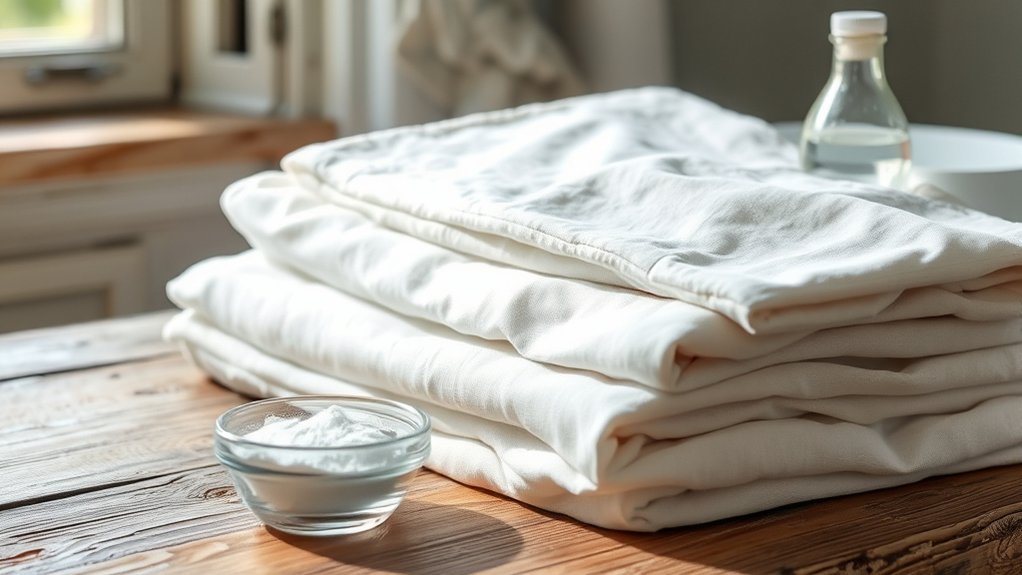
If you’re tired of stiff, uncomfortable linen sheets, washing them with vinegar and baking soda can help restore their softness. Here’s how to do it:
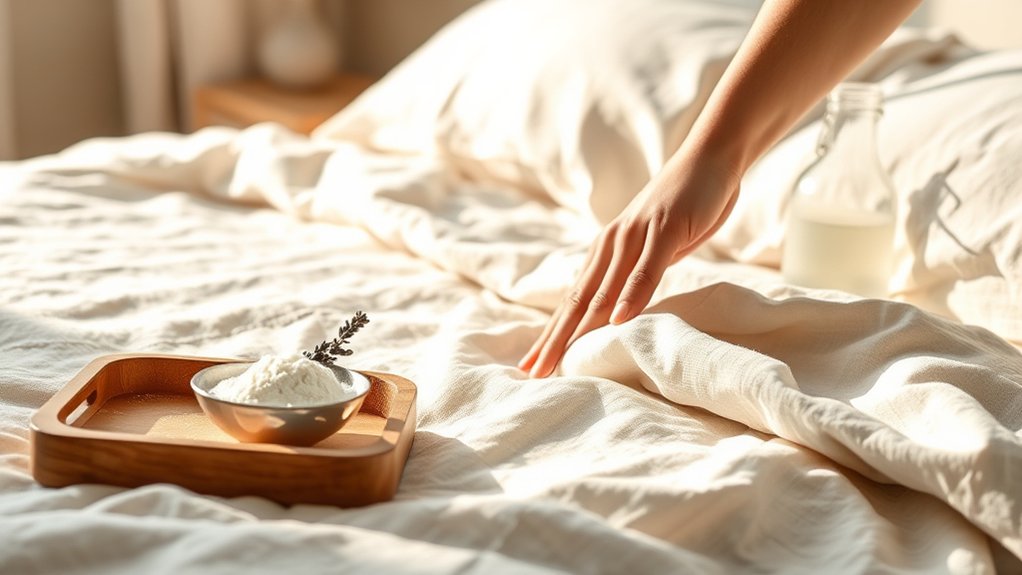
Add half a cup of baking soda to your regular laundry detergent during the wash cycle. Baking soda softens fabrics naturally while removing buildup that makes sheets feel rough.
In the rinse cycle, pour half a cup of white vinegar into the fabric softener dispenser. Vinegar eliminates detergent residue and loosens fibers, enhancing softness without leaving a smell once dry.
Use warm water for best results, and avoid fabric softeners that can coat linen and reduce absorbency.
Repeat this method monthly to maintain your sheets’ softness and extend their lifespan significantly.
Use a Fabric Softener Alternative During the Rinse Cycle
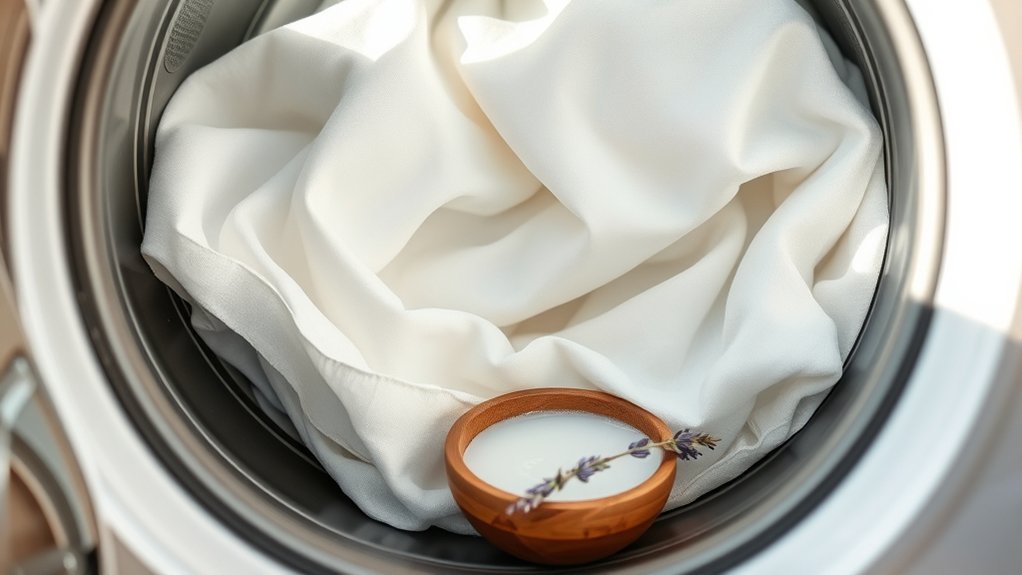
While vinegar works wonderfully in the rinse cycle, you can also explore other natural alternatives that soften linen without the drawbacks of commercial fabric softeners.
Glycerin is an excellent option—add a quarter cup to your rinse cycle for noticeable softness. You’ll find it’s gentler on fibers than synthetic softeners.
Another effective choice is hair conditioner. Simply pour a small amount into the rinse water, and your sheets will become remarkably supple. This works because conditioner’s moisturizing agents penetrate fabric fibers.
For a more economical approach, try castile soap diluted in water during the final rinse. It cleanses while simultaneously softening your linens.
You can also experiment with essential oils mixed with water—lavender or chamomile add softness while leaving your sheets pleasantly scented. Rotate these alternatives to discover which method delivers the results you prefer.
Dry Your Sheets on High Heat or in Direct Sunlight
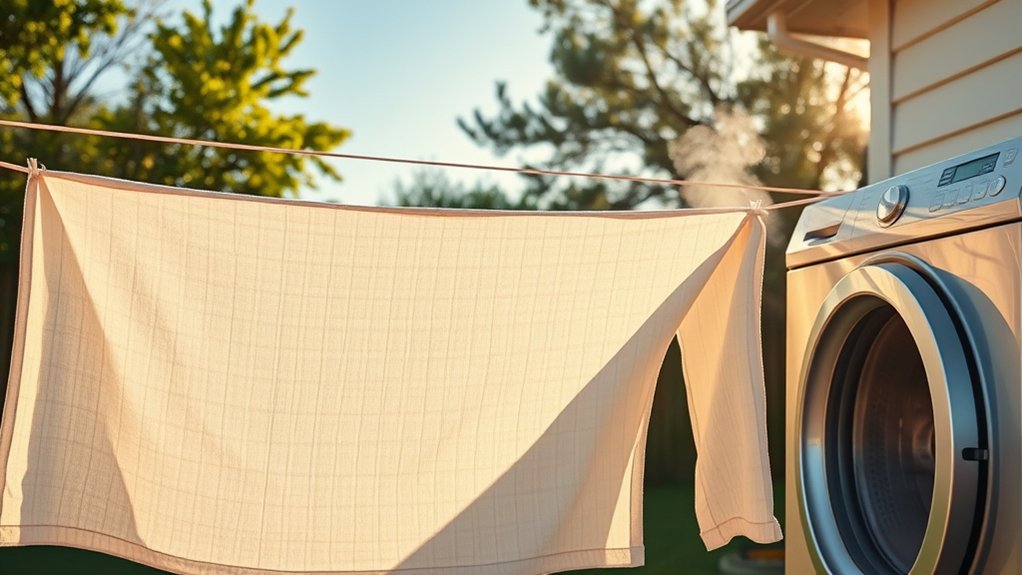
After you’ve finished the rinse cycle, drying method plays a crucial role in achieving that coveted softness. You’ve got two excellent options to consider.
High heat drying works wonderfully for linen sheets. Toss them in your dryer on a high setting for about 45 minutes. The heat relaxes the fibers, making them feel noticeably softer and fluffier. You’ll notice an immediate difference compared to air-drying alone.
Alternatively, direct sunlight offers a natural approach. Hang your sheets outside on a clothesline or drying rack. Sunlight naturally softens linen fibers while eliminating odors and bacteria.
UV rays break down the fibers slightly, enhancing pliability.
Choose whichever method fits your lifestyle. Both approaches effectively soften your sheets when combined with previous conditioning steps. The key is consistent application for lasting results.
Scrunch Your Linens to Speed Up Softening
Once you’ve dried your sheets, you can accelerate the softening process by scrunching them regularly. This simple technique breaks down fibers and increases flexibility without requiring additional products or effort.
Here’s how to do it: Grab your dried linens and crumple them into a ball, holding each bunch for 10-15 seconds. Release and repeat this action multiple times across different sections of the sheet.
You’ll feel the fabric becoming more pliable with each squeeze.
Perform this scrunching routine several times throughout the week. The mechanical action mimics the natural wear that eventually makes linen softer over time.
It’s particularly effective when combined with your drying method from the previous step.
This hands-on approach costs nothing and requires minimal time while delivering noticeable results quickly.
Repeat Wash-and-Dry Cycles for Softer Sheets
The most effective way to soften linen is through repeated washing and drying cycles. Each time you wash and dry your sheets, the fibers relax and become progressively softer. You’ll notice significant improvements after three to five cycles.
When washing, use warm water and a gentle detergent designed for delicate fabrics. Avoid fabric softeners, which can coat fibers and reduce breathability.
Tumble dry on medium heat, removing sheets while slightly damp to prevent over-drying and stiffness.
The frequency matters too. Regular laundering accelerates softening compared to occasional washing. Wash your linen sheets every one to two weeks for optimal results.
This consistent approach gradually breaks down the fibers’ natural stiffness, transforming your sheets into luxuriously soft bedding you’ll love sleeping on.
Conclusion
You’ll find that combining these five methods transforms your linen sheets into luxuriously soft bedding. By washing with vinegar and baking soda, using natural fabric softeners, applying heat or sunlight, scrunching your linens, and repeating wash-and-dry cycles, you’re breaking down fibers and enhancing texture effectively. Don’t expect overnight results—you’ll notice gradual improvement with each cycle. Your investment in these proven techniques pays off with noticeably cozier sheets you’ll love sleeping on.