How Do Cooling Sheets Work?
You’ve probably noticed how regular sheets trap heat and leave you sweating through the night. But what if you could actually regulate your body temperature while you sleep? Cooling sheets promise exactly that, using innovative fabrics and technologies you’ve likely never heard of. The question is: do they really deliver, or is it just marketing hype? Let’s uncover what’s actually happening beneath the surface.
Do Cooling Sheets Actually Work? What Research Shows

When you’re shopping for cooling sheets, you’ll find plenty of marketing claims—but what does the science actually say? Research shows that cooling sheets do work, though their effectiveness depends on the technology used.
Studies demonstrate that moisture-wicking fabrics like bamboo and certain synthetics pull sweat away from your skin, helping you stay dry and comfortable. Temperature-regulating materials containing phase-change compounds actively absorb and release heat based on your body’s needs.
However, no sheet will dramatically lower your room temperature. Instead, they enhance heat dissipation from your body to your mattress. Your results vary based on your sleep environment, body chemistry, and the specific sheet quality.
High-thread-count options generally outperform cheaper alternatives, delivering measurable improvements in sleep comfort.
How Cooling Sheets Regulate Body Temperature
Because your body naturally radiates heat throughout the night, cooling sheets work by accelerating the transfer of that warmth away from your skin. Most cooling sheets use moisture-wicking fabrics that pull sweat from your body and evaporate it quickly, preventing heat from accumulating around you.
Some sheets contain phase-change materials (PCMs) that absorb excess body heat when you’re too warm, then release it back when your temperature drops. This creates a self-regulating thermal balance throughout the night.
Other cooling sheets rely on breathable weaves and high thread counts that maximize airflow and reduce heat retention. By improving air circulation around your body, you’ll experience lower surface temperatures and more consistent sleeping conditions.
How Moisture-Wicking Fabrics Pull Sweat Away
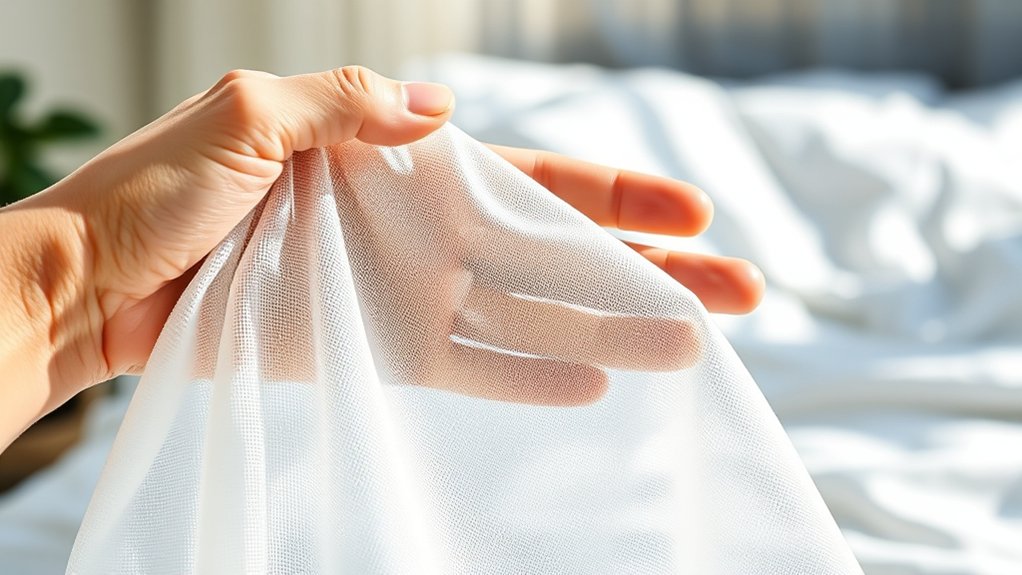
Moisture-wicking fabrics work through capillary action, a process where liquid moves along fabric fibers away from your skin’s surface. These specially designed materials feature fibers with microscopic grooves that pull sweat upward and outward, preventing it from pooling against your body.
As moisture travels through the fabric’s structure, it spreads across a larger surface area, allowing it to evaporate more efficiently. You’ll notice this effect immediately—sweat doesn’t sit on your skin, creating that clammy feeling that disrupts sleep.
High-quality cooling sheets use synthetic fibers like polyester or nylon, which excel at moisture transport. Some blends incorporate natural fibers like cotton or bamboo to enhance breathability while maintaining wicking properties.
The result is faster evaporation and sustained coolness throughout the night.
Bamboo and Linen: Why They Cool Better
While synthetic fibers dominate the cooling sheet market, natural materials like bamboo and linen offer distinct advantages that shouldn’t be overlooked.
You’ll find that bamboo viscose has a hollow fiber structure that absorbs and releases moisture faster than most synthetics, keeping you consistently dry throughout the night.
Linen performs similarly well because its fibers contain micro-gaps that allow air circulation, naturally regulating your body temperature.
Both materials excel at breathability—they don’t trap heat against your skin like polyester does.
Additionally, you’ll appreciate their durability; these natural fibers withstand frequent washing without degrading.
While they may cost more initially, bamboo and linen sheets typically outlast synthetic alternatives, making them a worthwhile investment for quality sleep.
Phase-Change Technology in Cooling Sheets Explained
Beyond natural fibers, phase-change materials (PCMs) represent a technological leap in cooling sheet innovation. These advanced materials absorb excess heat when you’re too warm, then release it back when your temperature drops.
PCMs work by storing thermal energy during their transition between solid and liquid states, maintaining your ideal sleeping temperature throughout the night.
You’ll find PCMs embedded in sheet fibers or applied as coatings. They respond dynamically to your body’s heat fluctuations, preventing the hot spots that disrupt sleep.
This technology proves particularly effective for hot sleepers and those experiencing night sweats.
While pricier than natural fiber sheets, PCM-infused options offer superior temperature regulation. They’re often blended with cotton or synthetic fibers to enhance durability and comfort while maximizing cooling performance.
Cooling Sheets vs. Traditional Cotton: What’s the Real Difference
When you slip into traditional cotton sheets, you’re getting breathability but not active temperature control. Cotton absorbs moisture and allows air circulation, keeping you reasonably comfortable. However, it doesn’t regulate your body temperature—it simply responds to what’s already there.
Cooling sheets work differently. They use phase-change materials or advanced fabrics that actively pull heat away from your body. Instead of passively absorbing sweat, they dissipate it, maintaining your ideal sleeping temperature throughout the night.
The real difference? Cotton adapts to your body; cooling sheets counteract your body’s heat. You’ll notice cooling sheets stay cool to the touch, while traditional cotton warms up as you sleep.
For hot sleepers or night sweats, cooling sheets deliver measurable temperature regulation that standard cotton can’t match.
Why Thread Count and Weave Actually Matter
Now that you understand how cooling sheets actively regulate temperature, you need to know what actually makes them work at the fabric level. Thread count directly impacts how tightly woven your sheets are, affecting breathability and moisture-wicking. Higher thread counts don’t always mean better cooling—in fact, they can trap heat by creating a denser barrier.
You’ll find that cooling sheets typically feature lower to medium thread counts (300-600) paired with open weaves that promote airflow. The weave structure itself matters enormously. Sateen weaves feel smooth but retain warmth, while percale weaves offer crisp textures with superior breathability.
Specialty weaves designed for cooling sheets maximize air circulation and moisture evaporation, directly enhancing their temperature-regulating properties and keeping you comfortable throughout the night.
Choose Cooling Sheets for Your Sleep Style and Budget
How do you know which cooling sheets will actually work for your body and wallet? Consider your primary sleep style first. Side sleepers benefit from moisture-wicking fabrics that prevent heat buildup around pressure points, while back sleepers often prefer lightweight, breathable materials. Stomach sleepers need sheets that won’t trap body heat underneath them.
Next, evaluate your budget realistically. Premium cooling sheets with advanced gel-infused technology cost more but last longer and perform better. Mid-range options offer solid cooling performance without excessive expense. Budget alternatives provide basic breathability, though they may wear faster.
Climate also matters. Hot sleepers in warm regions need aggressive cooling features, while those in temperate zones might prefer gentler solutions. Test different materials—bamboo, cotton blends, or synthetic cooling fabrics—to discover what feels best against your skin.
Your ideal sheet matches both your sleeping habits and financial capacity.
Conclusion
You’ll find that cooling sheets genuinely deliver results through moisture-wicking fabrics and phase-change materials that actively regulate your body temperature. By investing in bamboo, linen, or high-quality synthetics with proper weave construction, you’re upgrading your sleep quality significantly. The right cooling sheets won’t just feel better—they’ll keep you comfortable throughout the night, reducing wake-ups from overheating and helping you achieve deeper, more restorative sleep.