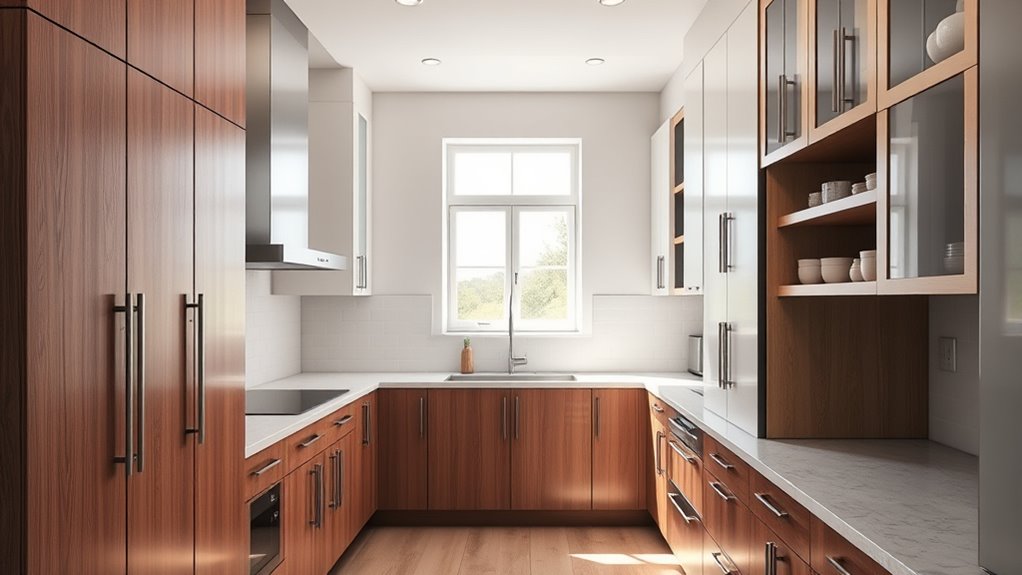
10 Factors Affecting Kitchen Cabinets Cost
Trying to figure out how much your kitchen cabinets will cost can feel overwhelming. You’re not alone—many people struggle with understanding the many factors that influence the final price. Whether you’re remodeling or building new, getting a clear picture of what affects cabinet costs helps you avoid surprises and stay within budget.
Your kitchen cabinet costs depend on ten key factors: material type, cabinet style (stock, semi-custom, or custom), kitchen size, build quality, door design, brand reputation, installation complexity, countertop choices, hardware selections, and project timeline.
You’ll find solid wood costs more than particleboard, while custom cabinets exceed stock options considerably. Labor expenses vary by location and layout difficulty.
Understanding how these elements interact helps you budget effectively and make informed decisions that align with your renovation goals.
Key Takeaways
- Material Type: Solid wood costs more than plywood, particleboard, or MDF. This directly impacts the total cabinet expenses.
- Cabinet Style: Stock cabinets are the most affordable option. Semi-custom and custom choices offer more design freedom but come at higher prices.
- Kitchen Size: Larger kitchens require more materials. Small kitchens cost $2,500–$5,000, while extra-large ones can exceed $20,000.
- Installation Complexity: Electrical modifications, wall preparation, and limited access can increase labor costs. This drives up the overall project expenses.
- Hardware & Finishes: Premium hinges, soft-close systems, custom paint, glazing, and specialty edging can significantly raise cabinet costs.
Kitchen Cabinet Material Type and Costs: The Foundation of Your Budget
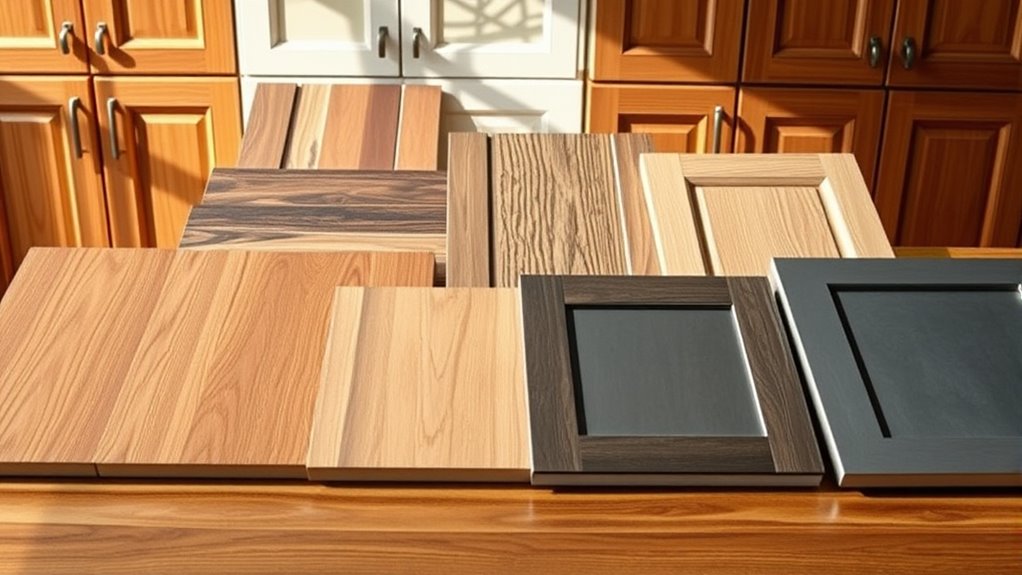
Since material type determines both the durability and price of your kitchen cabinets, it’s the most critical factor you’ll consider when budgeting.
Material type stands as your most critical budgeting factor, directly determining both kitchen cabinet durability and price.
You’ll encounter several material options, each with distinct price points. Solid wood cabinets offer longevity and classic appeal but command premium prices. Plywood provides excellent durability at moderate costs, while particleboard represents the most budget-friendly choice, though it’s less resilient.
Eco-friendly materials have gained popularity among environmentally conscious homeowners, though they typically cost more upfront. Bamboo and reclaimed wood exemplify sustainable options that deliver both performance and environmental responsibility.
Consider your aesthetic preferences too. Vintage finishes add character and warmth to your kitchen, often justifying higher expenses. Whether you’re drawn to distressed wood or antique hardware, these design elements markedly impact your total investment.
Balance your priorities: durability, environmental impact, and visual style. Your material selection directly influences renovation costs and long-term cabinet performance.
Stock, Semi-Custom, or Custom Cabinets: Which Fits Your Price Range?
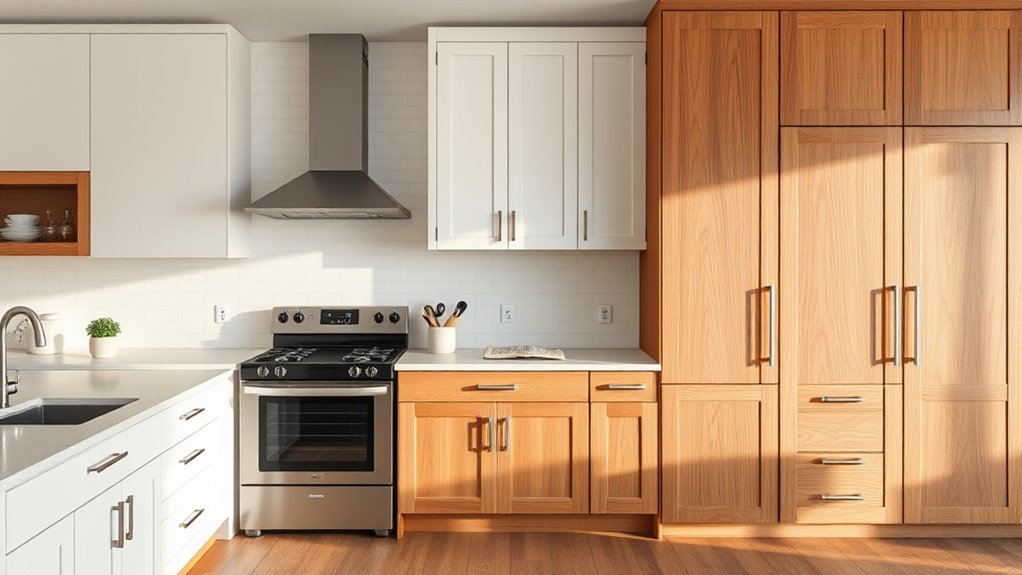
Once you’ve selected your cabinet materials, you’ll face another pivotal decision: choosing between stock, semi-custom, and custom options.
Stock cabinets are your most budget-friendly choice, offering pre-made designs in standard sizes. They’re ready to install and ideal if you’re working with tight constraints.
Semi-custom cabinets strike a balance between affordability and flexibility. You’ll enjoy custom color options and modest modifications while keeping costs reasonable. This middle ground suits most homeowners seeking personalization without breaking the bank.
Custom cabinets provide complete design freedom, allowing you to maximize storage and achieve your exact vision. They’re the priciest option but worth considering if you have specific needs.
When evaluating these choices, consider eco-friendly options available at each level. Sustainable materials and finishes now exist across all cabinet types, so you don’t necessarily sacrifice environmental responsibility for budget savings. Your price range will ultimately guide which option best serves your kitchen renovation goals.
Kitchen Layout and Linear Footage: Calculating Your Total Cost
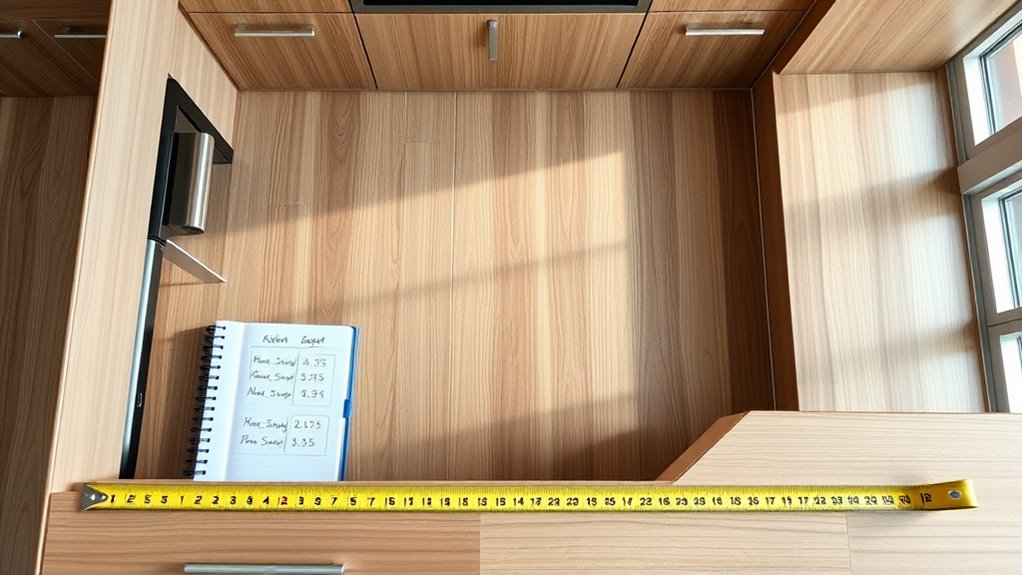
Beyond choosing your cabinet type, the physical dimensions of your kitchen directly determine your project’s overall expense. You’ll calculate costs based on linear footage, which is the total running inches of cabinetry you need. Larger kitchens naturally require more materials and labor, which considerably increases your budget.
| Kitchen Size | Linear Footage | Estimated Cost Range |
|---|---|---|
| Small (under 100 sq ft) | 10-15 feet | $2,500-$5,000 |
| Medium (100-150 sq ft) | 15-20 feet | $5,000-$10,000 |
| Large (150-200 sq ft) | 20-30 feet | $10,000-$20,000 |
| Extra Large (over 200 sq ft) | 30+ feet | $20,000+ |
Your layout greatly impacts pricing too. U-shaped and galley kitchens typically cost less than islands or L-shaped designs that require additional cabinetry. When planning, prioritize innovative storage solutions and ergonomic design to maximize functionality within your linear footage allocation.
Strategic placement reduces waste while optimizing your investment’s value and your kitchen’s usability.
Cabinet Build Quality: Frame, Joinery, and Materials That Last
While linear footage determines how much cabinetry you’ll need, the quality of that cabinetry decides how long it’ll last and perform. Cabinet craftsmanship directly impacts your investment’s longevity and functionality.
You’ll find significant differences in frame construction among cabinet options. Solid wood frames outperform particle board or MDF in durability and stability. Quality joinery such as dovetail or mortise and tenon joints prevents cabinet doors from sagging and drawers from warping over time.
Material durability extends beyond the frame. Plywood box construction resists moisture and warping better than solid wood alone. Hardware quality matters too; heavy-duty hinges and slides endure years of daily use without degradation.
Premium finishes protect against stains, scratches, and fading. You’re fundamentally choosing between cabinets that’ll serve you reliably for decades or those requiring premature replacement.
Investing in superior build quality today reduces costly repairs and replacements tomorrow.
Door Style and Finish: How Design Choices Affect Price
After you’ve settled on frame quality, your door style and finish selections markedly shape both aesthetics and cost. You’ll encounter various options ranging from simple flat-panel designs to ornate raised-panel styles, each affecting your budget differently.
Decorative glass inserts enhance your cabinets’ visual appeal but increase expenses. You can choose from clear, frosted, or textured glass depending on your kitchen’s aesthetic direction.
Finish choices considerably impact pricing. Standard painted finishes cost less than stained wood options. Vintage finishes, which create aged or distressed appearances, typically command premium prices due to their labor-intensive application processes.
Custom finishes, including two-tone combinations or specialty glazing, require additional investment. High-gloss finishes cost more than matte alternatives because they demand meticulous application techniques.
Your door style determines overall cabinet character while directly influencing your project’s total expenditure. Balancing your design preferences with your budget ensures you’ll achieve your desired kitchen transformation without overspending.
Hardware Choices: Hinges, Pulls, and Soft-Close Systems
Cabinet hardware, including hinges, pulls, and closing mechanisms, represents another cost variable you shouldn’t overlook when budgeting your kitchen renovation. Basic hinges and knobs cost considerably less than premium options, but your choices dramatically impact your total expenses.
Soft-close systems, for instance, add substantial value but increase prices notably. These hydraulic mechanisms prevent slamming and strengthen durability, making them worthwhile investments for frequently used cabinets.
Your hardware trends preferences matter too. Contemporary minimalist pulls differ in cost from ornate vintage hardware styles. Vintage hardware often commands premium prices due to craftsmanship and authentic materials, while modern designs typically offer more budget-friendly alternatives.
Material selection—stainless steel, brass, bronze, or ceramic—further influences pricing. You’ll find that upgrading hardware across all cabinets compounds expenses quickly, so prioritizing visible areas like kitchen islands maximizes visual impact while controlling costs.
How Cabinet Maker Brand Affects Your Price
When you’re shopping for kitchen cabinets, you’ll quickly notice that premium brands come with higher price tags. That’s because they’re known for superior craftsmanship, better materials, and solid warranties. On the other hand, budget cabinet makers give you a more cost-effective option by streamlining production and using less expensive materials. But keep in mind, you might be trading off some longevity and design sophistication.
Premium Brand Pricing Strategy
Just as you’d expect to pay more for a designer handbag than a department store alternative, cabinet brands command vastly different prices based on their reputation, quality, and market positioning. Premium manufacturers use luxury branding to justify higher costs, positioning themselves as top choices for discerning homeowners.
Their pricing strategies typically include:
- Heritage markup: Established brands charge premiums for decades of reputation
- Craftsmanship positioning: Superior materials and construction methods justify higher price points
- Exclusivity appeal: Limited availability and designer collaborations drive demand
You’ll notice that luxury cabinet makers emphasize handcrafted details, imported materials, and personalized customization. They’re not just selling storage solutions; they’re selling status and refined aesthetics. Understanding these strategies helps you decide whether premium pricing fits your needs and budget.
Budget Cabinet Maker Options
If premium pricing doesn’t align with your budget, you’ve got plenty of solid alternatives that won’t compromise functionality or appearance. Budget-friendly cabinet makers offer cost-saving solutions without sacrificing quality. You’ll find reliable options from manufacturers that prioritize value over luxury branding.
| Maker Type | Price Range | Best For |
|---|---|---|
| Semi-Custom | $100-300/unit | Balanced quality/cost |
| Stock | $50-150/unit | Maximum savings |
| Local Builders | $80-250/unit | Customization |
| Online Retailers | $60-200/unit | Direct pricing |
These makers deliver durable cabinets using quality materials and construction methods. You’re paying for the product itself rather than brand prestige. Compare warranties, wood types, and hardware options across manufacturers to find the best value for your kitchen renovation.
Installation Complexity and Labor Costs
Beyond the cabinets themselves, installation complexity plays a significant role in your overall project cost. You’ll want to factor labor expenses into your budget planning from the start.
Installation complexity significantly impacts your kitchen cabinet project cost—factor labor expenses into your budget planning from the start.
Several elements drive installation costs: kitchen layout and existing cabinetry removal, electrical or plumbing modifications required, and wall preparation and leveling needs.
Your kitchen’s design trends, like custom finishes or specialized layouts, can complicate installation. If you’re incorporating modern open shelving or intricate corner solutions, you’ll likely pay more for skilled labor.
Experienced installers charge higher rates, but they work efficiently and prevent costly mistakes. You’re investing in quality craftsmanship that ensures your cabinets function properly and last years longer.
Geographic location also influences labor costs. Urban areas typically charge more than rural regions. When planning your budget, request detailed installation quotes from multiple contractors to understand what you’re actually paying for.
How Countertops and Edging Impact Cabinet Costs
You’ll notice that the type of countertop material you pick can really impact your overall cabinet budget. Premium options like quartz and granite tend to cost quite a bit more than laminate or butcher block.
Then there’s the edging to think about. Whether you go for simple beveled edges or more decorative profiles, it affects not just the look but also the durability and price. More elaborate designs usually need specialized installation, which can add to the cost.
Plus, your labor costs might go up if you choose materials that require complex cutting, sealing, or professional finishing during installation. So, it’s good to keep that in mind when making your selections.
Material Selection Determines Price
Why do two kitchens with comparably sized cabinets carry vastly different price tags? The answer lies in your material choices. You’re investing in quality when you select premium woods, high-end finishes, and durable surfaces.
Your kitchen color and cabinet accessories substantially impact overall expenses.
Consider these cost-determining factors:
- Wood type: solid hardwoods like oak and cherry cost more than plywood or particleboard.
- Finish quality: custom paint, stains, and specialty coatings add substantial value.
- Hardware and accessories: upgraded handles, soft-close hinges, and organizational inserts increase pricing.
You’ll notice budget cabinets use veneer over engineered wood, while luxury options feature solid construction throughout.
Your edging material matters too. Real wood edges cost more than laminate alternatives.
Every material decision directly influences your final cabinet investment, so you’re basically choosing your price point through these selections.
Edging Options and Durability
While cabinet materials form your foundation, the edging you choose determines how well your investment holds up over time and what you’ll pay for that protection.
Your edge finishing options profoundly impact surface durability and long-term costs. Premium edges like solid wood or metal trim provide superior protection against moisture and impact damage, reducing future repairs. Budget-friendly options like veneer or PVC edges offer basic protection but may wear faster.
| Edge Type | Cost Level | Durability | Best For |
|---|---|---|---|
| Solid Wood | High | Excellent | Long-term investment |
| PVC/Veneer | Low | Fair | Budget cabinets |
| Metal Trim | Medium | Very Good | High-moisture areas |
| Laminate | Low | Good | Standard kitchens |
| Solid Surface | High | Excellent | Premium finishes |
Your choice directly affects maintenance needs and replacement timelines.
Installation Labor and Complexity
Once you’ve selected your edging materials, the actual installation process becomes your next cost consideration. Installation labor directly impacts your overall cabinet expenses, and complexity varies markedly based on your kitchen’s layout and design trends you’re pursuing.
You’ll encounter several factors affecting installation costs: cabinet configuration and layout intricacy, countertop attachment methods and precision required, and edging application difficulty and material handling.
Modern sustainability considerations can also influence labor complexity. Eco-friendly materials sometimes require specialized installation techniques, potentially increasing professional fees. Custom designs that align with current trends may demand more skilled craftsmen, raising costs accordingly.
Your contractor’s experience level matters considerably. Experienced installers work efficiently, reducing labor hours and expenses. Request detailed quotes that break down installation complexity separately from material costs so you’ll understand exactly where your money’s going.
Does Project Timeline Matter? Urgency and Pricing
Your project timeline directly impacts what you’ll pay for kitchen cabinets. When you’re in a hurry, you’ll typically face urgency pricing that increases your overall costs considerably.
If you need cabinets installed within a tight deadline, manufacturers and installers charge premium rates to prioritize your job. They’ll adjust their schedules, potentially hire additional labor, and expedite production. All these expenses get passed on to you.
Conversely, allowing flexibility with your project timeline lets you take advantage of standard pricing and seasonal discounts. You can schedule installation during slower business periods when contractors offer better rates.
Rush orders also limit your customization options. You might need to choose from standard designs rather than custom builds, which sometimes means settling for less-ideal solutions.
Plan ahead whenever possible. Building in extra time for your cabinet project gives you negotiating power, access to quality craftsmanship, and substantial savings.
Frequently Asked Questions
Can I Finance My Kitchen Cabinet Purchase, and What Payment Plans Are Available?
Yes, you can finance your kitchen cabinet purchase through several financing options. Most retailers offer flexible payment plans tailored to your budget, including interest-free financing for qualified buyers.
You’ll typically find options like monthly installment plans, credit card financing, and third-party lenders. Some companies provide extended payment terms spanning 12 to 60 months.
You should compare different payment plans to find what works best for your financial situation. Always review the terms carefully before committing.
Are There Warranty Options for Kitchen Cabinets, and What Do They Typically Cover?
As the saying goes, “you get what you pay for,” and that’s especially true with cabinet warranties. You’ll find most manufacturers offer coverage ranging from 1 to 10 years, protecting against defects affecting cabinet longevity.
Your warranty typically covers structural damage, hardware failures, and finish problems. You’re responsible for normal wear and tear. Premium cabinets often include extended warranties.
Don’t skip reading the fine print. You’ll want to understand exactly what warranty coverage protects your investment.
How Do I Maintain and Care for My Kitchen Cabinets After Installation?
You’ll maintain your cabinets best by establishing regular cleaning routines using mild soap and water. Wipe spills immediately to prevent damage and avoid harsh chemicals that’ll strip finishes.
Your material selection impacts care requirements. Wood needs occasional polish, while laminate requires gentler treatment.
You should dust weekly, deep clean monthly, and use soft cloths to prevent scratching. Don’t expose cabinets to excessive moisture or direct sunlight, as these will cause warping and fading over time.
What Permits or Inspections Are Required for Kitchen Cabinet Installation Projects?
You’d be wise to remember: permits aren’t paperwork burdens; they’re your safety net. Most jurisdictions don’t require permits specifically for cabinet installation, but you’ll need inspections if you’re modifying plumbing, electrical, or structural elements.
You must comply with building codes regarding ventilation around appliances and proper spacing. Check with your local building department first. They’ll clarify inspection requirements and ensure your project meets all regulations before you proceed.
Can I Mix Cabinet Styles or Brands Within the Same Kitchen Design?
Yes, you can absolutely mix cabinet styles and brands in your kitchen design. Cabinet style compatibility depends on creating visual cohesion through consistent finishes, hardware, and color palettes.
You’ll find numerous brand integration options available. Mixing high-end cabinetry with budget-friendly pieces works well when you maintain design harmony. You should coordinate door styles, materials, and overall aesthetics to make sure they complement each other.
Consider consulting a designer to help you achieve a polished, unified look while combining different cabinet sources.
Conclusion
You’ve navigated through numerous factors that shape your kitchen cabinet investment. From material selection to installation complexity, each choice you make impacts your final bill.
Like a medieval knight adjusting his armor before battle, you’re now equipped to make informed decisions. By understanding these ten elements, you’ll confidently balance quality, design, and budget.
This way, your kitchen cabinets deliver lasting value without breaking the bank.