What Is a Buffet Table and How Do You Set It Up?
Struggling to host a smooth, stress-free meal where everyone can enjoy a variety of dishes without constant waiting or confusion? You’re not alone. Many people find it challenging to organize food in a way that keeps guests happy and the event flowing effortlessly. That’s where a buffet table comes in handy.
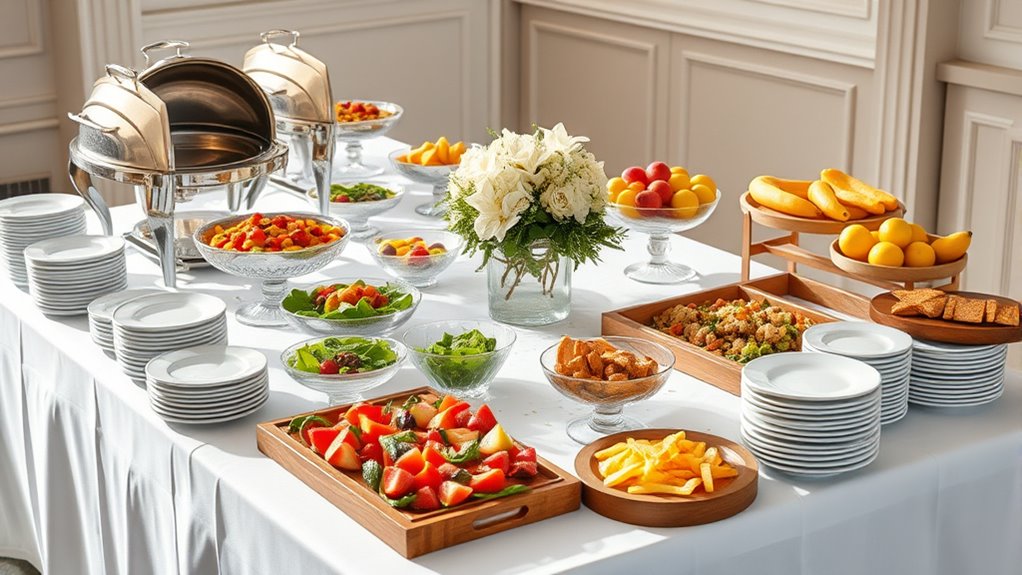
A buffet table is a self-service dining display where you showcase multiple food options and let guests serve themselves. You’ll want to choose a visible, accessible location with 3-4 feet of space on all sides.
Arrange food logically—appetizers first, then mains, desserts last—using different heights and colors for visual appeal.
Keep hot foods above 140°F and cold items below 40°F. Position plates at the start and beverages separately to prevent congestion.
The details of proper setup can transform your event’s entire flow.
Key Takeaways
- A buffet table is a self-service dining setup that lets guests serve themselves from a centralized display of food options.
- Choose a visible, accessible spot with about 3-4 feet of space on all sides. This helps keep guests moving smoothly without crowding.
- Arrange food stations in order: appetizers first, then mains, sides, and finally desserts. This guides guests logically through the meal.
- Keep food at the right temperatures by using chafing dishes for hot items and ice baths for cold ones to ensure safety.
- Place plates, napkins, and utensils thoughtfully at the start and end of the line. This makes it easy for guests to access what they need and keeps the flow going.
What Exactly Is a Buffet Table?
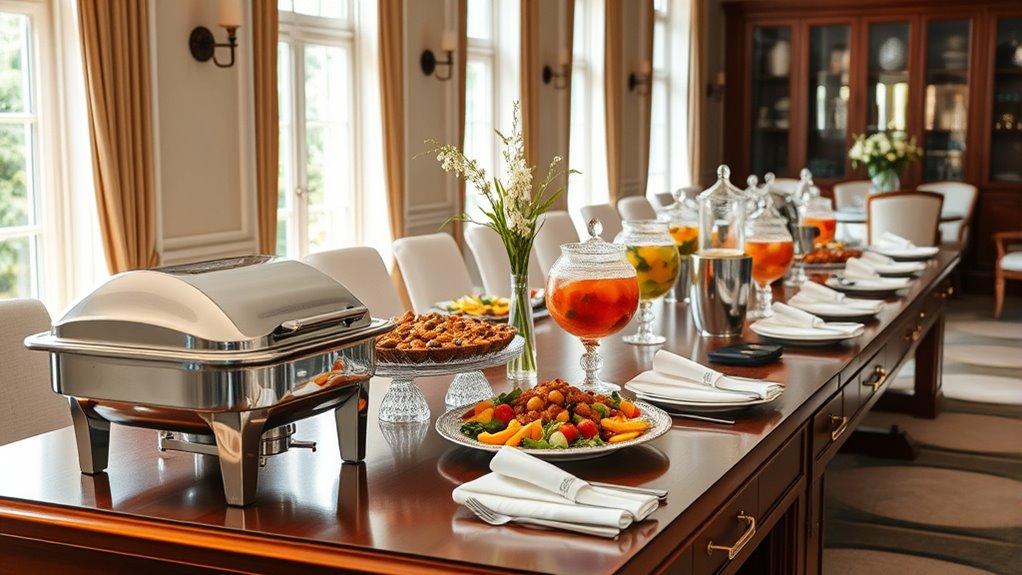
How’s a buffet table different from a traditional served meal? Instead of waitstaff delivering individual plates, you’re serving yourself from a centralized display of food. This self-service approach gives you control over portions and selections.
The buffet concept has fascinating historical origins, tracing back to Scandinavian smörgåsbord traditions and French service styles. It evolved into a practical dining method that democratized food access by eliminating hierarchical serving protocols.
Cultural variations shape how different regions approach buffets. Scandinavian countries emphasize cold dishes and preserved items, while Mediterranean cultures incorporate fresh ingredients and regional specialties. Asian buffets typically feature multiple cooking stations with hot woks and grills. Latin American buffets showcase rice, beans, and grilled proteins as centerpieces.
You’ll appreciate how buffets accommodate diverse dietary preferences simultaneously. Rather than predetermined menus, you customize your meal according to your tastes and restrictions. This flexibility makes buffet tables ideal for mixed-group dining situations where preferences vary considerably.
Choosing the Right Location and Table Size
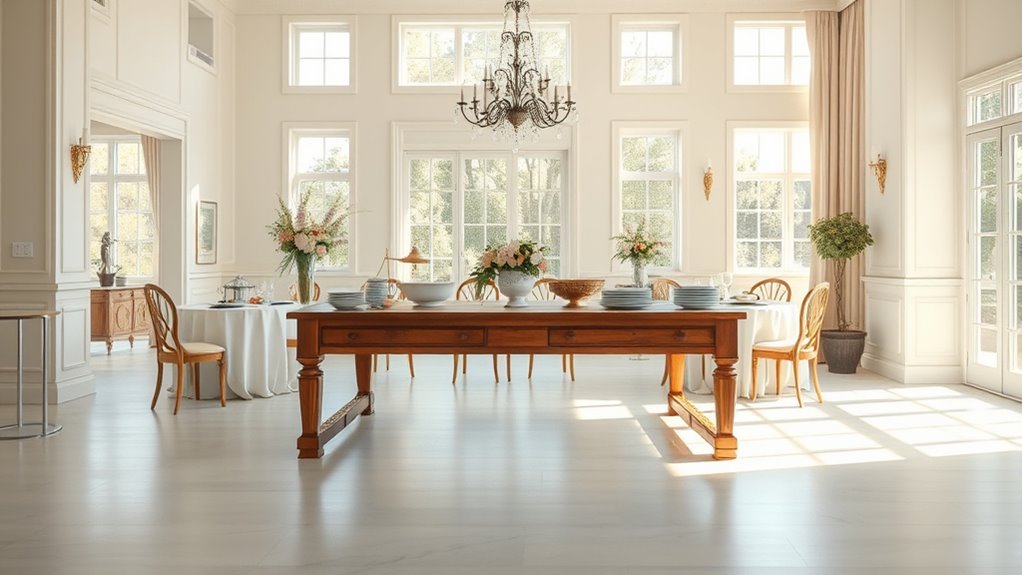
When you’re picking a spot for your buffet, think about how your guests will move around. You want to avoid any tight squeezes or traffic jams. It’s all about making the flow smooth and easy.
Also, take a good look at the size of your table. Make sure it’s big enough to hold all your dishes, but don’t cram everything together. Leave some space between the items so people can reach what they want without hassle.
Finding the right balance is key—it’s about having enough room for everything while keeping things accessible. Plus, a well-organized layout makes your food look even more inviting.
Space and Traffic Flow
Before you set up your buffet, scout your venue for a location that will accommodate both your table and guest movement. You’ll want to position your buffet away from high-traffic areas like doorways or restrooms to prevent congestion and bottlenecks.
Ensure there’s adequate space on all sides of the table, ideally three to four feet, so guests can comfortably navigate without bumping elbows. This strategic placement supports guest engagement by encouraging mingling and conversation while maintaining smooth flow throughout the event.
Consider your room’s layout carefully. Place the buffet where it’s visible and accessible to promote ambiance improvement through intentional design. Arrange serving stations in a logical sequence, guiding guests naturally from appetizers to main courses to desserts. This thoughtful spacing transforms your buffet into both a functional and welcoming focal point.
Table Dimensions and Capacity
Once you’ve identified your buffet’s placement, selecting the right table size becomes essential for both functionality and guest comfort. You’ll want to take into account your guest count and the variety of dishes you’re serving. A standard 6-foot table accommodates 20-30 guests, while 8-foot tables work better for larger gatherings.
Your table dimensions should allow adequate spacing between items and prevent congestion. Consider these factors:
- Depth and width: ensure at least 2-3 feet of depth for serving dishes and guest access
- Tablecloth styles: choose durable fabrics that complement your décor while accommodating your setup
- Chair arrangements: position seating at appropriate distances to avoid blocking traffic flow
Balance aesthetics with practicality by selecting tables that fit your venue while maintaining comfortable guest movement throughout the space.
How to Map Out Your Buffet Layout
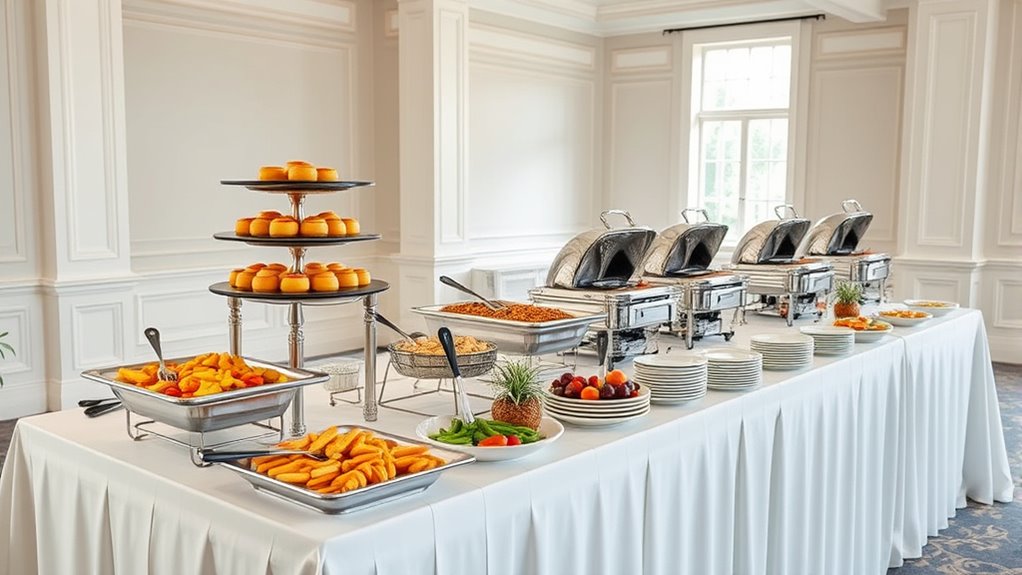
To create a logical buffet layout, start by thinking about how your guests will move through the space. You want to position stations in a way that keeps things flowing smoothly and avoids any congestion or bottlenecks.
For example, placing appetizers first, then mains, and desserts last helps guide guests naturally along the buffet line. This kind of strategic setup not only makes the serving process easier but also keeps the pace comfortable for everyone.
In the end, this thoughtful sequencing improves the overall dining experience by helping guests move through each course without feeling rushed or stuck in line.
Traffic Flow Patterns
A well-designed buffet layout guides guests naturally through the food stations without creating bottlenecks or confusion. You’ll want to establish a logical pathway that encourages smooth movement and promotes guest interaction.
Consider these essential elements:
- One-way circulation: Direct traffic in a single direction to prevent collisions and maintain momentum
- Spacing between stations: Allow adequate room for guests to pause, select items, and move forward comfortably
- Ambient lighting: Use strategic illumination to highlight food stations and guide guests toward the next area
Position appetizers and beverages at the entrance to ease congestion. Place heavier dishes midway through your layout, saving desserts and drinks for the end. This arrangement naturally paces your guests’ experience and maximizes your space efficiently.
Station Placement Strategy
While understanding traffic flow prevents congestion, the actual placement of your stations determines whether guests can navigate efficiently in the first place. You’ll want to position hot dishes at one end and cold items at the opposite side, creating a logical progression.
Consider your space’s natural layout when deciding station locations. Here’s how to organize your setup:
| Station Type | Ideal Position |
|---|---|
| Appetizers | Entrance area |
| Main dishes | Center or midway point |
| Sides & salads | Following mains |
| Desserts | End of line |
| Beverages | Separate corner |
| Condiments | Near mains |
Your tablecloth selection and decorative accents should complement each station’s purpose while maintaining visual cohesion. Position serving utensils strategically so guests don’t block each other.
Guarantee adequate spacing between stations to prevent bottlenecks and allow comfortable reach to all items.
Serving Order Sequence
How should guests move through your buffet? You’ll want to create a logical flow that prevents congestion and guarantees everyone enjoys the full menu variety you’ve prepared.
Design your layout so guests progress in one direction, starting with plates and napkins. Position lighter appetizers first, followed by main courses, sides, and desserts last. This sequence naturally guides your guests and prevents backtracking.
Consider these key elements:
- Dietary considerations: Place vegetarian, gluten-free, and allergen-free options clearly labeled throughout the line so guests can easily identify suitable choices.
- Traffic flow: Position high-demand items strategically to avoid bottlenecks where guests cluster.
- Temperature zones: Separate hot and cold stations to maintain food safety and quality.
This thoughtful arrangement maximizes your buffet’s efficiency while accommodating all your guests’ needs.
Food Safety and Temperature Control
When you’re setting up a buffet table, maintaining proper food temperatures is essential for preventing foodborne illness. You’ll need to keep hot foods above 140°F and cold foods below 40°F throughout your event.
| Food Type | Required Temperature | Duration |
|---|---|---|
| Hot dishes | 140°F or higher | Up to 4 hours |
| Cold items | 40°F or below | Up to 2 hours |
| Perishables | Varies by item | Check regularly |
Use chafing dishes, slow cookers, and ice baths to maintain these temperatures effectively. Position your buffet away from direct sunlight, and replace serving utensils frequently to prevent cross-contamination.
Consider dietary restrictions by clearly labeling dishes with allergen information and ingredient lists. When selecting beverage pairings, choose drinks that complement your menu while accommodating various dietary needs. Don’t forget to monitor food temperatures every two hours using a reliable thermometer, adjusting heat sources as needed to keep guests safe.
The Right Order for Arranging Food
When setting up your buffet, start by placing the cold items first. This helps keep them at safe temperatures longer as guests make their way through the line. Then, put your hot dishes at the end so they stay warm and don’t cool down while people are waiting. This way, your food stays fresh and delicious the whole time.
Cold Items First
Because cold foods don’t require heating or last-minute preparation, they’re ideal for starting your buffet setup. You’ll appreciate how this approach streamlines your workflow and keeps everything fresh throughout the event.
Begin by placing cold items like salads, cheeses, and charcuterie at the table’s front. This strategy allows guests to move efficiently while you finalize hot dishes in the kitchen. Consider your tablecloth choices and vintage decor to create an inviting presentation that complements your cold selections.
Key advantages of this approach:
- Eliminates stress from coordinating multiple heating times
- Maintains food quality and prevents premature spoilage
- Allows you flexibility to attend to other preparation tasks
Position serving utensils and small plates near cold items, encouraging guests to help themselves while you complete final cooking stages. This practical method ensures a smooth, well-organized buffet experience.
Hot Dishes Last
After you’ve positioned your cold items, add hot dishes to the buffet table in a strategic sequence that keeps food at safe temperatures. Place dishes that retain heat longest, like casseroles and roasted meats, toward the end of the line. Position chafing dishes with warming elements underneath to maintain proper temperatures throughout your event.
You’ll want to arrange hot items away from cold foods to prevent cross-contamination and temperature fluctuations. Consider your garden decor and entertainment options when determining buffet placement. Make sure guests can access hot dishes without disrupting other activities or blocking sightlines.
Keep sauces and gravies separate until guests request them to preserve dish integrity. Always use serving utensils and replace dishes regularly to maintain food safety and presentation quality throughout your gathering.
Setting Up Plates, Utensils, and Napkins
To create an organized and efficient buffet experience, position plates at the beginning of the line where guests can grab them immediately. This setup streamlines the flow and prevents congestion.
Place napkins beside the plates so guests can take them without fumbling. Position utensils strategically after the food stations, with forks on the left and knives and spoons on the right, following traditional dining etiquette. This arrangement keeps utensils clean and accessible when guests need them.
Your tablecloth selection sets the tone for the entire buffet. Choose durable, stain-resistant fabrics that complement your décor and withstand spills during service.
Key considerations for your setup:
- Position serving utensils within each dish for self-service convenience
- Keep backup napkins and utensils at the end of the line
- Arrange place settings to accommodate your guest count and space
This logical progression ensures guests move smoothly through the buffet while gathering everything they need for an enjoyable meal.
Managing Traffic Flow to Prevent Bottlenecks
Even the most thoughtfully arranged buffet can become chaotic when guests bunch up at popular stations or narrow serving areas. You’ll prevent congestion by spacing serving stations throughout the table rather than clustering them together. Position decorative centerpieces strategically to create natural flow patterns and guide guests in one direction.
You should arrange your buffet in a logical sequence: plates first, then main dishes, sides, and condiments. This order keeps traffic moving smoothly without backtracking. Consider using themed tableware that complements your décor while maintaining clear sight lines to food items.
Make your serving areas wider than you’d initially think necessary. You’ll reduce bottlenecks by allowing multiple guests to serve themselves simultaneously. Position utensils and napkins at both ends of the table so guests don’t congregate in single locations.
Using Height and Color to Enhance Your Display
While a well-organized buffet keeps guests moving efficiently, you’ll capture their attention and appetite through strategic use of height and color.
Varying heights across your display creates visual interest and prevents a flat, monotonous appearance. Use risers, cake stands, and tiered serving pieces to raise different dishes at different levels. This height variation draws the eye naturally and makes your spread feel more dynamic and intentional.
Color coordination transforms your buffet into an appealing focal point. Choose complementary colors that work together harmoniously, like warm tones with cool accents or analogous colors for a cohesive look. Arrange colorful foods strategically to create visual balance.
Consider these amplification strategies:
- Place vibrant vegetables and fruits at varying heights to create focal points
- Use colored linens and serving pieces that complement your food presentation
- Group similar-colored dishes together, then break them up with contrasting items
These techniques make your buffet visually stunning while maintaining functionality and guest engagement.
Handling Beverages and Desserts
Beverages and desserts deserve their own dedicated stations because they’re often the last items guests visit before leaving your buffet. You’ll want to position your beverage station away from the main food table to prevent congestion and spillage near savory dishes.
Stock your beverage station with glasses, ice, and both hot and cold drink options. Keep alcoholic beverages separate if serving them. Label each drink clearly so guests can easily identify their choices.
For dessert presentation, create visual appeal by varying heights and arranging treats on tiered stands or pedestals. You’ll draw attention to these finale offerings by using contrasting tablecloths or decorative backdrops. Place smaller desserts at the front and larger centerpiece items toward the back.
Don’t forget serving utensils, small plates, and napkins at both stations. This setup ensures your guests enjoy a satisfying wrap-up to their buffet experience while maintaining organized, efficient flow throughout the meal.
Setup Mistakes That’ll Ruin Your Event
Now that you’ve mastered the technical aspects of buffet layout, it’s time to address the common pitfalls that can undermine all your careful planning.
You’ll want to avoid these critical mistakes:
- Overcrowding your table Cramming too many dishes creates confusion and spills, making it difficult for guests to navigate smoothly.
- Ignoring buffet etiquette and cultural variations Different groups have distinct dining customs and dietary restrictions you must respect to ensure everyone feels welcome.
- Placing items illogically Positioning hot foods near cold items or desserts before mains disrupts the natural eating flow.
Poor spacing forces guests to reach awkwardly across others, increasing accident risk. Inadequate serving utensils cause bottlenecks and frustration. You’ll also sabotage your event by failing to refresh depleted dishes promptly or maintaining proper food temperatures.
Understanding your guests’ backgrounds ensures you’re accommodating preferences respectfully. Thoughtful buffet etiquette means considering traffic flow, accessibility, and comfort throughout your setup. These preventative measures transform your buffet from chaotic to seamless, allowing guests to enjoy their experience fully.
Frequently Asked Questions
How Far in Advance Should I Prepare Food for a Buffet Table?
You should prepare most buffet foods one to two days ahead, though timing depends on the dish. You’ll want to prep cold items like salads and desserts earlier, while keeping hot foods until shortly before service.
For your buffet presentation, you shouldn’t assemble everything until an hour before guests arrive. Don’t forget about food labeling; you’re adding these signs right before serving.
This approach guarantees you’re maintaining quality while staying organized throughout your event.
What’s the Appropriate Budget for a Buffet per Person?
You’ll typically spend between $8-$15 per person for a casual buffet, though upscale events can reach $25+. To maximize your budget, use smart pricing strategies by selecting cost-effective options like seasonal produce, bulk purchases, and simple dishes that don’t require extensive preparation.
You can stretch your dollars further by incorporating filling starches, pasta dishes, and casseroles. Consider your guest count and event formality when determining your final per-person investment.
How Do I Accommodate Dietary Restrictions and Allergies at a Buffet?
You’ll want to picture clearly labeled dishes gleaming under warm lights, each one thoughtfully arranged for your guests’ needs. Start by offering gluten-free options like rice, potatoes, and certified gluten-free bread.
Include vegetarian choices such as roasted vegetables, legume-based dishes, and dairy options. Create a separate allergen station with ingredient lists displayed prominently. You’ll communicate dietary information directly with guests beforehand, ensuring everyone feels welcomed and cared for at your table.
Should I Hire Staff to Manage the Buffet During the Event?
Yes, you’ll benefit from hiring staff to manage your buffet. They’ll handle staff management by monitoring food levels, restocking dishes, and maintaining cleanliness throughout your event.
Professional servers ensure proper service etiquette by greeting guests, answering food questions, and managing traffic flow. They’ll also prevent contamination and keep everything organized.
If you’re hosting a large gathering, trained staff will free you up to enjoy your event while guaranteeing your guests receive excellent service and attention.
What Decorations Work Best to Complement a Buffet Table Setup?
You’ll want to select elegant tablecloths that complement your event’s theme. Consider neutral tones or subtle patterns that won’t clash with your food displays.
Create stunning visual interest with centerpiece ideas like fresh flowers, candles, or seasonal arrangements positioned strategically throughout the table. You shouldn’t overcrowd the space, so keep decorations proportional to your buffet’s size.
Strategic lighting and coordinating linens tie everything together, making your buffet table both functional and visually appealing.
Conclusion
You’ll create an inviting dining experience when you master buffet setup fundamentals. By arranging food strategically, controlling temperatures, and managing traffic flow, you’re setting your guests up for success.
Remarkably, studies show that buffet presentations with varied heights increase food consumption by up to 23%. You’ve now got everything you need to host a memorable event that’ll impress your guests with a well-designed buffet table.