
What Is a King Size Bed?
Finding the perfect bed size can be a real challenge, especially when you want enough space to sleep comfortably without feeling cramped. If you’ve ever woken up cramped or bumped into your partner during the night, you’re not alone. Many people struggle to find a mattress that offers both ample room and fits well in their bedroom.
A king size bed measures 76 inches wide by 80 inches long, giving you and your partner roughly 38 inches of personal space each. It’s the largest standard bed option available, perfect if you’re sharing your bedroom and want maximum comfort and movement during sleep.
You’ll need a minimum 10′ x 12′ room with proper clearance on all sides. Mattress costs typically range from $500 to $3,000+, depending on quality.
Find out what makes this size ideal for your specific needs.
Key Takeaways
- A king size bed measures 76 inches wide by 80 inches long, providing ample space for two people.
- King beds offer approximately 38 inches of personal space per sleeper, which enhances comfort and helps reduce sleep disruption.
- Standard kings are 4 inches wider than California kings. The California kings are 4 inches longer instead.
- King beds require a minimum bedroom size of 10′ x 12′ with 2 to 3 feet of clearance on the sides.
- Mattress costs range from $500 to $3,000 or more. You’ll also want to budget for bedding, delivery, and maintenance.
King Size Bed Dimensions and Measurements
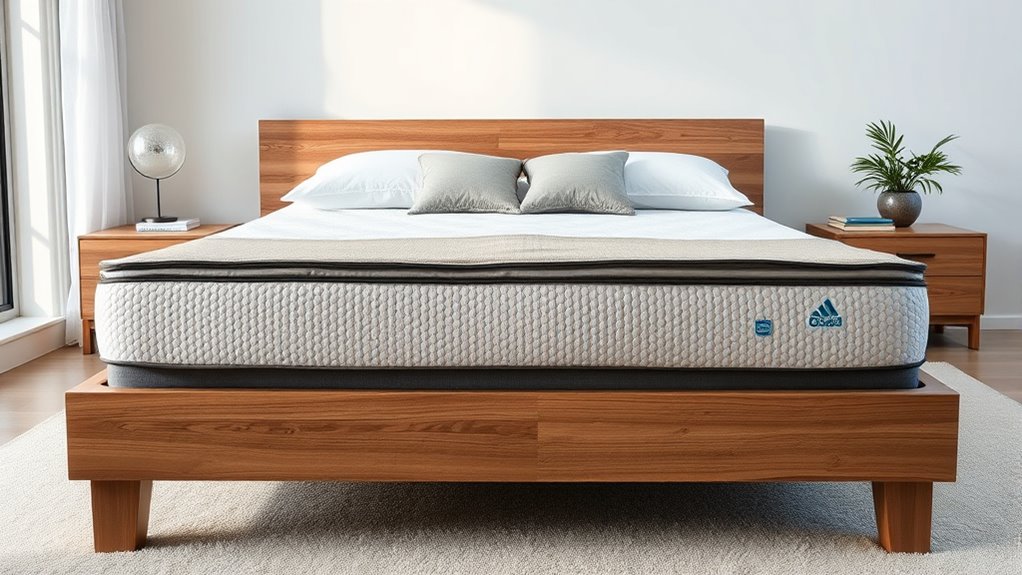
Whether you’re shopping for a new bed or furnishing a bedroom, understanding a king size bed’s exact dimensions is essential. A standard king size mattress measures 76 inches wide by 80 inches long, providing ample sleeping space for two people or one person who values extra room.
A standard king size mattress measures 76 inches wide by 80 inches long, offering generous sleeping space for two people.
You’ll find that these dimensions allow you to arrange your bedroom efficiently while maintaining adequate walking space. When selecting mattress materials, consider how they affect your sleep hygiene. Memory foam, latex, and innerspring options each offer distinct benefits for comfort and support.
The bed’s width gives you and your partner approximately 38 inches of personal space each, significantly more than a queen bed. Height varies depending on your box spring and mattress materials, typically ranging from 24 to 36 inches.
Before purchasing, measure your bedroom doorways and hallways to ensure delivery’s feasible. You’ll also want to account for nightstands and dressers when planning your layout.
How a King Size Bed Compares to Other Sizes
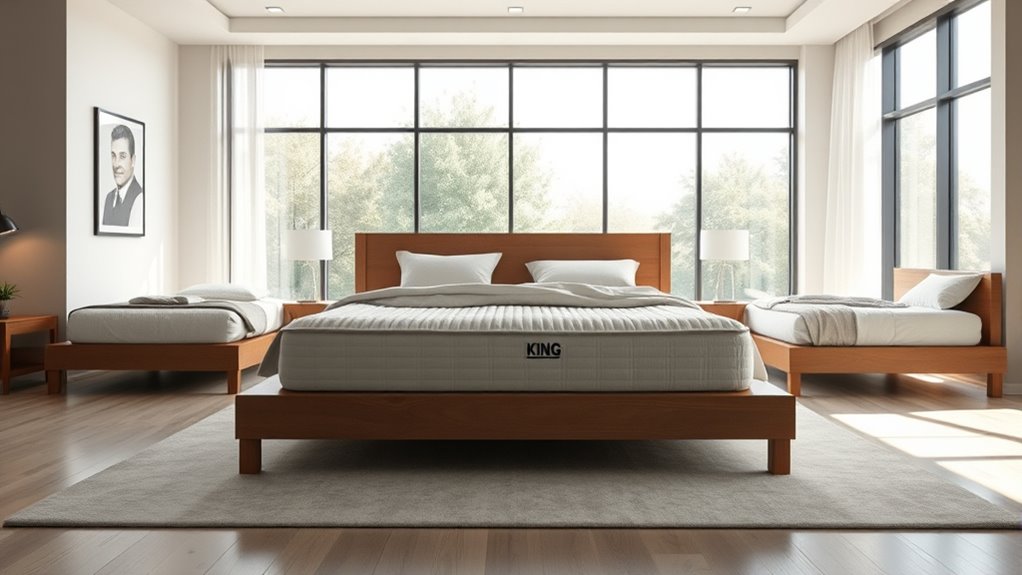
Why should you care how a king size bed stacks up against other mattress dimensions? Understanding the differences helps you make informed decisions about space requirements and comfort needs.
| Bed Size | Width | Length |
|---|---|---|
| Twin | 38″ | 75″ |
| Full | 54″ | 75″ |
| Queen | 60″ | 80″ |
| King | 76″ | 80″ |
A king bed offers considerably more space than a queen, giving you 16 additional inches of width. You’ll appreciate this extra room if you share your bed with a partner or pets. Compared to a full-size mattress, a king provides 22 extra inches of width. That’s a substantial difference for couples seeking personal space.
When considering a king bed, factor in decorative headboards and mattress toppers that will consume additional inches. You’ll need adequate bedroom dimensions to accommodate these elements comfortably. The king’s generous surface area makes it ideal for those prioritizing comfort and movement during sleep.
Standard King vs. California King Beds: Key Differences
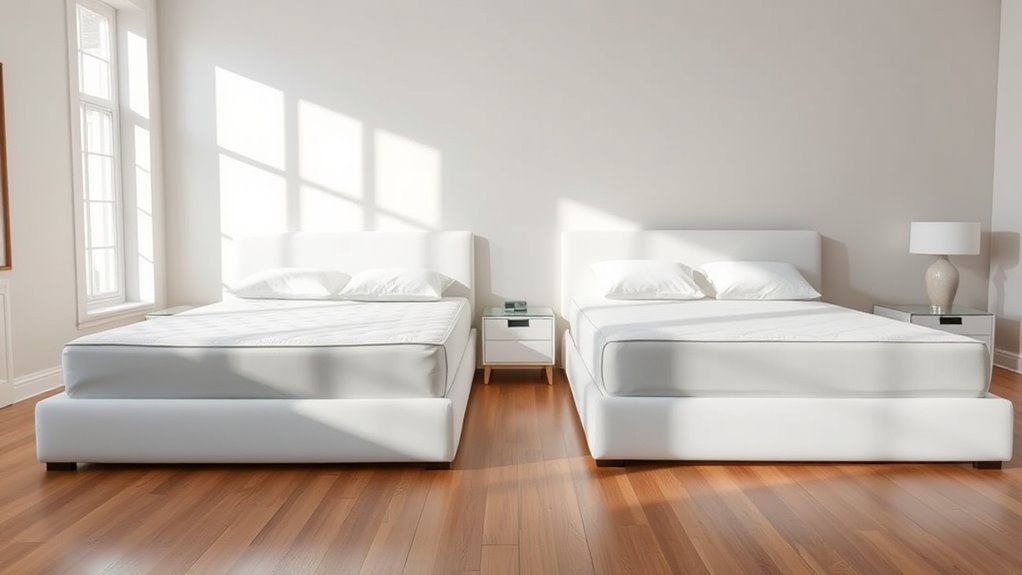
When you’re deciding between a standard king and a California king, it’s important to think about how each bed’s size will fit into your room and how comfortable you want to be. A standard king is 76 inches wide and 80 inches long. On the other hand, a California king is a bit narrower at 72 inches wide but longer at 84 inches.
Dimension and Space Comparison
Since you’re deciding between a standard king and California king, understanding their distinct dimensions will help you choose the right fit for your bedroom.
| Feature | Standard King | California King |
|---|---|---|
| Width | 76 inches | 72 inches |
| Length | 80 inches | 84 inches |
| Square Footage | 42.3 sq ft | 42 sq ft |
| Room Space Needed | 10′ x 12′ minimum | 10′ x 12′ minimum |
| Bed Frame Styles | More options available | Fewer frame choices |
The standard king offers four extra inches of width, which is ideal if you prioritize sleeping space. The California king provides additional length, perfect for taller individuals. Your choice depends on room layout and personal preferences.
Consider mattress firmness when selecting either option, as both accommodate various comfort levels. Standard kings work well in spacious master bedrooms, while California kings suit longer rooms efficiently.
Room Layout Considerations
How you arrange your bedroom furniture depends considerably on which king bed you select. A standard king’s extra width affects wall placement and traffic flow differently than a California king’s length. You’ll need to position your nightstands and dressers strategically to maximize movement around the bed.
Consider your lighting arrangements carefully. Standard kings work better with overhead fixtures, while California kings benefit from directional wall sconces. Your decorative accents, such as artwork or mirrors, should complement your chosen bed’s proportions.
Headboard placement matters too. Standard kings need wider wall space, whereas California kings require taller wall arrangements. Evaluate your room’s dimensions before deciding. Measure doorways and hallways to ensure furniture fits during delivery.
Your layout choices ultimately determine how functional and visually balanced your bedroom becomes.
Comfort and Sleeping Differences
Beyond room layout, your choice between a standard king and California king directly impacts your sleep quality and comfort. A standard king’s 76-inch width gives you more lateral space, ideal if you’re a restless sleeper or share your bed with a partner.
The California king’s 72-inch width compensates with an extra 4 inches in length, benefiting taller individuals who need extended legroom.
Your sleep posture matters too. Side sleepers often prefer standard kings for shoulder room, while back sleepers appreciate the California king’s length. Consider your bed frame styles as well. California king options are more limited, potentially restricting your aesthetic choices.
Ultimately, prioritize what supports your body’s needs. Test both formats when possible to determine which elevates your personal sleep experience most effectively.
Space Requirements for a King Size Bed
Before you purchase a king size bed, it’s important to check your room dimensions and layout to make sure you’ve got enough clearance on all sides. You’ll want to think about how your furniture will fit around the bed, since a king takes up quite a bit of floor space. This can affect where you place nightstands, dressers, and other pieces. When you plan the spacing well, your room won’t feel cramped, and you’ll be able to move around comfortably.
Room Dimensions and Layout
When you’re considering a king size bed for your bedroom, understanding the space it’ll occupy is essential. A standard king bed measures 76 inches wide by 80 inches long. It requires a minimum room of 10 by 12 feet for comfortable movement around the furniture.
Consider these layout factors:
- Clearance space: Leave at least 2-3 feet on each side for walking and access
- Furniture placement: Position nightstands, dressers, and other pieces to maintain flow
- Visual balance: Use decorative accents and lighting options to improve the room’s proportions
You’ll want adequate space near windows and doors to avoid obstructions. Measure your room carefully before purchasing, accounting for closets and architectural features. Proper planning guarantees your king bed fits functionally while maintaining an open, breathable atmosphere in your bedroom.
Furniture Placement Considerations
Since a king bed dominates most bedrooms, you’ll need to strategically position surrounding furniture to maximize functionality and flow. Place nightstands on either side for convenience and balance. Position dressers perpendicular to the bed rather than directly across, creating better traffic patterns through your space.
Consider your room lighting carefully. Wall sconces beside the bed eliminate the need for bulky bedside lamps. Keep pathways clear by pushing non-essential pieces against walls. Decorative accents like mirrors can reflect light and visually expand your room.
Avoid overcrowding by limiting furniture to essentials: bed, nightstands, dresser, and perhaps a bench at the foot. This arrangement ensures comfort, accessibility, and an open feeling despite your bed’s substantial size.
Why Choose a King Size Bed?
If you’re thinking about upgrading from a smaller mattress, a king size bed offers clear advantages that make it worth the investment. You get a lot more sleeping space, which helps reduce disturbances from a partner’s movements at night. Plus, the extra room lets you stretch out and find comfy sleep positions all night long.
A king size bed gives you more sleeping space to reduce partner disturbances and find your most comfortable sleep positions all night long.
King size beds also give you more flexibility with decorating. They allow you to create a sophisticated focal point in your bedroom. Your space instantly feels more luxurious and thoughtfully designed.
When it comes to bedding, you’ll find plenty of options to choose from. There are premium linens and duvet covers in lots of materials and designs. You can also layer bedding for both style and comfort. Coordinated bedroom textiles help elevate the whole look.
A king size bed easily fits two people without compromise, making it perfect for couples who want their own personal space. You’ll likely sleep better and wake up feeling more refreshed, which can boost your daily well-being and even improve your relationship.
The Drawbacks and Limitations to Consider
While king size beds definitely provide plenty of comfort and space, there are a few important drawbacks you should think about before buying one. First off, do you have enough room? These beds measure 76 inches wide and 80 inches long, so they need a good amount of space to fit comfortably.
Then, there’s the price to consider. Depending on the quality, you’re usually looking at spending anywhere from $500 to $3,000. And it’s not just the initial cost—keeping a king size bed clean and well-maintained can be a bit of a hassle since the larger surface area means more time and effort. So, it’s worth weighing these factors before making your decision.
Space Requirements and Placement
Despite the luxurious comfort a king size bed provides, you’ll need to carefully consider your bedroom’s dimensions before committing to this expansive frame. A standard king measures 76 inches wide by 80 inches long, consuming substantial floor space that restricts furniture arrangement and movement.
Consider these placement challenges:
- Limited clearance: You’ll struggle maneuvering around the bed in smaller bedrooms, making daily activities awkward.
- Decorative headboards: Ornate designs require additional wall space and can overwhelm compact rooms.
- Bedding styles: Finding coordinating sheets and comforters that fit properly demands careful shopping.
Before purchasing, measure your bedroom thoroughly. Account for doorways, closets, and other furniture. Make sure you can open bedroom doors fully and maintain comfortable walking paths. Strategic placement near walls maximizes usable space while accommodating your lifestyle needs.
Cost and Budget Impact
The financial commitment required for a king size bed extends far beyond the frame itself. Your cost analysis must account for the mattress, which typically ranges from $500 to $3,000+ depending on quality and materials. You’ll also need compatible bedding, pillows, and a sturdy foundation, adding another $300-$800 to your expenses.
Budget planning should include delivery and setup fees, often $100-$300. If you’re replacing an existing bed, disposal costs may apply. Premium mattresses offer better longevity, reducing long-term expenses but require significant upfront investment.
Before purchasing, compare prices across retailers and consider sales cycles. Factor in your bedroom dimensions to ensure the bed doesn’t compromise functionality. Ultimately, investing in quality saves money through durability and better sleep quality.
Maintenance and Cleaning Challenges
Once you’ve invested in a king size bed, you’ll quickly find that its massive surface area creates significant upkeep demands. Keeping your bed pristine requires consistent effort and planning.
You’ll face several maintenance challenges:
- Frequent sheet washing: The larger dimensions mean more fabric to launder regularly, consuming additional water and energy.
- Mattress rotation complexity: Flipping and rotating such a heavy mattress becomes physically demanding, especially with certain bed frame styles.
- Dust accumulation: The expansive surface area collects dust faster than smaller beds, so regular vacuuming is necessary.
Additionally, your choice of mattress firmness affects cleaning difficulty. Softer surfaces trap debris more easily than firmer options. Protecting your investment requires quality mattress protectors and regular deep cleaning. These add ongoing expenses and time commitments you shouldn’t overlook before purchasing.
Is a King Size Bed Right for Your Bedroom?
Before you commit to a king size bed, you’ll want to assess whether your space and lifestyle can accommodate one. Start by measuring your bedroom to confirm you’ve got at least two feet of clearance on all sides for comfortable movement and furniture arrangement.
Consider your sleep needs. If you’re sharing the bed with a partner, a king offers substantial personal space, roughly 38 inches per person compared to a queen’s 30 inches. You’ll appreciate the extra room if you value undisturbed sleep.
Evaluate your decorative preferences and budget. Decorative headboards and quality mattress technology designed for kings can substantially impact your investment. Factor in additional bedding costs and ongoing maintenance requirements.
Think practically about your lifestyle. If you frequently rearrange furniture or live in a smaller home, a king might feel cramped. However, if space permits and you prioritize comfort, a king size bed delivers worthwhile benefits for restful sleep.
Choosing a King Bed Foundation: Platform, Box Spring, or Adjustable Base?
Why does your mattress foundation matter so much? Your foundation directly impacts mattress longevity, comfort, and support quality. It’s the invisible partner that makes or breaks your sleep experience.
Your mattress foundation directly impacts longevity, comfort, and support quality—the invisible partner that makes or breaks your sleep.
You’ll encounter three primary bed frame styles:
Platform beds offer solid support with minimal maintenance, ideal for memory foam and latex mattress materials that don’t require ventilation.
Box springs provide traditional bounce and absorption, working best with innerspring mattress materials for improved durability.
Adjustable bases deliver customizable positioning, perfect if you want head and foot elevation for health benefits.
Your choice depends on your mattress materials and personal preferences. Platform beds suit modern aesthetics and budget-conscious shoppers. Box springs work well for traditional setups. Adjustable bases cater to those seeking therapeutic positioning.
Consider your bedroom’s style, your mattress type, and how much customization you need. The right foundation guarantees your king bed investment lasts years while maintaining ideal comfort.
What Kind of Mattress Works Best for a King Bed?
Since you’ve selected your foundation, the mattress itself becomes your next critical decision. Your choice substantially impacts your sleep hygiene and overall comfort.
You’ll find king mattresses in various materials, each offering distinct benefits. Memory foam conforms to your body, reducing pressure points and minimizing motion transfer. This is ideal if you share your bed. Latex provides natural responsiveness and durability, suiting those preferring a bouncier feel. Innerspring mattresses offer traditional support with good airflow, though they may transfer motion more readily.
Hybrid mattresses combine coil support with foam or latex layers, delivering balanced comfort and breathability. They’re excellent for couples with different sleep preferences.
Consider your sleep position when evaluating mattress materials. Side sleepers benefit from softer foams, while back and stomach sleepers often prefer firmer support. Your budget, durability expectations, and temperature preferences should also guide your decision. Testing mattresses in-store helps you find the best match for your individual needs.
Essential King Bed Bedding and Accessories
Once you’ve invested in a quality mattress, the right bedding and accessories improve your sleep experience even further. You’ll want to select bedding materials that complement your climate and personal preferences. Cotton, linen, and bamboo each offer distinct breathability and comfort levels.
Your bed frame styles greatly impact both aesthetics and functionality. Whether you choose platform beds, sleigh frames, or upholstered designs, ensure your frame properly supports your king mattress.
Essential accessories you shouldn’t overlook:
- Pillows and pillow protectors that provide proper neck support and reduce allergen exposure
- Quality sheets and duvet covers in breathable materials that boost comfort and durability
- Mattress protectors that safeguard against spills, stains, and dust mites
Investing in coordinating nightstands, bed skirts, and appropriate lighting fixtures creates a cohesive bedroom environment. These thoughtful additions transform your king bed from merely functional to truly luxurious, maximizing your investment and improving your nightly rest quality.
Frequently Asked Questions
How Much Does a King Size Bed Typically Cost Compared to Other Sizes?
You’ll typically spend 20-30% more on a king size bed than a queen. When you’re budgeting, you’ll need to take into account bed frame considerations, as king frames cost considerably more due to their larger support structure.
Your mattress material options also affect pricing. Memory foam and latex king mattresses run higher than innerspring alternatives. You’ll find queens and full-size beds cheaper, but you’re gaining extra sleeping space that justifies the investment for your comfort needs.
What Is the Average Lifespan of a King Size Mattress Before Replacement?
You’ll typically need to replace your king-sized mattress in seven to ten years. Mattress durability depends on lifespan factors like materials, maintenance, and usage frequency.
Quality construction considerably contributes to longevity. Premium latex and memory foam models often outlast budget options.
You’ll extend your mattress’s lifespan by rotating it regularly, using a protective cover, and keeping it on a sturdy foundation.
When you notice sagging, lumps, or decreased support, it’s time for replacement.
Can a King Size Bed Fit Through a Standard Doorway During Delivery?
No, you’ll likely face challenges getting your king size mattress through a standard doorway. Most doorway widths measure around 32-36 inches, while king mattresses are typically 76 inches wide.
During mattress delivery, you’ll need to angle, compress, or sometimes remove the door frame entirely. Consider your hallways, stairwells, and bedroom entrance beforehand.
Many delivery services can navigate these obstacles, but planning ahead prevents frustration and potential damage.
Are There Budget-Friendly King Size Bed Options Available for Budget-Conscious Shoppers?
Like finding a diamond in the rough, you’ll uncover affordable king size beds that don’t compromise on quality. You can absolutely find budget-friendly options that deliver excellent sleep comfort without luxury bedding price tags.
Online retailers, warehouse stores, and seasonal sales offer substantial discounts. You’ll want to compare foam mattresses and basic bed frames. They’re typically cheaper than spring or adjustable models.
Don’t overlook store brands; they’re often your wallet’s best friend while maintaining durability and comfort.
How Do I Properly Maintain and Clean a King Size Mattress Regularly?
You’ll want to rotate your mattress every three months to guarantee even wear across all mattress materials. Vacuum it monthly using an upholstery attachment to remove dust and allergens.
For stains, you’re best using mild soap and water or a specialized mattress cleaner. Don’t forget your bedding accessories. Wash sheets weekly and use a mattress protector to guard against spills.
You’ll extend your mattress’s lifespan considerably by following these simple maintenance steps consistently.
Conclusion
You’ve learned that king size beds aren’t just about luxury; they’re about practicality too. Curiously, studies show couples who sleep on king beds report 35% better sleep quality than those on smaller mattresses.
You’ll find that investing in a king bed, a quality mattress, and proper bedding transforms your bedroom into a personal sanctuary. Whether you’re prioritizing comfort or space, choosing a king size bed is a smart decision for your sleep and overall well-being.