5 Tips for Using a King Headboard on a Queen Bed
Struggling to find the perfect headboard that fits your queen bed? You’re not alone. Many people face the challenge of wanting a larger, more stylish headboard without the hassle of replacing their entire bed frame.
Using a king headboard on a queen bed is a popular solution that can elevate your bedroom’s look—if you know how to make it work.
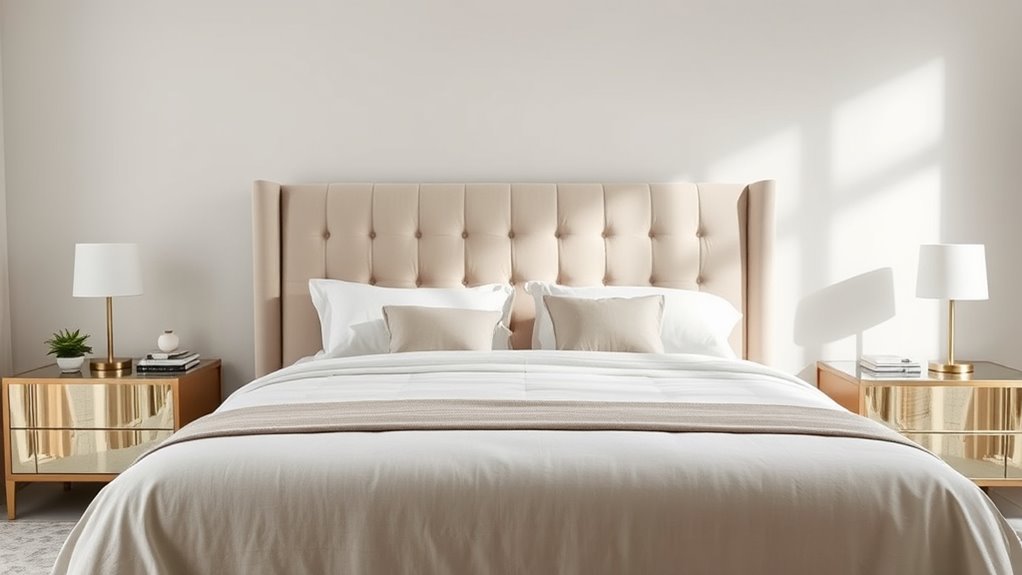
You can successfully use a king headboard on a queen bed by centering it for balanced proportions. Raise it 12-18 inches higher to elongate your bed visually.
Frame the space with flanking nightstands or dressers that complement your décor. Layer oversized pillows and textured blankets across the width to fill the gap.
Finally, create a statement wall behind the headboard with bold wallpaper or accent lighting. Each strategy transforms the size difference into intentional design that’ll improve your bedroom’s appeal.
Key Takeaways
- Center the king headboard by measuring the width difference and dividing the overhang equally on both sides.
- Mount the headboard 12-18 inches higher than standard height to create visual balance and elongation.
- Place matching nightstands or accent tables flanking the bed to frame and complement the oversized headboard.
- Layer textured throw blankets and oversized decorative pillows to add fullness and depth to the queen bed.
- Create a bold statement wall behind the headboard with wallpaper, shiplap, or contrasting paint and accent lighting.
Center Your King Headboard Over Your Queen Bed
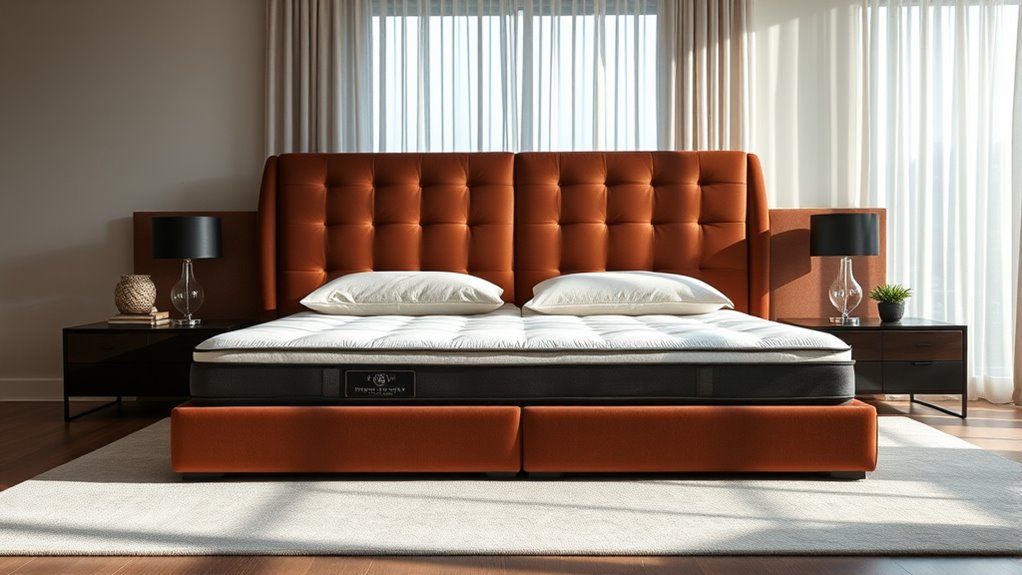
Since a king headboard is wider than a queen bed, you’ll need to center it carefully to achieve a balanced, intentional look.
Start by measuring your queen bed’s width, then measure your king headboard. Find the difference and divide it evenly to determine how much overhang you’ll have on each side. Mark the midpoint of both your bed frame and headboard to align them precisely.
Consider the historical context of bedroom design. Centered headboards have always created visual symmetry and focal points in sleeping spaces. When positioning yours, ensure equal distance extends beyond the bed on both sides.
Your material options matter here too. Upholstered headboards may require reinforced mounting brackets to handle their weight, while wooden or metal options might need different hardware. Check that whatever anchoring system you choose can support the headboard’s dimensions safely on your wall.
Raise It Higher to Improve the Proportions
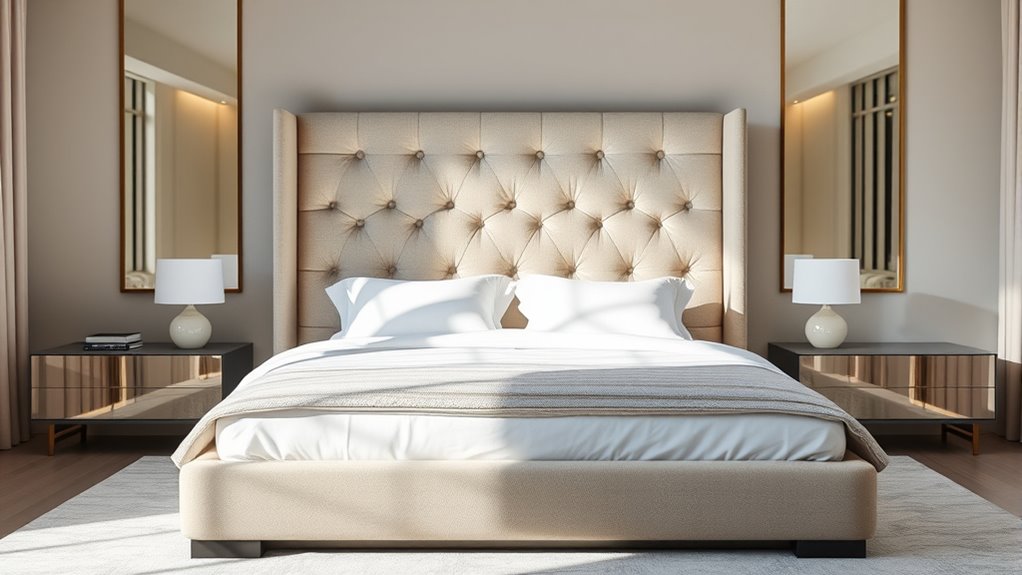
Once you’ve centered your king headboard, positioning it higher on the wall can dramatically improve how it looks above your queen bed. The extra height creates visual balance and prevents your headboard from overwhelming the smaller bed frame.
Positioning your king headboard higher on the wall creates visual balance and prevents it from overwhelming your queen bed frame.
Here’s how to optimize your placement:
- Mount the headboard 12-18 inches higher than standard height to elongate your bed visually.
- Ensure adequate space between the mattress top and headboard bottom for comfort and accessibility.
- Use color contrast between your headboard and wall to boost its visual impact.
- Consider material texture when selecting wall colors. Rough textures pair well with smooth headboard finishes.
This raised positioning draws the eye upward, making your bedroom feel more spacious. The increased clearance also improves functionality, allowing you to sit comfortably against the headboard without feeling cramped. Experiment with different heights until you achieve proportions that feel right for your space and personal aesthetic preferences.
Use Flanking Furniture to Frame the Space
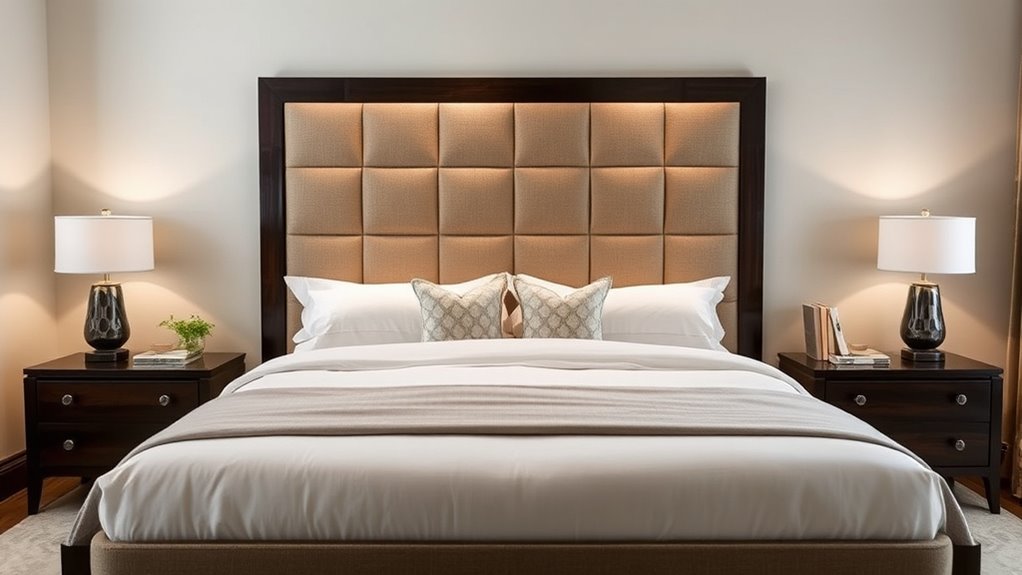
Nightstands, dressers, or accent tables positioned on either side of your queen bed create a balanced frame that visually anchors your oversized headboard. This strategic placement breaks up the excessive width and draws attention toward the center of your sleeping area.
When selecting flanking furniture, you’ll want to match the headboard’s height or keep pieces slightly lower for visual harmony. Choose pieces that complement your bedroom’s style and existing décor.
Incorporate decorative accents on these surfaces to elevate the overall composition. Table lamps, artwork, plants, or sculptural objects add personality and dimension to the space.
Color coordination between your flanking furniture and headboard strengthens the design scheme. If your headboard’s fabric is neutral, consider painted nightstands in a complementary shade, or vice versa.
This layered approach transforms an awkward size mismatch into an intentional, well-designed focal point that feels purposeful rather than oversized.
Layer Bedding and Pillows to Fill the Width
When you’re working with a king headboard on a queen bed, strategic layering of bedding and pillows becomes your most effective visual tool. This approach fills the width gap while creating depth and visual interest that transforms your sleeping space.
Start by implementing these bedding layers and decorative pillows strategically:
- Place a textured throw blanket across the foot of your bed for dimension.
- Add oversized decorative pillows in varying heights along the headboard.
- Use contrasting pillow shams to draw the eye across the full width.
- Incorporate a statement cushion in the center to anchor the design.
These bedding layers create a cohesive look that bridges the size mismatch. Mix textures, patterns, and colors to maximize visual fullness. Arrange your decorative pillows from largest to smallest, extending toward the edges of the headboard.
This layering technique not only addresses the proportional challenge but also adds comfort and sophistication to your bedroom aesthetic.
Make It a Focal Point With a Statement Wall or Lighting
Beyond layering your bedding, you’ll want to draw attention upward and around your king headboard to disguise the width disparity entirely.
Creating a statement wall behind your headboard accomplishes this beautifully. Paint it a bold color, add wallpaper, or install shiplap to make the headboard the room’s centerpiece. This visual impact naturally draws eyes to the focal point rather than the sizing mismatch.
Accent lighting amplifies this effect dramatically. Install wall sconces on either side of the headboard or position uplighting behind it. Soft, directional light creates depth and dimension while highlighting your headboard’s design details.
Consider combining both approaches for maximum impact. A jewel-toned statement wall paired with warm accent lighting transforms your bedroom into a sophisticated retreat.
The strategic use of color and lighting redirects attention away from any awkward proportions, making your king headboard on a queen bed appear intentional and stylish rather than mismatched.
Frequently Asked Questions
Will a King Headboard Damage or Fit Properly on a Queen Bed Frame?
You’ll find that a king headboard won’t damage your queen bed frame, but it won’t fit properly either. Since a king headboard measures approximately 80 inches wide compared to a queen’s 60 inches, you’ll have significant overhang.
For bed frame compatibility, you’d need to secure it differently than intended. However, if you’re seeking decorative accents, you could repurpose it as a wall installation or modify it creatively.
How Do You Securely Attach a King Headboard to a Queen Bed Safely?
Studies show 40% of bedroom furniture mismatches occur due to improper attachment methods. You’ll need L-brackets and heavy-duty bolts to securely fasten your king headboard to the queen frame.
Check the headboard height and material compatibility. Wood requires different fasteners than metal, so keep that in mind. You’ll want to reinforce mounting points and verify the headboard won’t overhang dangerously.
Use a stud finder for wall anchoring if needed.
What Is the Cost Difference Between Buying a Queen Versus King Headboard?
You’ll typically find that king headboards cost $200 to $500 more than queen options. The price difference depends on your material options and style variations you choose.
Upholstered designs cost more than wood frames, while ornate styles exceed simple, minimalist headboards. You’re investing in extra width and often premium materials when selecting a king size.
Shopping sales and comparing different retailers helps you find better deals on either size, potentially narrowing that cost gap considerably.
Can You Use a King Headboard in Small Bedrooms With Limited Wall Space?
Can you truly have your cake and eat it too? Yes, you can use a king headboard in small bedrooms, though it’s challenging. Your room size will feel cramped since king headboards consume significant wall space.
However, if your decor style adopts minimalism or modern design, you’ll offset the visual heaviness. Consider wall-mounting it to maximize floor space and create an illusion of openness.
Ultimately, measure carefully before committing.
How Do You Remove or Adjust a King Headboard if You Change Décor?
You’ll find that most king headboards attach with bolts or brackets you can easily loosen. Start by removing decorative accessories like pillows and wall hangings. Then unscrew the mounting hardware from your wall studs.
For headboard height adjustment, you can reposition brackets at different stud levels before reattaching. If you’re replacing it entirely, patch any wall holes with spackle and repaint to refresh your room’s décor seamlessly.
Conclusion
You’ve now navigated the nuances of perfectly positioning your king headboard on your queen bed. By centering, elevating, and embellishing your bedroom’s backdrop, you’ll create an enchanting, cohesive space that’s both bold and beautiful.
Don’t doubt your decorating decisions. You’re crafting a sanctuary that’s stylishly sophisticated. Your bedroom’s breathtaking transformation awaits, promising peaceful, purposeful rest.
You’re ready to revel in your redesigned room with your king headboard on your queen bed.