What Are RTA Cabinets?
Planning a kitchen upgrade on a budget can feel overwhelming, especially when you want stylish cabinets without paying for professional assembly. You’re not alone—many homeowners struggle to balance cost, quality, and installation time.
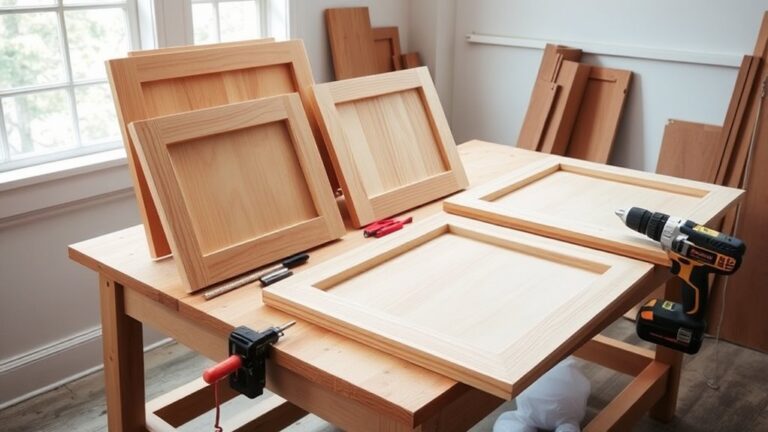
RTA cabinets are ready-to-assemble cabinets that arrive flat-packed with doors, panels, shelves, hardware, and instructions. You assemble the boxes at home using basic tools, then install and secure them to your walls. What are rta cabinets
They typically cost less than fully assembled cabinets because you handle the labor. You can choose from materials, finishes, door styles, and layouts, but standard sizes may limit customization.
Keep exploring to see whether RTA cabinets suit your space, budget, and project timeline.
Key Takeaways
- RTA cabinets, or Ready-to-Assemble cabinets, arrive flat-packed with labeled parts, hardware, and instructions for home assembly.
- They typically include cabinet boxes, doors, shelves, panels, hinges, handles, and other installation components.
- RTA cabinets come in styles such as Shaker, slab-front, raised-panel, modern, traditional, and two-tone designs.
- Materials range from solid wood and plywood to MDF and particleboard, affecting durability, appearance, maintenance, and price.
- They cost less than fully assembled cabinets but require careful measuring, assembly, leveling, and installation.
What Are RTA Cabinets?

Ready-to-assemble (RTA) cabinets are kitchen and bathroom cabinets that arrive flat-packed, with all the parts and hardware needed for assembly. You choose the style, finish, size, and configuration, then assemble each cabinet before placing it in your room. Unlike fully custom cabinetry, RTA options use standardized components, which helps manufacturers offer practical designs at accessible prices.
RTA cabinets offer practical, stylish storage with flat-packed convenience and accessible pricing for kitchens and bathrooms.
You’ll find RTA cabinets in popular design trends, including Shaker doors, sleek slab fronts, traditional raised panels, and two-tone combinations. Material options commonly include solid wood, plywood, medium-density fiberboard (MDF), and particleboard.
Each choice affects durability, appearance, maintenance, and cost. Look for reinforced joints, quality hinges, adjustable shelves, and moisture-resistant finishes when you compare products.
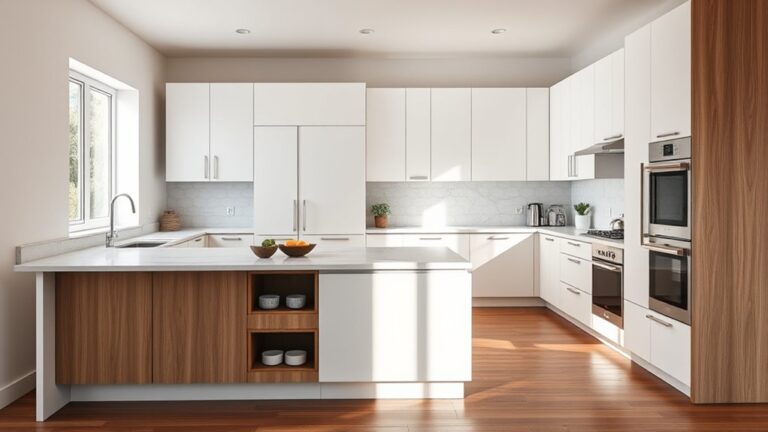
RTA cabinetry can suit a small update or a complete kitchen redesign. You’ll also find matching bathroom vanities, pantry units, and accessories.
Because manufacturers provide varied dimensions and finishes, you can coordinate storage throughout your home while maintaining a consistent look without ordering custom-made cabinetry.
How Are RTA Cabinets Delivered and Installed?

RTA cabinets typically arrive flat-packed in labeled boxes, with doors, panels, shelves, hardware, and assembly instructions protected inside. You’ll carry each carton indoors, inspect parts for damage, and organize components before assembly.
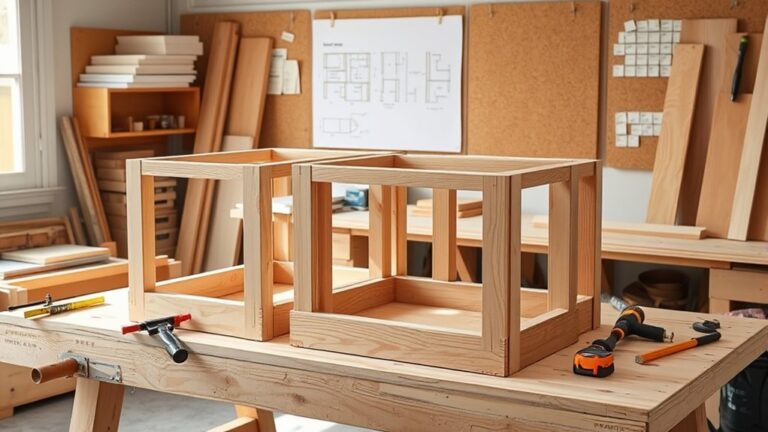
Keep a screwdriver, drill, level, measuring tape, and rubber mallet nearby. Follow the instructions step by step, joining panels with cams, screws, or dowels, then attach doors, drawer fronts, hinges, and handles.
Picture your installation unfolding like this:
- Unboxing: You’ll arrange labeled panels and hardware across a clean, open floor.
- Assembly: You’ll build each cabinet box, checking corners and joints for square alignment.
- Installation: You’ll secure cabinets to wall studs, level neighboring units, and add trim.
Before mounting, confirm your wall measurements and mark plumbing, electrical lines, and stud locations.
You can complete cabinet finishing by adjusting hinges, aligning gaps, and installing toe kicks or crown molding. This process also lets you use RTA design versatility to create a layout that fits your kitchen and workflow.
How Much Do RTA Cabinets Cost?
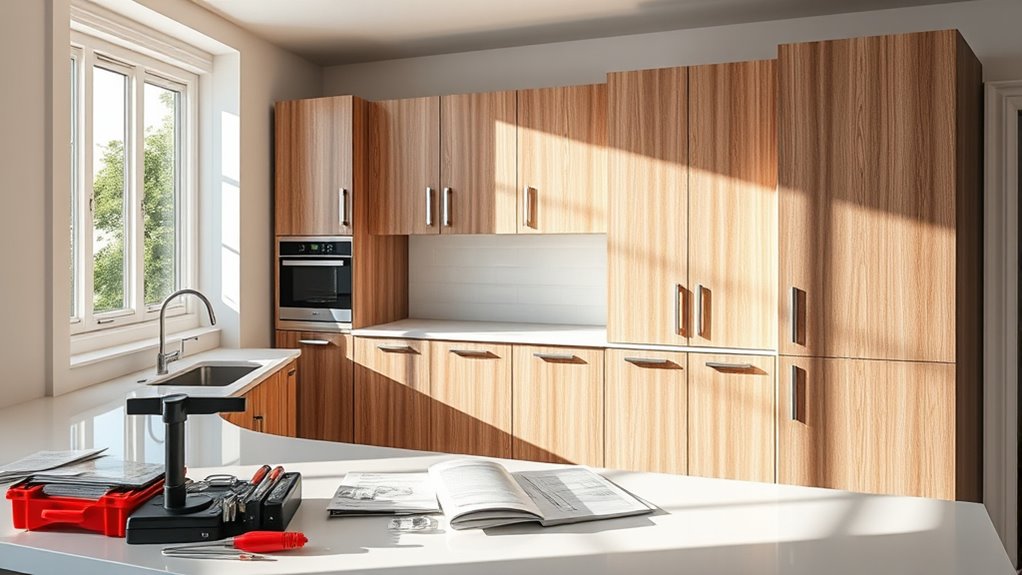
RTA cabinets can range from budget-friendly to premium, depending on the size and design of your kitchen. The materials, finishes, hardware, and cabinet layout you choose will all affect the final cost. Let’s look at how these factors can shape your project’s budget.
Average RTA Cabinet Prices
Several factors shape the average RTA cabinet price, including materials, construction quality, size, finish, and included features. You’ll typically pay about $80 to $250 per cabinet, while a complete kitchen may cost $1,500 to $6,000 before countertops, appliances, delivery, and installation.
Your budget becomes easier to picture with these examples:
- A compact galley kitchen with basic cabinets may land near $1,500.
- A mid-size kitchen with upgraded doors and organizers may reach $3,500.
- A spacious kitchen with premium finishes may approach $6,000 or more.
Material options and style variations give you room to match your design goals and spending limit. RTA cabinets often cost less than fully assembled alternatives because you handle assembly.
You’ll also find starter, midrange, and premium collections, so compare complete package prices rather than judging one cabinet’s tag alone.
Factors Affecting Cabinet Costs
Cabinet costs depend on more than the number of boxes you need. Door style, wood species, finish, cabinet size, and interior features can quickly change your total.
Choose basic shaker doors and standard sizes to keep your project affordable. Upgrading to solid hardwood, premium veneers, specialty finishes, or decorative details raises the price, but these choices may improve material durability and create a more refined look.
Your layout also matters. Tall pantry units, deep drawers, corner solutions, and custom-width boxes typically cost more than standard base and wall cabinets.
Interior accessories, including pull-outs, soft-close hardware, and organizers, add convenience while increasing your investment. Consider design flexibility, too. RTA cabinets offer many configurations, yet unusual dimensions may require modifications.
Compare quotes carefully, checking hardware, finishing, shipping, and assembly costs before ordering.
Why Choose RTA Cabinets?
RTA cabinets give you a practical way to update your kitchen without sacrificing style or control. You can select finishes, layouts, and hardware that reflect your taste while enjoying a streamlined ordering process.
Because manufacturers produce standardized components, you’ll often find attractive options that fit common kitchen dimensions and support efficient installation.
Picture how RTA cabinets can transform your space:
- Fresh design: Choose shaker doors, warm wood tones, or bold colors that align with current Design trends.
- Personal control: Mix sizes, shelves, and accessories to create storage that matches how you cook, shop, and organize.
- Responsible choices: Compare materials and construction methods to *contemplate* your Environmental impact while selecting durable products.
You’ll also appreciate the satisfaction of assembling and installing cabinets that make your vision tangible. With careful measurements and thoughtful planning, you can create a cohesive kitchen that feels intentional rather than generic.
RTA cabinets help you balance appearance, function, and customization as you shape a space that supports daily life and reflects your personal style.
What Are the Drawbacks of RTA Cabinets?
RTA cabinets require assembly, which can take time and effort. They also offer limited customization, so you may not get the exact design you want. Since quality can vary, inspect the materials and construction carefully before buying.
Assembly Required
Although RTA cabinets can lower your remodeling costs, you’ll need to assemble each unit before installation. You’ll sort hardware, follow instructions, and align panels carefully, so the assembly process can take several hours or longer.
If you rush, you may create uneven doors, loose joints, or visible gaps that affect performance and appearance.
Before beginning, prepare a clean, spacious work area and gather a screwdriver, drill, mallet, level, and clamps. As you work, keep every fastener organized and inspect each connection.
- Picture stacks of flat boxes covering your floor.
- Imagine dozens of hinges, screws, and dowels waiting for sorting.
- Envision lifting a completed cabinet to check its square corners.
Your experience may vary with cabinet size, construction, and material options. If you lack tools, time, or confidence, professional assembly adds expense and delays installation.
Limited Customization
Standard sizes, preset door styles, and fixed layouts can limit how closely RTA cabinets fit your kitchen’s design. You’ll typically choose from a defined selection rather than tailor every detail to your space.
If your kitchen includes an unusual wall, narrow corner, or awkward opening, standard cabinet dimensions may leave gaps or require filler pieces. Limited design flexibility can also make it harder to match a specific architectural style or create specialized storage for your cooking habits.
Manufacturers may offer several finishes, but your preferred shade might not appear among their color options. You may need to accept a close alternative or adjust your overall palette.
Before ordering, measure carefully and review available configurations to determine whether the collection supports your goals without extensive modifications.
Potential Quality Issues
Beyond limited design flexibility, you may encounter quality differences among RTA cabinets. Since you assemble them yourself, small manufacturing flaws can become more noticeable during installation.
Before ordering, inspect samples, read reviews, and confirm the warranty.
- Uneven wood grain: Veneer may look inconsistent, show visible seams, or include knots that differ from your expectations.
- Rough construction: You might find misaligned holes, weak joints, thin backs, or drawers that don’t glide smoothly.
- Inconsistent finish: Paint can reveal chips, thin coverage, or color variation. Available finish options may also look different online than in person.
You’ll also need to handle damaged parts carefully. Shipping can dent doors or cabinet edges, and replacement pieces may take time to arrive.
Measure accurately and assemble each unit on a level surface to reduce installation problems. With careful selection, you can still find durable RTA cabinets at an attractive price.
How Durable Are RTA Cabinets?
RTA cabinets can be highly durable when they’re made from quality materials and assembled correctly. You’ll get the best results from solid-wood doors, plywood boxes, reinforced joints, and moisture-resistant finishes.
These features help cabinets withstand daily opening, closing, spills, and changing temperatures.
Durability testing can reveal how well a cabinet handles weight, repeated use, humidity, and impact. Look for manufacturers that test drawer slides, hinges, finishes, and connection points, then publish clear construction details.
You should also inspect hardware ratings and choose components designed for frequent use.
Material longevity depends on more than the materials themselves. You’ll extend your cabinets’ service life by tightening hardware, wiping spills promptly, maintaining stable indoor humidity, and avoiding excessive weight.
Proper assembly matters, too. Carefully aligned joints and securely fastened components reduce stress over time.
With sensible care and reliable construction, quality RTA cabinets can serve you for many years while maintaining their function and appearance.
Shelves remain sturdier when you distribute heavier items evenly instead of concentrating weight in one area.
RTA Cabinets vs. Assembled Cabinets
When comparing RTA and assembled cabinets, think about assembly time, shipping, and storage needs. RTA cabinets typically cost less and ship more efficiently, but you’ll need to assemble them yourself. Assembled cabinets arrive ready to install, which can save time and effort.
You’ll also want to balance quality, budget, and your project timeline. If you’re looking to save money and don’t mind some assembly, RTA cabinets may be the better choice. If convenience is your priority, assembled cabinets could be worth the extra cost.
Assembly Time
Assembly time can be the biggest difference between RTA and assembled cabinets. With RTA options, you’ll receive flat-packed components and build each cabinet before installation.
Assembled cabinets arrive ready to place, so you can move directly to fitting doors, drawers, and hardware.
Your choice often depends on:
- Your schedule: RTA cabinets require measuring, sorting, fastening, and checking every joint, while assembled cabinets shorten the installation phase.
- Your comfort level: Basic tools and patience can make assembly manageable, but complex layouts may demand extra help.
- Your design priorities: Consider how Interior design goals and Material selection affect the number of cabinets and assembly steps.
If you enjoy hands-on projects, RTA cabinets can save money and give you control.
If you want a faster, simpler installation, assembled cabinets may better suit your plans and available time.
Shipping And Storage
Shipping and storage can be simpler with RTA cabinets because their flat-pack boxes take up less space and often cost less to transport. You can carry manageable cartons through narrow doorways, stack them safely, and store them in a garage until installation.
Assembled cabinets arrive bulky, so you’ll need more room and careful handling.
| Consideration | RTA Cabinets |
|---|---|
| Box size | Compact, stackable cartons |
| Storage | Easier to organize |
| Delivery access | Fits tighter pathways |
You’ll also find that packaging usually protects each component separately, reducing movement during transit. Check labels before storing, and keep boxes dry and level.
Material options and Design flexibility may affect the number of packages, but flat-pack shipping still helps you plan your space.
Assembled units suit immediate placement, while RTA cabinets give you more control over staging and delivery timing.
Cost And Quality
RTA cabinets typically cost less because you assemble them yourself, while assembled cabinets include professional labor and arrive ready to install. You’ll save money with RTA options, but you’ll invest time, tools, and patience during assembly.
Assembled cabinets cost more upfront, yet they can shorten installation and reduce concerns about mistakes.
- Picture flat boxes becoming sturdy drawers and doors in your kitchen.
- Imagine choosing finishes, layouts, and hardware that match your vision.
- Envision factory-built units arriving aligned, reinforced, and ready for placement.
Compare construction before deciding. Design flexibility often favors RTA cabinets, since you can select from many sizes, styles, and configurations.
However, assembled cabinets may offer consistent craftsmanship and faster results. Check plywood thickness, joinery, hinges, drawer slides, and finish quality to judge Material durability.
A lower price doesn’t always mean weaker cabinets, and a higher price doesn’t guarantee superior performance. Review warranties, samples, and customer feedback before purchasing.
What Comes in an RTA Cabinet Box?
When your RTA cabinet box arrives, you’ll typically find the cabinet panels, doors or drawer fronts, shelves, hardware, and assembly instructions inside.
You’ll assemble these components at home using cam locks, screws, hinges, and drawer slides. Some boxes also include adjustable shelf pins, toe-kick pieces, and decorative trim.
| Component | Purpose | Check for |
|---|---|---|
| Panels | Form the cabinet body | Matching edges |
| Doors | Cover cabinet openings | Correct style |
| Shelves | Add storage surfaces | Shelf pins |
| Hardware | Connect and operate parts | Complete quantity |
Packaging usually protects each piece with cardboard, foam, or plastic wrap.
Before assembly, unpack everything carefully and compare the contents with the parts list. This helps you spot damage or missing hardware early.
Finishes and construction vary according to your selected Interior design and Material options. However, the box generally contains the essentials for building one cabinet.
Extra accessories, such as organizers or crown molding, typically arrive separately.
How to Choose RTA Cabinets for Your Space
Choosing RTA cabinets starts with matching the cabinet layout, dimensions, storage needs, and style to your space. Measure wall lengths, ceiling height, appliance openings, and door swings before you choose sizes. Leave enough clearance for comfortable movement and verify that the boxes fit through entryways.
Picture your finished room as you compare options:
- A bright galley kitchen: Use consistent cabinet depths and light finishes to make narrow aisles feel more open.
- A busy family kitchen: Combine deep drawers, adjustable shelves, and a pantry cabinet for efficient Kitchen organization.
- A clean, contemporary space: Select flat-panel doors, simple hardware, and a restrained color palette to support Modern design.
Next, match cabinet materials and finishes to your maintenance habits. Choose durable surfaces where spills are common, and consider interior accessories that keep cookware, dishes, and cleaning supplies accessible.
Review door and drawer placement carefully, then create a measured layout before ordering. This preparation helps you select cabinets that look balanced, function smoothly, and use every available inch wisely.
Are RTA Cabinets Right for Your Project?
If you want attractive cabinets without the cost of fully assembled units, RTA cabinets may be right for your project. They offer flexible styles, practical storage, and lower prices, making them a strong choice for kitchen updates, bathroom renovations, and rental properties. You’ll also find options that complement modern, traditional, and transitional designs.
RTA cabinets work best when you’re comfortable measuring your space, reviewing specifications, and assembling components. You can save on labor, but you’ll need time, patience, and basic tools.
If your project has an unusual layout or a tight deadline, fully assembled cabinets may provide greater convenience.
Consider the cabinet materials, construction, warranty, and available interior finishes before you buy. Check whether the package includes essential cabinet hardware, such as hinges, drawer glides, and handles, or whether you’ll need to purchase those separately.
Frequently Asked Questions
Can RTA Cabinets Be Customized With Different Colors, Finishes, or Hardware?
Yes, you can customize RTA cabinets with different colors, finishes, and hardware. Color customization typically includes painted, stained, or wood-grain options, although availability depends on the manufacturer and cabinet line.
You can also choose hardware options such as knobs, pulls, handles, and hinges to match your kitchen’s style. Some suppliers offer additional door profiles, glass inserts, and decorative accessories, so confirm each option before ordering your cabinets.
How Should RTA Cabinets Be Cleaned and Maintained?
Use gentle cleaning techniques to keep your RTA cabinets looking their best. Wipe spills promptly with a soft, damp cloth and mild dish soap, then dry every surface thoroughly. Don’t use abrasive pads, harsh chemicals, excessive water, or steam, which can damage finishes and joints.
For maintenance, check hinges and handles regularly, tighten loose hardware, and adjust doors when needed. Protect cabinets from prolonged heat, moisture, and direct sunlight to preserve their appearance.
Are RTA Cabinets Environmentally Friendly or Sustainably Manufactured?
RTA cabinets can be environmentally friendly, but you’ll need to check each manufacturer’s materials and practices. Look for eco-friendly materials, such as bamboo, recycled wood, low-VOC finishes, and formaldehyde-reduced panels.
Sustainable manufacturing may include certified wood, efficient production, minimal packaging, and responsible waste management. You shouldn’t assume every RTA cabinet meets these standards.
Verify certifications like FSC or CARB compliance before buying, and choose durable designs that reduce replacement waste.
Can Damaged or Missing RTA Cabinet Parts Be Replaced?
When there’s a will, there’s a way: you can usually replace missing or damaged RTA cabinet parts. Contact the manufacturer or retailer first, providing your order number, cabinet model, and photos of the damaged components.
They may ship replacement parts, such as doors, hinges, drawer fronts, panels, or hardware. If the original supplier can’t help, search for compatible replacement parts through cabinet dealers or hardware stores, and verify measurements before ordering.
What Warranties Do RTA Cabinet Manufacturers Typically Offer?
You’ll typically find limited warranty coverage on RTA cabinets, often lasting one to five years against manufacturing defects. Some manufacturers offer longer warranties, while others cover only original purchasers and exclude improper installation, moisture damage, normal wear, or unauthorized modifications.
Review the manufacturer policies before buying, especially the requirements for reporting damage and providing photos or proof of purchase. Warranties usually cover replacement parts, not labor, shipping, or installation costs.
Conclusion
RTA cabinets can help you save money, simplify delivery, and personalize your space, but they also require patience, planning, and hands-on assembly. If you’re comfortable measuring carefully, following instructions, and investing some time, you can create a stylish kitchen without overspending.
Compare materials, inspect hardware, confirm dimensions, and choose a reputable supplier before ordering. When you balance budget, quality, and effort, you’ll know whether RTA cabinets fit your project and whether they’re the right choice for you. What are rta cabinets