What Is a Buffet?
Understanding what is a buffet can feel confusing, especially when you’re unsure about etiquette, portions, or what to expect. You’re not alone—many people struggle with navigating buffet dining comfortably and confidently.
A buffet lets you choose and serve yourself from a variety of prepared dishes, usually for a fixed price. You can select small or generous portions and return for more when the format allows it.
Stations may offer salads, entrées, sides, desserts, soups, bread, and beverages, while breakfast, lunch, dinner, brunch, and themed options provide different menus.
As you navigate buffet dining, you’ll find out how it works, what to expect, and how to enjoy it courteously.
Key Takeaways
- A buffet is a meal arrangement where guests serve themselves from a wide selection of prepared dishes.
- Buffets typically charge a fixed price, offering unlimited servings or portions under specific restaurant policies.
- Food is organized into stations featuring salads, entrées, side dishes, desserts, beverages, soups, and bread.
- Common buffet formats include breakfast, lunch, dinner, brunch, and themed menus based on regional or seasonal cuisine.
- Buffets provide variety, flexible portions, and social dining, but require attention to etiquette, hygiene, allergens, and food waste.
What Is a Buffet?

A buffet is a meal setup where you choose from a variety of dishes and serve yourself. Instead of receiving one fixed plate, you encounter an open display designed to offer choice, variety, and flexibility. You can select foods that match your appetite, preferences, or dietary needs, making the format useful for groups with different tastes.
A buffet offers choice and flexibility, letting you create a meal that suits your appetite, preferences, and dietary needs.
The word “buffet” comes from French, though the dining tradition has broader historical origins. Earlier communal meals, feasts, and self-service spreads appeared in various cultures before modern restaurants popularized the buffet.
Over time, hotels, celebrations, and family gatherings adopted the format because it encourages abundance and social interaction.
Buffets also carry cultural significance. You may see local ingredients, traditional recipes, and festive customs represented across one spread. In some communities, the arrangement reflects hospitality: hosts offer plenty so guests can feel welcome and choose freely.
Whether formal or casual, a buffet combines culinary variety with communal generosity, giving you a meal experience shaped by choice and shared abundance.
How Does Buffet Dining Work?
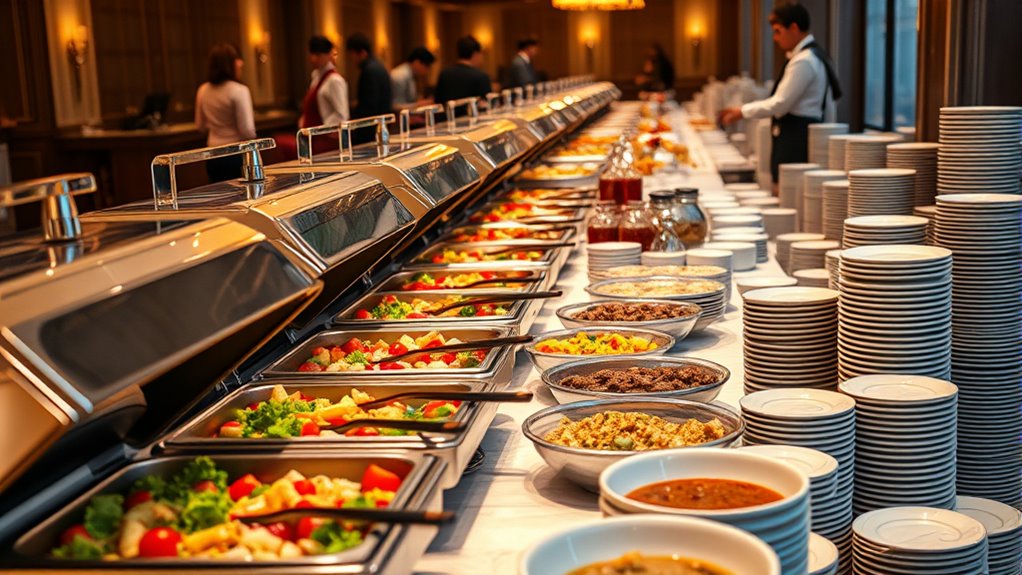
At a buffet, you choose and serve yourself from the available dishes. You’ll usually pay one fixed price, then enjoy as many portions as you like. It’s a flexible way to eat because you can choose exactly what—and how much—you want.
Self-Service Food Selection
When you dine at a buffet, you choose your food from a variety of self-service stations rather than ordering a single meal from a menu. You move along the line, select portions, and return for seconds if you’re still hungry.
Use serving utensils for each dish, and keep your choices considerate of other guests.
| Station | What You’ll Find | Your Action |
|---|---|---|
| Salads | Greens, toppings | Build your bowl |
| Entrées | Hot main dishes | Take a portion |
| Sides | Vegetables, grains | Balance your plate |
| Desserts | Cakes, fruit | Choose a treat |
Good buffet etiquette keeps the line moving: wait your turn, avoid touching food, and replace dropped utensils.
A clean buffet presentation helps you identify dishes and decide quickly. You can sample different flavors while controlling your portions and creating a meal that suits your preferences.
Fixed-Price Dining
With fixed-price buffet dining, you pay one set amount and choose from the available dishes. This model lets you plan your meal’s cost before you sit down, making budgeting simpler than ordering several individual plates.
You typically pay at the entrance or when you receive your bill, then follow the venue’s service guidelines and table policies. The price supports food preparation, staff, facilities, and ongoing replenishment.
You’ll often find buffets in hotels, restaurants, celebrations, and community gatherings, where the format encourages social interaction and broad menu variety. It also reflects buffet cultural significance by bringing diverse foods together for shared enjoyment.
Some venues promote buffet sustainability by reducing disposable packaging, donating safe leftovers, and tracking demand to limit waste. Always check included drinks, service charges, and dining-time limits beforehand.
Unlimited Portion Choices
How does a buffet’s unlimited portion format work? You pay one fixed price, then serve yourself as much as you’d like from the available dishes. You can sample small portions, return for seconds, or build a full plate, depending on your appetite.
Staff typically refresh each station throughout service, but they may set limits on waste, takeout, or particularly expensive items. You should use clean serving utensils, take only what you’ll eat, and follow posted guidelines.
This flexibility lets you compare flavors and pace your meal without ordering each dish separately. Its cultural significance appears in communal eating traditions, where sharing encourages conversation and hospitality.
Its historical development reflects the rise of self-service restaurants, which made variety and generous choice central to modern buffet dining.
What Foods Are Common at a Buffet?

At a buffet, you’ll often find popular staples like salads, roasted meats, pasta, rice, and vegetables. For dessert, you can enjoy cakes, pastries, fruit, or ice cream. Beverages usually include water, soft drinks, coffee, tea, and sometimes juice.
Popular Buffet Staples
A buffet typically features a mix of crowd-pleasing dishes, such as salads, soups, roasted meats, pasta, rice, vegetables, bread, and bite-sized appetizers. As you peruse the table, you’ll often find familiar staples prepared in several styles, giving you plenty of choices without requiring a fixed menu.
Roasted chicken, sliced beef, grilled fish, steamed vegetables, and seasoned rice can anchor a meal, while fresh salads, warm soups, pasta, and crusty bread add variety. You might also see spring rolls, stuffed mushrooms, skewers, or savory pastries that are easy to pick up and sample.
These selections reflect buffet history, when hosts served abundant food for self-service, as well as cultural variations that shape seasonings, ingredients, and presentation. You can build a balanced plate or sample something new with every visit.
Desserts And Beverages
Dessert and beverage stations add a sweet, revitalizing finish to the buffet, with options such as cakes, cookies, pastries, puddings, fresh fruit, ice cream, coffee, tea, juice, and soft drinks.
You can sample several dessert varieties, pairing rich chocolate cake with fresh berries or a light fruit pudding. Look for pastries, cookies, and miniature tarts when you want smaller portions, or choose ice cream and toppings to create your own treat.
Beverage options help you balance each bite. Pour hot coffee or tea with pastries, select juice alongside breakfast-style sweets, or enjoy a soft drink with cake.
Some buffets also offer flavored water, lemonade, or specialty drinks. Check the serving area for chilled and hot selections, then build a satisfying ending that matches your appetite and taste.
What Are the Main Types of Buffets?
Buffets come in several forms, including breakfast, lunch, dinner, brunch, and dessert spreads, each organized around different foods, schedules, and dining experiences. Choose a breakfast buffet when you want eggs, pastries, fruit, cereal, and coffee to start your day.
Explore breakfast buffets for a welcoming spread of eggs, pastries, fruit, cereal, and coffee to begin your day.
A lunch buffet typically offers salads, sandwiches, soups, hot entrées, and lighter sides for a midday meal. Dinner buffets often feature roasted meats, seafood, vegetables, grains, and richer sauces, creating a more substantial experience.
Brunch combines breakfast and lunch favorites, so you might find pancakes beside carving stations, salads, and sparkling drinks. Dessert buffets focus on cakes, pastries, puddings, fruit, and other sweet finishes.
You’ll also find themed buffets built around regional or seasonal dishes. Buffet history shows how hosts adapted shared food service to different occasions, while Cultural influences shaped ingredients, preparation methods, and presentation.
Each type lets you delve into a meal arranged for its particular time and purpose.
Are All Buffets All-You-Can-Eat?
The type of buffet doesn’t always determine how much you can eat. Although many buffets offer unlimited servings for one set price, others charge by weight, plate size, item, or time.
You’ll usually find the rules on the menu, posted near the entrance, or explained when you arrive. Check before filling your plate so you understand the buffet pricing and avoid surprises at checkout.
Watch for these common arrangements:
- All-you-can-eat: Pay once and return for additional portions during the allowed period.
- By weight: Build your plate, then pay according to its total weight.
- Limited servings: Choose from a buffet, but follow restrictions on premium foods or refills.
Some venues combine models, offering unlimited standard dishes while charging separately for drinks, desserts, or specialty items.
You should also consider buffet hygiene. Choose establishments that keep food covered, maintain safe temperatures, and replace serving utensils regularly.
Reading the policy helps you plan portions, compare value, and enjoy your meal confidently.
Self-Serve vs. Staff-Served Buffets
With a self-serve buffet, you choose your own portions and move at your own pace. With a staff-served buffet, attendants portion and serve each dish for you. Understanding how both styles work can help you choose the option that best suits your needs.
Self-Serve Buffet Basics
In a self-serve buffet, you choose your portions and place food on your plate, while staff keep the dishes stocked and the area clean. You can scan every option before deciding, then build a meal that suits your appetite and preferences. Start with a clean plate, use serving utensils, and avoid touching food directly.
- Survey first: Walk along the line before serving yourself, so you can plan a balanced plate.
- Practice portion control: Take modest servings initially; you can return for more if you’re still hungry.
- Improve plate presentation: Separate contrasting foods, leave space between items, and keep sauces from covering everything.
Move steadily to help others, and keep your hands, sleeves, and personal items away from shared dishes. Follow posted instructions, especially when selecting hot, chilled, or allergen-sensitive foods.
Staff-Served Buffet Features
Staff-served buffets let you request portions from an attendant, who handles the serving utensils and controls how much food reaches your plate. You can ask for a smaller serving, skip an item, or request an extra spoonful without touching shared dishes.
These staff-served buffet features support cleaner stations and smoother movement, especially when hot foods require careful handling. An attendant can also answer questions about ingredients, allergens, and preparation, helping you make informed choices as you build your meal.
Because each portion passes through trained hands, service quality often depends on attentiveness, accuracy, and speed. You’ll still enjoy variety, but the attendant manages the serving process.
This format can reduce spills, limit cross-contact, and keep displays orderly throughout the meal while maintaining consistent portions for every guest.
Choosing The Right Style
Choosing between self-serve and staff-served buffets depends on how much control, convenience, and assistance you want during the meal. Self-serve setups let you choose portions, compare dishes, and return for favorites.
They’re ideal when you value flexibility and buffet customization.
Staff-served buffets offer guidance, consistent portions, and cleaner presentation. Choose this style when you prefer less handling, need help identifying ingredients, or want staff to manage dietary accommodations.
Consider these factors:
- Control: Select self-serve for personal pacing and portion decisions.
- Support: Pick staff-served when you need recommendations or assistance.
- Crowd flow: Choose the format that keeps lines moving and suits your group.
You can also combine both styles. A self-serve salad station paired with staff-served entrées gives you choice without sacrificing support.
Think about your guests’ needs, the event’s formality, and available space before deciding.
Why Do People Choose Buffets?
Why do people choose buffets? You can investigate many dishes, build a meal that suits your appetite, and enjoy flexible dining with friends or family. Instead of ordering one entrée, you can sample small portions, return for favorites, and decide as you eat.
Buffets also make group meals simpler because everyone can choose something different without lengthy discussions.
| Reason | What you gain |
|---|---|
| Variety | You can try multiple flavors |
| Flexibility | You control portions and timing |
| Social dining | You share choices and conversation |
You may also value Buffet sustainability when a restaurant reduces packaging, serves local ingredients, or plans portions to limit waste.
Buffet health benefits can come from choosing vegetables, lean proteins, whole grains, and reasonable servings. You’ll still need to make mindful selections, but the format gives you control over your plate.
For celebrations, buffets create a relaxed flow. You can mingle, eat at your pace, and revisit the foods you enjoy without interrupting conversation or waiting for another course.
What Are the Pros and Cons of Buffets?
Buffets give you variety, flexible portions, and an easy way to accommodate different tastes, but they can also encourage overeating, create food waste, and raise concerns about freshness or hygiene.
You can sample several dishes, choose as little or as much as you want, and often save money when you have a hearty appetite. However, value depends on quality, menu selection, and buffet pricing strategies.
Three advantages and drawbacks deserve attention:
- Choice: You can satisfy different cravings in one meal, though abundant options may lead you to take more than you’ll eat.
- Value: A fixed price can make dining predictable, but light eaters might pay for food they don’t need.
- Convenience: Self-service usually speeds up decisions, yet crowded stations can affect comfort and sanitation.
You should also consider buffet health concerns, including allergens, lukewarm foods, cross-contact, and excessive salt or sugar.
Choosing busy venues with strong cleanliness practices can reduce these risks. Always weigh convenience against nutrition and freshness.
What Is Proper Buffet Etiquette?
Proper buffet etiquette means serving yourself considerately while keeping the line moving and protecting the food for everyone. Wait your turn, follow the line’s direction, and decide what you want before reaching each dish.
Use the provided utensils for each item, and don’t touch food with your hands. Take modest portions first; you can return for more if you’re still hungry.
Keep your plate below serving areas, and avoid leaning over dishes, coughing, or talking directly above them. If you drop a utensil or spill something, alert staff instead of replacing it yourself.
Respect dietary restrictions by asking staff about ingredients, preventing cross-contact, and using separate utensils when available. Don’t assume everyone shares your preferences or allergies.
Cultural variations may shape table manners, serving order, and expectations, so observe your hosts and follow local cues. Finally, let others pass when you’re finished, keep children supervised, and clear your place without blocking the buffet line.
How Do You Plan a Buffet for an Event?
Planning a buffet for an event starts with matching the menu, serving style, and quantities to your guest count, venue, and budget. First, determine your guest count, including children and likely appetites. Then choose dishes that offer variety without overwhelming your kitchen or table.
- Build a balanced menu: Combine appetizers, main dishes, sides, salads, desserts, and beverages. Provide dietary accommodations, such as vegetarian, vegan, gluten-free, or allergy-conscious choices, and label each item clearly.
- Organize the flow: Place plates first, followed by salads, entrées, sides, sauces, and utensils. Use separate stations for drinks or desserts to reduce lines. Keep hot foods hot and cold foods chilled.
- Set the scene: Select sturdy serving equipment, replenish dishes regularly, and plan enough seating and table space. Add buffet decorations that complement your event without blocking food or creating spills.
Before guests arrive, test the layout, confirm serving times, and brief helpers on refilling, cleanliness, and food safety. A simple plan helps you serve comfortably and keep guests focused on enjoying the meal.
Frequently Asked Questions
How Much Does a Buffet Typically Cost per Person?
You’ll typically pay $15–$40 per person for a casual buffet, while upscale hotel, seafood, or specialty buffets may cost $50–$100 or more.
Your final bill can change with location, meal period, drinks, taxes, and gratuity. Pricing strategies often include weekday discounts, children’s rates, and unlimited add-ons.
Cultural variations also affect costs: local cuisine may remain affordable, while international or premium ingredients can raise prices markedly. Check menus before you go.
How Long Can Food Safely Remain on a Buffet Table?
You should discard perishable buffet food after two hours at room temperature, or after one hour when temperatures exceed 90°F (32°C). Keep hot dishes at 140°F (60°C) or above and cold foods at 40°F (4°C) or below.
A simple timeline—0 hours: serve; 2 hours: discard—visually tests the safety theory. Follow food safety protocols, monitor food temperature regularly, and replace small portions instead of topping up old food.
How Can Buffets Accommodate Guests With Food Allergies?
You can accommodate guests with food allergies by labeling every dish clearly, listing ingredients, and preventing cross-contact with separate utensils and serving areas. Offer allergy-friendly options prepared in a clean, dedicated space, and train staff to answer questions accurately.
Ask guests about their needs before service, provide dietary accommodations when possible, and never guess about ingredients. Encourage guests to confirm choices with staff, especially when allergies could cause life-threatening reactions.
What Beverages Are Usually Included With Buffet Meals?
What beverages do you usually get with a buffet meal? You’ll commonly find water, coffee, tea, and assorted soft drinks included. Some buffets also offer juice, lemonade, or iced tea, while alcoholic beverages usually cost extra.
Beverage variety depends on the restaurant, event, and package you choose. Check the menu beforehand to confirm availability and pricing. Thoughtful drink pairings can complement different dishes, helping you enjoy a more satisfying meal overall.
How Should Leftovers From a Buffet Be Stored Safely?
Refrigerate buffet leftovers within two hours, or within one hour if temperatures exceed 90°F (32°C). For safe Leftover storage, divide food into shallow, airtight containers so it cools quickly.
Label each container with the date, then use refrigerated leftovers within three to four days. Follow Food safety guidelines by keeping your refrigerator at 40°F (4°C) or below.
Reheat leftovers to 165°F (74°C), and discard anything left at room temperature too long.
Conclusion
Whether you’re enjoying a casual brunch or planning a polished party, a buffet offers flexibility, variety, and a chance to share. You can sample new flavors, select exactly what satisfies you, and savor every social moment. What is a buffet.
With thoughtful choices, courteous manners, and careful planning, you’ll help make the experience smooth and satisfying. So fill your plate wisely, welcome each guest warmly, and let the buffet bring people together through delicious exploration and memorable meals.